
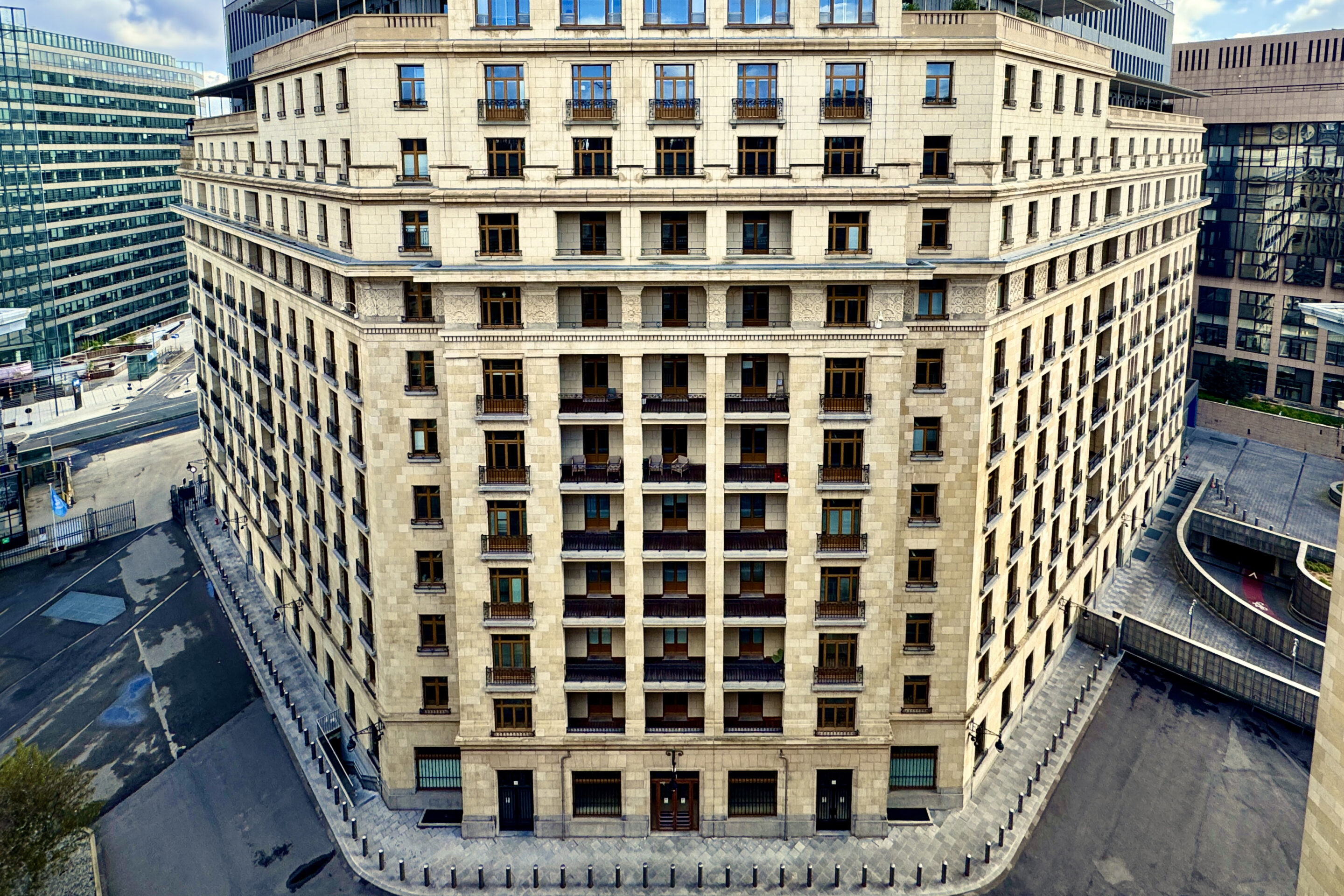
Sharp-eyed strollers in the European Quarter of Brussels will notice that one of its most celebrated landmarks celebrates a centenary this year. Carved on the Rue de la Loi façade of Résidence Palace is a foundation stone dated 1926.
Sitting 200 metres down from the Schuman roundabout, the former luxury-apartment complex is the oldest surviving building in this stretch of the street. Once the dominant feature to the east of Brussels, towering over its neighbours, it is now somewhat lost among the glass, stone and steel leviathans of the European institutions.
Far more has emerged about the building’s origins since it won monument status in 2004, thanks notably to a cache of documents discovered in the forgotten vault of the private on-site bank that served its wealthy residents a century ago.
Earthworks and empire
Three enormous movements of earth set the scene for the building we know today. The first occurred in prehistory as meltwater carved the valley of the Maelbeek south to north across the eastern fringe of central Brussels. In the 19th century, its steep slopes put a full stop to the neat grid pattern of the Leopold (now EU) Quarter, the city’s first purpose-built suburb which from the 1840s had filled up with foursquare mansions and large townhouses for the nobility and industrial rich of the new country. Too expensive to fill in, the planners instead threw a viaduct across the valley, interrupting the order and continuity of the street plan.
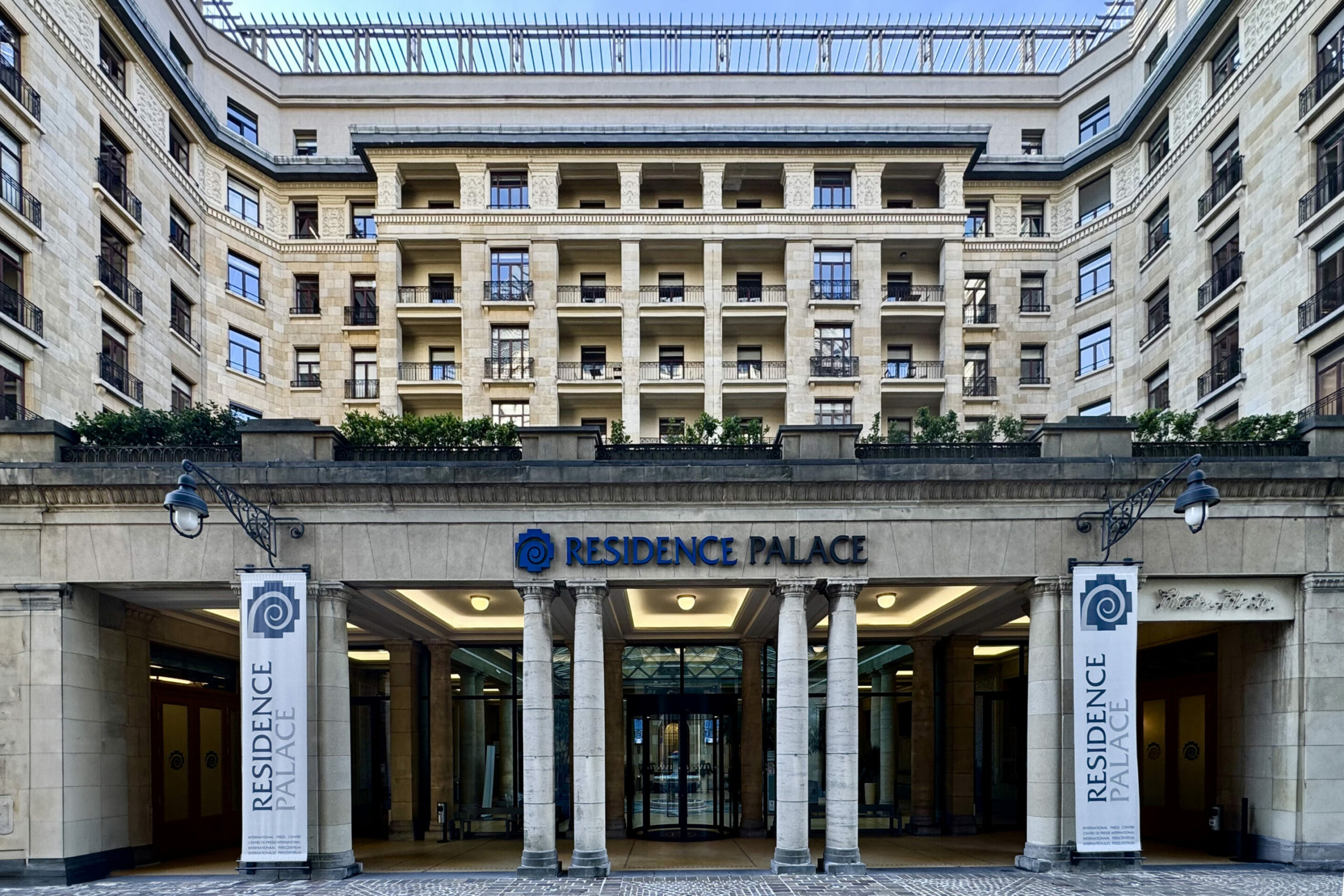
Brussels' iconic Résidence Palace
The earth moved again in the 1850s when British investors built a rail line across the valley linking London via Harwich and Ostend across Brussels and friendly Belgium and avoiding hostile France. Passing under Rue de la Loi in a deep cutting spanned by a second viaduct, this ‘Empire’ line would continue through Namur to Luxembourg, completing a chain to Trieste, then Suez and India beyond.
The gift
The junction of these two deep grooves in the landscape had left a steep slope of unstable, sandy soil made up of long gardens on Rue de la Loi and mean workshops and warehouses below in the valley along Chaussée d’Etterbeek. Late 19th-century developers, defeated by this unpromising triangle of land, had simply built around its edges but it was here that Résidence Palace would emerge, creating a new city block all of its own from spare patches.
It was thanks to the vision of Lucien Kaisin, an investor and lobbyist for new forms of living, whose international contacts had woken him to the potential of building high and in reinforced concrete. Harnessing financial instruments and construction technology not available to previous speculators, he would make a virtue of the site’s shortcomings, acquiring parcels of land on the cheap and using the railway to deliver materials.
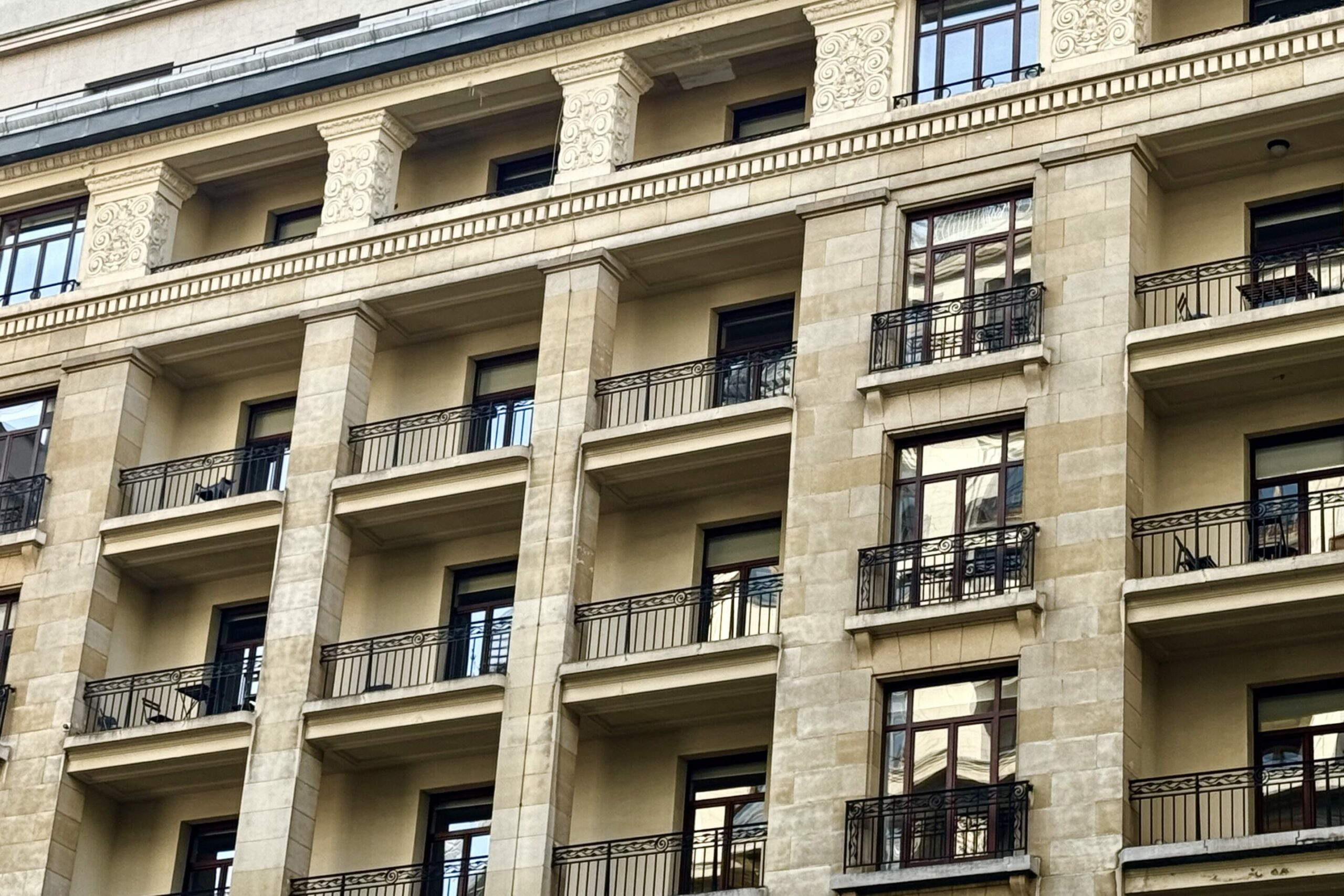
Brussels' iconic Résidence Palace
The architect Thierry Henrard has worked at Résidence Palace for 20 years, initially as part of the team coordinating the conversion for the Europa Building of Block A, fronting Rue de la Loi. It was then that he discovered the Résidence Palace company records in the strongroom below the former bank in an abandoned arcade of shops that ran through the building. These explained how Kaisin brought off his sensational garden-grab, conjuring up a 180-apartment complex of almost 50,000m2 from a seemingly worthless site in just four years.
"There was the problem that the ground was of very, very poor quality but for someone who wanted to build high in concrete, the railway was a gift, I actually believe the site created the project,” Henrard says. He estimates that without the ability to bring materials directly on site to an ad hoc siding using the old ‘Empire’ line, the costs would have doubled, making the project unviable: “It couldn’t have been achieved anywhere else”. But why was it needed at all?
Creation: the housing crisis
Announced in August 1922, Résidence Palace created a stir in the press, which would provide almost weekly updates as construction accelerated. Le Soir dedicated a page to this project, “the like of which has never been seen in Belgium”, hailing it as “a solution to the housing crisis”. The crisis in question was that facing the Brussels rich, whose ageing houses, deprived of modern conveniences, depended on large numbers of ever scarcer and dearer servants to operate.
Résidence Palace – its hybrid name clearly meant to be evocative of ‘Anglo-Saxon' luxury - would ride to the rescue of “families seeking to liberate themselves from the constraints of their servants, whose demands continue to exceed permitted boundaries,” La Libre Belgique explained. In this “refuge” from the social turmoil gripping postwar Belgium, apartments of up to 600m2 could reproduce the reception and living space of the classic townhouse without the inconvenience of either stairs or rebellious servants. Central heating from vast furnaces beneath the complex meant the end to lighting every grate, and vast fuel reserves were promised to see off strikes in the energy sector in comfort.
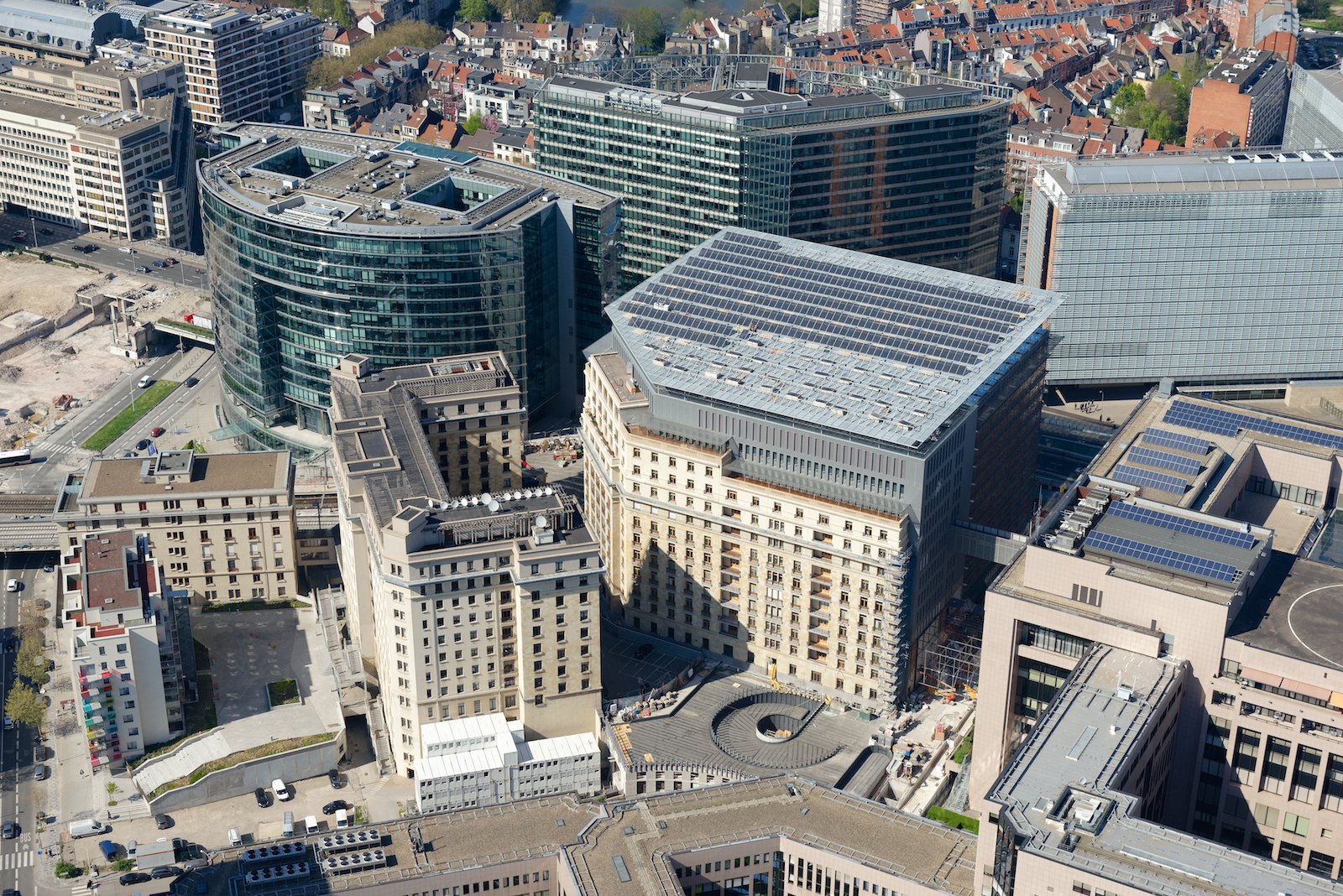
Brussels' iconic Résidence Palace from the air
These arguments were almost certainly fed to the press by Kaisin himself whose 68-million Belgian franc gamble depended on coaxing the very rich from their traditional homes (another of his innovations was a huge marketing budget, including magazine features and even radio ads).
The convenience and comfort of modern living were a key lure. Dumb waiters would deliver food from the kitchens of the on-site restaurant directly to apartments, from which mail could be deposited at the dedicated post office via pneumatic tubes. An array of express lifts would deliver tenants to the rooftop to enjoy “hanging gardens higher than Babylon” and alfresco luncheons, even games of tennis.
Alternatively, they could descend in a matter of seconds to the gym, swimming pool and library or visit the hairdresser, florist, newsagent and bank. In the evening, the theatre and restaurant would be at hand, or they could fetch their car (or rent or buy one) in the car park. It was not so much 15-minute city as five-minute city-within-a-city.
Exciting as these trappings of modernity were, Kaisin’s target market of rentiers and high-flyers was a relatively conservative crowd whose aspirations needed to be clothed in dignified restraint, retaining the correct measure of tradition. Résidence Palace needed to balance gigantism with discretion and good taste. In order to “magic up Brussels in New York”, there was no question of skyscrapers, simply sufficient height to deliver a return on the enormous investment. In the event, the target of 14 storeys was cut to 11 after negotiations with the city planners.
Thierry Henrard views Résidence Palace as an achievement of “astonishing audacity”. To embed vast, heavy concrete skeletons into the crumbling slope of the Maelbeek Valley and clothe them as promised “in the style of the Italian Renaissance and the motifs of our time”, Kaisin required a team capable of pioneering work in both engineering and prestige architecture. Michel Polak, a graduate of both the Zurich Polytechnic school and the Paris Beaux-Arts, brought from his base in the Swiss lakeside resort of Montreux experience of both large-scale luxury housing and expertise in concrete construction. By the time he and his engineer partner Alexandre Sarrasin joined the project in late 1921, Kaisin had the land and its key elements in place.
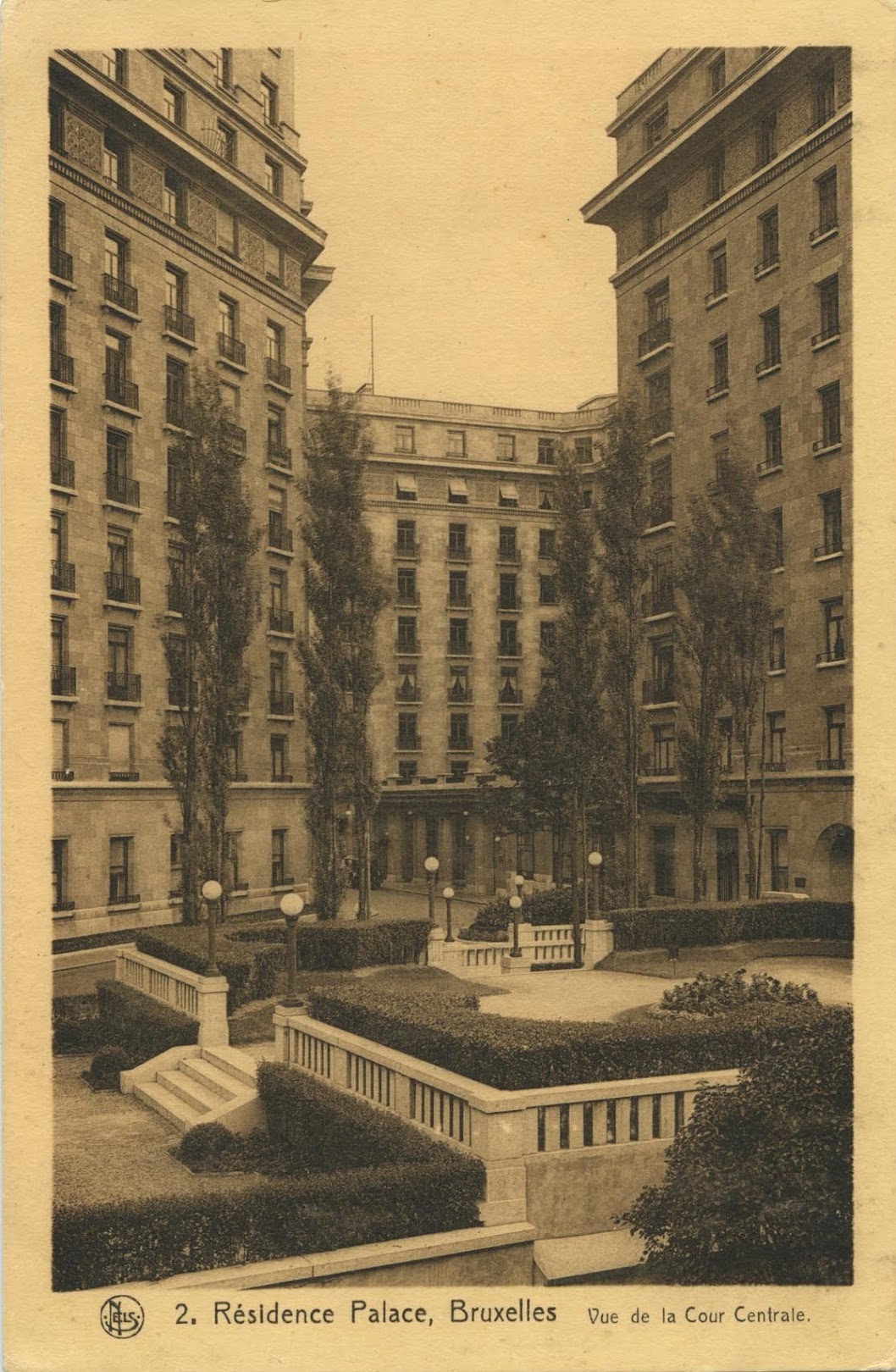
Brussels' iconic Résidence Palace. Credit: Collection Henrard Thierry
A narrow entrance on Rue de la Loi gave the scheme a prestige address with minimal outlay, thanks to the purchase of just three expensive houses, of which two were demolished and one retained as the site office. Some 18 further demolitions on a side street and in the valley below allowed the site to expand to the five original blocks, labelled A-E, which lined a one-way through street, the so-called Central Avenue.
The principal buildings, Block A (now Europa) and Block C (now the International Press Centre), sat on each side of the new private road, which also served Block D which had parking for more than 100 cars, and Block B (both demolished in the 1980s). Across a garden at the Rue de la Loi entrance was a gallery leading to Block E, small flats aimed at bachelors overlooking the railway cutting and Chaussée d’Etterbeek (it survives as private housing). Block A contained the shopping arcade and Block B the leisure and social facilities, including the restaurant and reception suites.
New York-style vistas
The set-piece of the central avenue marks the artistic triumph of the Résidence Palace project, where Kaisin’s vision of a lucrative and dense megastructure was met with the exquisite delicacy of Polak’s execution. By stacking apartments horizontally, triple the number of large homes were created compared to an equivalent stretch of Rue de la Loi. Vast stone facades evoked the permanence and solidity of the traditional upper-class mansion while the interplay between solid wall and the voids of the loggias rising full height dispelled the effect of warehouse or tenement.
Flanked by 11 storeys of masonry, the avenue evoked New York as promised while the slow reveal around a chamfered corner of the colonnaded patio set in the embrace of the facade of Block C avoided the Manhattan canyon effect. Wrapping the buildings just below the cornice, Polak’s frieze of volutes sublimated classical detail into the Art Deco “motifs of our time”, joined at ground level by wrought-iron geometric canopies above each entrance. The building’s stylised ‘R’ logo used the typography of the 1920s to evoke the monogrammed iron doors of the patrician houses it would supplant. All these elements combined to create a novel mini-cityscape carrying a sense of occasion for both visitors and the residents in their light-filled apartments who, in Polak’s words, would “look out over vistas created by us”.
Construction started in March 1923. The challenge of the unstable ground was met with the sinking of no fewer than 2,500 so-called Franki piles, a recent Belgian invention used here for the first time on such a large scale. Thanks to the presence of the railway, concrete could be mixed on the spot then channelled throughout the site by a vast network of pipes, allowing extraordinarily quick progress, The facades in imitation stone were also created on site and attached to each floor as it was built, allowing the completion in just five years of a new luxury residential, commercial and social hub in a dedicated street of 180 homes.
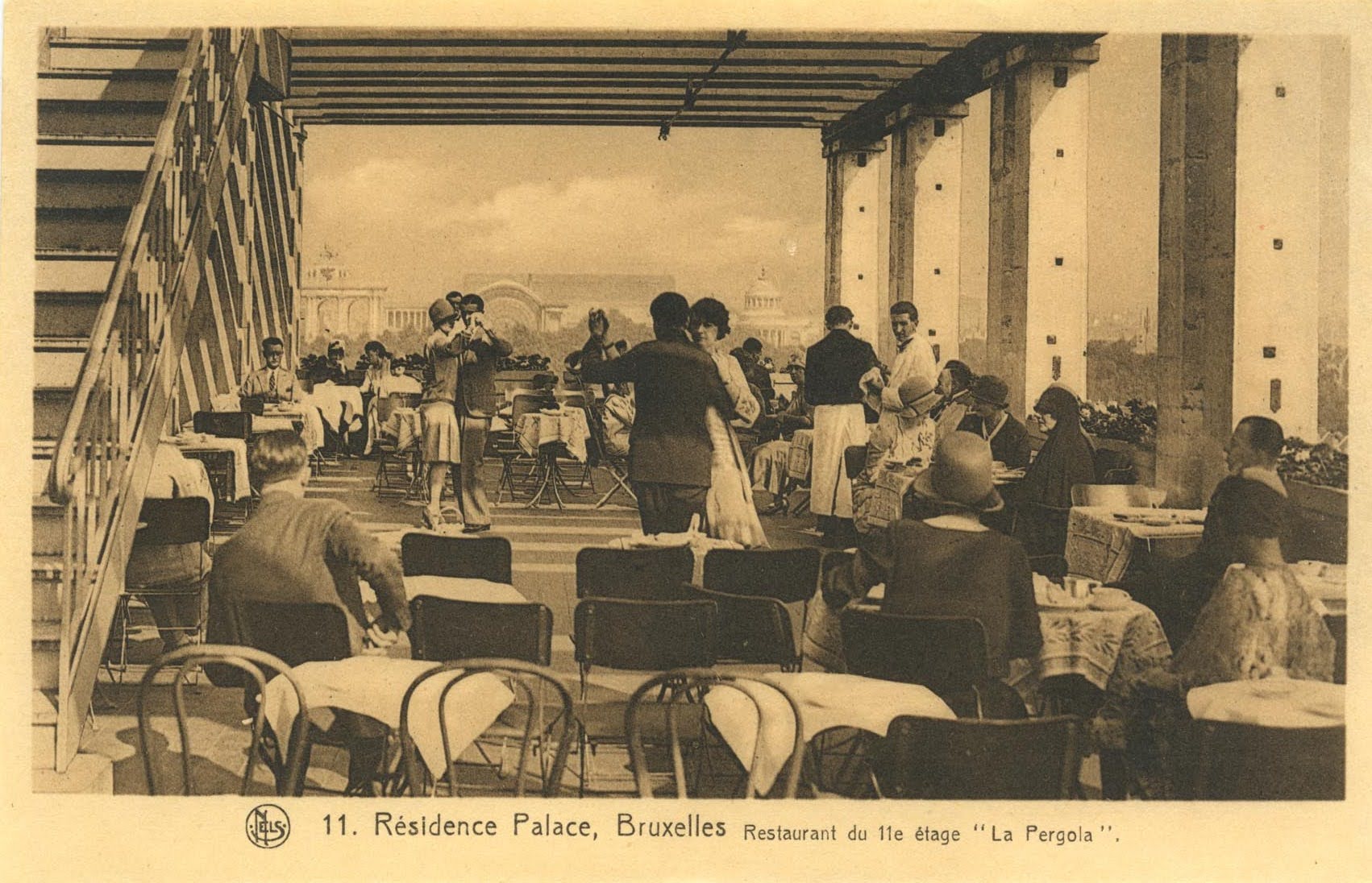
Brussels' iconic Résidence Palace. Credit: Collection Henrard Thierry
“Résidence”, as the papers called it, was an immediate success, meeting both the cultural and social pretensions of Brussels high society. Kaisin had promised a “first-rate attraction” for the city where “musicians, painters, artists would have frequent contact with the meilleur public” and where “parties and events would be organised by the young who would find in Résidence Palace the healthy atmosphere and the setting they need.”
By the end of the decade, it was home to politicians Robert Catteau, Emile Vandervelde and Charles Magnette, president of the Belgian Senate. They were joined by the proprietor of Het Laatste Nieuws Julius Hoste, the first editor-in-chief of Le Soir, as well as bankers, industrialists, aristocrats and foreign diplomats.
By 1929, the occupancy rate hit 75%, vindicating Kaisin’s audacious gamble on a blend of modernity, technology and tradition. It also vindicated his choice to turn down an opportunity to contribute his innovative financial skills to the Congo project. He preferred to stay in Brussels and tap the wealth it produced at destination rather than source. The second Baron Van Eetvelde, son of one of the architects of the colonial project chose to live in a flat here, selling the obsolete Art Nouveau mansion built nearby in 1900 by Horta for his father.
Disputed authorship
Polak himself was another early resident, perhaps surprisingly as his relations with Kaisin appear to have soured. Thierry Henrard’s research in the corporate accounts of Résidence Palace SA showed that Polak’s fee under the management of Kaisin had been just 1.57% compared to the 7% more usual in the profession for an architect overseeing a large project. Henrard believes Polak was somewhat sidelined in the execution of Résidence Palace beyond his contribution of that timeless classically tinged sheen. For example, a project manager and general fixer called Célestin Francois received a fee of 3.24% and it was he and Kaisin who arranged the racier 1920s elements, such as fittings by De Coene Brothers of Kortrijk for the unfurnished apartments.
The ambiguity over the precise authorship of each of the elements of Résidence Palace reflects Kaisin’s economy-minded, hands-on approach to the project. This was no Gesamtkunstwerk, the total works of art entrusted along with a blank cheque to architects of the previous generation, such as Josef Hoffmann at the Palais Stoclet or Victor Horta at the Hôtel Solvay.
While we can be certain that Polak designed the principal facades and the tasteful, classical interior decoration, the stand-out Art Deco feature of the entire scheme was almost certainly not his work. The colourful and extravagant Pompeian swimming pool was probably entrusted to Parisian architect Henri Ploquin, according to documents examined by Henrard. Architect status was not formalised as a protected profession until 1939, and Henrard believes this allowed Kaisin considerable freedom to plug contributors in ad hoc, blurring the boundaries of authorship and thus fees due.
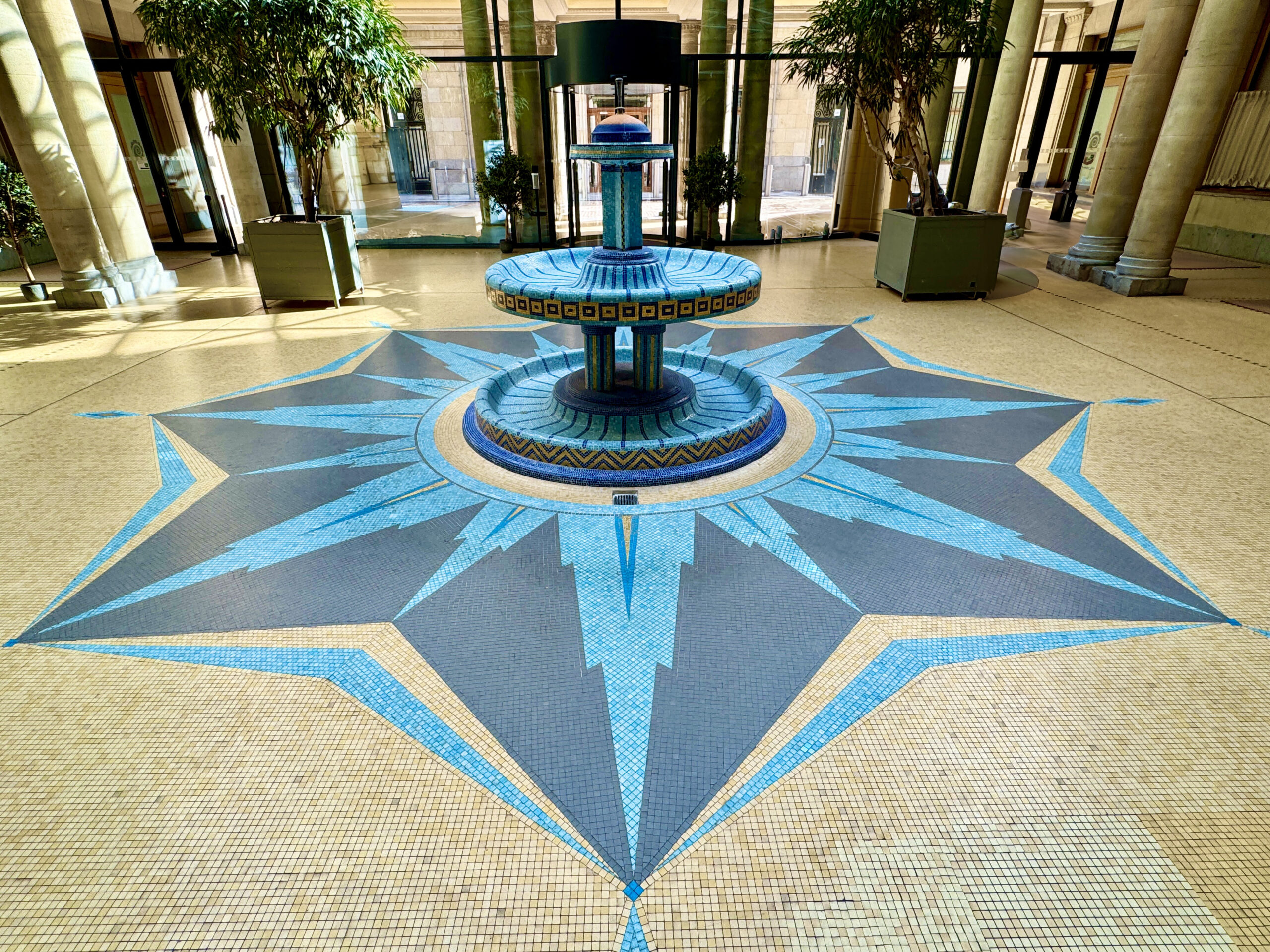
Entrance of the Brussels' iconic Résidence Palace
Polak had the last laugh, however. Kaisin's sharp practices had exhausted the patience of the board, which removed him from overall control of the project in 1927. The old site office, now home to his son, had been heated free of charge by pipes running under the garden from the complex. Soon afterwards, the architect obtained a substantial bonus for his work from the company. Kaisin remained a major shareholder however and wanted to retain paternity of the complex. In 1928, a bust of the impresario, sporting an immense Leopoldian beard, was unveiled in the patio. Under his name, the plaque noted that he ‘devised and executed’ Résidence Palace. Thierry Henrard has discovered that it wasn't until 1935, shortly after Kaisin’s death that Polak was finally authorised to carve his name on the building, backdated to 1926. Despite a very busy workload at the time, Polak was clearly proud of his debut creation in the city, and the company was only too happy to be associated with a man who was now one of the most famous architects in Belgium.
A house of European history
The future vocations of Résidence Palace as host to journalism and the wider European community were in place from the earliest days, thanks to its strategic location giving quick road access to the palace and parliament as well as central Brussels by rail. News conferences and press lunches were held in the city’s newest prestige salons and in 1928 the Maison de la Presse began a stay here that would only end in 2012.
In 1927, the British community held a banquet for 200 to celebrate George V’s birthday, where God Save the King and La Brabançonne rang out during the toasts. The following year, their Irish counterparts celebrated Saint Patrick’s Day at the same venue. Throughout its early years, Résidence Palace’s reception rooms were host to almost nightly events reflecting its hybrid appeal to both modernity and tradition: “hot jazz” nights were succeeded by ‘transvestite balls’ recalling the pleasures of Ancien Régime Paris.
In the following decade, the fun continued, but dark clouds gathered above Résidence Palace as they did across the rest of Europe. In March 1936, the German community of Brussels gathered in the Grande Salle to celebrate Potsdam Day, marking the third anniversary of the reopening of the Reichstag in Berlin, the ceremonial installation of the Nazi regime. As the decade drew to a close, wealthy refugees from Germany used Brussels as a staging post on the way to safety across the Atlantic, helping to swell occupancy at Résidence Palace to 95% by 1939.
As 1940 began, Résidence Palace put on a brave, defiant face in the shadow of the coming war. In February, 100 young Brussels women performed a “living flower dance” in the theatre to raise money for the families of servicemen mobilised in France while students at the Free University of Brussels (ULB) gathered for a “Hot Swing Ball”. Nine months later, following the occupation of Belgium in May, the Nazis were back and the Propaganda-Abteilung Belgien invited local collaborators to enjoy the gaiety of a soirée intime with operatic recitals in the grande salle.
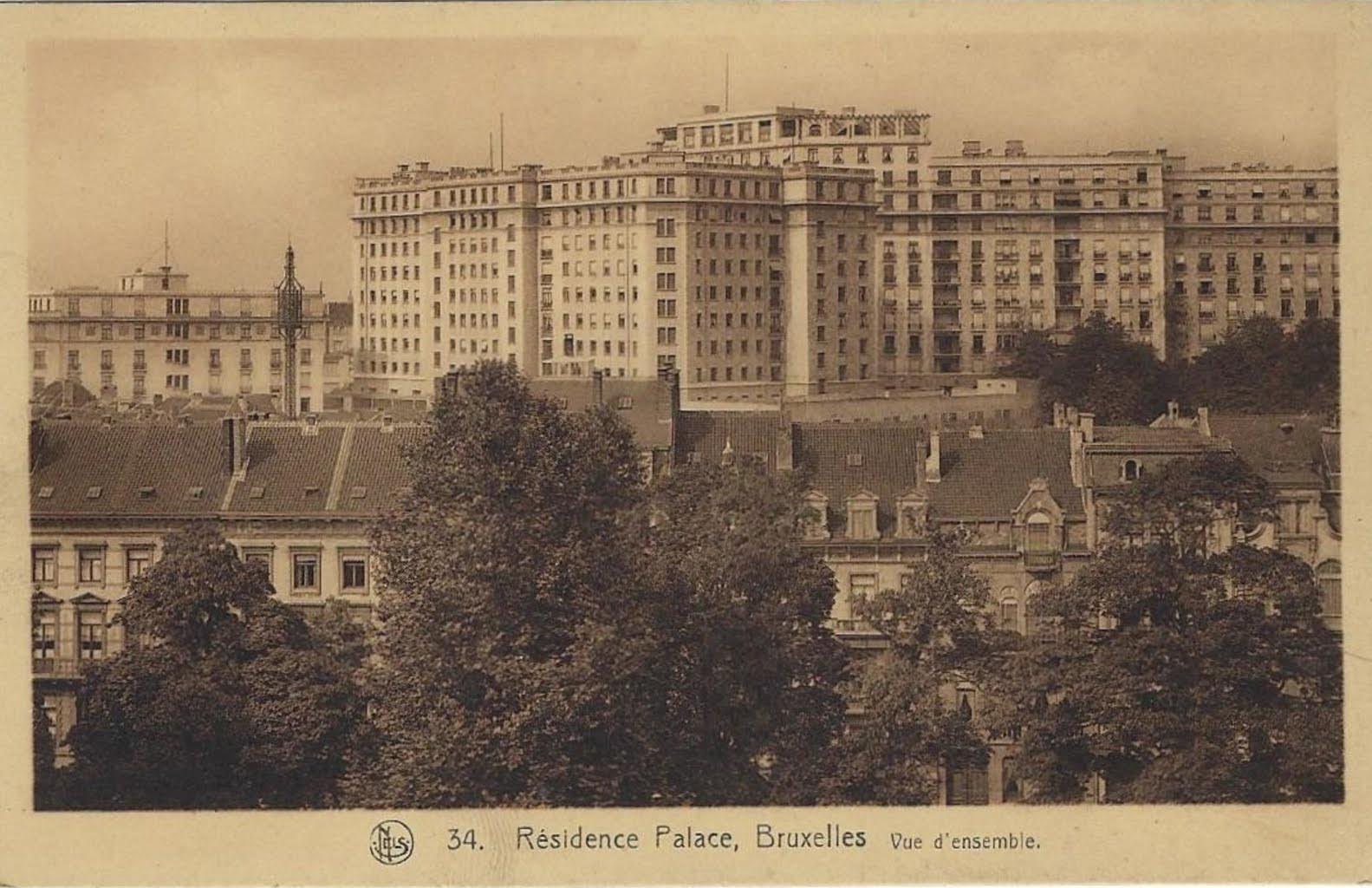
Brussels' iconic Résidence Palace. Credit: Collection Henrard Thierry
Part of Résidence Palace was immediately requisitioned by the occupiers and in 1941 the building was emptied of its residents, among them one of its very first tenants, Michel Polak.
The fate of the complex during World War II remains murky. Anti-aircraft guns were placed on the roof and it appears to have been used by the Luftwaffe to provide ground services. Based on the evidence of strong fortification, Henrard believes it may have hosted a more critical Nazi function but the answers, if they exist at all, probably lie in unexamined archives in Germany, perhaps Russia.
Institutional gloom
The war brought an end to Résidence Palace as a residence and in 1947, after long negotiations with the company’s stockholders, the Belgian state acquired the complex, ushering in many decades of neglect. With apartments now serving as makeshift offices for civil servants, the De Coene Bros furniture disappeared, and the painstakingly created imitation stone interiors were painted over to achieve the customary institutional gloom.
By the 1960s, the appeal of its interwar glamour reached its nadir. The cast-iron canopies were removed and the upper floors were bedecked in sheets of Eternit, the epitome of Brussels economy over maintenance. There was a proposal to entirely cover its “bunker” appearance and Polak’s sons created a new extension in glass and concrete over the Rue de la Loi facade in deference to the functionalist looks of the new Berlaymont building opposite.
In the 1990s, a long-fermented plan to build a fast train link from Schuman station to the airport under the building threatened Résidence Palace with outright demolition. But just as the geopolitics of the 19th century had prepared the ground for its creation, a change in international relations at the dawn of the 21st century helped save it. Blocks B and D had already been sacrificed in the 1980s to allow the construction of the EU Council of Ministers’ Justus Lipsius building next door but the Nice Treaty of 2001 came to the rescue of the principal buildings, Blocks A and C.
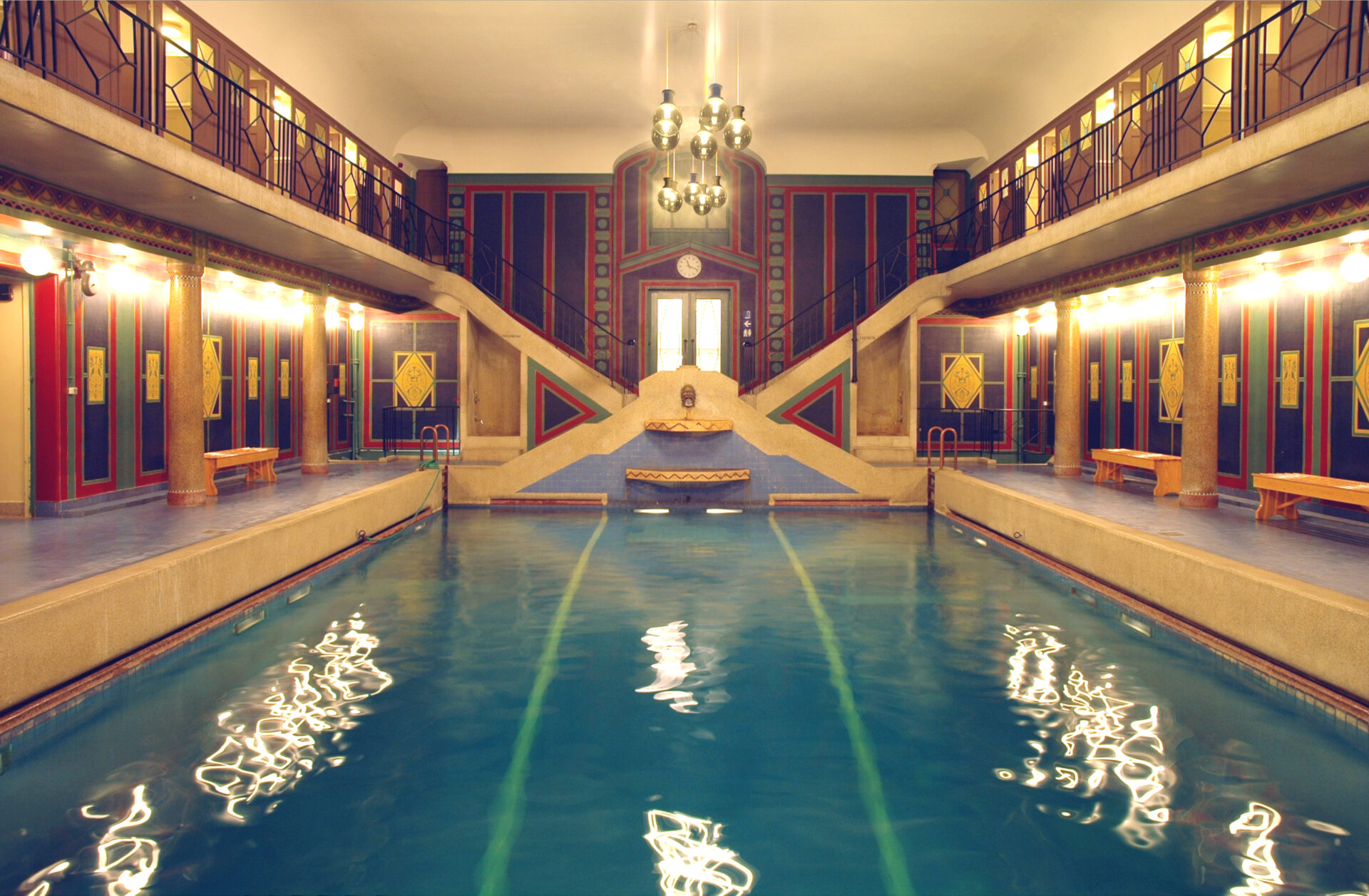
Residence Palace's swimming pool when it was in use. Credit: Buildings Agency
The rehabilitation of the Jazz Age architecture attracted the European Council, in need of new premises in the neighbourhood to accommodate the expansion in membership, to cast its eyes on Block A. At the same time, the decision to base the EU’s summits exclusively in Brussels sparked an initiative by Belgium’s then-Prime Minister Guy Verhofstadt to convert Block C into a centralised press centre from which the government would communicate with the rest of the world.
The airport line would go ahead but by now the remaining buildings of Résidence Palace were protected monuments. In 2005, work started on the conversion of Block A into the Europa building, a €312 million project entrusted to a team from Philippe Samyn Partners, which included Thierry Henrard.
Henrard says the building on Rue de la Loi was literally turned into a bridge over the new rail line to be crammed in alongside the 1850s cutting, the metro and the road tunnel. By sawing the building into sections into which were inserted four vast metal frames, the Samyn project ensured the walls were supported from above rather than below, allowing the contractors to scoop out its foundations for the creation of the new rail platforms. From the surviving structure, a concrete roof was hung, protecting the forthcoming council chamber from a bomb attack from beneath.
The steel facade on Rue de la Loi created by Polak’s sons was removed and a new glass frontage symbolically incorporating window frames from across the EU transformed the L-shaped building into a rectangle. Henrard, who worked on the conversion for 12 years until its completion in 2017, observed that the apparent fragility of the new wood and glass wall is illusory and that its ability to withstand assault was tested to military standards. This emphasis on security means access to Europa, the former Block A of Résidence Palace, is strictly limited but the former arcade of shops can be glimpsed from the old entrance on Rue de la Loi if one is prepared to brave the stares of the security guards.
Hidden attractions
Henrard left Samyn partners in 2017 after the completion of the Europa Building seeking a change of air, which he found 10 metres away: he and his colleague Eve Deprez have just completed a €1.2m restoration of some of the key original decorative features of Block C. “We like to think it was a success because you can't tell the difference between the new restoration and the rare surviving parts of the reception areas,” he says.
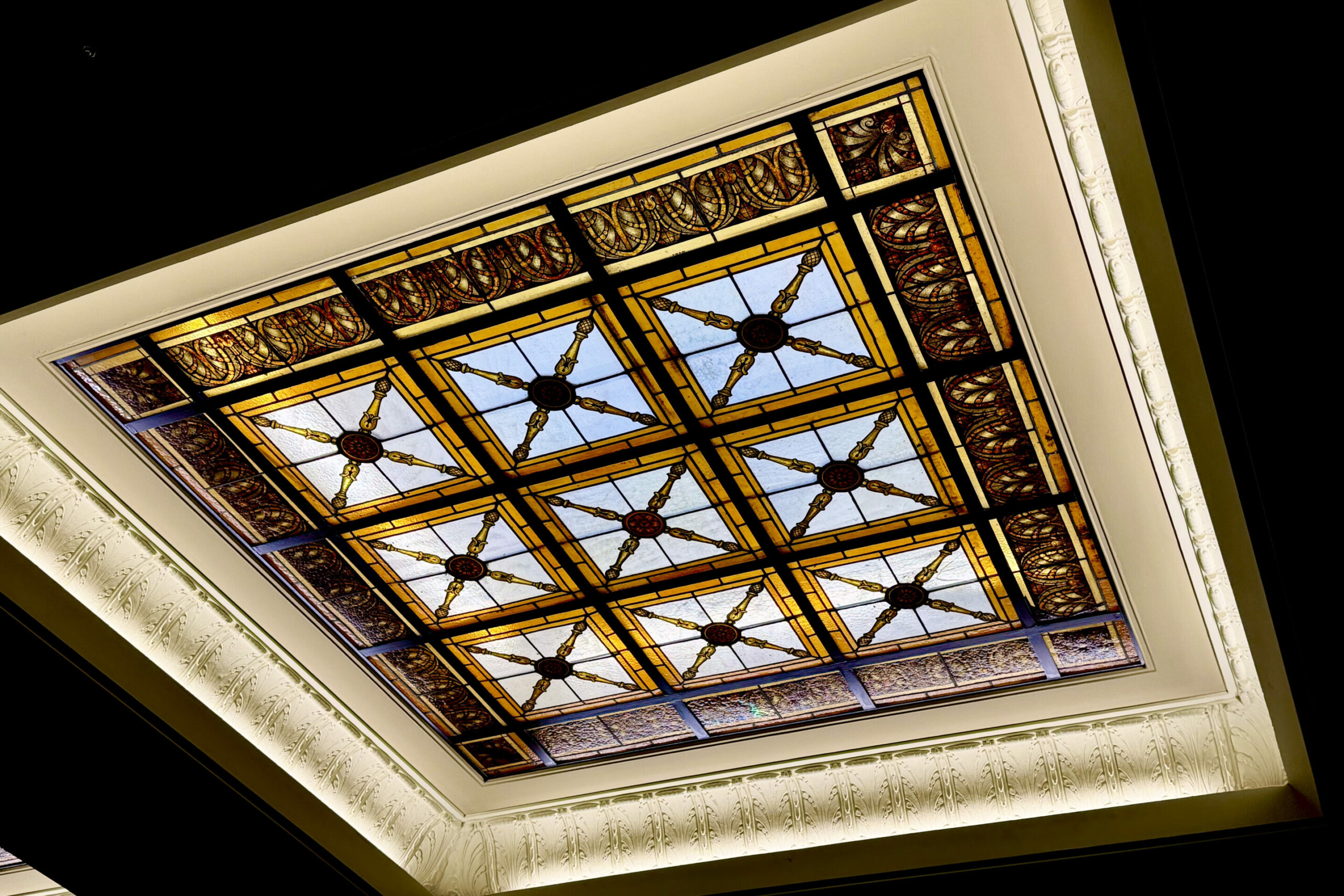
Ceilings of Brussels' iconic Résidence Palace
As a working building for journalists, access to the press centre in Block C is much easier. There are currently 85 tenants and the managers claim the 80% occupancy rate is much better than neighbouring office blocks. With units ranging from 20-200m², the UN Regional Information Centre is the largest tenant overall while German press agency DPA is the largest journalism client. Tenants are mostly European but three continents are represented, thanks to the presence of the New York Times and Saudi Arabia’s MBC Group.
Facilities in Block C today include broadcast studios and a large roof terrace lined with pergolas to mask technical equipment that had to be moved from the basements when the two main buildings were divided. This compensates for the now-inaccessible original terrace on Block A where a century ago, tea dances were held against the backdrop of the Cinquantenaire arcade, a key attraction at launch. Henrard’s research reveals however that neither the promised rooftop tennis courts nor the French-style gardens ever materialized. The often-repeated claim that an original apartment was preserved for the use of a top eurocrat is also false, he says.
As for the general public, the restaurant is open to all. Two of the key listed elements in the basement of the complex are closed however: the pool since 2002 and the theatre since 2007. Like the entirety of Block C, they are the property of the Régie des Bâtiments, which manages Belgium’s real-estate portfolio, but are excluded from the lease. Previously, both were valued public amenities, hosting playgoers with an intense programme of works while school groups splashed around in the lavish surroundings known to the rich of the 1920s.
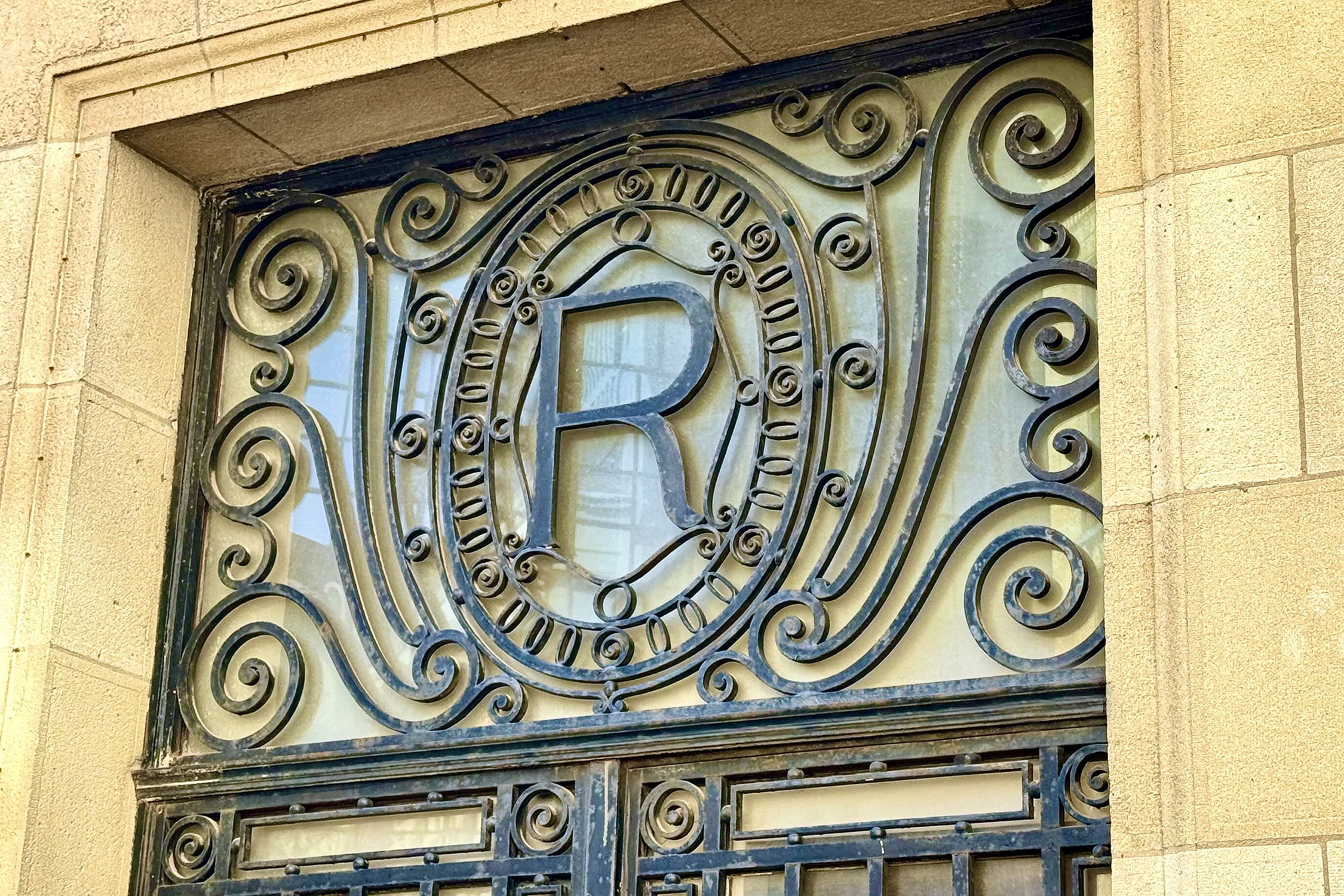
Wrought ironwork from the front of Brussels' iconic Résidence Palace
The prospects for a return to public access have improved somewhat in recent months. In October 2025, the Régie launched a tender for restoration work in response to a lawsuit launched by Urban, the agency of the Brussels Capital Region with responsibility for the city’s heritage. An inspection had revealed cracks and a general deterioration in the state of the 100-year-old swimming pool, one of many state-owned heritage sites in the region causing concern for Urban.
This is interpreted as a sign of goodwill by the Brussels Capital Region, whose primary mission in this area is “the safeguarding and preservation of monuments for the benefit of future generations,” according to one official. How far in the future this will translate to public access to this Art Deco jewel, let alone in swimming costumes, isn’t known. Strict rules for the restoration of protected monuments add expense to already-squeezed public budgets. And while “the maximum possible public access to the treasures of the region” is the policy, ever-stricter security concerns in the EU precinct will complicate matters when work is complete.
Restoring Polak’s vision
Thierry Henrard prefers instead to hope for additional funding for restoration of the original appearance of the wider complex. Heading his wish list is a thorough rejuvenation of the central avenue, notably by recreating the 11 missing black, Art Deco entrance canopies that once enhanced the vast expanses of stone. While the sculptural drama of Polak’s opposing facades still make Résidence Palace a first-rate example of Brussels interwar architecture, the “very carefully composed approach from Rue de la loi has been damaged,” leaving this set-piece swimming in “a sea of asphalt,” he says.
Where the garden once straddled the railway cutting are parked cars and a smoking area, and Henrard believes greenery inspired by the period could help restore the scenic vistas of the 1920s. Just outside Résidence Palace, another new concrete desert is nearing completion around the Schuman roundabout, disappointing hopes for a dash of organic colours to inject some life into the monotonous cityscape at the heart of European Brussels. Even the notoriously hard-headed Kaisin understood that basic human yearning. But like the EU, heritage management in Brussels is ever a work in progress and as Henrard concludes: “Much work remains to be done.”
