
The Parti Socialiste (PS - Socialist Party) leads in Wallonia with 27.9% of voting intentions, while the Parti du Travail Belge (PTB - Workers’ Party of Belgium) is ahead in Brussels with 25.5%, according to an Ipsos poll published on Friday.
In Wallonia, the PS maintains its dominance, showing a 5.9% increase compared to its performance in the June 2024 elections. It has a clear lead over the Mouvement Réformateur (MR - Reformist Movement) at 21% and Les Engagés at 19.4%. The PTB ranks fourth with 17%, followed by Ecolo at 7.9%.
In Brussels, the PTB is significantly ahead with 25.5% of voter support, pulling away from the PS at 18.4% and the MR at 16.4%. Les Engagés takes fourth place with 11.7%, outpacing Ecolo at 7.1%. DéFI, on the other hand, drops below the electoral threshold with 4.5%.
The Flemish region sees a tight contest between the Nieuw-Vlaamse Alliantie (N-VA - New Flemish Alliance) at 25.5% and Vlaams Belang (VB) at 25.4%. Vooruit and the Christen Democratisch en Vlaams (CD&V - Christian Democratic and Flemish) party compete for third place with 12.8% and 12.6% respectively. PTB (known as the Parti v/d Arbeid, PVDA, in Dutch-speaking areas) garners 9.8%, while Groen registers 7.7%. The Anders party, led by Frédéric De Gucht since January, polls at 5.6%, flirting with the electoral threshold.
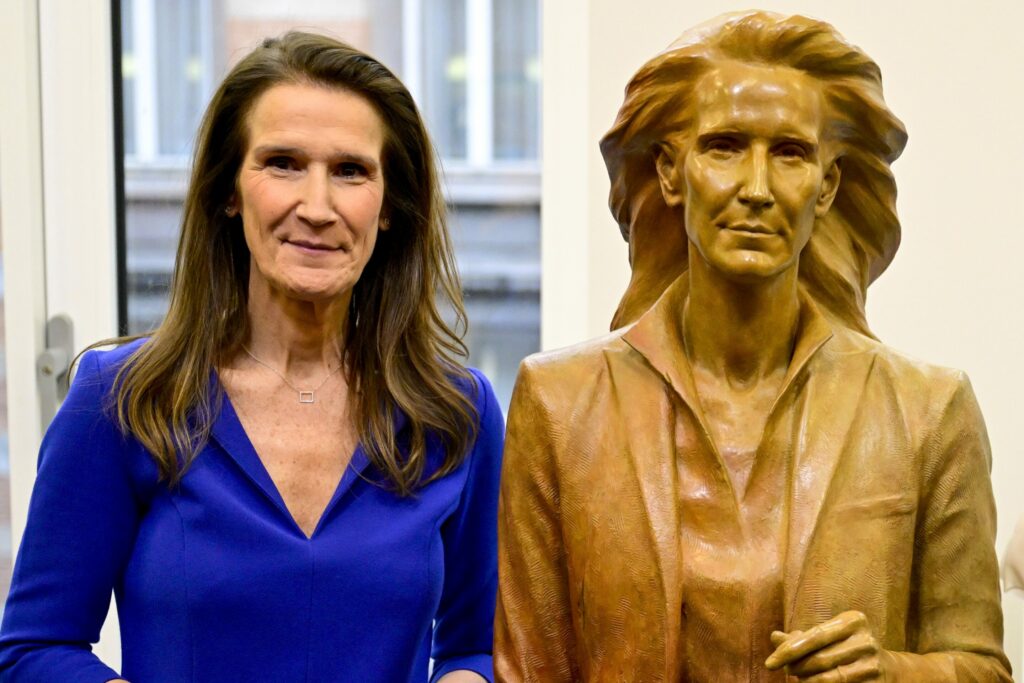
In terms of political personalities, Sophie Wilmès (MR) remains the most popular figure in both Wallonia and Brussels.
In Wallonia, she is followed by PS leader Paul Magnette and Maxime Prévot of Les Engagés.
In Brussels, Bart De Wever (N-VA) ranks second, slightly ahead of Paul Magnette.
In Flanders, the Prime Minister remains the top choice among voters, followed by Theo Francken (N-VA) and Annelies Verlinden (CD&V).
The survey was conducted from 2 to 9 March with a representative sample of 2,602 respondents. The margin of error is about 3.1% in Wallonia and Flanders, and about 4% in Brussels.
