
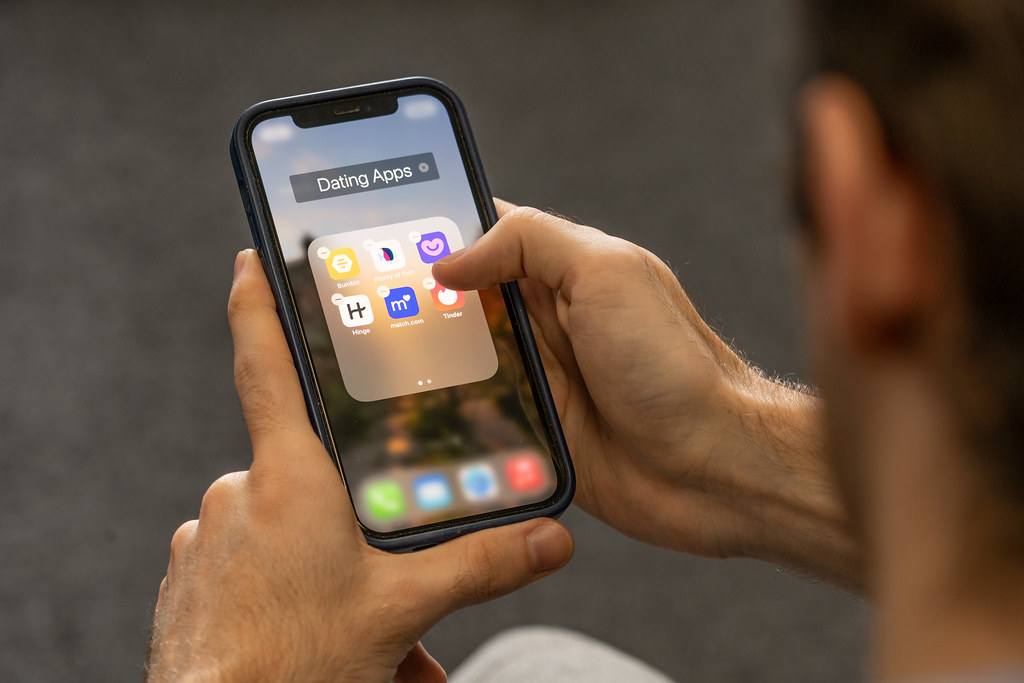
Have you ever felt compelled to delete your dating apps – only to redownload them a couple of weeks later? Thanks to some clever marketing, dating apps have mastered their business model, perhaps to the detriment of their users.
This article is part of The Brussels Times' dating series, which includes columns and interviews with experts and members of the public on all matters of the heart.
A decade ago, online dating was taboo; people would have sooner concocted stories about how they met than admit to having matched on the internet. But now, it's no secret that dating apps have become one of the most popular ways to meet a potential partner. In fact, over 50% of all couples now meet online, DW reported last year. But more than ever, people are experiencing vicious cycles of app addiction, burnout and fatigue. What's stopping us from quitting them altogether?
Dr Femke Konings, who works at KU Leuven's Media Psychology Lab and whose research focuses on online relationships, tells The Brussels Times that although dating apps are not designed to be addictive in a clinical sense, they are created to keep users engaged.
Stick or twist
Gamification plays a central role: think Duolingo, but for love instead of language (and no abusive green owls). With clever algorithms, colourful visuals and game-like elements, such as matching and rewards, it’s no wonder people feel the urge to keep swiping.
Much like gambling on a slot machine, "you don't know when you'll get a match, so there's always that feeling of 'maybe the next one', which keeps people swiping," Dr Konings says. Your soulmate could be just a swipe away.
"Swiping can start to feel like a 'hot or not' game, where you're quickly judging people often just based on appearance. Because there are so many options, there’s also this sense that choosing one person means missing out on others," she adds.
"It can start to feel like a kind of game where you're moving through profiles, rather than interacting with real people."
The key difference between apps such as Hinge, Tinder or Bumble and scroll-heavy social media platforms such as TikTok or Instagram, however, is how they're used.
"Social media is mostly about maintaining existing networks, while dating apps are about creating new romantic or sexual connections between strangers."
In her research, Dr Konings also found that some stay on the apps because matches feel like a reward, and are therefore validating: "it gives a sense of success, even if it doesn't lead to anything meaningful."
Although this can boost some users' confidence, for others it can lead to low self-esteem and diminish their romantic self-worth. Gender stereotypes, objectification and sexualisation often come to the fore, and profiles are quickly judged on appearance alone, she says.
This commodification and dehumanisation of people has a profound psychological impact: 78% of people have experienced dating app burnout and felt emotionally, mentally or physically exhausted by the apps, according to a Forbes Health Survey in July 2025.
"Moreover, on days when people swipe more than usual, they tend to feel more worried about being single. It's not just using the app, but what you experience on it that shapes well-being, and that can, over time, lead to frustration or disillusionment."
Love in the age of capitalism
When asked about users' experiences of app addiction and fatigue, Match Group, which owns Hinge and Tinder, told The Brussels Times that its apps are carefully created to support people on their romantic journeys, through built-in tools such as photo verification, conversation limits and post-date 'We Met' surveys.
"Dating is one of the most human things people do. We take seriously that our platforms are where millions of people begin that journey, and we design every feature with that responsibility in mind," a spokesperson said in a statement.
"We cannot change the unpredictability of human behaviour, but we can, and do, build tools that encourage respect, support users when something feels wrong, and help people find connections that are genuinely meaningful."
Related News
- 'I'm scared of dating in Brussels'
- Do you like ghost stories? Try dating in Brussels
- Why I've (almost) given up on dating in Brussels
But despite Hinge's signature slogan, 'Designed to be deleted', and its enticingly minimalist social media marketing, it wants anything but to be deleted.
"It's a strong marketing message, but it also reflects that inherent tension in the business model," Dr Konings says. Paradoxically, the slogan shows that Hinge is oriented toward meaningful relationships rather than endless swiping, yet it is reliant on user engagement, subscriptions and premium features, and builds its success on people continuing to use it.
"So even if the promise is to help people leave the app, the design is often still optimised to keep people active."
Illustration image shows students using their mobile phones during a lecture at university in Brussels, Thursday 8 May 2014. Credit: Belga / Siska Gremmelprez
As well as tension in the business model, our behaviour has evolved due to the ever-present, readily available nature of mobile dating apps.
Unlike sitting down with a paper in the past, flicking through lonely hearts ads, or starting up the computer at home to browse early dating sites, we can now swipe wherever and whenever: on the toilet, in the office, on a train, out of boredom.
"This has made dating much faster-paced, visual, and swipe-based," Dr Konings says, adding that people swipe a staggering 22.11 profiles per minute on average.
"And I think that also reflects a broader shift toward social media logic, with more emphasis on speed, engagement, and continuous interaction rather than slower, more deliberate connections."
Swiping with purpose
So how do we go about finding a meaningful connection when compulsive online swiping remains today's most popular option?
Dr Konings says understanding how to use the apps in a healthy way is key, which she terms "mobile dating literacy". But there is also a severe lack of guidance in this regard: in her research, over 70% of young users said they had never received any guidance on how to navigate dating apps healthily or safely.
This involves being aware of how the platforms work – how they encourage endless swiping or quick, appearance-based judgements – and learning how to deal with rejection or unwanted interactions, and self-reflection.
"In practice, that can mean setting boundaries, like limiting your time on the app or being more intentional about why you're using it, but also being more aware of your own experiences. If you notice that certain interactions consistently make you feel worse, that's something to take seriously," she says.
Sex and relationship therapist Jenny Keane even suggests using the apps "like a toothbrush", with just a brief look once or twice a day, so they don't become the sole focus of our lives.
"Ultimately, it's about shifting from just using these apps automatically to using them in a more reflective and self-aware way," Dr Konings says, "so they support your well-being rather than undermine it."
If you have a story to share of dating in the city, get in touch! i.vivian@brusselstimes.com
