
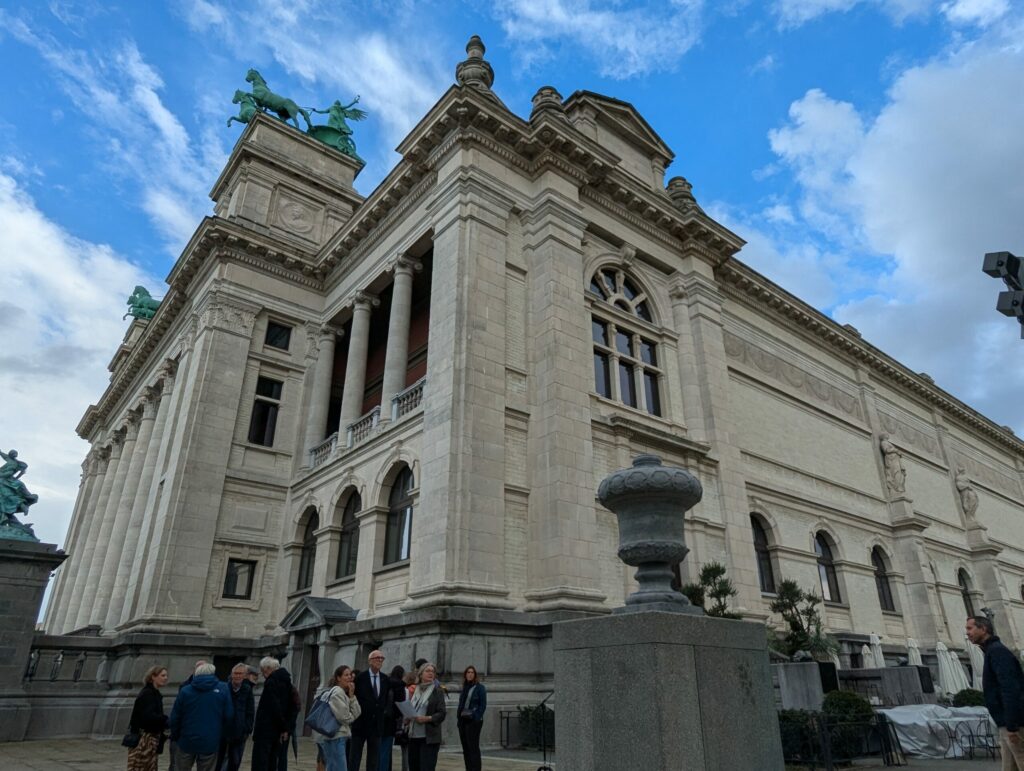
Archaeologists in Antwerp’s Zuid district have uncovered remains of the Citadel of Alva, including munitions like cannonballs, during recent excavations.
The work is part of preparations for the redevelopment of Verschansingstraat and Pourbusstraat, which will be transformed into greener, climate-resilient spaces with a separated sewer system and cooling zones for locals.
Excavations revealed well-preserved structures from the 16th century, when the citadel was constructed by order of Philip II. The five-sided fortress was intended to both protect and suppress the city, earning it the nickname “coercion castle” among locals. It lost its military purpose in the 19th century with the construction of the larger Brialmont Fortifications and was eventually demolished to make way for the development of Het Zuid neighbourhood.
The unearthed remains consist primarily of barracks from the citadel. Walls from the armoury’s magazine and parts of water reservoirs were also found preserved.
Archaeologists uncovered cannonballs, mortar shells, and musket components thought to be from the 1832 bombardment of the citadel during Antwerp’s Siege. That attack was carried out by French allied forces against Dutch troops who had entrenched themselves there after Belgium’s independence movement.
Further investigations will focus on the citadel’s hospital area and western gate, where the preservation state of structures remains uncertain.
