
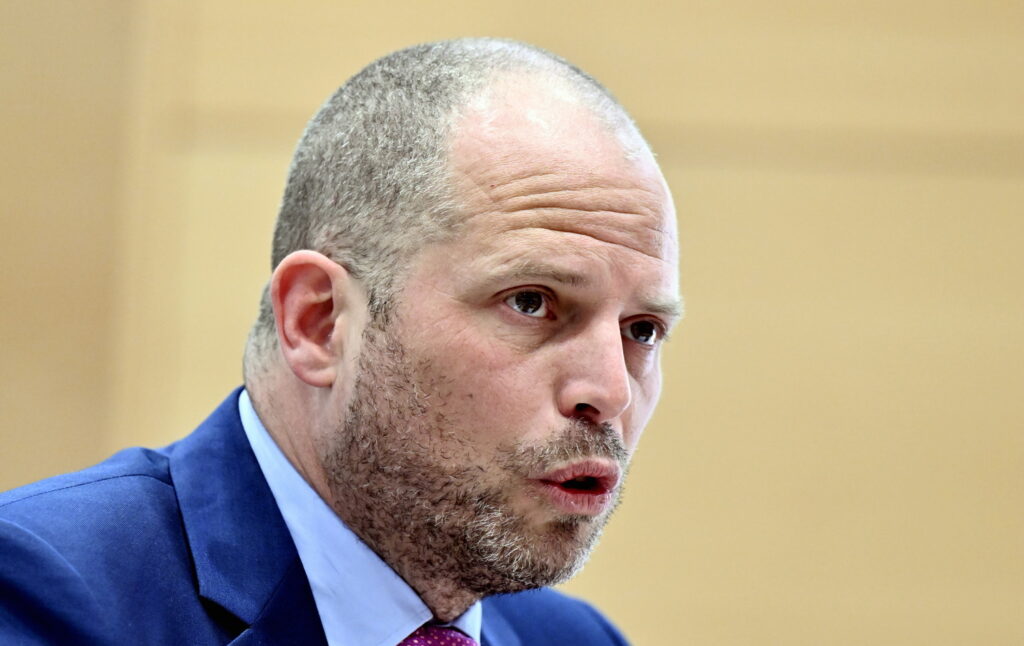
The deployment of soldiers to patrol streets in Belgium begins on Monday, focusing first on guarding Jewish sites, Defence Minister Theo Francken announced in Parliament on Thursday.
Initially, up to 200 soldiers will be deployed simultaneously for a period of three months, after which this will be scaled back to 90 soldiers.
The operation will start with the protection of synagogues and Jewish schools in response to a federal police request under the Police Act.
Soldiers will later be assigned to other missions, such as supporting railway police and participating in Full Integrated Police Action (FIPA) against drug-related violence.
Francken clarified that the maximum number of soldiers on duty at any given time would remain at 200 for the initial period. However, when the need for rotations is taken into consideration, this figure effectively involves 600 military personnel.
Defence Minister Francken indicated that the military was already heavily burdened, noting that alongside this new mission, 50 soldiers are currently tasked with guarding nuclear sites—a responsibility transferred from police forces earlier.
For now, only Jewish sites will be covered at the start of the operation. Wider objectives, including stations and FIPA-related missions, are scheduled after the three-month period.
Francken admitted that the codex to regulate military deployment on the streets has yet to be finalised. The draft requires negotiations with trade unions, advice from the Council of State, and approval in Parliament.
Several legislators expressed concerns.
Opposition member Kjell Vander Elst criticised the scale of the military’s involvement, arguing that it contradicts operational plans approved last year.
Annick Ponthier of Vlaams Belang condemned the decision as a temporary fix due to inadequate police resources, stating that such tasks are not meant for the military.
Axel Weydts of coalition partner Vooruit warned about the strain this operation could impose on military units and used it as an argument against deploying personnel to the Middle East.
Francken assured Parliament that Belgium has no plans to participate in operations against Iran, nor has it decided on providing defensive aid to Saudi Arabia, the UAE, or Oman. Discussions on this issue are scheduled for Friday’s cabinet meeting.
