
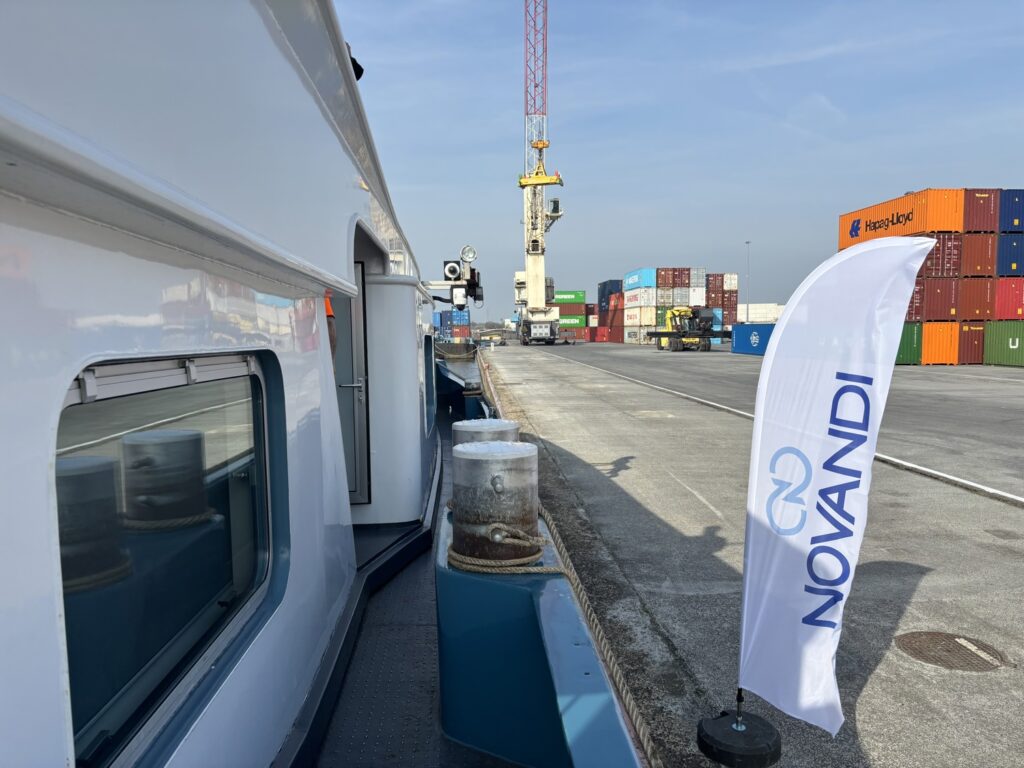
A remote-controlled cargo ship navigated on Wallonia’s river network for the first time on Friday afternoon, marking a technological milestone.
The inaugural voyage of the 110-metre-long Novandi 2 took place in Oupeye, near Liège, and was witnessed by François Desquesnes, Wallonia's Minister for Mobility and Infrastructure.
The remote navigation system was previously tested in Flanders, but this was its first trial in Wallonia.
The technology aims to address a labour shortage in the maritime transport sector, especially the lack of captains due to tough working conditions.
Remote-controlled ships allow crew members to work eight-hour shifts in office-like settings. “There’s a clear rejection of the captain’s traditional lifestyle. Work-life balance has proven to be a central issue,” said Cyrielle Böttcher, project director at Novandi, the company that owns the vessel.
The Novandi 2 is equipped with cameras and sensors, including those monitoring its engine, to ensure safe operations.
The ship’s technology was developed by Seafar, a company that also manages control centres in Antwerp and Charleroi where captains operate remotely.
Although the vessel is remotely piloted, a helmsman and crew remain on board to handle specific tasks and make sure overall operations run smoothly.
The trial’s first phase linked the Port of Kanne to Oupeye. In subsequent phases, the Novandi 2 is scheduled to navigate through Liège, continue on to Namur via the Grands-Malades Lock, and be tested under more challenging conditions such as high water flow, night-time navigation, and poor visibility.
This trial received a special authorisation from Minister Desquesnes, who granted an exemption from the usual requirement of having a captain physically present on a ship.
