
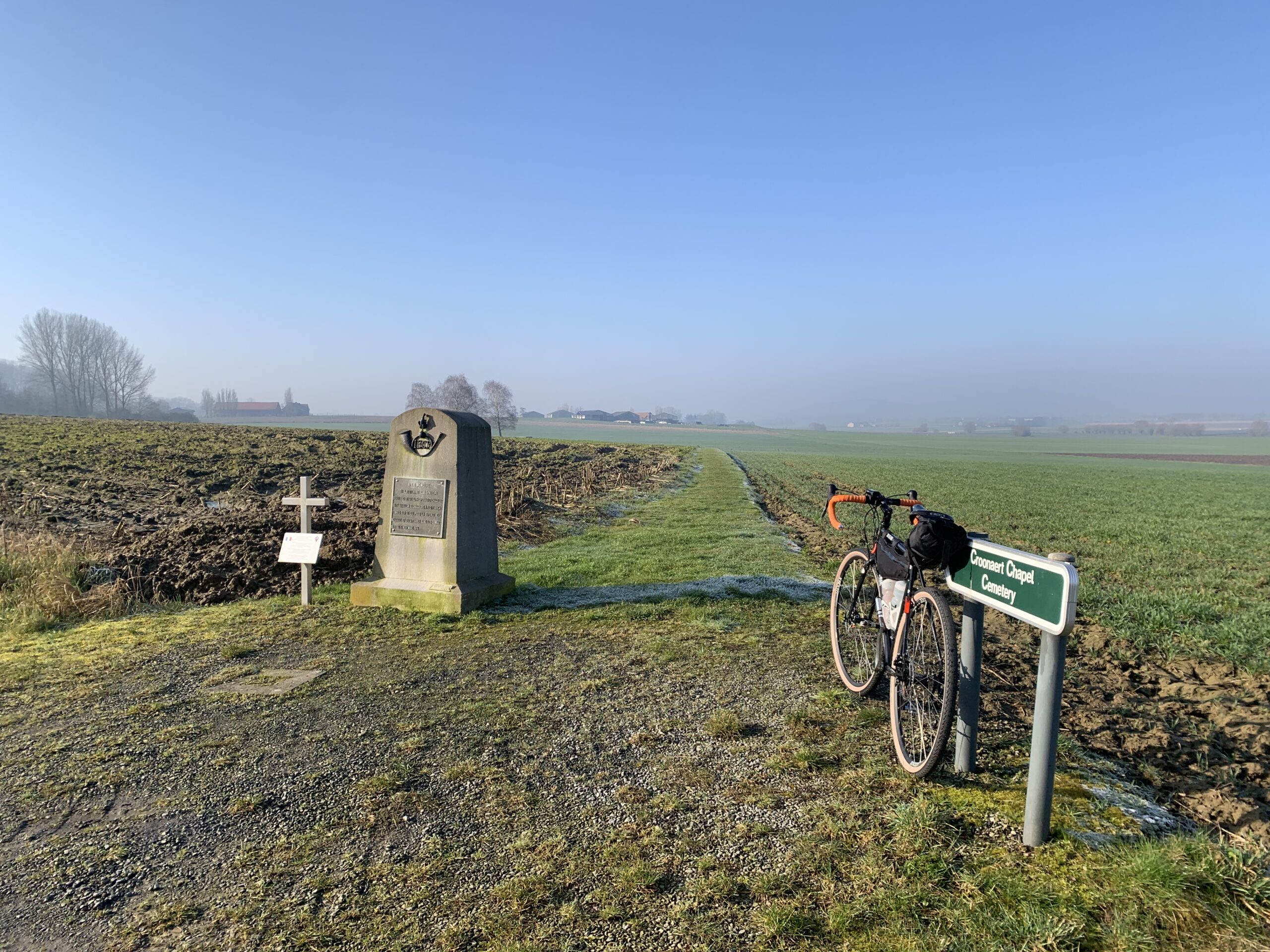
It’s a cold start as I roll out of the hotel car park for a day cycling the former First World War battlefields around Ieper – or, as I was brought up to call it, Ypres. The route is meticulously planned. Time is short, and there are many sites to recce ahead of upcoming tours. Although I’ve ridden these roads countless times, it is essential to cycle each route again, checking for closed roads, new memorials and unexpected obstacles. The last thing I want is to lead a group down an impassable track.
My first tour of the year is a month away, and I need – literally and figuratively – to get back in the saddle. I do this every March, a ritual as much as a rehearsal, to make sure I am ready for the coming battlefield season.
I’ve been guiding cycling tours around the Western Front for over a decade and am often asked how I came to it. The answer begins with a childhood fascination. Both my grandfathers were wounded in Flanders, fighting around Ypres in 1915 and 1917.
One story, however, left a particularly deep impression. My paternal grandfather was gassed during the first German chlorine gas attack in April 1915. Damaged lungs, years as a prisoner of war and medical advice to seek a warmer climate led him to Trinidad after the war – where my father was born.
As a child, I was enthralled by his stories of palm trees, white sand and catching butterflies, snakes and spiders. Only later did I grasp the irony: that events around Ypres in 1915 had shaped my family’s future. My own career path, perhaps, was always bending back towards that place.
Early stints as a civil engineer and then an investment banker left me unfulfilled. In 2002, I quit my job in the City of London, scraping by while building a reputation through research for books, television programmes and, later, archaeological projects. The work was endlessly fascinating, but paid opportunities were irregular.
My first visit to Ypres had been in 1998, on a coach trip that included six British First World War veterans, aged between 98 and 103. As my knowledge deepened, I began guiding that group, later bringing visitors over by car and minibus. Cycling, at that stage, never crossed my mind.
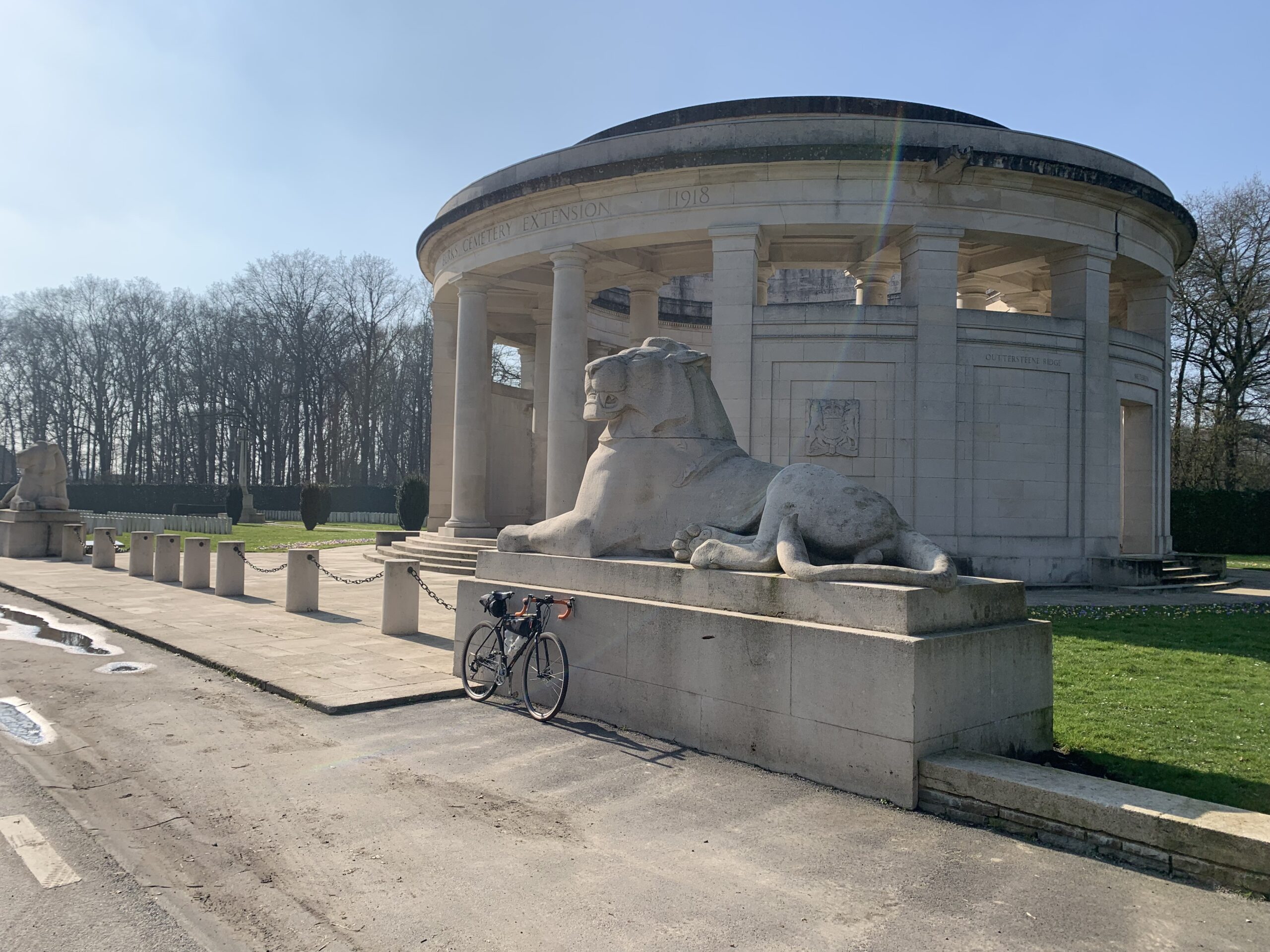
Ploegsteert Memorial. Credit: Jeremy Banning / The Brussels Times
That changed in 2015 when I was asked to guide a group of ten by bike. In hindsight, I’m amazed it took so long. One of my favourite archival discoveries was a British officer’s account of cycling tours he made in the early 1920s, returning to Arras and Vimy Ridge – and yet it still took someone else to force my hand. That first tour around the Somme and Arras was transformative. There was no going back.
Since the pandemic, the work has grown. From March to October, I am a regular visitor to Belgium and France, guiding bespoke tours rather than fixed-date departures. Clients often ask for help researching family connections, which makes every tour different and constantly draws me to new sites. While I enjoy cycling in France and often stay in Arras, it is Ypres that continues to exert the strongest pull for British visitors.
The town remains a magnet for pilgrims, drawn by an emotional gravity to a place burned deep into the British national memory, much like the Somme. To understand that pull, it helps to know something of the fighting that took place here.
Wartime Ypres
The Western Front stretched for some 700km, from the North Sea at Nieuwpoort through West Flanders and into France, eventually reaching the Swiss border. After a series of manoeuvres in the autumn of 1914 – the so-called Race to the Sea – both sides ran out of open ground and dug in. Most of Belgium fell under German occupation, leaving Ypres, once the centre of the Flemish cloth trade, as the last major Allied-held town. Its fall would have given the Kaiser’s army control of Belgium and a clear route into France and the Channel ports.
During the First Battle of Ypres in 1914, a small but well-trained British Army held the line at enormous cost. Outnumbered and outgunned, it lost nearly 60,000 men around the town. The following spring brought another desperate struggle. In April 1915, the Germans unleashed chlorine gas for the first time, ushering in chemical warfare and inflicting a further 60,000 British casualties in a month of fighting. By then, Ypres had become a symbol of British resolve.
The Ypres Salient – low-lying, waterlogged and overlooked from three sides – earned a fearsome reputation. Geography itself became an enemy. The town was destroyed in 1915, its shattered silhouette turning into a familiar emblem of industrialised war.
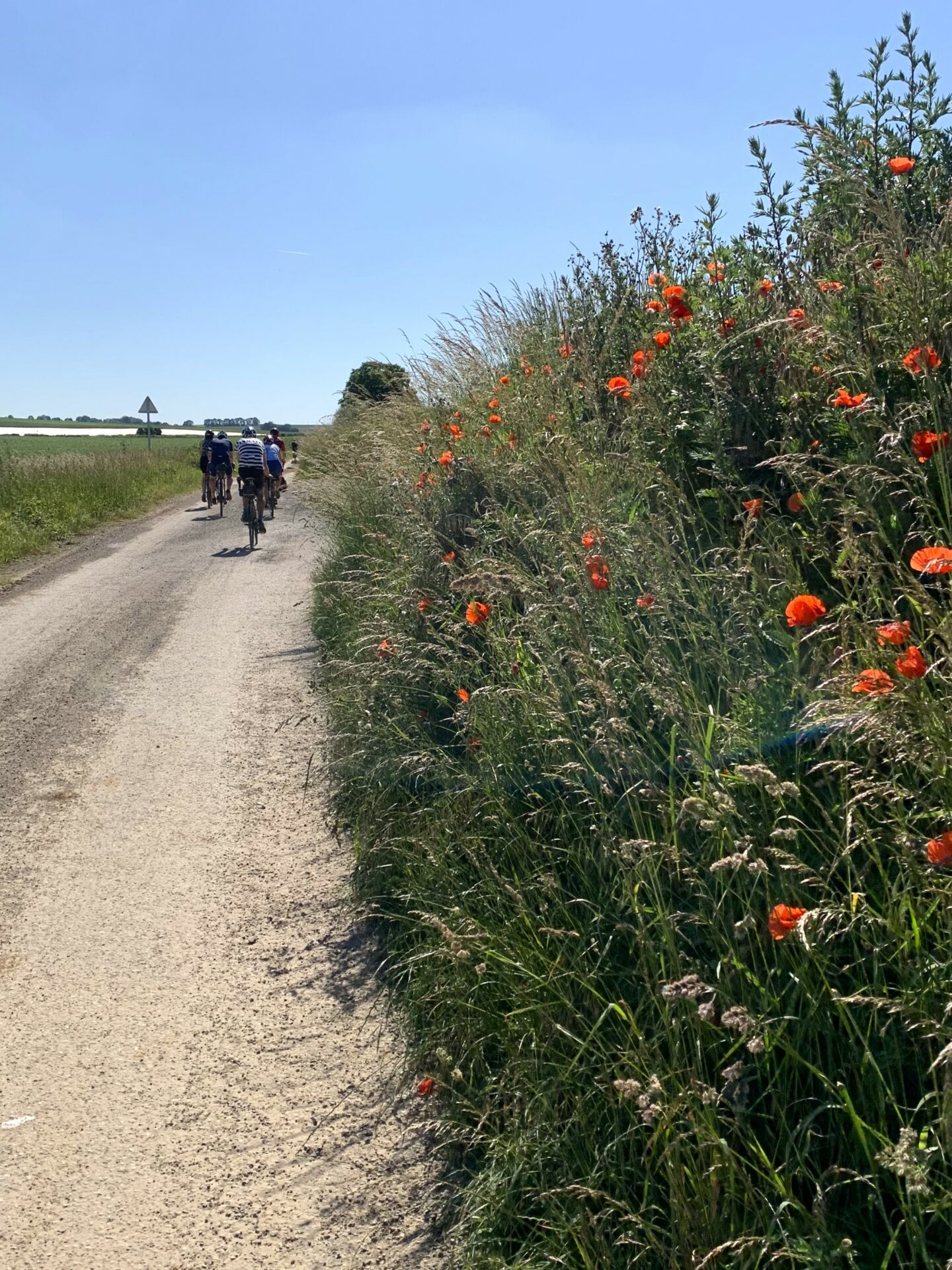
Poppy-lined tracks on the trail of a Military Cross action. Credit: Jeremy Banning
In 1917, the British launched a renewed offensive, determined to break out of the salient once and for all. The Third Battle of Ypres, better known as Passchendaele, became synonymous with horror. Shellfire obliterated drainage systems, while relentless rain turned the ground into a quagmire in which men drowned in shell holes, trapped by the cloying Flemish mud. Soldiers fought the landscape as much as they fought the enemy.
In three and a half months, British casualties reached around 250,000, with German losses likely similar. More than half a million men were killed, wounded or missing within seven miles of Ypres’ Grote Markt. It is little wonder that Siegfried Sassoon’s line – “I died in hell (they called it Passchendaele)” – still resonates so powerfully.
Today, the fertile farmland bears little resemblance to the wasteland of 1917. Cycling through it on a warm, sunlit day, with knowledge of what happened here, can be profoundly disorientating. The calm feels almost indecent. And yet I often sense that the men who fought would recognise, and perhaps approve of, pilgrims arriving by bicycle, on a form of transport they themselves knew well.
The war’s debris still surfaces in the Flemish landscape. Each year, the ‘iron harvest’ – unexploded shells, grenades, mortars and other detritus – is ploughed up and left by the roadside for collection. With time, you develop an eye for spotting them, to the astonishment of those riding with you, who are reminded that live ordnance still lies just beneath the surface.
Why cycling works
Despite having no military experience, I was once told by a former British Army officer that I have an infantryman’s eye for terrain. Cycling may explain why. Much of the fighting was for high ground. Ridges mattered, and they exacted the heaviest toll. Cycling makes you feel every rise and dip. A slope that looks inconsequential on a map tells a very different story when leg power is your only means of progress.
On a bike, the landscape becomes tactile. You experience it physically, not just visually. The pace is slower, more intimate, and far more revealing than travelling by car or coach.
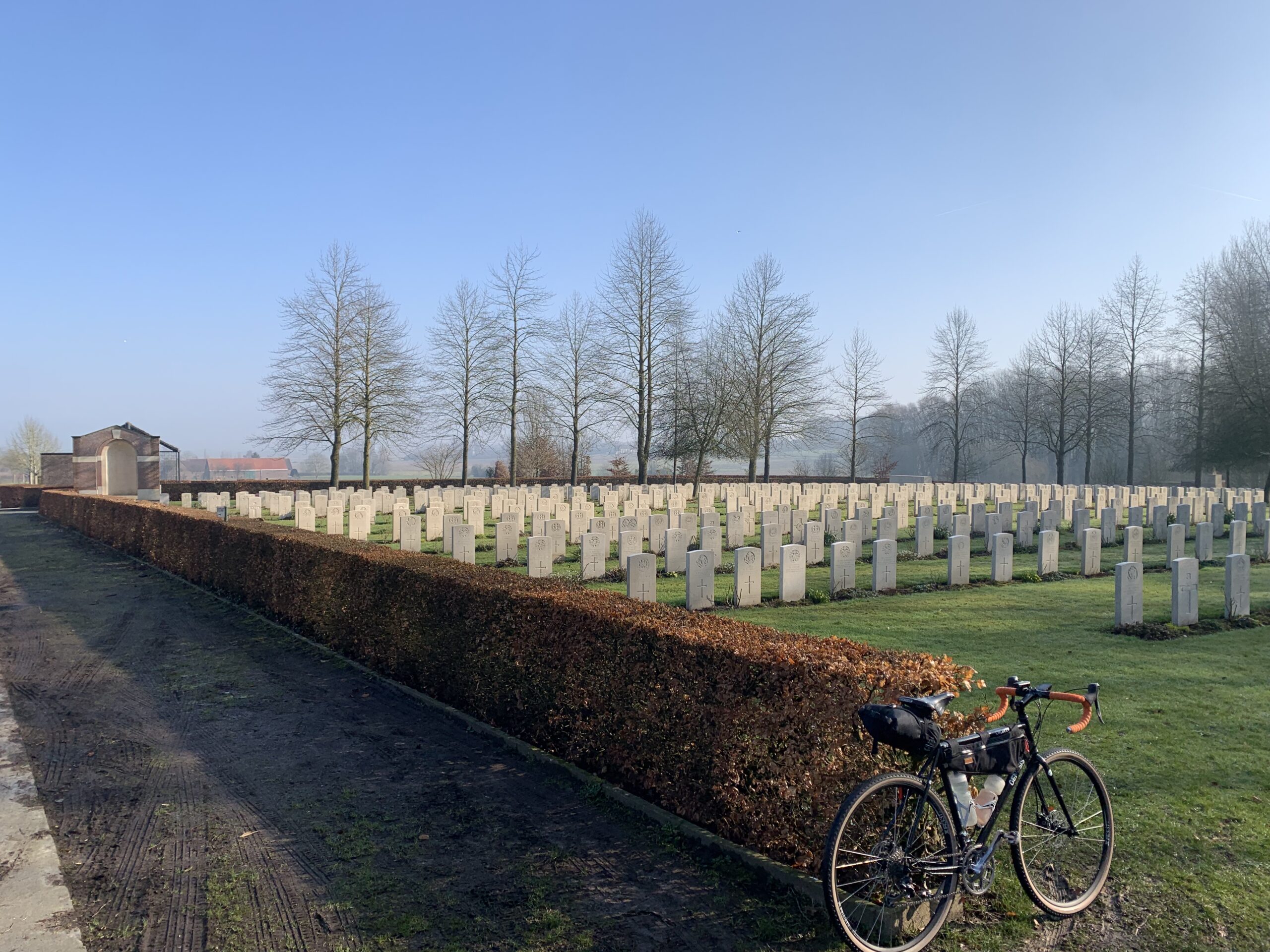
Kemmel Chateau Cemetery
Cycling also grants access to places vehicles struggle to reach. No other form of transport strikes the same balance: covering meaningful distances while moving slowly enough to absorb each change in terrain, and stopping whenever needed – no car park required when you can simply pull onto the verge.
Lessons learned
Belgium is a cyclist’s paradise. Cafés, museums and hotels provide bike racks as standard, and the Albion Hotel in Ypres even has a garage for up to a hundred bicycles, complete with pumps and work stands – unthinkable in the UK. Bike lanes make navigating towns straightforward, drivers are considerate, and most people seem to cycle themselves. The contrast with Britain’s often hostile road culture is stark.
Belgian hospitality is another advantage. You are rarely far from an open café or bakery – welcome news after time in the saddle. In rural France, lunch stops require careful planning; in Belgium, they usually do not.
Food matters, but it is the cemeteries, memorials and the nightly Last Post at the Menin Gate that linger longest in the mind. Sounded every evening at 8pm since 1928 as a final salute to the fallen of the former British Empire and its allies, it is a ritual of remarkable endurance. A few days in and around Ypres leave a lasting impression.
Farm tracks often lead to the sites of remote trench lines, allowing clients to stand exactly where a relative once served. If that relative was wounded or killed there, the visit acquires an added gravity. It is these moments – using letters, diaries and official records to animate the landscape and carry people back more than a century – that I find most rewarding.
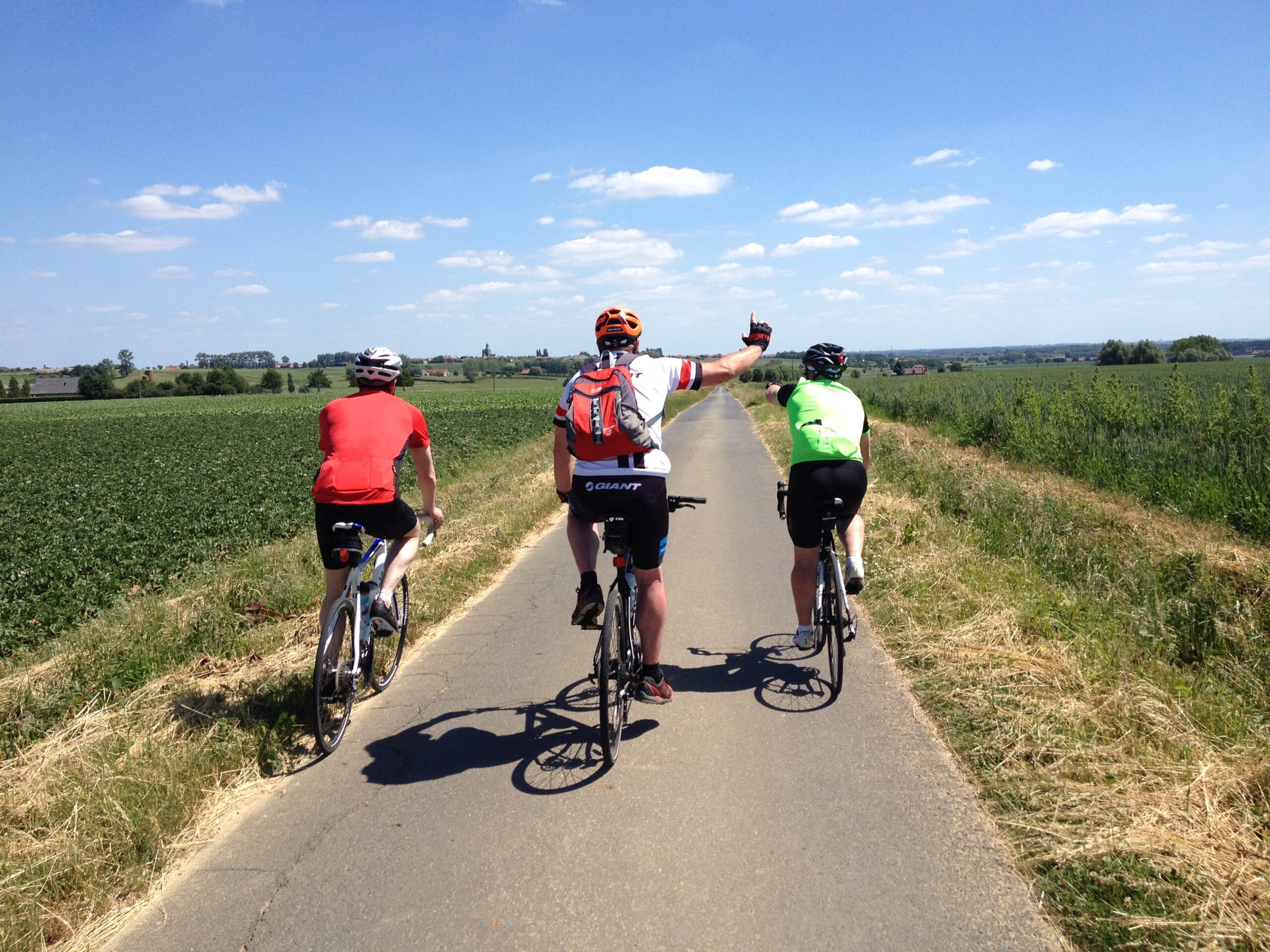
Cycling Messines Ridge. Credit: Jeremy Banning / The Brussels Times
On one recent tour, a client’s grandfather had earned the Military Cross in 1917. I identified the site of his action and guided the group along poppy-lined tracks, explaining how he had led a convoy under fire along the same route. For my client, it was a quietly extraordinary experience, made richer by the ability to linger, to stop for photographs, and to remember. It is a day she will not forget.
Occasionally, my two passions collide. Last March, we were riding up the famous Kemmelberg – its cobbles pitching to gradients of more than 22 per cent – when we were effortlessly passed by chatting professional cyclists. Days later, we watched those same riders race up the hill during Gent–Wevelgem.
Cycling the battlefields offers a uniquely immersive way to engage with this history. It brings you closer, offering an intimate perspective on the landscape, the stories and the men who fought here. And after a long day in the saddle, that first Belgian beer tastes all the better. Of course, everyone is welcome to join me for a tour!
