
Much has been said and written about Brussels' issue with keeping its streets clean. Now, Flemish employers' organisation Voka is urging the new Brussels Government to get all hands on deck quickly, or risk businesses relocating out of the city.
The new government has put cleanliness at the top of its agenda. And while the director of Voka's Brussels branch, René Konings, believes that optimism is a moral duty, he also stressed that the proof is in the pudding.
"Cleanliness is all about our city’s image," Konings told The Brussels Times. "When a business owner welcomes people – whether they are new employees or customers – they want to project a positive image of themselves."
"But there are simply several places in this city that are in a poor state and do not give a good first impression," he said. And this is putting investors off: in a small survey among its members, Voka found that cleanliness emerged as investors' second-biggest concern, just after safety.
'Laissez-faire'
"Neighbourhoods that are not well looked after immediately give people with bad intentions the impression that they can get away with doing what they want. It feels like nothing matters much in some of those areas – the famous Belgian 'laissez-faire' attitude."
But Konings believes that there is a bit too much of that attitude in Brussels, especially considering that it is difficult to overstate the importance of a clean, pleasant living and working environment. "That is the basic prerequisite for a liveable city and for attracting entrepreneurs. That is the foundation on which everything else is built."
"If you manage to create a liveable city and to attract people to come and live here, then everything else – including those entrepreneurs – will follow naturally."
Since the spate of drug-related shootings in February 2025 – and the CCTV image of two young men with Kalashnikovs in a metro station went viral – the issue of security has been at the forefront of people's minds, driving away investors.
On the other hand, Konings emphasised, investors still opt for Brussels because of its central location, its prestige as the capital of Belgium and the EU, its cosmopolitan environment, its connectivity, its networking opportunities, etc.
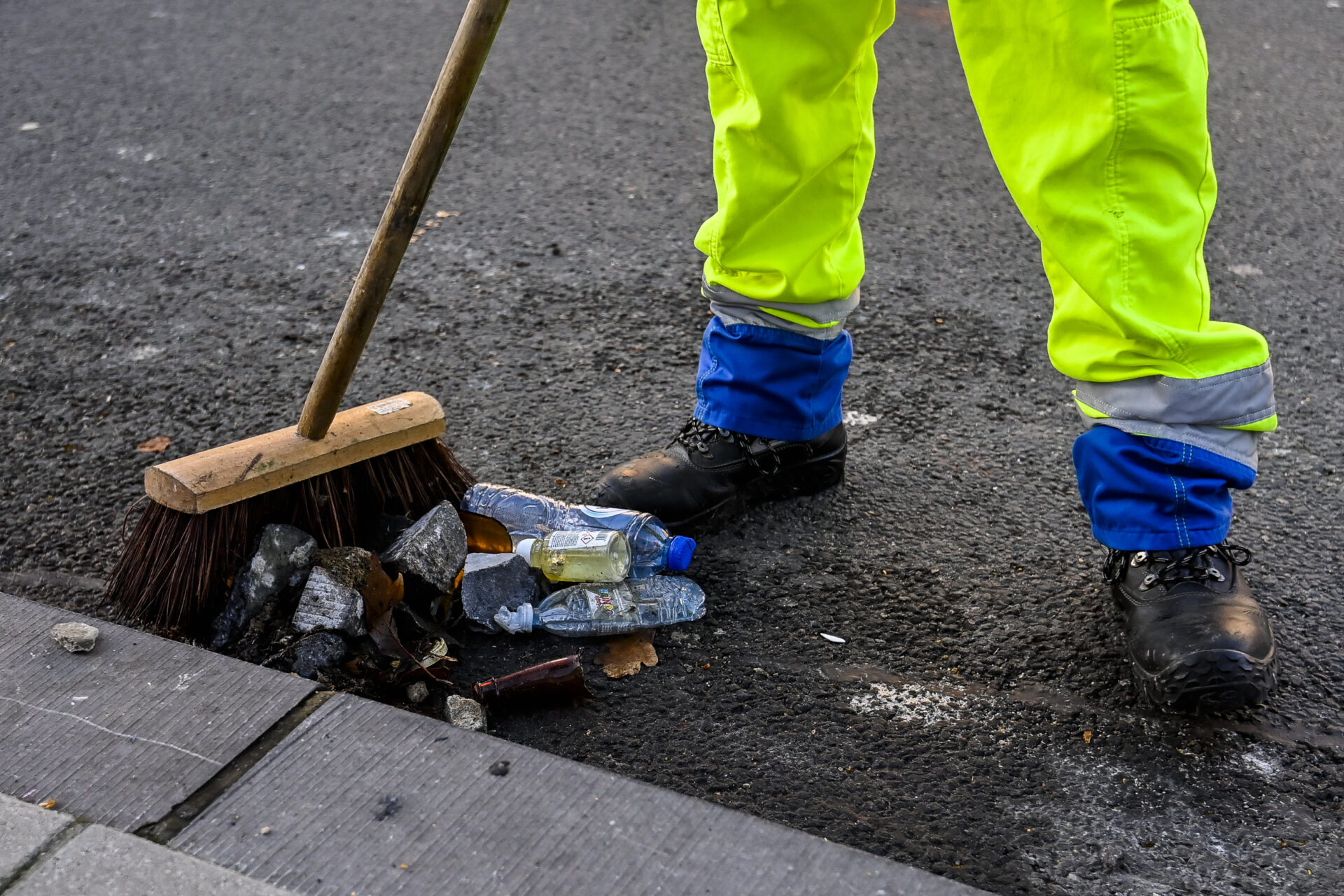
A city worker cleaning up rubbish in Brussels. Credit: Laurie Dieffembacq/Belga
Generally, there is a feeling that Brussels is struggling – not only because of cleanliness, but due to a combination of factors. "Quite a few multinationals have also moved to the Flemish municipalities just outside the city, and that means Brussels’ appeal is under pressure."
To fix that, a thriving ecosystem of start-ups, scale-ups and large companies is needed. "So, we have to be careful not to lose that. If too many large companies move away, then your ecosystem stops working. Fortunately, a large number of new companies are still setting up shop in Brussels."
However, Brussels’ economic growth is currently slightly lower than that of Flemish Brabant and Walloon Brabant. "In other capital cities, the metropolitan area acts as the economic driver. But at the moment, growth in Brussels is somewhat lower than in the surrounding areas."
While the Flemish municipalities around Brussels are also part of the city in socio-economic and metropolitan terms, the companies and employees living there do not pay their taxes in the Brussels Region.
This, Konings stressed, is incredibly important for politicians to take into account when considering whether to invest in cleanliness.
If companies leave Brussels, the city pays twice: it loses those companies' tax revenue, but it also potentially loses new middle-class, tax-paying residents. "Interesting employers and interesting jobs are what attract new people."
'Yes, but...'
Now, the new Brussels Government have put the issue of cleanliness high up on the political agenda: they will deploy regional cleanliness brigades, enforce basic social rules regarding cleanliness, and impose heavier fines on offenders, while also putting extra focus on the areas around the Brussels-Midi and Brussels-North railway stations.
"Importantly, the first media appearance by Brussels' new Minister-President Boris Dilliès (MR) was at the Midi station. Symbolically, that was an important signal, including to businesses, to show that the government wants to do something about the situation," Konings said.
The government has stressed that it will enforce rules more strictly – an approach that Konings agrees with. "Education and awareness are incredibly important. But in Brussels, all too often when people raise an issue, politicians respond with 'yes, but...' which seems to mean, 'yes, but this is Brussels'."
Having a system with containers – whether they are above or below ground – does not require innovation: many cities around the world use containers, and it works. "But what do Brussels politicians say? 'Yes, but if we do that, people will dump their rubbish around those bins."
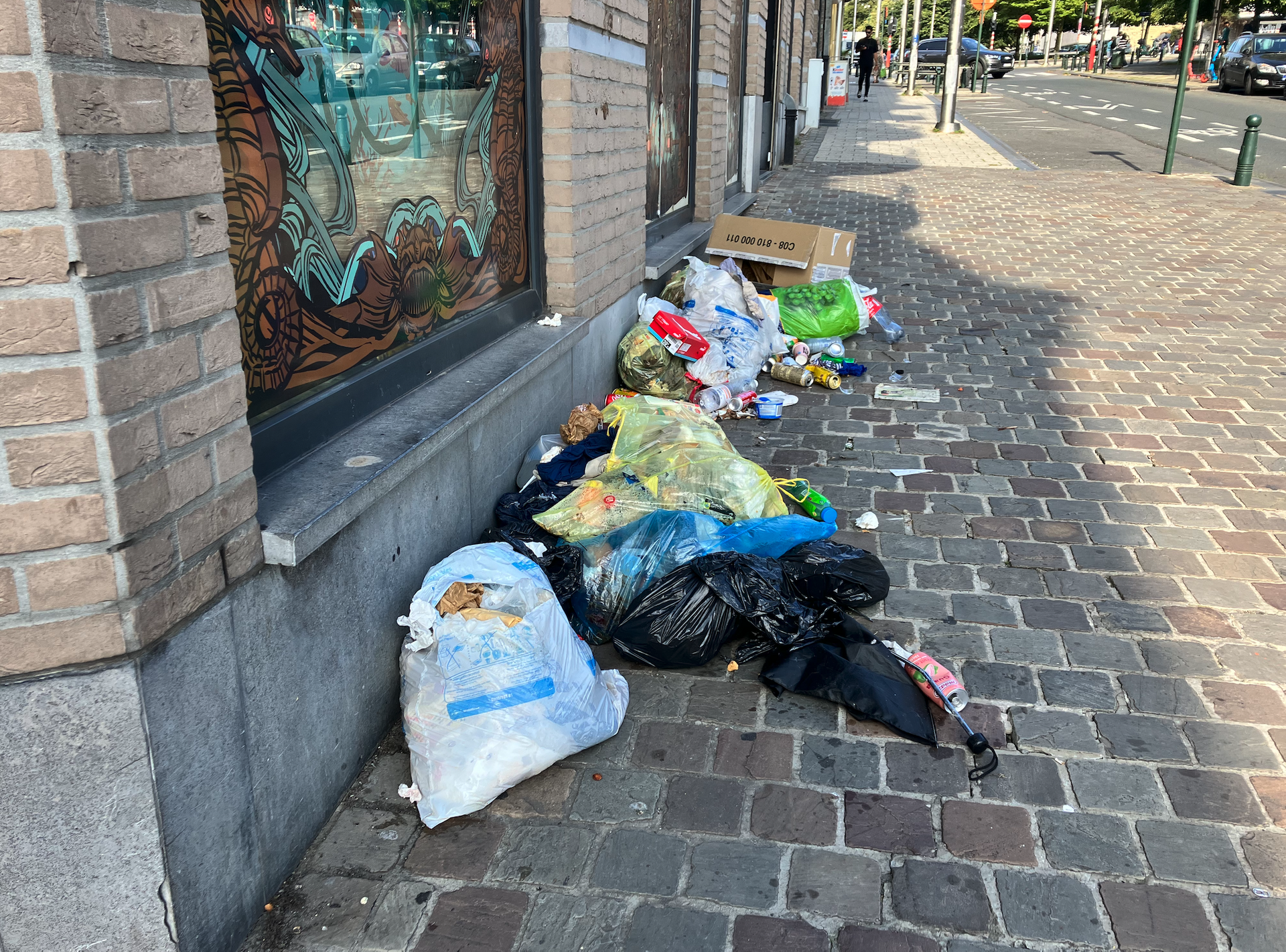
Rubbish bags on a Brussels street. Credit: Lauren Walker/The Brussels Times
In practice, many Brussels politicians tailor their policy to roughly 5% of antisocial people out there, who ensure that the city is permanently littered, Konings said. "And that's not right."
Instead, politicians should ensure that the 95% of well-meaning Brussels residents are not tempted to quickly dump their rubbish on the streets. "And at the same time, you need to take a much tougher stance against that 5% of antisocial individuals."
Like Brussel (Pou)belle, Konings believes that much would be resolved if it were made clearer who is responsible. While he is not opposed to a fully centralised approach in principle, he mainly believes that the lines of authority must be made much clearer.
"The region should take on the coordinating role and be able to purchase the heavy equipment," he said. "It seems absurd to me that 19 municipalities would go and purchase 19 different pieces of equipment. You need to coordinate this at the highest level, so that you can also secure good market prices. And with the money you save, invest in your cleanliness policy."
"Everyone here pays a lot of tax," Konings said. "And everyone should also be able to count on sufficient political commitment to take this problem seriously."
Cosy chaos
Now, the new government appointed Audrey Henry (MR) as State Secretary for Cleanliness, but Konings underlined that many other competences are directly or indirectly linked to the issue.
"If you ask me, cleanliness is the responsibility of all eight people currently in government, through their investment in the public spaces of your city," Konings said. "It concerns public transport, urban permits, parking policy... Cleanliness is the responsibility not just of Henry, but of all eight people sitting in that new government."
The best thing about Brussels is that the city has "a bit of an edge," he said. "And that is one of the reasons why I love it. But too many people, including politicians, have come to interpret this as meaning that it is allowed to be a bit chaotic."
"It's described as a cosy kind of chaos, and it is. But we should not just let things take their course when it comes to cleanliness," he said. "But I think many people are now realising this. We have let things get too far."
Still, this feeling of cosy chaos is something to be proud of, Konings believes. People who are proud of the city they live in want it to look its best, and they want to be able to show it off to their visitors with pride. "That's where politics has an important role to play. That sentiment could be turned around: it’s all about taking pride in your city."
