
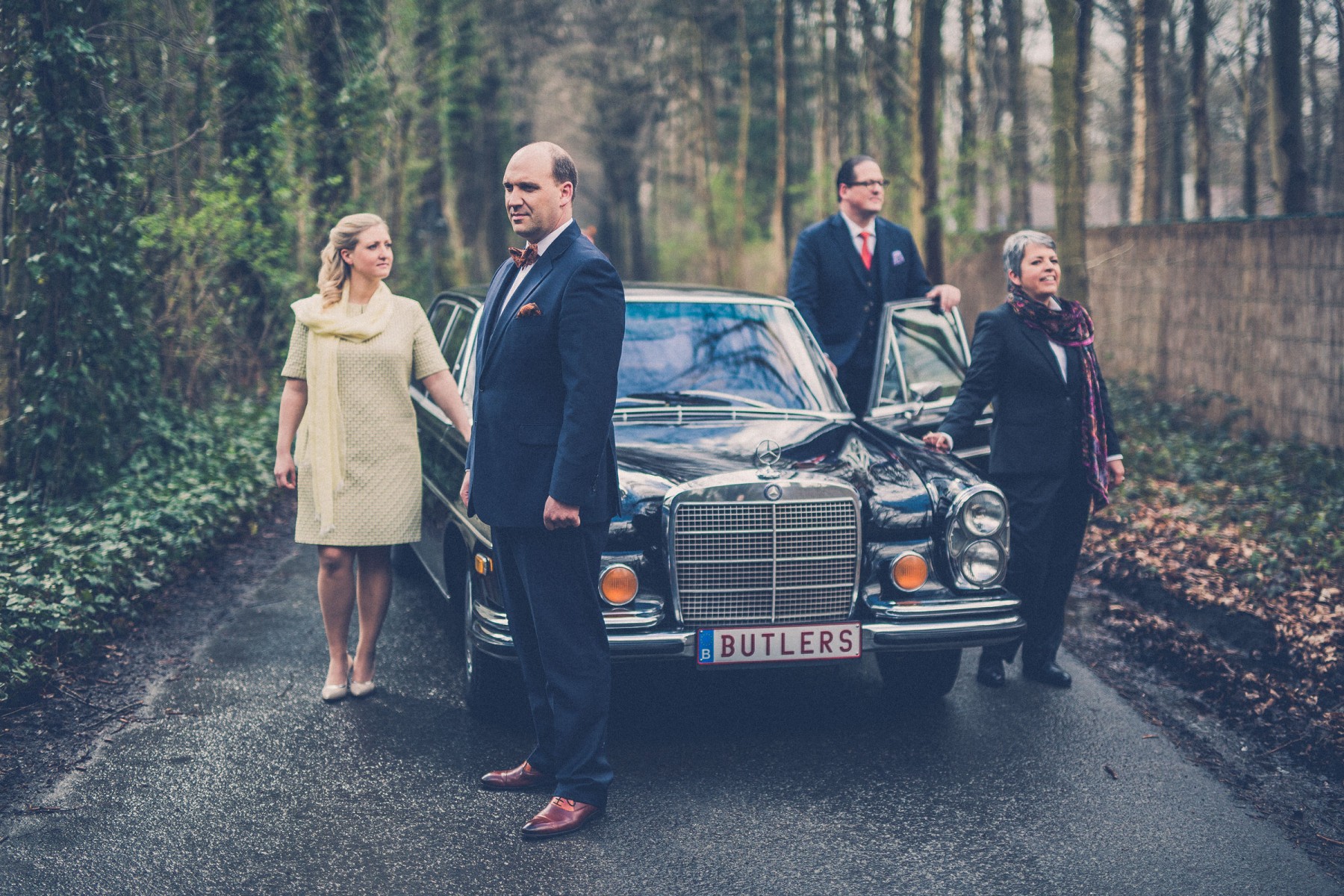
The modern butler is as likely to manage cybersecurity risks as to decant a bottle of claret. They travel constantly, serve clients across continents, and are expected to combine discretion with technological fluency. Aristocratic households still exist – but they are no longer the centre of gravity.
That shift is being taught, quite literally, in rural West Flanders, at Belgium’s internationally renowned School for Butlers & Hospitality. Its graduates now work for entrepreneurs, celebrities, business leaders and ultra-high-net-worth families whose expectations owe more to global mobility than Edwardian ritual.
At the helm is Vincent Vermeulen, a fourth-generation service professional who insists that while the values of butlering endure, the job itself has been radically reinvented.
“Butlers today are globally mobile professionals who must master fast communication, modern technology and cultural adaptability,” he says. “They must stay at the forefront of information and lifestyle trends. The modern ‘principal’ in the 21st century expects a butler who is as connected and forward-thinking as they are.”
Vermeulen, who trained with the Guild for Professional English Butlers and The Lanesborough hotel in London’s Knightsbridge, is the fourth generation of a family that has dedicated its life to service.
His great-grandfather, Frans, who started out as a kitchen boy in Bruges, became a butler for a Belgian baron from the Bailly de Tilleghem family. He would have certainly recognised the image of the profession depicted in Downton Abbey, where the butlers, Mr Carson and his successor, Mr Barrow, would be content with housing and meals in return for their loyal service.
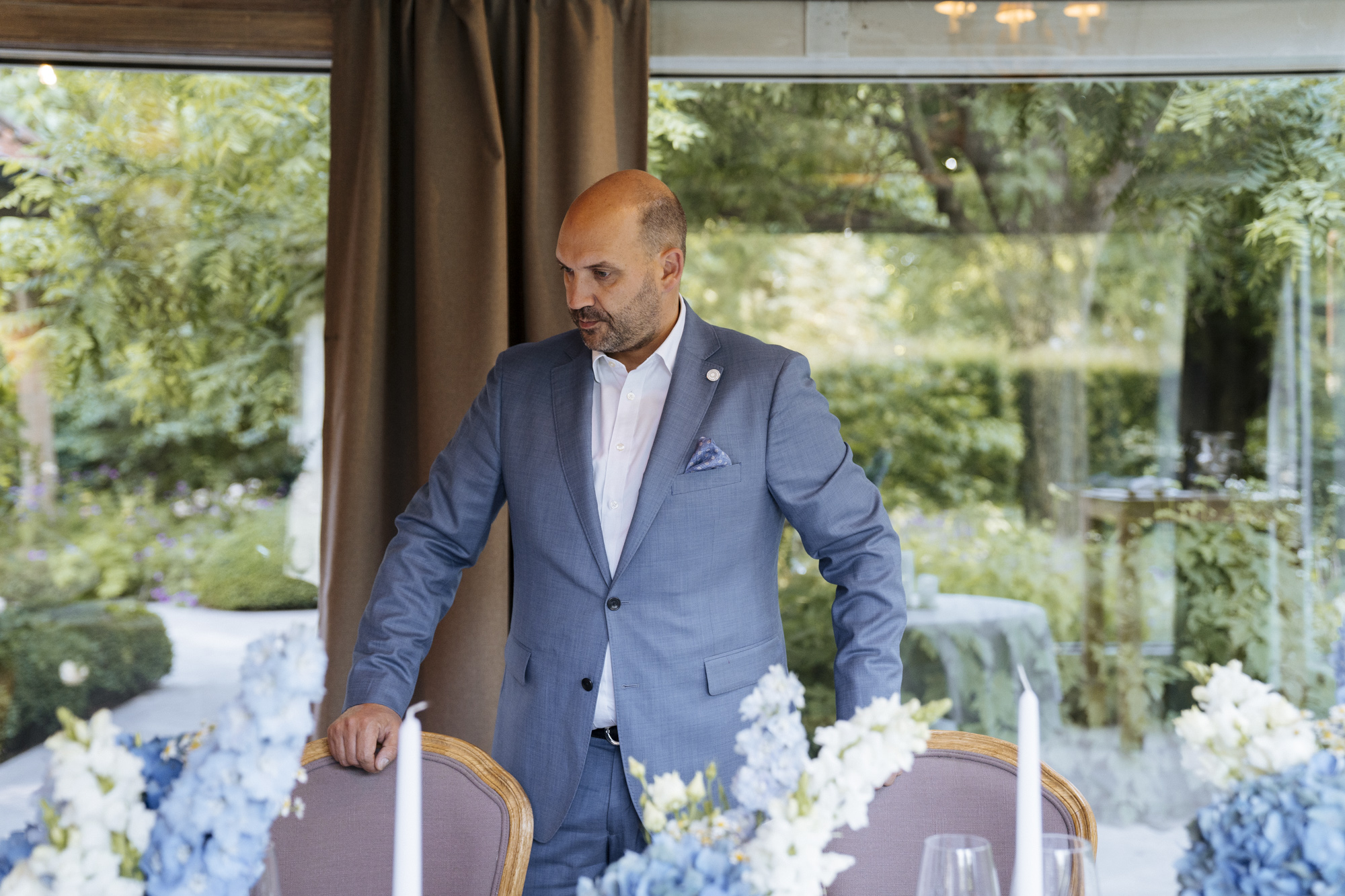
Vincent Vermeulen
Now, Vermeulen says, the modern butler must be capable of not only serving the old, landed gentry but also a new generation of employers, including DJs, celebrities, entrepreneurs and business leaders.
“The butler of today must be ready to navigate both worlds with professionalism and discretion,” the 51-year-old declares. “That said, Downton Abbey remains a wonderful reference for the heritage and elegance of the profession, and it continues to inspire many people to discover our school and keep the tradition alive in a modern way.”
Since founding his school in 2013, Vermeulen has trained well over 1,000 butlers, both in Belgium and across the world at resorts and private households. He is also an author, penning two books on the trade. Wat we kunnen leren van butlers (What we can learn from butlers), and Guestology 2.0.
Celebrity hangout
He is abroad when we first make contact, running a course at the Tryall Club, which covers a 9km stretch of coast near Montego Bay in Jamaica. Over the years, its guests have included Alfred Hitchcock, Paul Newman, Grace Kelly, Paul McCartney, Ian Fleming, Ryan Gosling and Michelle Williams.
We resume our conversation when Vermeulen returns to Belgium a few days later. He is busy preparing for a new residential course with his wife, Kimberly, who looks after the school’s administration. “I’m the face of the school, but Kimberly decides everything behind the scenes. She’s the engine behind the whole thing,” he says.
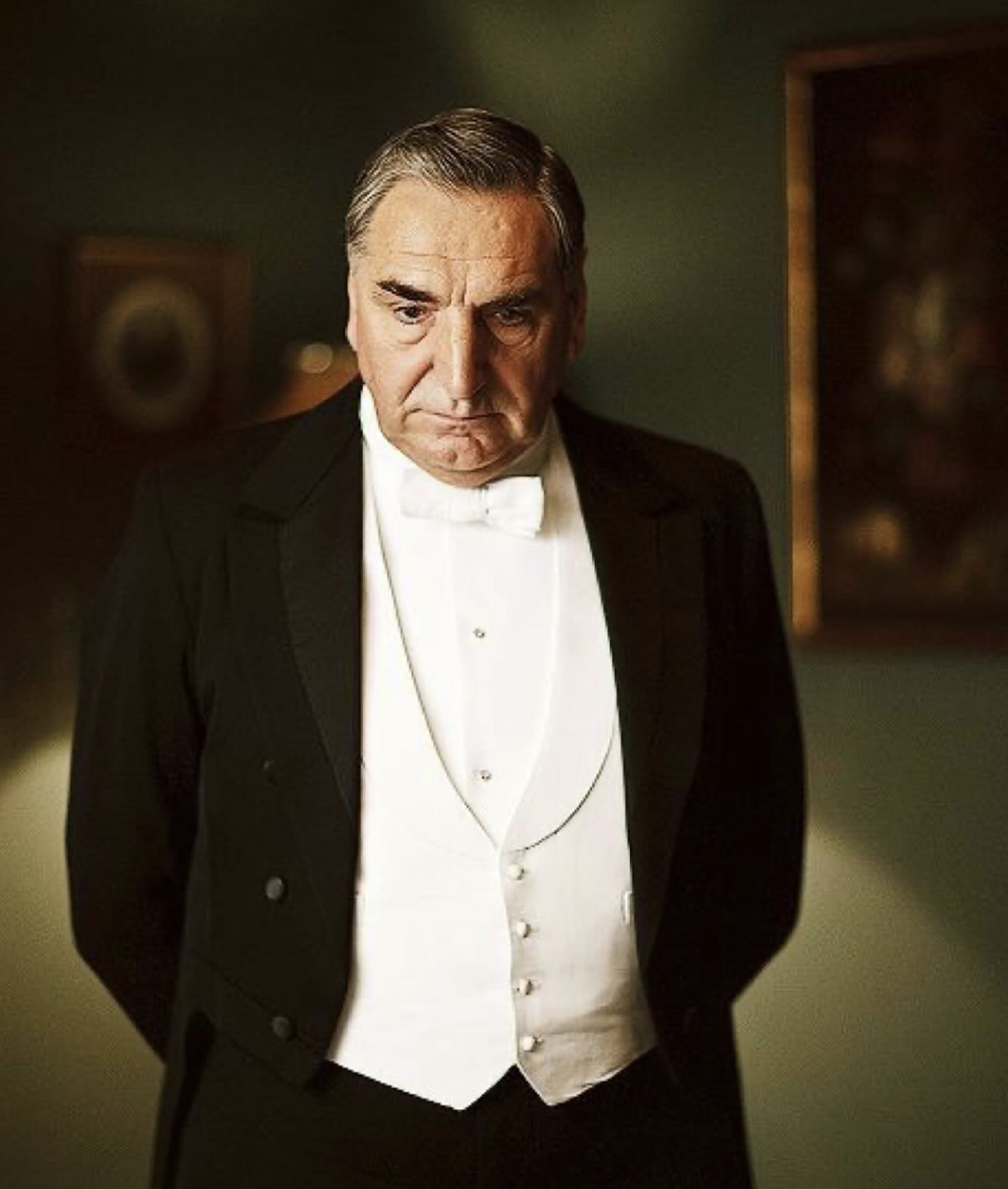
Carson, the fictional butler from hit TV series Downton Abbey
Most of the students were from Belgium when the school launched, but today, 95% come from abroad. “Nowadays, we have participants from Hong Kong to the United States. This diversity enriches the programme, as students learn not only from the instructors but also from each other’s cultural and professional backgrounds,” Vermeulen says.
He originally ran the course from Brussels, at the five-star Le Plaza hotel, and then at a manor house in Hertsberge, near Bruges. More recently, the school relocated to Ten Torre, a privately-owned chateau in nearby Oedelem with extensive facilities, elegant living quarters, professional training areas and inspiring surroundings. By coincidence, the castle was built in 1885 for Baron Hector Lebailly de Tilleghem, whose family later employed Vermeulen’s great-grandfather.
Royal households
The school runs three courses a year for a maximum of 12 students each time, with instruction in English. Several trainees have gone on to work for royal households, although Vermeulen prefers not to go into detail to protect the privacy of the employers and his clients.
“Let’s just say that our graduates work on every continent, serving in prestigious environments,” he says. “We've worked for some of the most amazing and well-known people, but also very unknown, wealthy people around the world. But I never, ever disclose names or relate anecdotes that could lead to anyone discovering their identities.”
Some of the skills his school teaches would likely resonate with Downton’s Carson and Barrow.
For example, the students learn how to pack a suitcase so that the clothing is free of creases after a journey, to navigate dinner table ‘emergencies’ and to serve butter at the correct temperature.
They also discover how best to deal with embarrassing intimate situations, such as how to fend off an inappropriate sexual advance by a principal.
“It’s not unknown,” he says. “We call this topic ‘flirting with the butler’ which, unfortunately, happens in the real world. It usually starts out with what might seem harmless questions or demands, like, ‘Would you get me a certain garment,’ before leading to other things.
“Our advice is for the butler to be quite direct with the principal and say, ‘Look, I am a professional and I want to do my job properly, so I would kindly ask you to refrain from touching me in that way.’”
Vermeulen admits that one of his former trainees found themselves in just such a situation – and let the boss have her wicked way with him. “He completely ignored my advice and ended up becoming the principal himself. That was interesting.” No names, of course.
Courting controversy
I ask if he has any views about Paul Burrell, the well-known butler to Queen Elizabeth II and Princess Diana, who wrote a controversial account about his two decades of royal service following the latter’s death in a Paris car crash in August 1997.
There is a sharp intake of breath.
“Burrell is not exactly good publicity for our profession,” Vermeulen says tersely. “He has leveraged the tragedy of Princess Diana for many years. There were many other people in her household who have never and would never do what he has done. To put it quite bluntly, he’s in it for the money.”
So, definitely not a role model for his trainees? “No.”
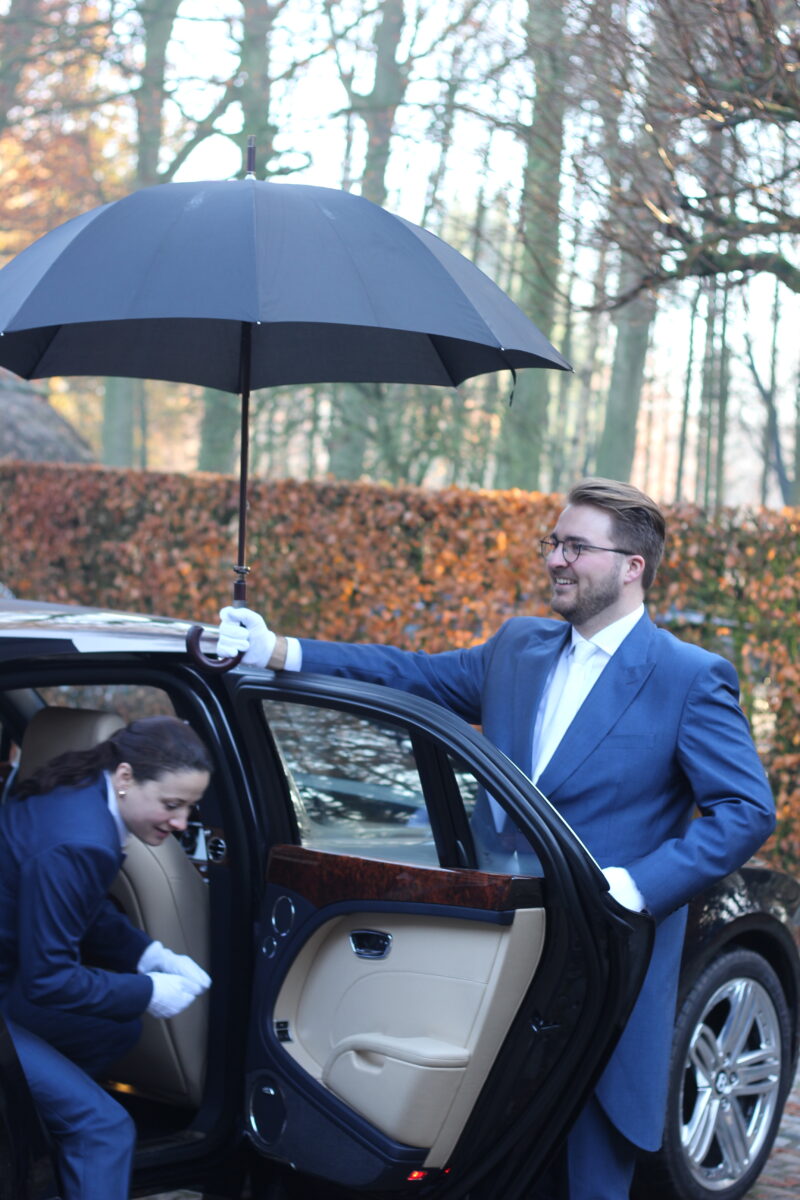
Cover for the client
We return to the main subject at hand. Vermeulen used to teach about 90% of the school’s programme, but as the school has grown, he focuses on, “delivering the crucial topics that define the overall quality and philosophy of our training.” Other modules are run by specialised instructors. “Many of them are former students who have gone on to successful butler careers, and some are still actively working in service today,” he adds. The teachers include etiquette expert Isabelle Coppens (see separate article).
“We also invite speakers covering specific areas such as cybersecurity, personal safety, whisky, cigars, and cheese, ensuring our students receive a well-rounded education that reflects the demands of modern private service,” he says.
Prior experience is not necessary and the school is open to all ages from 18. “Our oldest so far was a gentleman from Texas who began his butler career at 64,” he says. “It is never too late to learn or to start a new chapter in life. In our view, age brings diversity and passion is the only true requirement.”
Since its launch, women have accounted for more than a third of the students. The yachting and luxury cruise sector, “where service skills, attention to detail and adaptability are highly valued,” is an especially favoured destination for female trainees.
Learning refinement
Each residential course consists of three parts, starting with a distance learning programme, with over 35 hours of video lessons and assignments covering the theory of butler service. Students study subjects such as etiquette, household management and guest experience, submitting their assignments for review before arriving at Ten Torre.
They then spend four weeks at the chateau, immersing themselves in practical application and refinement. It’s quite an investment, with the residential segment costing €4,695 plus €2,750 for a private room, or €1,750 if sharing, which includes all meals (but not VAT).
The students are asked to bring a navy-blue three-piece suit, while the school provides accessories such as a tie, pocket square and gloves. Vermeulen plans to supply a uniform to each student to wear throughout the training and formal dinners where real guests are hosted at the school.
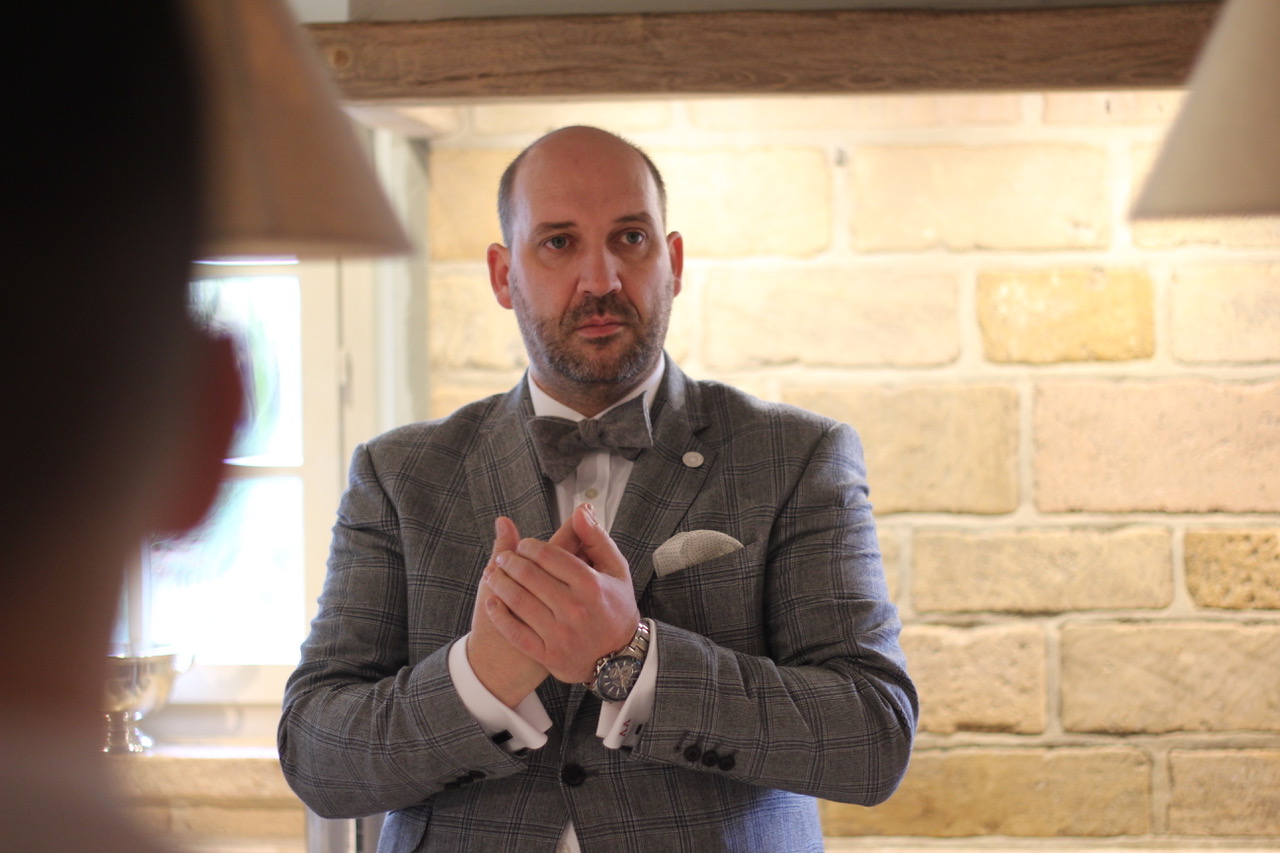
Belgian butler Vincent Vermeulen
The third part of the course is a follow-up programme (no additional cost) to ensure “long-term mastery” of the skills acquired. This includes an optional two-day trip to London (cost: €795) to visit recruitment agencies and the sort of high-end shops their principals will expect them to know, including Savile Row tailors and Royal shoemakers John Lobb.
No-one fails the course
‘We do not believe in bad students, only in bad instructors,” Vermeulen says. “It is our responsibility to guide every participant toward the highest possible standard of quality. In very rare cases, perhaps one or two in all these years, we have had to ask a student to leave, and that was purely due to serious attitude issues.
“Our philosophy is to support, coach and elevate every student. That is why we work in very small groups, allowing us to provide personal coaching.”
Mr Carson would no doubt approve.
