
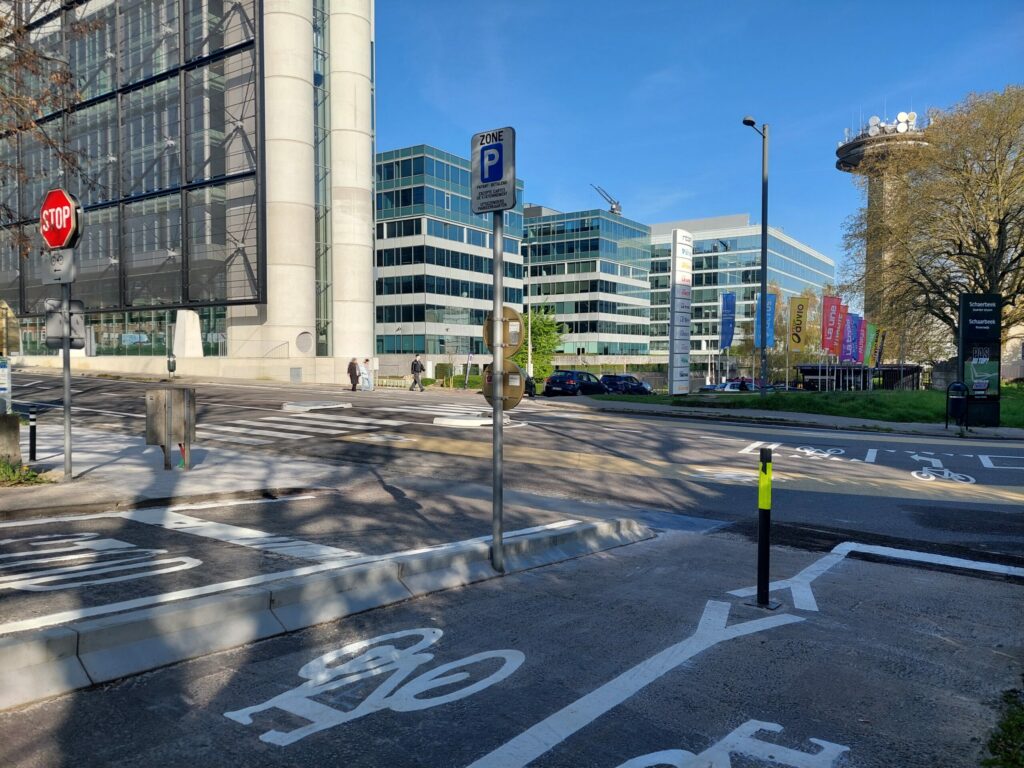
To make the streets of Brussels safer, Brussels Mobility is carrying out dozens of targeted "micro-projects" across the Capital Region to make accident-prone areas safer in the short term.
In addition to major projects to redesign public spaces, Brussels Mobility says it has also carried out the redesign of school surroundings, made public transport stops more accessible and created clearer crossing points for pedestrians and cyclists to make the streets safer.
"Through small, targeted interventions, we are improving road safety in Brussels every day," said Brussels Mobility Minister Elke Van den Brandt (Groen).
"Wider pavements near schools, better cycle paths, accessible stops for people with reduced mobility, speed bumps and more visible crossings: our micro-projects ensure that safe mobility becomes a right for everyone, not just for those who travel fastest," she said.
What happened last year?
Last year, Brussels Mobility carried out around 30 micro-projects. Various accident-prone spots were addressed to make them safer, specifically at Place Stéphanie, Square Jules de Trooz, the junctions between Avenue Louise and Chaussée de Vleurgat, between Chaussée de Mons and Liverpool and between the Avenue du Port and Place des Armateurs.
Traffic flows were clarified with appropriate road markings, clearer signage was installed, and traffic light timing was adjusted.
At the same time, pedestrian and cycle crossings were made more visible, and public transport stops were made accessible to people with reduced mobility.
The micro-projects also ensure safe school environments for children and their parents. Around the GO! Unesco Atheneum Koekelberg on Rue du Château, the pavement was widened and the service road was modified to reduce speed and make the school more visible.
The cycle paths were also made safer, and cycle racks and additional greenery were installed. Other school environments that were made safer in 2025 are located on Chaussée de Ninove, Avenue de Roodebeek, and the junction between Boulevard International and Rue de la Bienvenue.
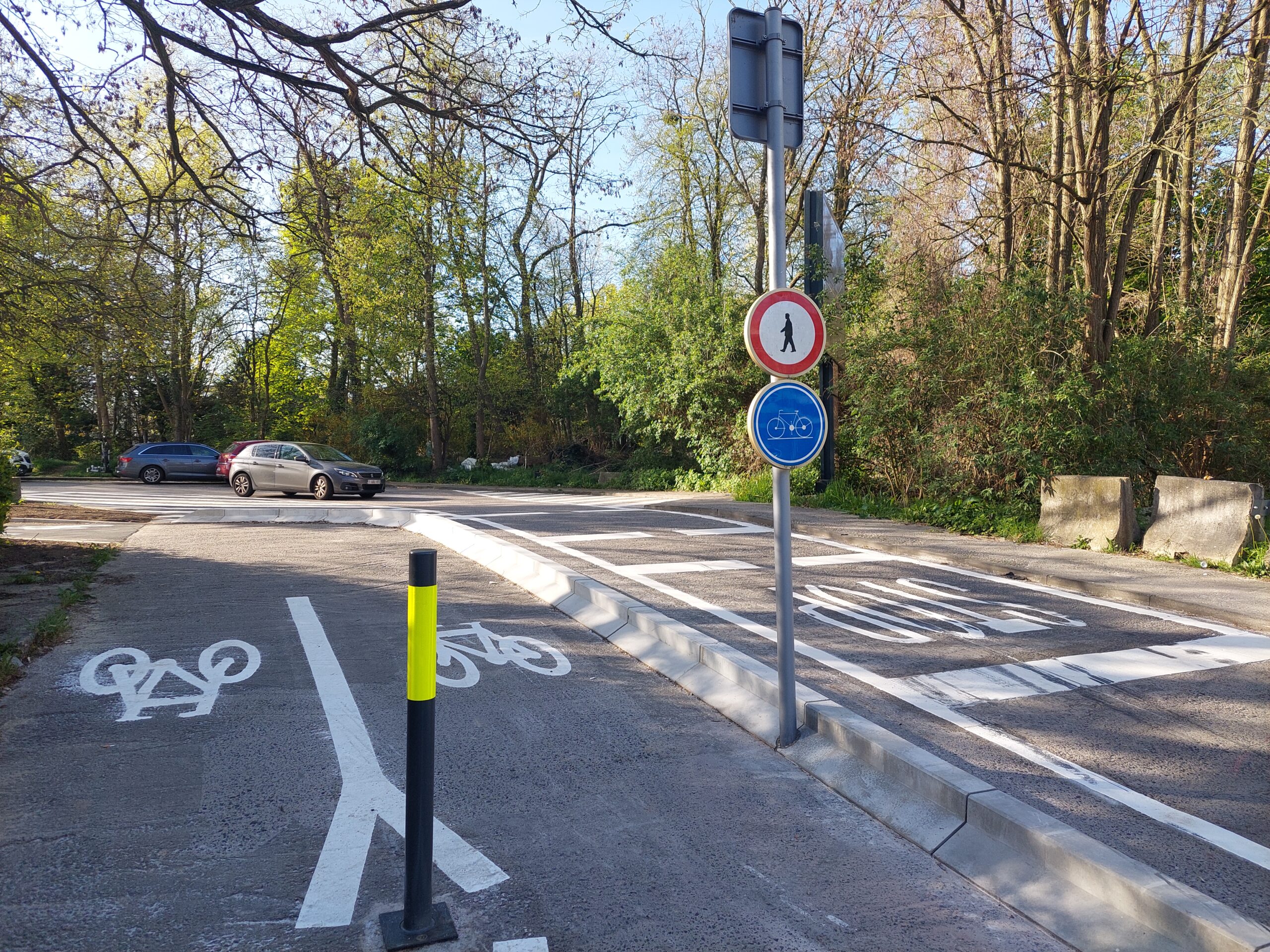
Specifically for cyclists, Brussels Mobility created a bus lane on Boulevard Lambermont, near the Teichmann Bridge, and on Avenue des Gloires Nationales, which is also open to cyclists.
Credit: Brussels Mobility
Additionally, the markings for cycling infrastructure were improved on Avenue Reine Marie-Henriette and on Boulevard Albert. On Avenue Charles Woeste, the cycling facilities on the forecourt of the Church of Our Lady of Lourdes were made safer.
More general road safety measures were also implemented in various locations. For example, at the junction of Rue Picard and Avenue du Jubilé, the central reservation was closed to motor traffic to make crossing the tram tracks safer. Speed bumps were also installed to ensure better compliance with the speed limit.
On Avenue Van Volxem, a waiting area for cyclists was marked out again at the traffic lights, and bollards and crosses were installed to prevent parking on the pavement.
On Avenue de Tervuren, the tram stops were adapted to the latest standards to make them more accessible for people with reduced mobility. Public transport was also made more accessible on Boulevard Marcel Thiry and in the Reine Thomas tunnel.
Following the same path in 2026
This year, too, numerous micro-projects are on the agenda to improve road safety.
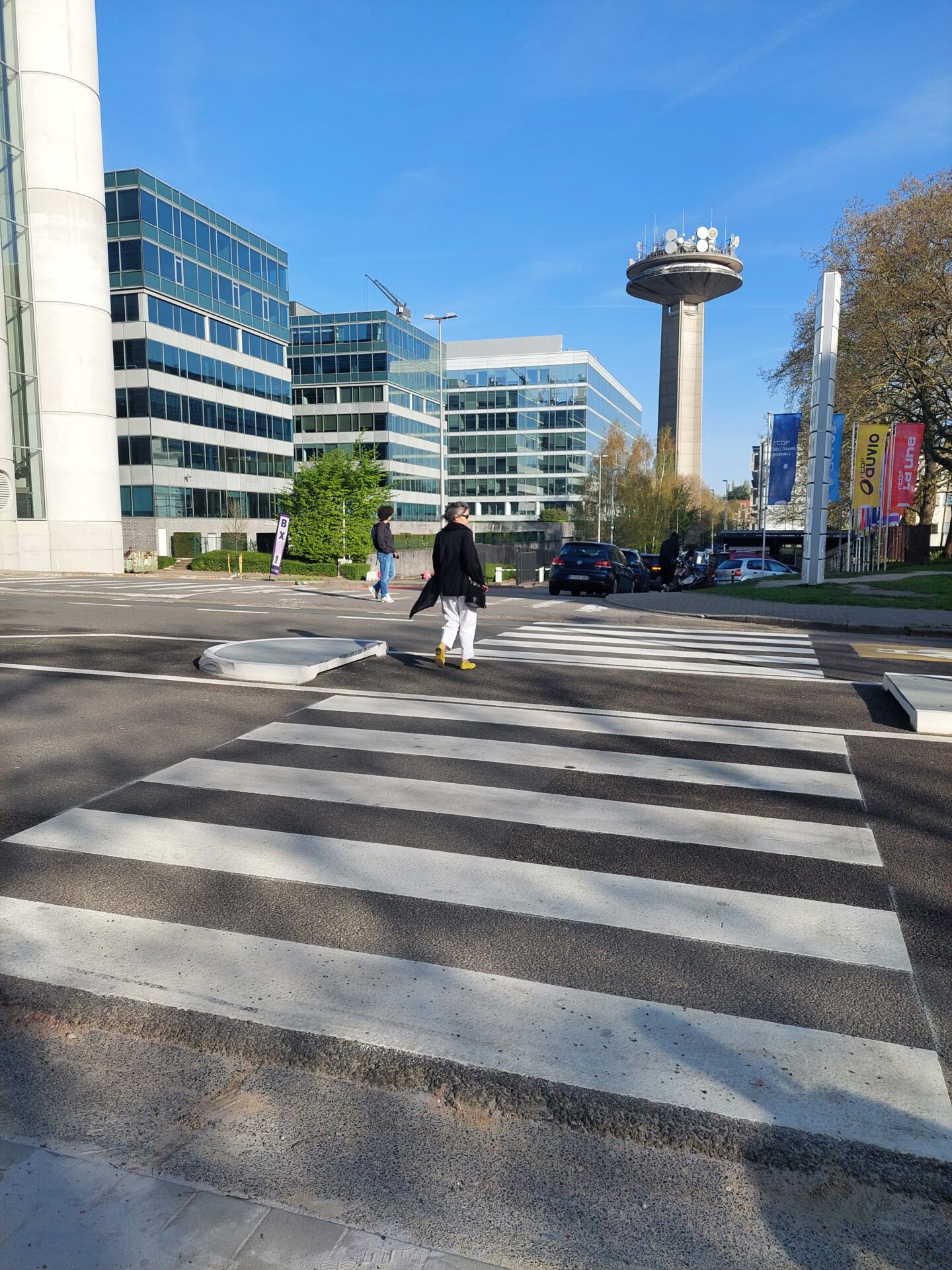
For instance, Brussels Mobility has recently made the accident-prone area on Rue Colonel Bourg safer. Cycling facilities there have been made more visible, and the connection between the cycle path along the E40 motorway and Rue Colonel Bourg has been improved.
To reduce speed, the E40 exit and the lanes on Rue du Colonel Bourg have been narrowed, and bends have been introduced. The pedestrian crossings have been renewed, with central waiting islands, to make crossing safer.
Similar measures are planned for other accident-prone areas, such as Porte de Namur or Rue du Trône.
Credit: Brussels Mobility
On Avenue de la Liberté, visibility near the school is being improved and speed-reducing measures are being implemented at the junction with Avenue du Panthéon.
Works are currently also being completed in various school areas, such as Rue de l’Hôtel des Monnaies, Chaussée de Ninove near the Rue des Quatre Vents. Other school areas will follow, including those around the Eos School on Rue Belliard and the Telescoop School in Laeken.
Additionally, various public transport stops will be adapted, for example on Boulevard de Waterloo and Boulevard Simon Bolivar. Works to improve the safety of pedestrian crossings and junctions will continue, including on Avenue Cicéron.
Finally, efforts are being made to enhance the public space by planting vegetation in the area as part of certain micro-projects. This will be the case at the Bascule and along the Chaussée de Vilvorde.
