
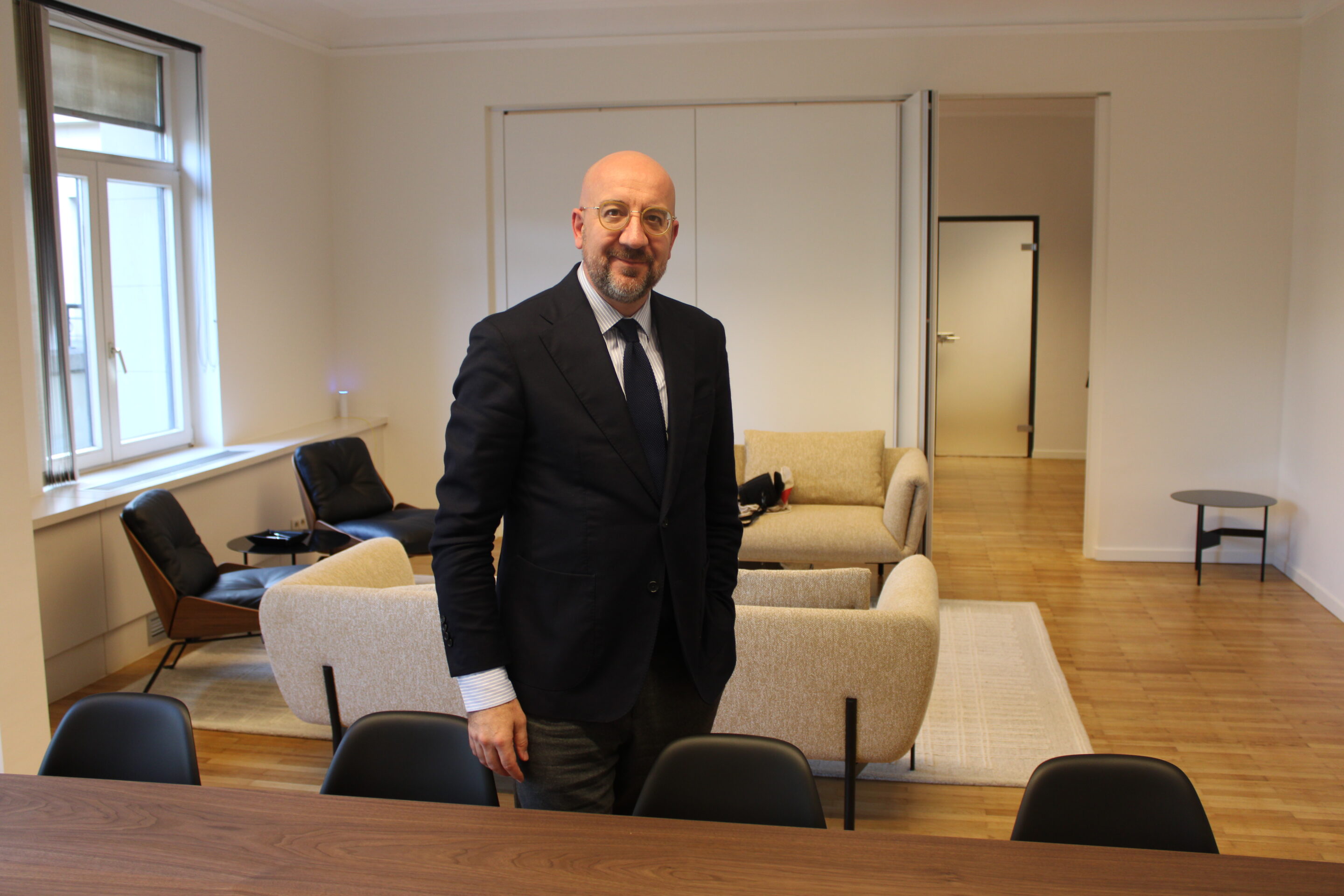
Charles Michel’s new office sits on the upper floors of the Résidence Palace, the Art Deco landmark in Brussels's European Quarter that houses, among other things, the International Press Centre. It is, by any measure, a handsome address. But what gives it a particular narrative charge is the location: it is directly across from the Europa building, the home of the European Council, the institution Michel led for five years until late 2024.
While the glass and steel of the summit chamber, where he once presided over Europe’s most consequential decisions, is on the other side of the building, he can almost look at his old office from his new one.
"It's a pure coincidence," Michel insists with a slight smile, in a precise, considered English, over coffee in his new, sparsely decorated premises. "These offices were empty when I decided on them. It’s a funny coincidence, but it's a coincidence."
Perhaps. But if you were scripting a political comeback story – or even just a quiet interval in a life that has rarely been quiet – you could hardly have arranged it better. The man who chaired summits of the European Union's 27 leaders, who hobnobbed with Russia’s Vladimir Putin, Ukraine’s Volodymyr Zelensky, US President Donald Trump and Germany’s Angela Merkel, who steered the bloc through a global pandemic and the return of war to European soil, now has a view on the comings and goings of his successors.
Not to mention the European Commission, whose Berlaymont headquarters are just across the road, and whose President, Ursula von der Leyen, had a combustible relationship with Michel. But more of that later.
Michel turned 50 last year. He has, he says, a powerful global network and decades of political expertise. His Charles Michel Office is a consultancy, offering advice, mainly legal and political, as well as arbitration support and private diplomacy. He also has academic roles, Visiting Professor at the College of Europe and Distinguished Professor at the China Europe International Business School (CEIBS).
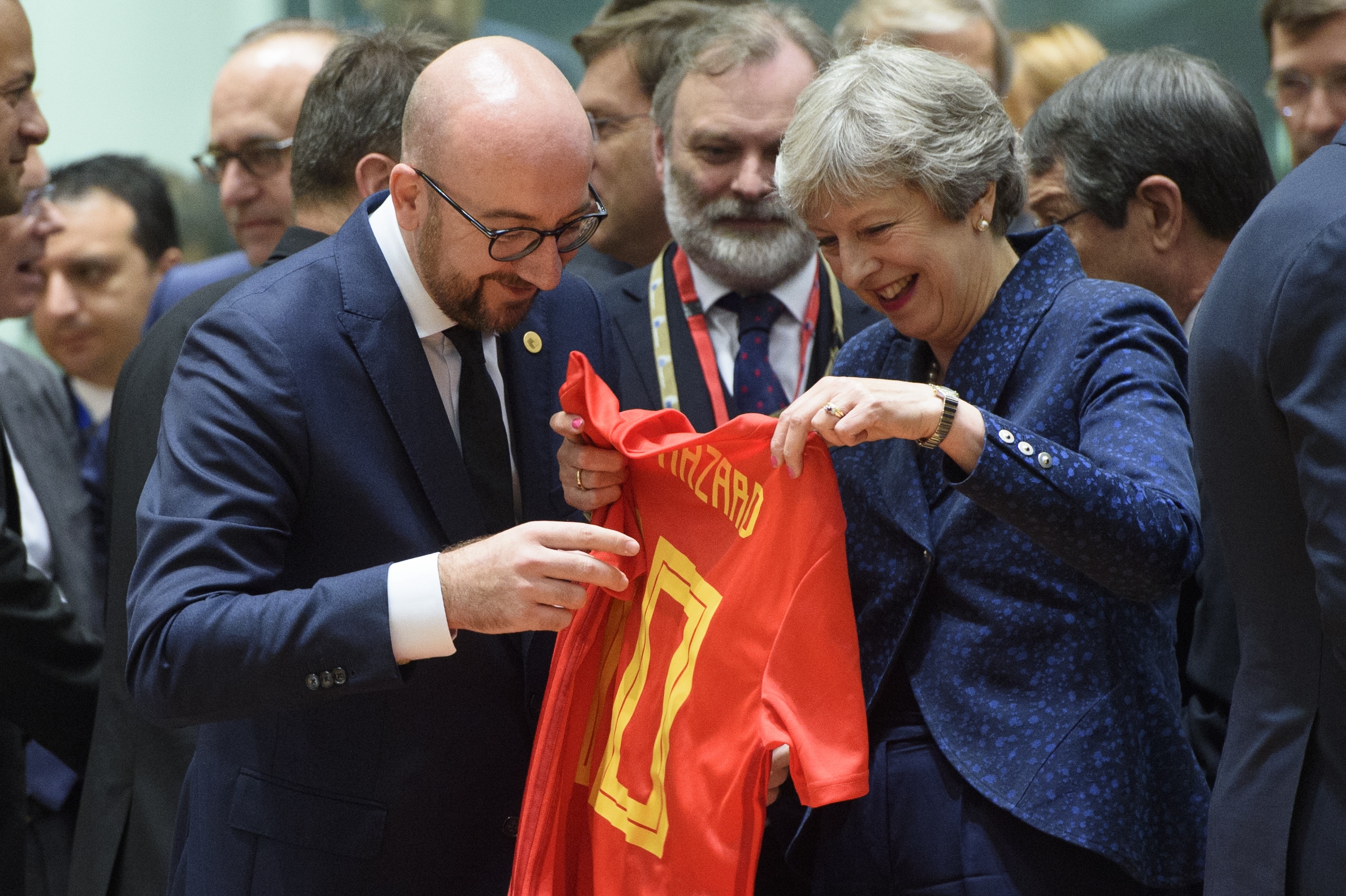
Belgian Prime Minister Charles Michel and Prime Minister of the United Kingdom Theresa May pictured as Michel gives a soccer jersey of Hazard to May, during an EU summit meeting, Thursday 28 June 2018, at the European Union headquarters in Brussels, Credit: Belga
And he is in the mood to talk.
Even now, Michel admits, he cannot help replaying events. “When I see what is happening,” he says, “I ask myself: what would I do?”
It is not nostalgia, he insists – he does not miss being in power – but it is the instinct of a decision-maker confronted with unfolding events. Sometimes, that leads to frustration.
He points to recent developments in the Middle East, to tensions with the United States, to what he sees as missed opportunities for European assertiveness. “We should at least try not to be only spectators,” he says.
There is, in these reflections, a clear attempt to shape the historical record. That narrative is not unusual among former leaders. But in Michel’s case, it is delivered with a particular insistence – a quiet, persistent drumbeat of vindication.
Le fils
Start at the beginning, and you run almost immediately into the question that has followed Michel throughout his career: how much of it was earned, and how much was inherited?
His father, Louis Michel, was one of the heavyweights of Belgian liberal politics: foreign minister, EU commissioner, MEP. Charles was elected provincial councillor at 18, became the youngest regional minister in Belgian history at 24, mayor of Wavre for 12 years, led his party and then his country. In Brussels political circles, he was long referred to simply as "le fils" – the son.
He doesn't bristle at the nepo baby question. "When you have a father or mother involved in politics, it has an impact on you," he acknowledges. "But it doesn't mean you will follow the same path."
Instead, he stresses the improbability of his family's trajectory: his father came from a poor family in southern Belgium. Charles, born in Namur, and raised in Jodoigne, was the first in his family to go to university, in Brussels (ULB), with an Erasmus year at the University of Amsterdam.
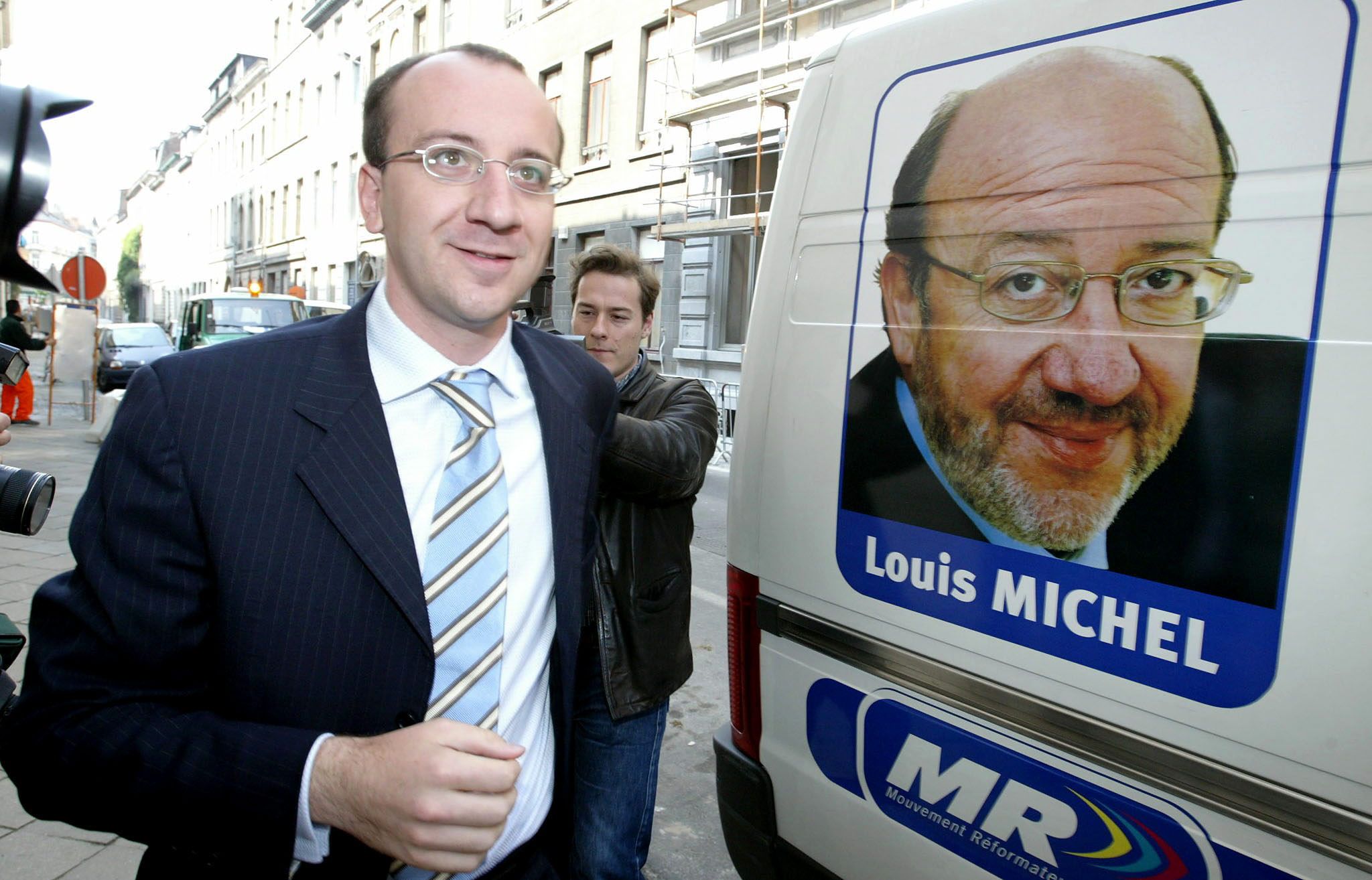
MR Charles Michel (L) arrives for a news conference at MR party headquarters, next to his father Louis Michel poster (R) , in Brussels, 2003. Credit: Belga
His original dream, he insists, was not politics. At around 12, he had "a very strong certainty" that he wanted to be a lawyer. The political candidacy that launched his career came almost incidentally – a friend of his father's put his name on a list as a gesture of mutual support. He got elected, as part of his father’s francophone liberal party, now the centre-right Mouvement Réformateur (MR). "I was very excited. And of course, I was familiar with this debate because of the family environment." One door led to another, and the law eventually gave way to politics entirely.
What sort of child was he? Not extroverted, he says – a point that will surprise those who know only the polished, assured public figure. Competitive, certainly: sporty, driven, the kind of kid who was "very unhappy when I was not able to win the match." Tennis, athletics, horse-riding. His family still jokes about his emotional volatility on the court. "I was quite a good student," he adds, a little primly.
Whether he stepped out from under his father's shadow, or simply cast a different one, is a matter of interpretation.
By the time he became Belgium's youngest prime minister since 1841 – at 38, in October 2014 – he had fought his own battles, including a fierce internal party leadership contest against Didier Reynders (later his deputy prime minister, subsequently EU commissioner, now facing money laundering charges). He won that fight. He won the next one too. And yet the whisper of "le fils" never entirely went away.
The kamikaze years
Michel’s approach to leadership is rooted, he argues, in his Belgian experience. With its complex federal structure and linguistic divisions, Belgium is often described as a laboratory for compromise. Michel embraces that description. “You have to listen,” he says. “Really listen. Not just at the surface. You start by understanding why someone disagrees. Then you try to build something that can bring them together.”
The government Michel assembled in 2014 was immediately christened the "Kamikaze Coalition" – a name that captured both its precariousness and the general expectation that it would self-destruct. A French-speaking liberal with no majority in French-speaking Belgium, leading a coalition that included the Flemish nationalist N-VA.
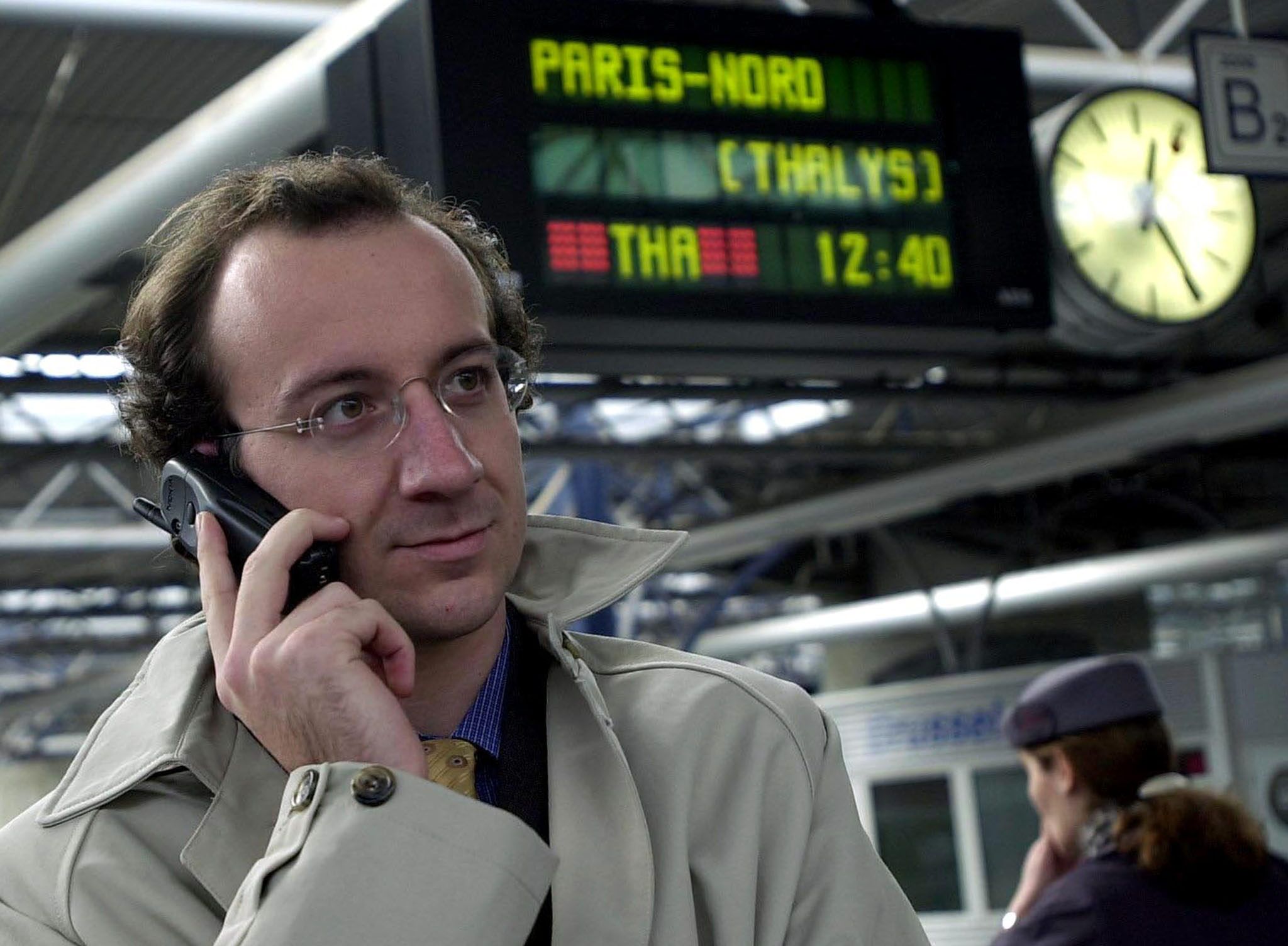
Charles Michel when he was Walloon Minister of interior affairs and public functions at Brussels Midi station. Credit: Belga
He is characteristically unapologetic about it now. "I had such a conviction that what we were doing was needed and was good for the country." The agenda was economic reform: raising the retirement age to 67 ("Look at France," he says, with something close to a smirk, "the difficulties they had when they tried just to extend it a bit"), labour market reform, tax simplification.
The OECD praised the government. Opposition was fierce. He was, he recalls, "not really embarrassed" by the volume of it. He is fond of a phrase that recurs throughout our conversation: "I was right when others were wrong."
What was not part of anyone's script was the morning of March 22, 2016. At 7.58am, two bombs exploded at Brussels Airport. Just over an hour later, a third detonated at the Maelbeek metro station, a stone’s throw from the very building in which we are sitting. Thirty-two people were killed, more than 300 wounded. Indeed, we are meeting just days after commemorations for the 10th anniversary of the attacks.
The bombings came four months after the November 2015 Paris attacks, carried out by a cell with strong links to Molenbeek, the Brussels district that became a byword for the failures of European counterterrorism.
Belgium faced a reputational catastrophe. Global media arrived in force, caricatures of Molenbeek circulated, the country's name became shorthand for security failure. Michel's response was to go on the front foot. Press conferences. Sustained international engagement. A deliberate counter-narrative. "I knew," he says, "that by tenacity and a consistent strategy, it was possible to change this image. And honestly, in a few months, we managed to change the narrative. It went quite fast."
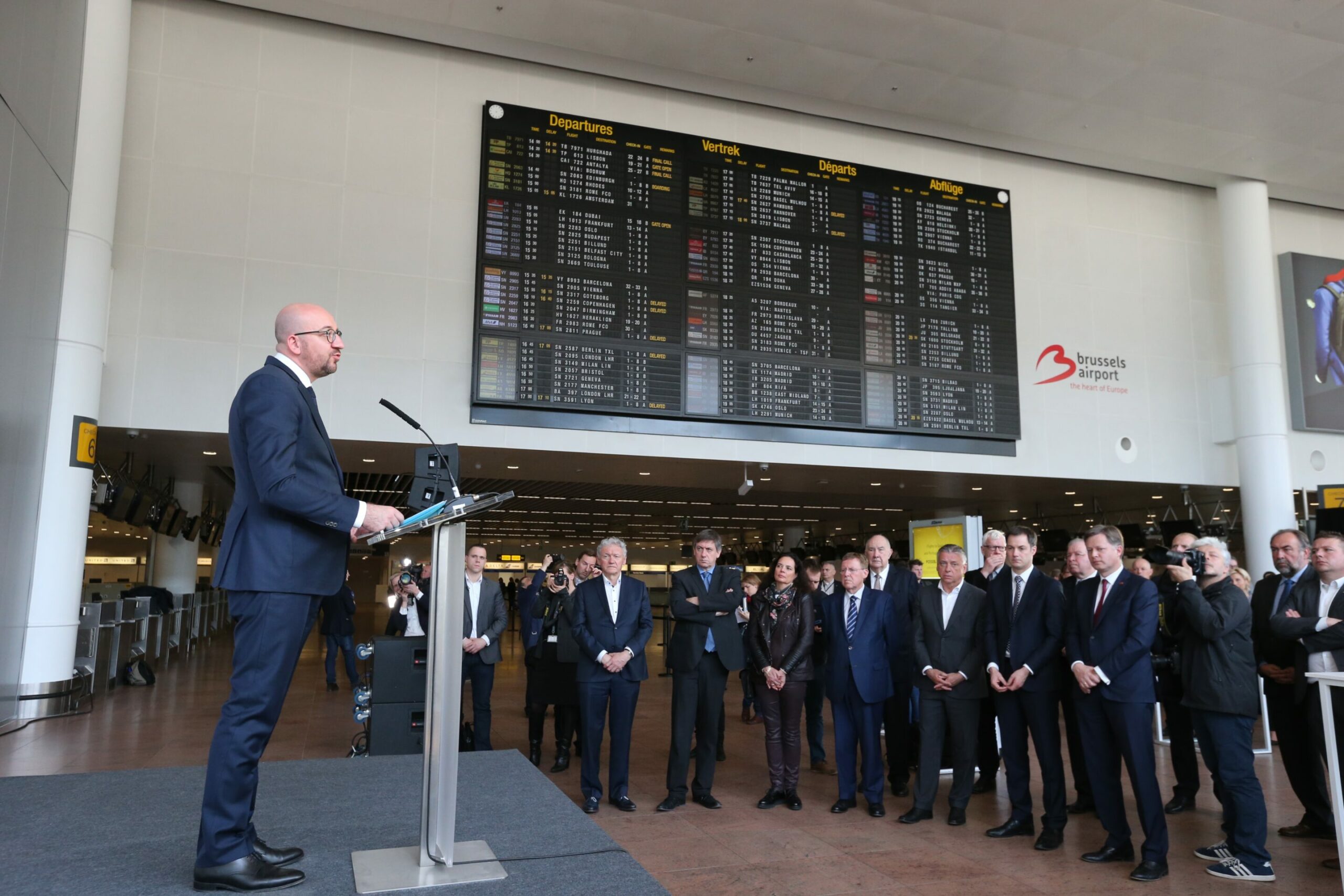
Belgian Prime Minister Charles Michel delivers a speech at the opening ceremony of the departure hall at Brussels Airport after the March 22 attacks, in Zaventem, Sunday 01 May 2016. Credit: Belga / Nicolas Maeterlinck
He is also proud of the legislation passed in the aftermath: security reforms still on the books today, alongside what he describes as a concerted effort to "protect the cohesion and unity of the country" in the face of attacks designed to do the opposite. "Those terrorists – their purpose was to radicalise the society." He believes they failed. And he is proud of how Belgium managed its large Muslim community through the crisis without the kind of social rupture that might have followed.
The government ultimately collapsed in late 2018 over migration. His party performed poorly in the subsequent elections, and he was on his way out – conveniently, just as the EU was debating how to redistribute its top jobs.
The Council, Covid and Ukraine
Michel's candidacy for the European Council presidency was widely seen, even at the time, as the logical next step for someone with his background: a former premier, schooled in compromise, fluent in English, Dutch as well as French, moderate by instinct. If he could hold the Kamikaze Coalition together, surely he could herd the EU’s cats. Indeed, the first person to hold the role was also an ex-Belgian premier, Herman Van Rompuy.
He took office in December 2019. Within months, the world was being reshaped by a virus. Two years later, there was a full-scale war on the eastern edge of the EU. By the end of his tenure, he had chaired countless emergency summits, navigated the largest sanctions regime in European history, overseen an unprecedented joint debt issuance, and granted Ukraine – a country at war – candidate status for EU membership.
On the pandemic, he is emphatic. The European Council, he insists, played a decisive role in pushing for a collective vaccine procurement approach – against significant resistance from within. "When the Commission, together with some other member states, decided in a small group to develop vaccines without taking into account 27 countries – I had to fight against that approach. I will never forget that I spent days fighting the European Commission and some countries because they didn't want a collective approach. It was not acceptable."
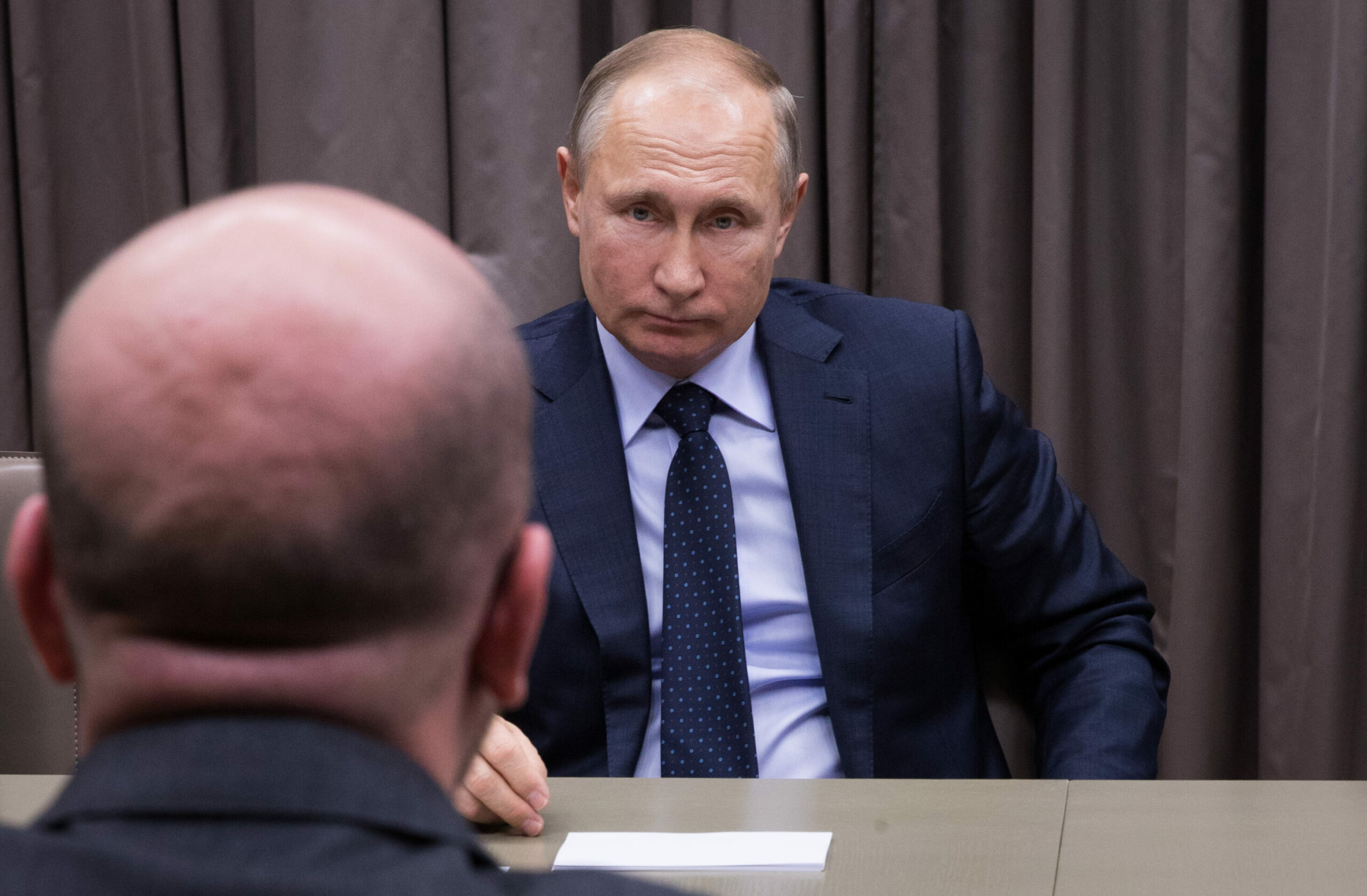
Vladimir Putin in conversation with former Belgian Prime Minister Charles Michel during an official visit to Moscow in 2018. Credit: Benoit Doppagne / Belga
The same applies to Ukraine. A year before the February 2022 invasion, he had visited the Donbas. Months before the war, he attended the Crimea Platform – a signal of solidarity with Kyiv that many other European leaders declined to make, nervous about antagonising Moscow. "At that time, many European leaders didn't want to be seen with Zelensky, because they wanted to show a certain restraint in terms of the relationship with Russia. I made another choice. And again, I was right when some others were wrong."
He recounts, with satisfaction, the moment two weeks before the European Council decision to grant Ukraine candidate status – when some of the most prominent leaders in the room privately told him it would never happen. "They said: ‘Charles, you are crazy. It will never happen.’ Two weeks later, we did it."
Nonetheless, he faced criticism: that he was seeking the limelight, overstepping his mark, spending too much time on the road and too little time on preparing for summits. In his final year in office, there was outrage when he announced he would run as an MEP in the June 2024 elections. Had he won a seat, he would have had to leave his Council President post early, triggering institutional uncertainty. Amid the furore, Michel backtracked on his election plans.
He dismisses these as trivial distractions. “There is gossip,” he says. “And there is substance.” He places himself firmly in the latter category.
Nor does he have truck with suggestions that the Council presidency is essentially a coordination role rather than a visionary one. "Some would like to trap the Council president in the position of just being the one who sent a letter to invite leaders to Brussels. That's not the interpretation I give to this role." He argues that the Council is, under the Lisbon Treaty, the "guardian of European unity" – and that unity is not spontaneous. "You need to fight to protect it."
Right of way
When it comes to his record, he is keen to show he has been vindicated, despite the brickbats levelled at him.
On European strategic autonomy – which he was advocating years before it became conventional wisdom – he says he was mocked by the Commission for warning that the EU's relationship with Washington would change. "At that time, I was attacked because it is not possible to imagine a different relationship with the United States. Today we can see that."
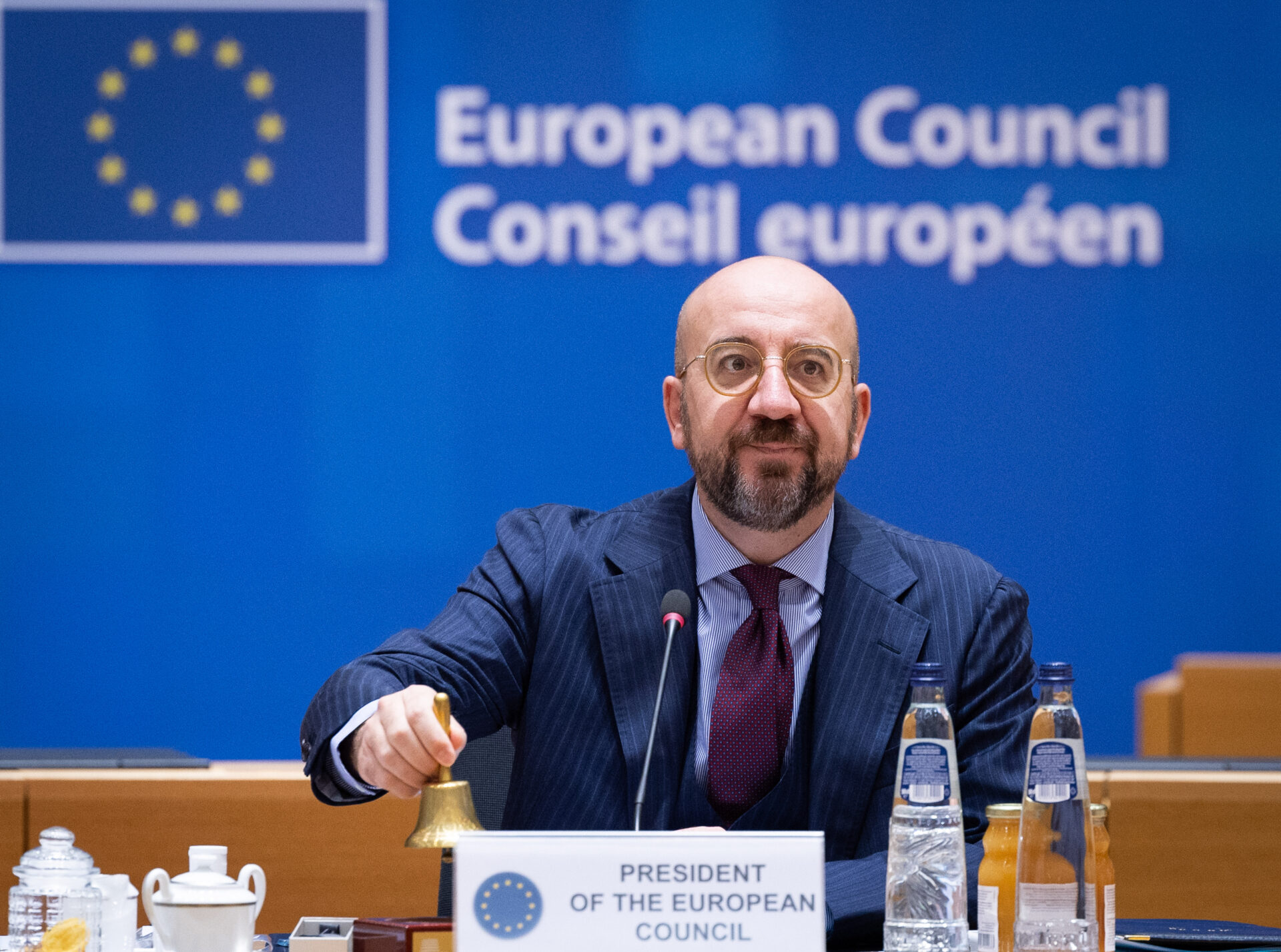
European Council President Charles Michel pictured during a summit of the European Council in Brussels. Credit: Belga / Benoit Doppagne
On the energy crisis, he says the Commission "wasted months" before unveiling proposals, captured by certain member states rather than the EU's collective interest. On Mario Draghi’s landmark report on EU competitiveness – a hefty document calling for radical economic reform – he notes that when he was pushing similar ideas in his final European Council conclusions, "some ambassadors criticised me. Today, almost two years later, who was right and who was wrong?"
Those critics, he adds pointedly, tended to operate off the record. "When they were criticising me, they never dared to go public. Most of them." He allows himself a slight pause. "But they are those who today are forced to recognise, on the substance: I was right."
Von der Leyen’s sofa
The relationship between Charles Michel and Ursula von der Leyen was one of the most discussed topics in Brussels political life.
It seemed to start well. Both were appointed at an EU summit in July 2019, and in their initial meetings, they appear friendly and engaged. They appeared jointly at press conferences as the EU tackled the Covid pandemic in early 2020. But relations soon soured, notably at the July 2020 summit where EU leaders agreed its €750 billion pandemic aid package.
The nadir was known as Sofagate, in April 2021, when both were in Ankara for a summit with Turkish President Recep Tayyip Erdogan. In video footage, they are led into a room where just two grand chairs are available, one of which is clearly for Erdogan. Michel swoops in to take the other one, leaving the flabbergasted von der Leyen to gasp, before sitting on a sofa, seemingly sidelining her.
The furore over the incident became a symbol of a dysfunction that ran far deeper than a question of seating protocol.
In the days that followed, Commission officials seemed happy to convey that Michel was ungallantly attempting to subordinate von der Leyen. She later added her interpretation, saying it was because she was a woman. Others chimed in, with former MEP Andrew Duff suggesting the “grisly spectacle” in Ankara proved that the job of the European Council President was superfluous and should be assumed by the Commission President. The Council’s response, that this was the protocol agreed and accepted by the institutions beforehand, was treated with scepticism.
Michel's own account is brief and unrepentant. "The protocol was perfectly respected," he says. He understands the visual impact. And he accuses the Commission of using the episode to leverage its role.
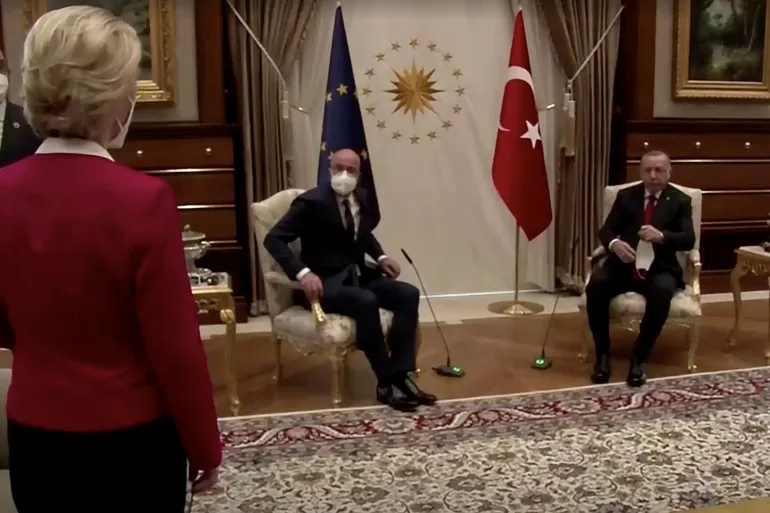
Sofagate with Charles Michel and Ursula von der Leyen
“Everyone knows and has seen how the Commission decided to instrumentalise this incident to try to grab more power, more institutional power, and to get involved in things that are not the responsibility of the Commission,” he says.
He sees it as part of a broader pattern: the Commission attempting to extend its reach into areas reserved for the Council. Defence, external representation, the External Action Service (EEAS). "Today, the Commission is trying to take control. That's not in line with the treaty."
As relations frayed, it led to chaotic splits. When the EU leadership was negotiating with the UK on post-Brexit ties, both Michel’s office and the Commission sent separate invitations to a meeting with then-British Prime Minister Boris Johnson – prompting Michel’s chief of staff to quit his post.
At the time, German media, like Der Spiegel, said he was engaged in “a grotesque power struggle” with von der Leyen. Michel singles out Politico (owned by Germany’s Axel Springer) for its trenchant criticism. “Unfortunately, there is a powerful media in this bubble called Politico. systematically acting as an agent to destabilise, to use gossip to try to put me on the defensive,” he says.
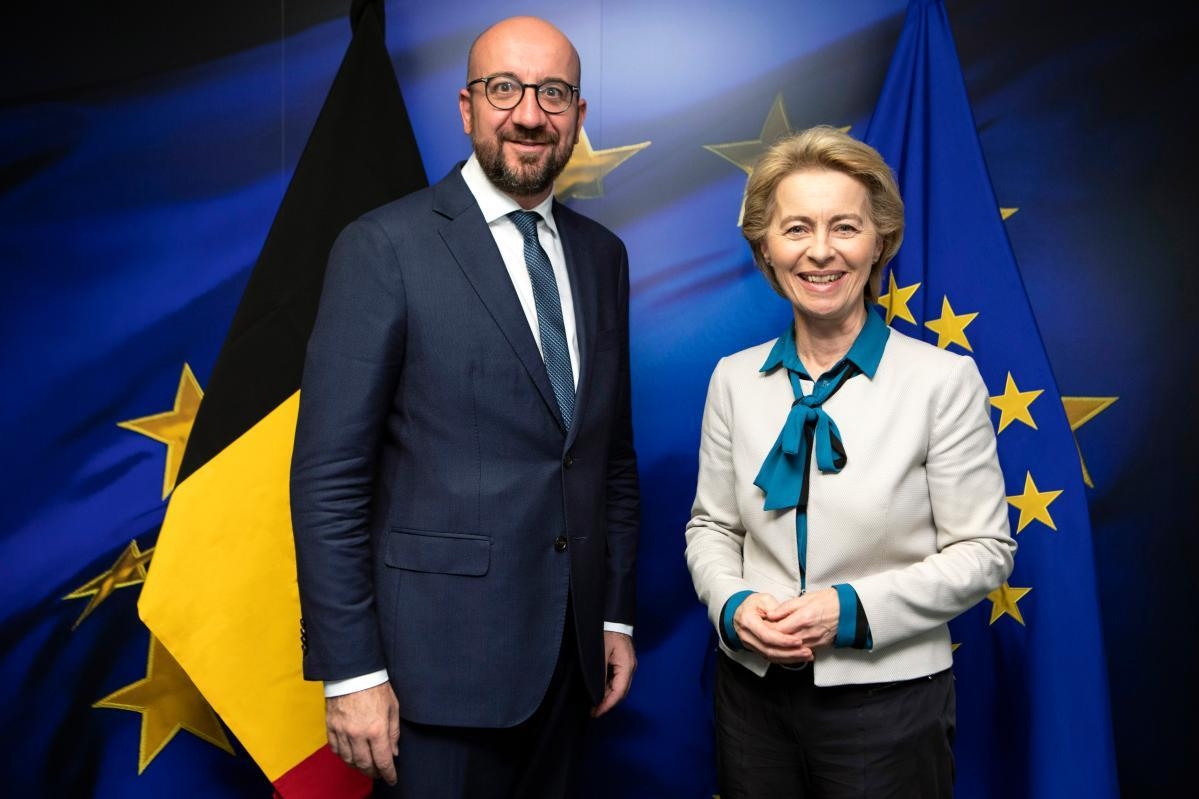
Charles Michel and Ursula von der Leyen. Credit: EU
On the broader breakdown of cooperation with von der Leyen, he is more measured. From early in their joint term, he says, he found it almost impossible to establish a functional working relationship. His proposal for regular, in-person coordination meetings on international affairs – designed to ensure the EU spoke with a unified voice – was, he says, "systematically refused" by von der Leyen.
"I have my own opinion about her personality," he says carefully, "and it's not my intention to make a comment today about personalities." A beat. "But I can tell you: never in the past had I faced this level of difficulty in terms of collaboration with a colleague. Never. It's not about personality. It's about the substance of the European project."
As for her leadership, Michel is scathing. “There is a super authoritarian governance,” he says. “Commissioners have absolutely no role anymore." The fundamental error, in his view, is misunderstanding the job. "She is supposed to work on the defence of the single market. Nothing has been done. She is supposed to work on the financial markets. Nothing has been done,” he says. “In this field, the result is zero, and that is a tragedy."
He pauses. "I'm severe. I'm cruel. Because I saw it from the inside."
The world turned upside down
Michel is no less outspoken on the great geopolitical questions of the day. Donald Trump, he argues, is not an aberration but a reflection of something shifting in American society that predates him and will outlast him. "Trump is not an accident in political history. He is a symptom. And probably he is accelerating something in American society."
The previous generation of American leaders – he names Biden specifically – had what he calls a "romantic tie" with European integration, seeing it as aligned with US interests and values. That era is over. "The old order is done. Something new will have to be written." On current US foreign policy, he is blunt: the military operation in Iran conducted without consultation with European allies, the rhetoric over Greenland, the posture toward Russia and Ukraine. "I don't feel any respect coming from the United States in this context."
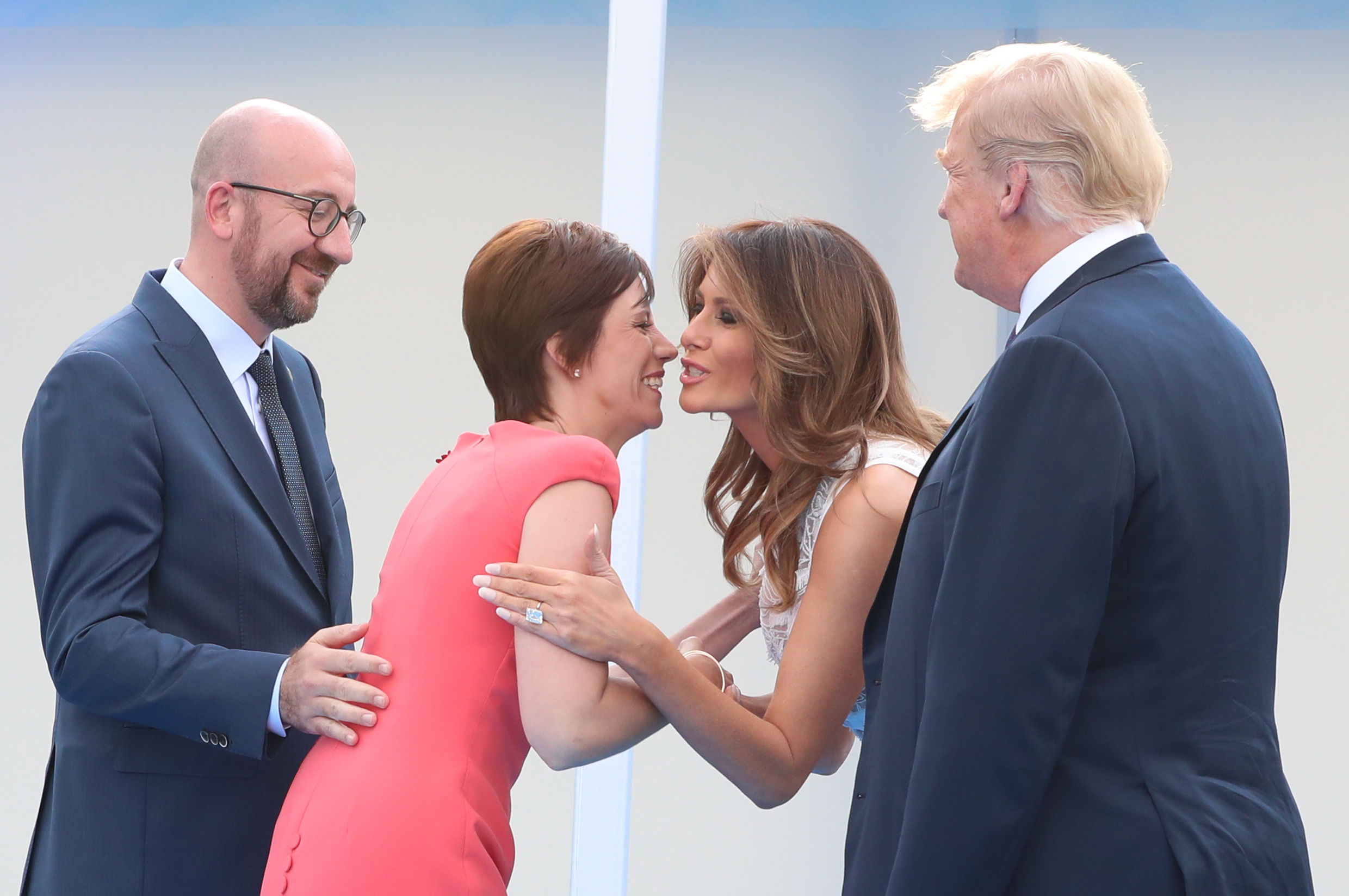
Belgian Prime Minister Charles Michel, Amelie Derbaudrenghien, First Lady of the US Melania Trump and US President Donald Trump at the arrival for a dinner at Cinquantenaire Park in Brussels, Wednesday 11 July 2018. Credit: Belga / Benoit Doppagne
He would, he says, have reacted differently to American sanctions on European officials like former EU Commissioner Thierry Breton. "I feel it's a sign of weakness. If I were EU leader today, I would have proposed to react." He adds: "If we do not react, we accept this humiliation. And then you should not be surprised that there will be another step."
On Belgium itself, he is surprisingly optimistic. The global context, he argues, is forcing a kind of clarity: Belgium cannot afford its internal divisions when the external pressures are so great. He compares the country to a cup of coffee with milk already stirred in. "After, you can try to separate the coffee and the milk. But it doesn't work."
Behind the scenes
The question of who Charles Michel is when he is not in active politics is one that his long career has made surprisingly hard to answer.
He is a family man, proud of his three children (a son of 22 and two daughters of 10 and seven). He plays video games – badly, he admits – with the son. The previous day, he played with his younger daughters, “with those small magic balls that go everywhere.” His wife, Amélie Derbaudrenghien, who he married in 2021, is a Belgian civil servant who is now working in his office.
He says he has genuine friendships across the political world and is a fan of Angela Merkel – "extremely respectful, extremely curious to understand various points of view.”
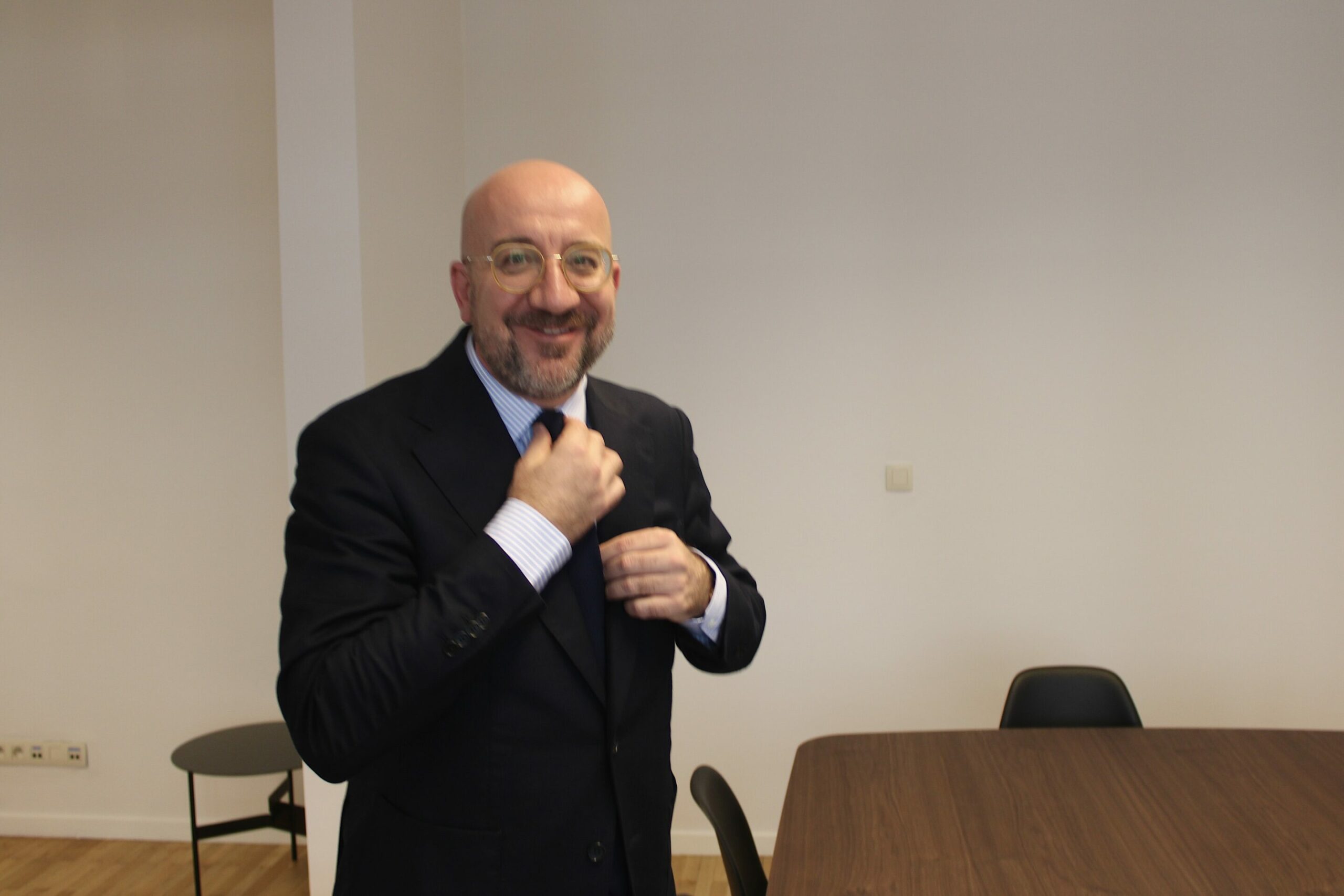
Former President of the European Council and former Belgian Prime Minister Charles Michel in his office. Credit: The Brussels Times / Leo Cendrowicz
Does he miss power? "No," he says, without much hesitation. "I don't feel the daily pressure anymore. When you are prime minister, when you are European Council president – in this hostile context, where a vast part of the observers want you to fail – this huge pressure. The fact that I don't feel it anymore is really nice."
And yet. He cannot quite stop himself from watching. He follows world affairs. He imagines what he would do differently. He is, he says, "not frustrated, but a bit sad" at the missed opportunities. The EU, in his view, should be in "the cockpit" on the rules-based international order. Instead, it is sitting on the sidelines.
From his new office, he can see the old theatre of power plays on: motorcades glide, doors close, decisions are made. Michel watches, no longer inside the room, but not entirely out of it either. Close enough to see the game, distant enough, at last, to comment on it.
