
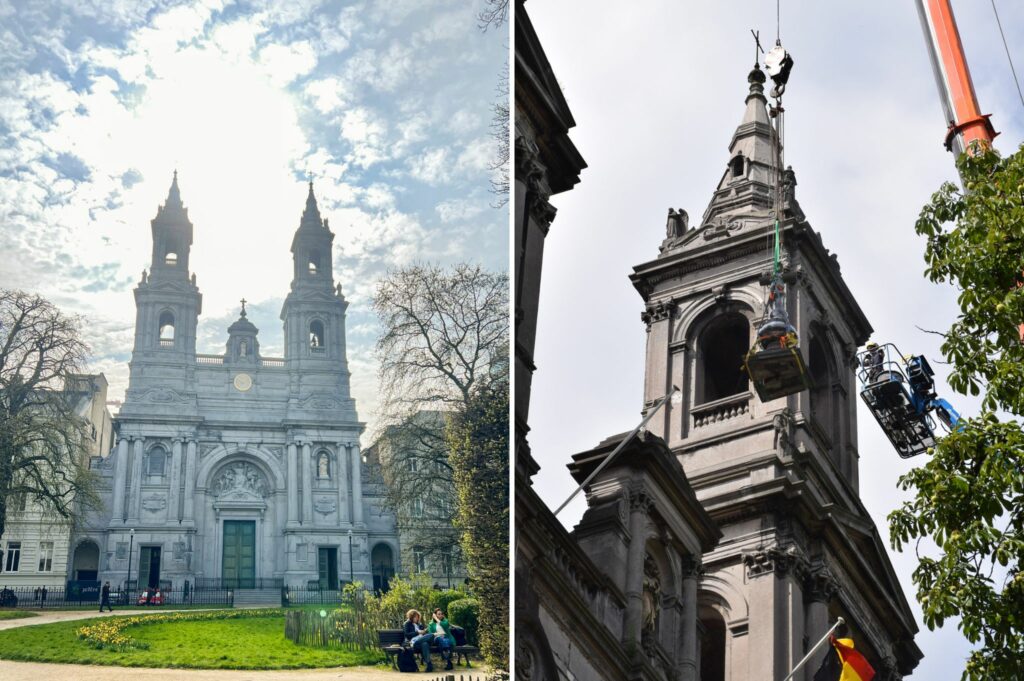
After two years of work, a landmark heritage site in the heart of Brussels’ European Quarter re-emerges with nearly €4 million in regional support.
The façades of Saint Joseph Church, located on Square Frère-Orban, in Etterbeek, have been fully restored, marking the end of a major renovation project announced this week by the Brussels State Secretary for Urban Renewal, Ans Persoons (Vooruit).
The works, launched in 2024, aimed to preserve one of the capital’s lesser-known architectural gems.
A heritage jewel
Often overlooked amid office buildings, Saint-Joseph Church has undergone a meticulous restoration of its façades, from stonework to iron details.
Statues, woodwork, entrance doors and metal elements were carefully repaired or replaced using traditional techniques, restoring the building’s original appearance.
“The church once again becomes an urban landmark,” Persoons said, stressing that the project serves as a reminder of the area’s past. Long before it became the administrative heart of the European Union, the neighbourhood was part of Brussels’ 19th-century expansion following the Belgian Revolution.
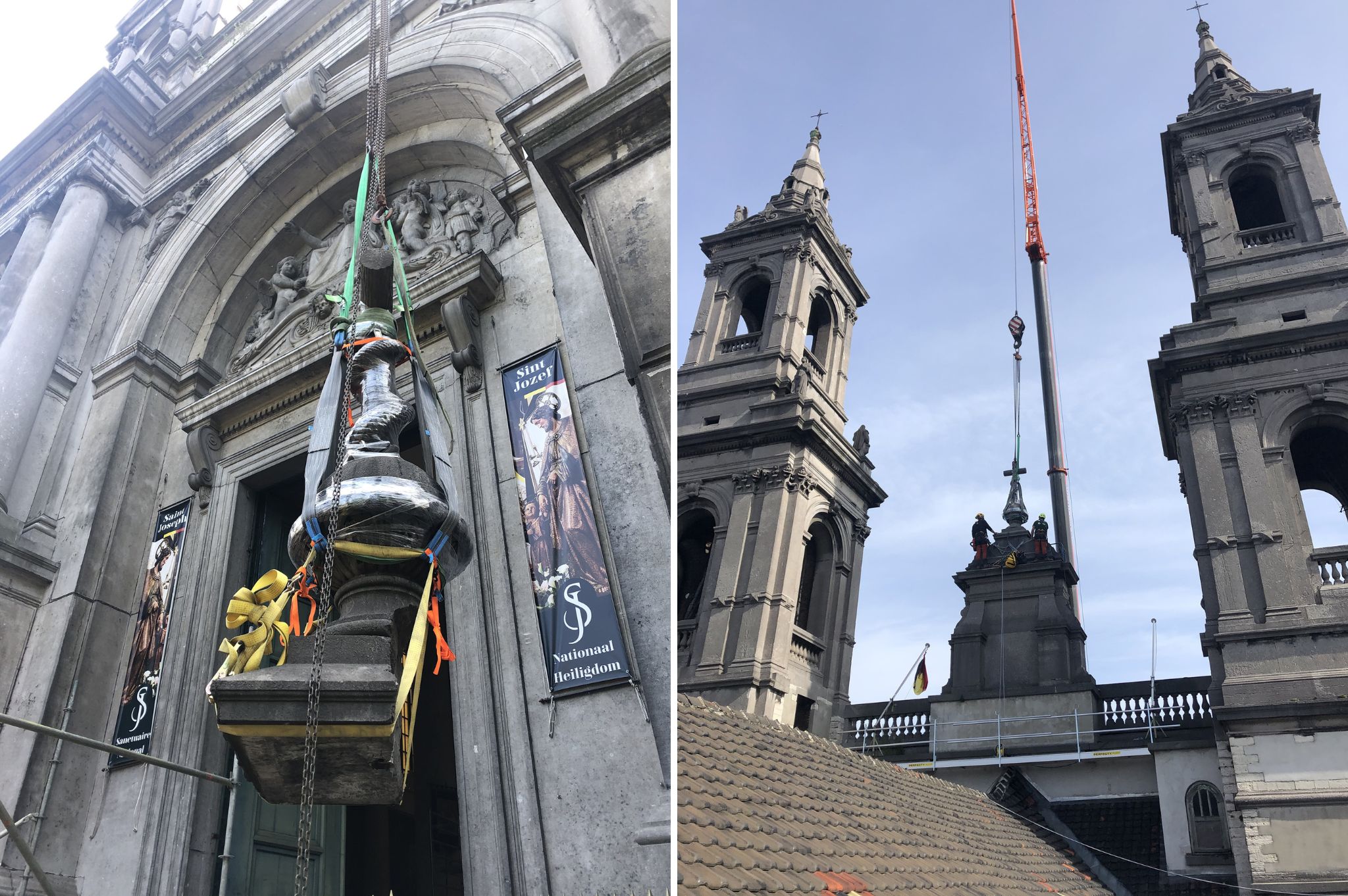
Restoration of Saint Joseph church in Brussels. Credit: Ans Persoons
Between restoration and conservation
The intervention focused on preserving as much of the original structure as possible. The blue stone façade, sourced from the small town of Écaussinnes (Hainaut), had suffered significant weathering over time, while the upper towers required stabilisation.
Seventeen statues and a cross were restored by a specialised sculptor, and defective internal metal structures in the spires were replaced.
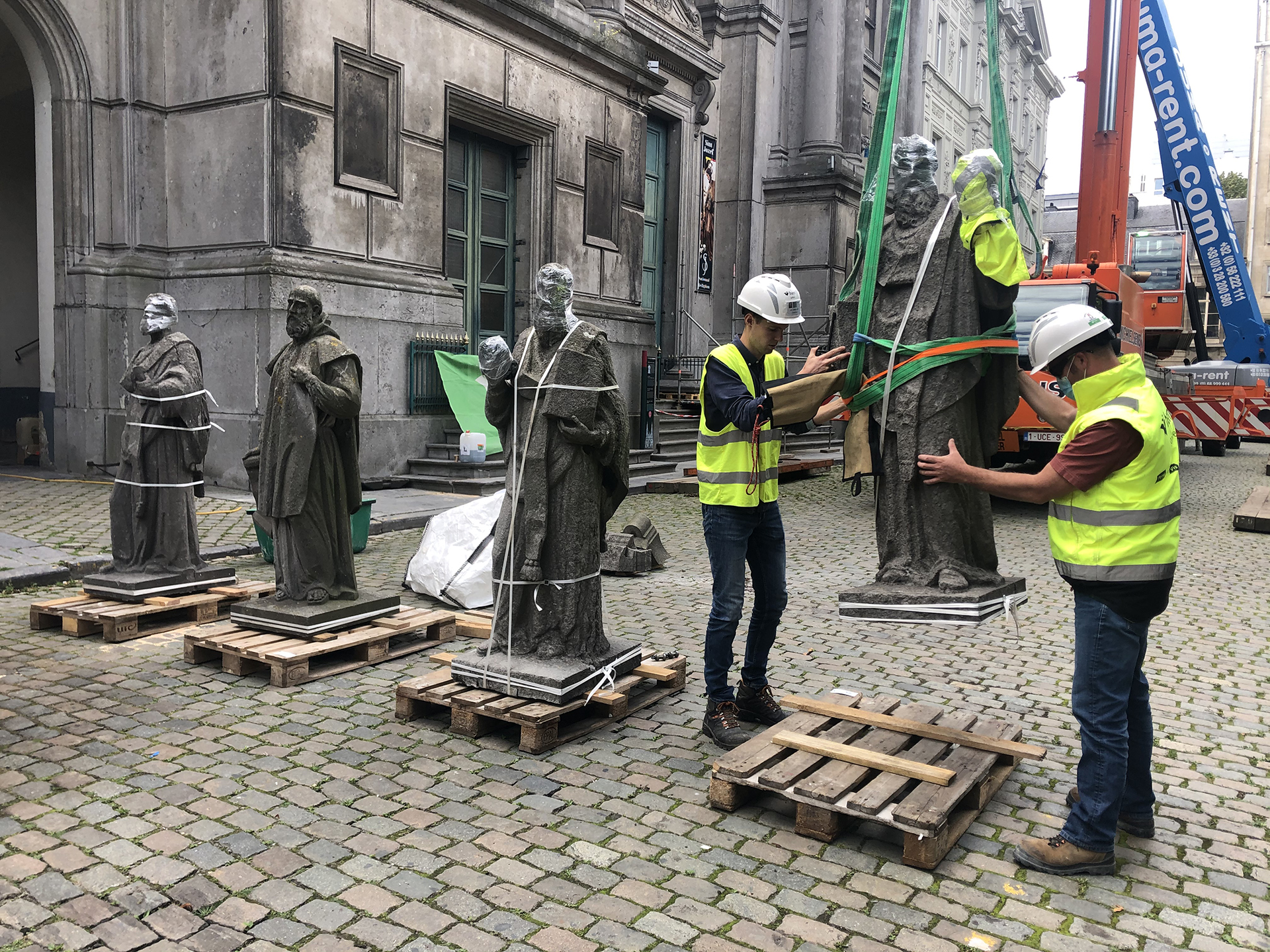
Traditional techniques were used for the restoration of the church. Credit: Ans Persoons
Regional agency urban.brussels supported the project from its early stages and oversaw its implementation alongside the non-profit managing the site.
A €4 million investment in listed heritage
The Brussels-Capital Region financed the majority of the works, with subsidies exceeding €4 million. For the government, the project reflects a broader commitment to safeguarding historic buildings across the city, even in rapidly evolving areas like the European Quarter.
Designed by 19th-century architect Tilman-François Suys, the church draws strong inspiration from Trinità dei Monti in Rome. Built between 1842 and 1849, it stands as a testament to Brussels’ architectural ambitions during the reign of Leopold I of Belgium.
Over the decades, the building has hosted different religious communities, including the Redemptorists and, later, a Syriac Orthodox congregation, before returning to Catholic worship.The church has been listed as a historic monument since 1981.
