
After much-anticipated talks failed to reach an agreement on Friday, Belgium's Federal Government is meeting again to discuss potential energy measures on Tuesday evening.
The question of whether Belgium's Federal Government should introduce temporary measures to provide energy support for commuting and other areas has been a topic of political debate for several weeks now.
Before the Easter holidays, the Federal Government had already decided to channel the extra tax revenue generated by high energy prices back to two target groups: vulnerable households that heat their homes with fossil fuels, and people who can only get to work by car. The measures would be temporary, expiring after three months.
While the proposals were due to be ready by the end of last week, this did not happen. The Federal Government's so-called "core cabinet" (the Prime Minister and his five deputy PMs) adjourned on Friday without reaching an agreement because the details still needed to be worked out.
"In view of the persistently high energy prices resulting from the conflict in the Middle East, the government is continuing to work out the technical details of targeted and temporary measures," Prime Minister Bart De Wever's (N-VA) office told Belga News Agency on Friday.
These measures will "address the needs of the next three months and aim to protect the purchasing power of the target groups," they added. "The detailed proposals will be discussed in the course of next week."
'Great defender of the budget'
However, the leader of the French-speaking liberal MR party, Georges-Louis Bouchez, had demanded in advance that measures be taken by Friday – calling the day "the moment of truth".
Without a decision on energy support, his party would block all other ongoing government files, he announced on social media. "All some people want to do is drag their feet," he said, while stressing that there are no budgetary issues with providing energy support.
"Seriously though: the support would amount to between €50 million and €100 million, out of a budget of €170 billion," he said.
According to Bouchez, the MR ministers in the Federal Government have implemented "all the savings measures required of them in the coalition agreement", and Employment Minister David Clarinval even "exceeded the target by €300 million".
"So why are other ministers deviating by €3.4 billion? It’s all very well to appear to be the great defender of the budget, but it’s even better to actually be one, as we are," he added.
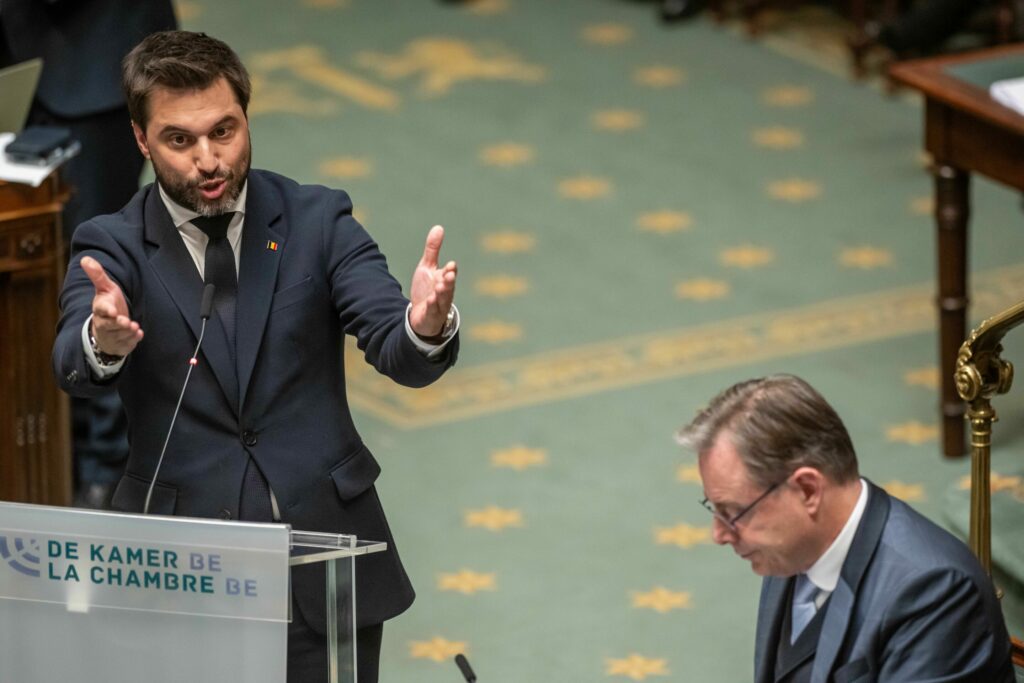
MR's Georges-Louis Bouchez and Prime Minister Bart De Wever in Federal Parliament in Brussels on Thursday, 2 April 2026. Credit: Belga/Jonas Roosens
Pending energy support, MR is blocking other issues within the government. "The largest French-speaking party committed to those who work has the right to be heard," Bouchez said.
In the meantime, credit rating agency Moody’s has downgraded its rating for Belgium over the weekend. While Moody's acknowledged that the Federal Government has initiated several "ambitious" reforms, it believes that these are insufficient to alleviate budgetary pressure.
This pressure, the agency said, stems "from rising interest costs, additional defence expenditure and persistent spending pressures resulting from an ageing population and disappointing revenue."
Belgium's budget deficit remains high – according to the International Monetary Fund (IMF), it is even the highest in the whole of Europe – and debt will continue to rise. According to Moody’s, it will rise to 116% of GDP by 2030.
'Wake-up call'
De Wever is not surprised by this assessment. For him, the assessment underlined "once again" that extra efforts are needed to restore the international markets' confidence in Belgium's financial health.
"It is a matter of responsibility to tackle this thoroughly over the coming months," he stressed. Therefore, De Wever intends to seek €5 billion this summer.
However, Moody’s assessment also gives him and his N-VA party a further argument to reiterate that there is no money for energy support – which all other parties in the Federal Government have been asking for in vain for weeks now.
Following the credit downgrade, the Flemish business network Voka has also rejected "costly" energy support measures, such as an increase in the commuting allowance.
"Belgium’s lower credit rating makes our budgetary situation even more difficult than it already was. That must be a wake-up call for the Federal Government," said Voka's managing director Frank Beckx, calling the downgrade a "wake-up call".
Last weekend, he stressed that the "costly measures are a bad idea, and certainly if they were to be paid for by businesses. The focus must be on a healthier economy that can compete with the rest of the world."
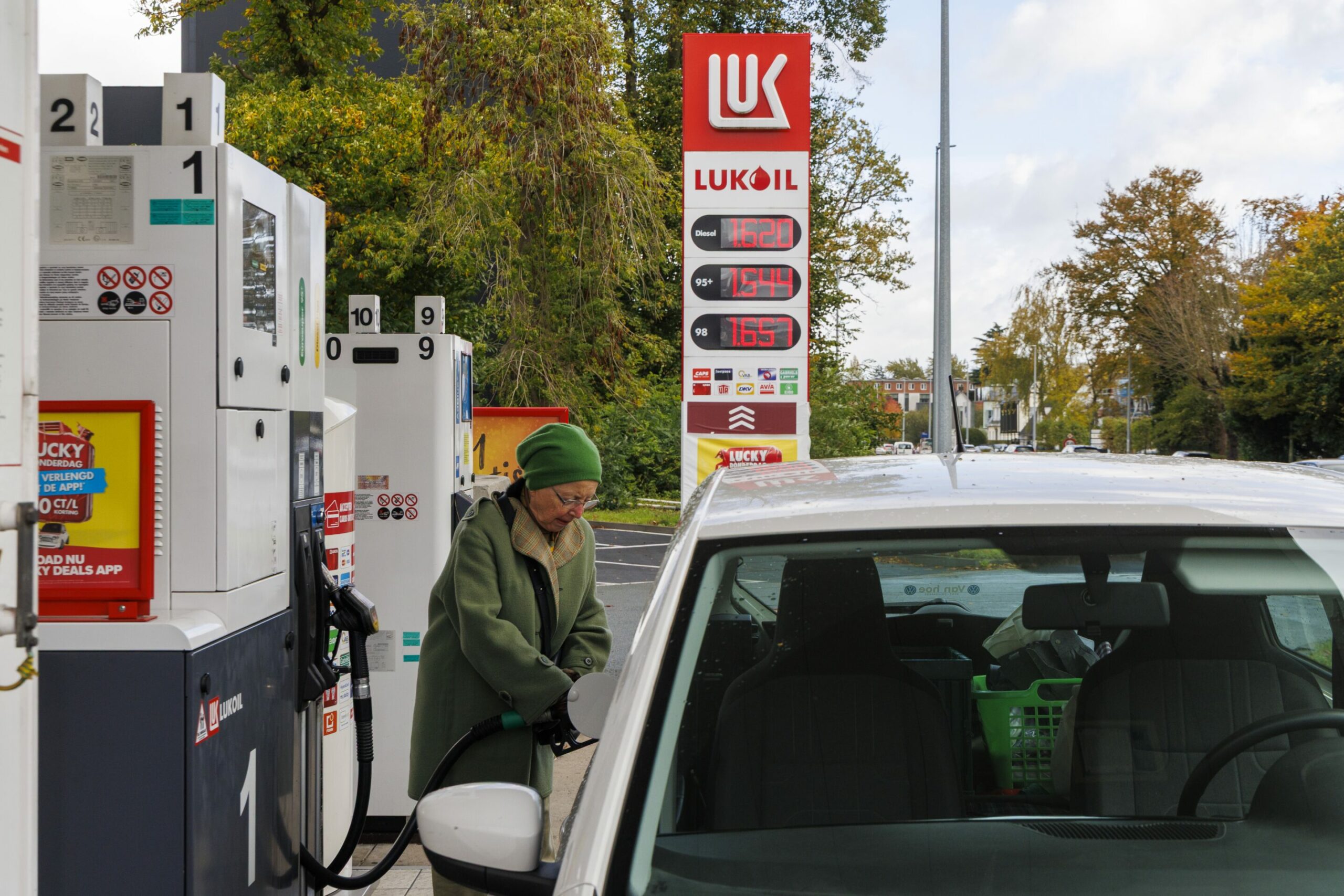
Credit: Belga/Nicolas Maeterlinck
On Tuesday at 20:00, the Federal Government's core cabinet will meet to examine "properly worked-out technical proposals".
According to VRT's political expert Ivan De Vadder, it is clear that "a winner and a loser" will emerge from Tuesday's meeting. "Either such energy support will be introduced, in which case MR wins and N-VA loses, or the support will not materialise, in which case it is the other way around."
Alongside MR, Les Engagés (French-speaking centrists), CD&V (Flemish Christian Democrats) and Vooruit (Flemish socialists) are also pushing for action. The only ones not in favour of energy support are N-VA, with De Wever stressing that there is "simply no money".
Either way, the Federal Government will have to find many multiples of Bouchez's proposed €50 million this summer.
