
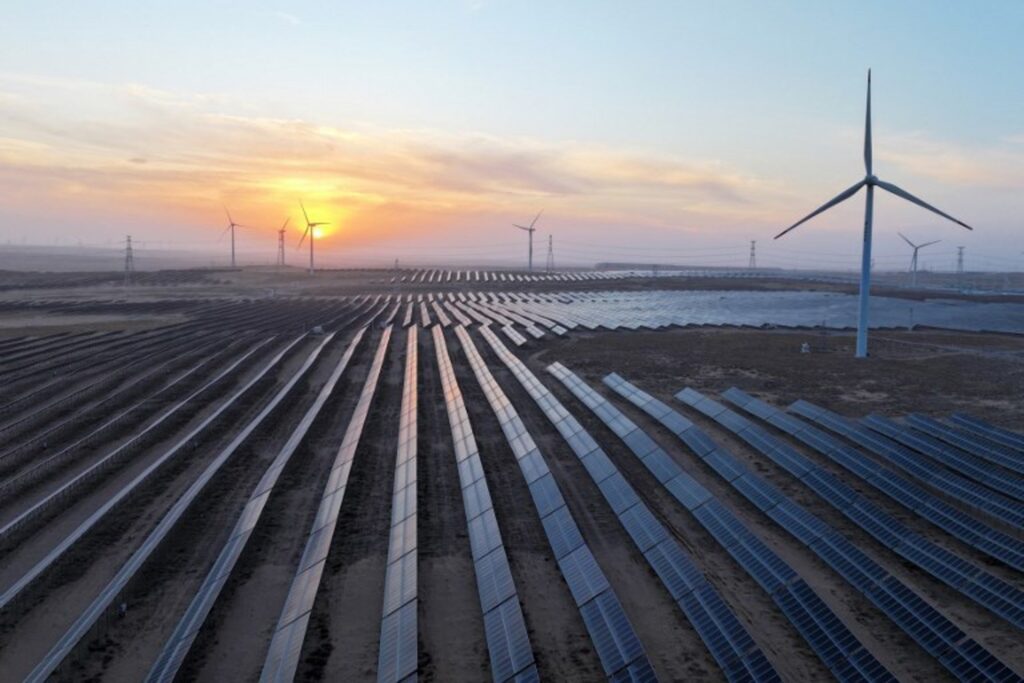
Renewable energy sources, led by solar power, met the entire global increase in electricity demand in 2025, preventing a rise in fossil fuel use, according to a new analysis by UK-based think tank Ember.
For the first time in 100 years, renewables surpassed coal as the leading source of global electricity generation, with solar energy playing a pivotal role in this shift.
Solar power production saw an extraordinary increase of 636 terawatt-hours (TWh) in 2025, representing nearly a 30% growth compared to 2024 levels.
Since 2015, global solar electricity generation has increased tenfold, nearly doubling every three years, according to Ember. Solar energy alone now matches the European Union’s entire electricity consumption.
The rapid expansion of solar energy accounted for 75% of the rise in global electricity demand in 2025. Combined with wind power, which grew by more than 8%, these two renewable sources met 99% of the global electricity demand increase.
Overall, renewable electricity generation increased by 887 TWh in 2025, surpassing the global electricity demand growth of 849 TWh. Consequently, fossil fuel-based electricity production remained flat, declining slightly by 0.2%. Ember noted this marked only the fifth year in the past century without growth in fossil fuel electricity production.
Aditya Lolla, Ember’s CEO, described the trend as a clear indicator that the world has “firmly entered the era of clean growth”. He added that this progress is no longer solely driven by aspiration but is becoming a structural reality.
China and India have emerged as major drivers of the energy transition, contributing significantly to the shift from fossil fuel-based systems to green energy. China alone accounted for over half of the new solar capacity and global solar power generation growth.
In 2025, renewable energy sources accounted for 34% of global electricity production, edging out coal, which dropped to 33%. This marks the first time coal generation has declined since 2020, with a reduction of 63 TWh globally.
Ember predicts that the large-scale deployment of energy storage solutions, such as batteries, will pave the way for the next phase of solar energy expansion.
Lolla emphasised that clean energy is reshaping global energy security, reducing reliance on fossil fuel imports, controlling costs, and catering to rising electricity demands. He highlighted the importance of modernising power grids and regulatory frameworks to ensure energy systems are equipped for this transformative shift.
