
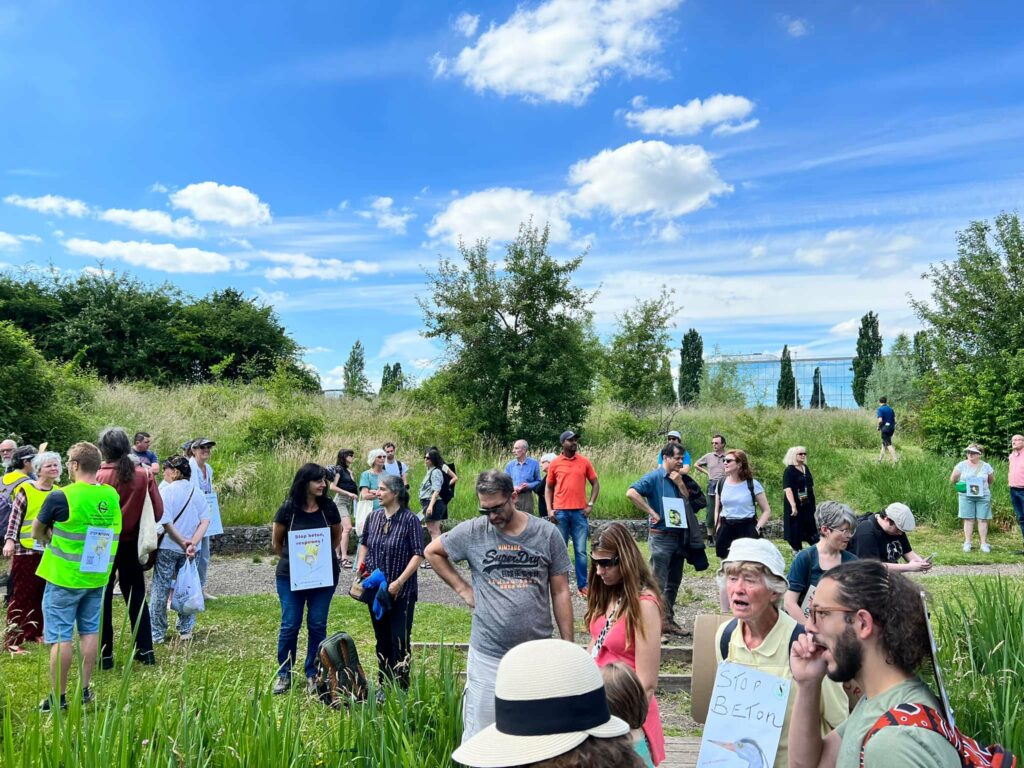
Despite the downpour that hit Brussels, about 80 people gathered late on Sunday afternoon in Watermael-Boitsfort to protest the proposed housing development on the urban farmland, Champ des Cailles.
The gathering, held on Rue de l’Autruche near the field, was organised by Les Ami.e.s du Champ des Cailles (ACdC) and intended to be symbolic.
Under the plans of the Brussels Region, approximately 70 social housing units are set to be built on part of the urban farm's land.
Participants denounced what they consider to be the "contradictions" in regional policy regarding the environment and housing.
The citizens’ group has been fighting for nearly 10 years to ensure the legal preservation of the Champ des Cailles green land. It is described as one of the last open-field areas in Brussels to have hosted an urban agriculture project and has been active for over ten years.
The ACdC notably criticised the continuation of real estate projects on undeveloped land while the Brussels Region simultaneously supports the development of urban agriculture, for example, through the Good Food strategy and the future Regional Designated Land Use Plan (PRAS).
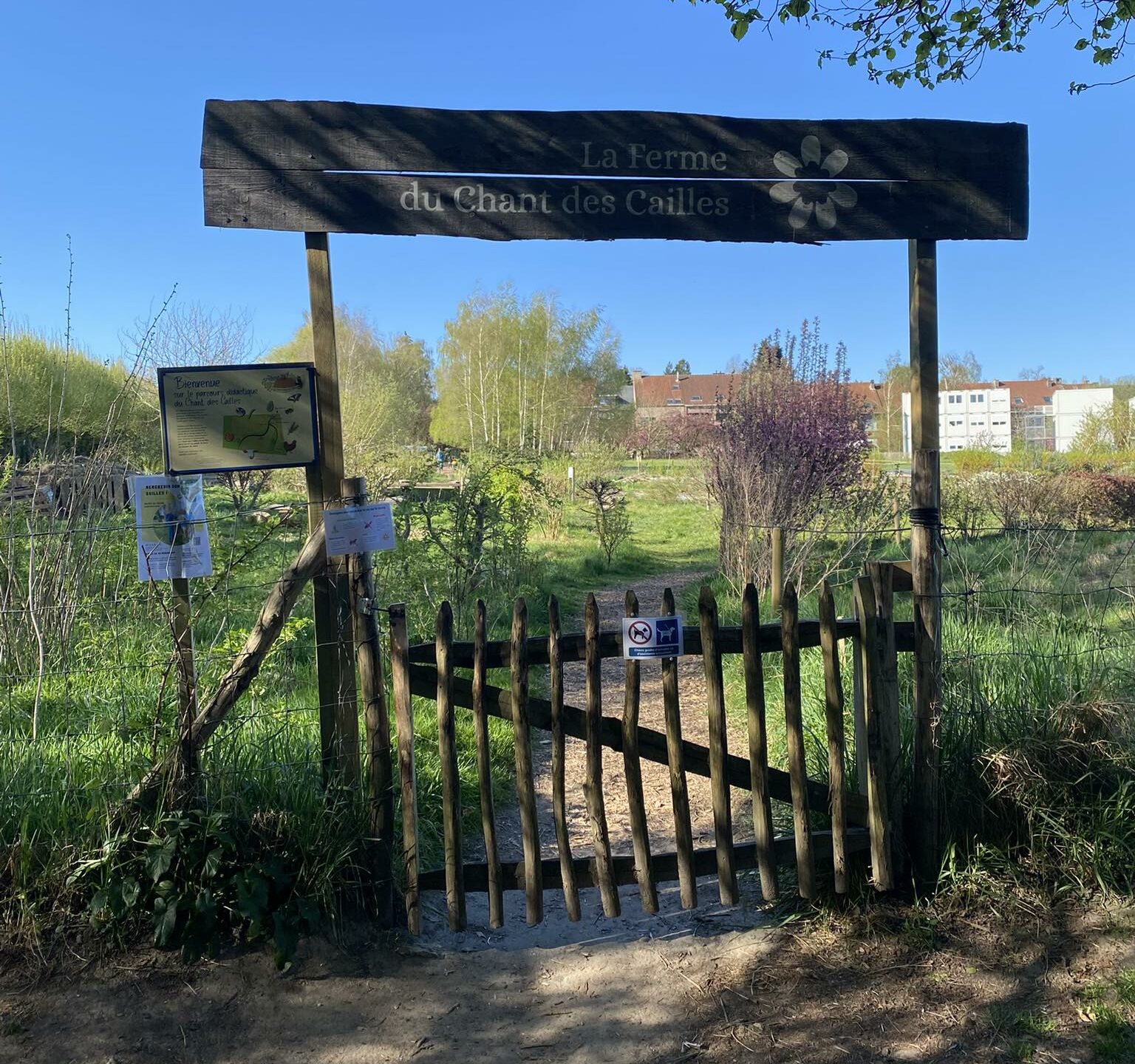
An urban farm on the Champ des Cailles. Credit: Les Amies du Champ des Cailles / Facebook
The collective also highlighted the financial situation of the Brussels-Capital Region Housing Company (SLRB), which must sell several hundred housing units and buildings to finance other projects.
According to opponents, maintaining the Champ des Cailles project in this context is "nonsensical".
Finally, the protesters noted that the project still needs to obtain several permits, notably from the Royal Commission for Monuments and Sites, as the Logis-Floréal garden city is listed as part of Brussels’ cultural heritage.
The Champ des Cailles issue has pitted advocates of urban agriculture against supporters of social housing construction for several years.
The site has already been at the centre of several citizen mobilisations. In February 2022, nearly 900 people protested against a 70-unit social housing project led by the SLRB.
However, there are currently over 50,000 households on waiting lists for social housing, with Brussels currently experiencing a severe social housing crisis.
Rejected moratorium
In February, the Brussels Parliament rejected a moratorium on all construction projects located in nine green zones of the capital.
The proposal was put forward by the French-speaking greens, and included the Champ des Cailles, the Josaphat brownfield in Schaerbeek, the Meylemeersch brownfield in Anderlecht and even the Donderberg Sauvage in Laeken.
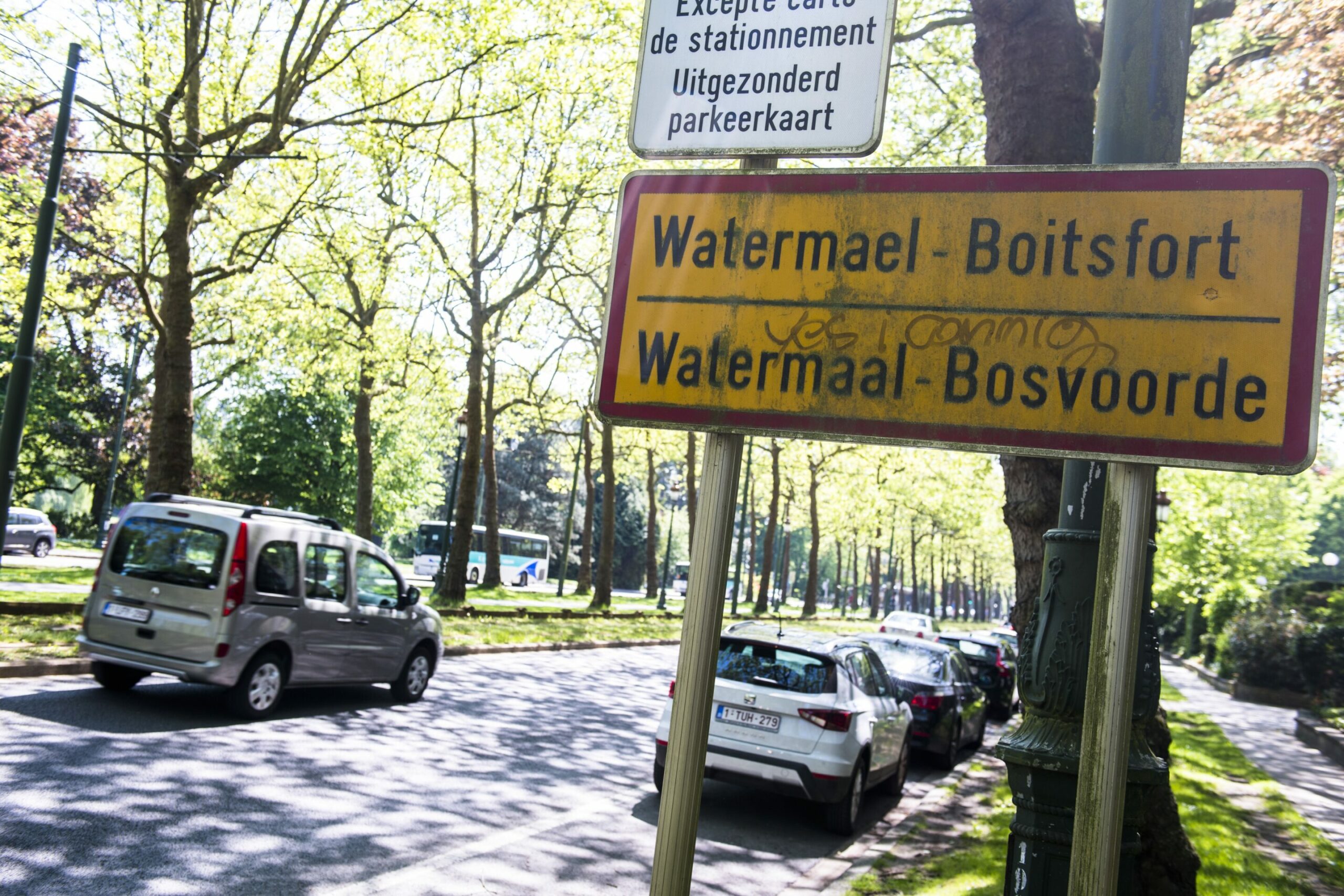
Illustration shows the name of the Watermael-Boitsfort/Watermaal-Bosvoorde municipality on a road sign, Friday 04 May 2018. Credit: Belga / Laurie Dieffembacq
Outgoing regional Brussels Environment Minister Alain Maron (Ecolo) criticised the compromise reached between partners in the new Brussels Government regarding brownfield sites back in February.
The new agreement enshrined three of the sites and calls for an 18-month moratorium on others. However, Maron argued that this will solve nothing in terms of legal certainty, first and foremost, beyond the central issue of climate preservation.
At the 2024 elections, Watermael-Boitsfort replaced its green mayor, Olivier Deleuze (Ecolo), who had been in place since 2012 and had governed alongside French-speaking liberals, MR.
He was succeeded by liberal David Leisterh (MR), who led the failed Brussels Government formation talks before resigning and quitting national and regional politics to focus on leading this affluent suburban municipality.
