
What are the most delicious foods, refreshing drinks, coolest cafés and intriguing restaurants in Belgium and Brussels right now?
Here are the trends and establishments that recently caught the eye of our food and drink expert.
Restaurant
Chaga
Chaga restaurant
We all have our reasons for booking a top restaurant: a special occasion, a business dinner, or simply the pleasure of fine cooking. In Brussels – and Belgium more broadly – there is no shortage of options.
Chaga, however, feels like a hidden gem. Tucked away on Boulevard Marnix beside the ING headquarters, above the traffic of the inner ring, it is easy to overlook – and all the more rewarding for it.
Its location is part of the appeal. A stone’s throw from the European quarter, it is the area’s only true gastronomic restaurant. It is also housed within the Faubourg 21 hotel, a member of the Best Hotels in the World label, which lends an immediate sense of quiet luxury.
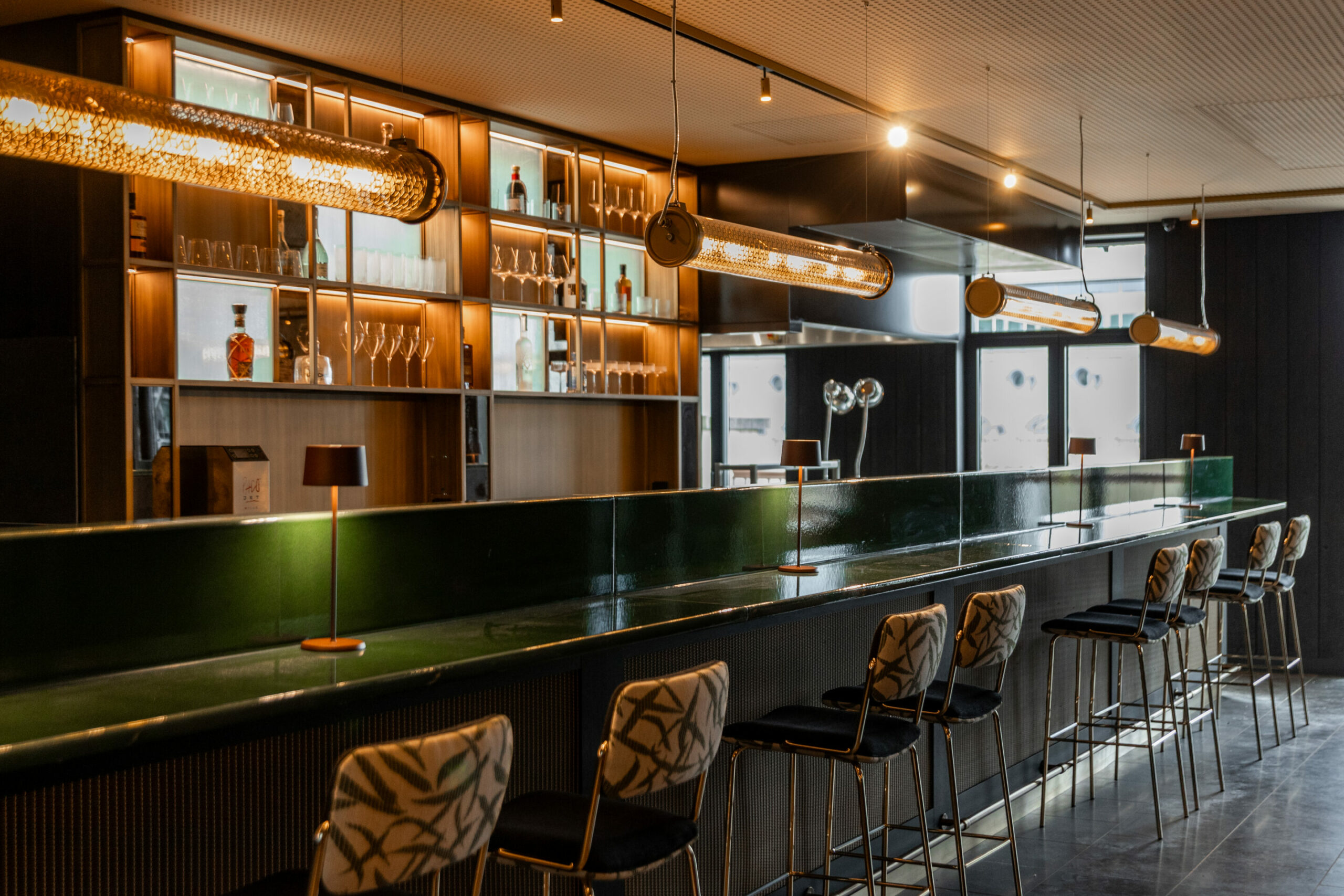
Begin with an aperitif at Bar 21 on the first floor. The setting – three cosy rooms overlooking the street or inner courtyard – offers a glimpse of Brussels at its most refined, complemented by the deft touch of French barman Amar Hennebert and his carefully curated drinks list.
From there, take the lift to the fourth floor. In the evening, the view across the illuminated AXA building adds to the mood. Inside, the layout of two-person tables never feels cramped; the staff strike a careful balance between intimacy and space.
As in many fine-dining restaurants, the meal begins with a sequence of small bites – elegant, precise and beautifully presented – setting the tone for what follows.
Chef Kevin Lejeune, who cut his teeth at La Paix before earning a star at La Canne en Ville, has free rein here. Named Gault & Millau’s ‘Revelation’ in 2021, he brings a confident, creative approach shaped in part by the restaurant’s robata grill, which allows fish and meat to be cooked without added fat.
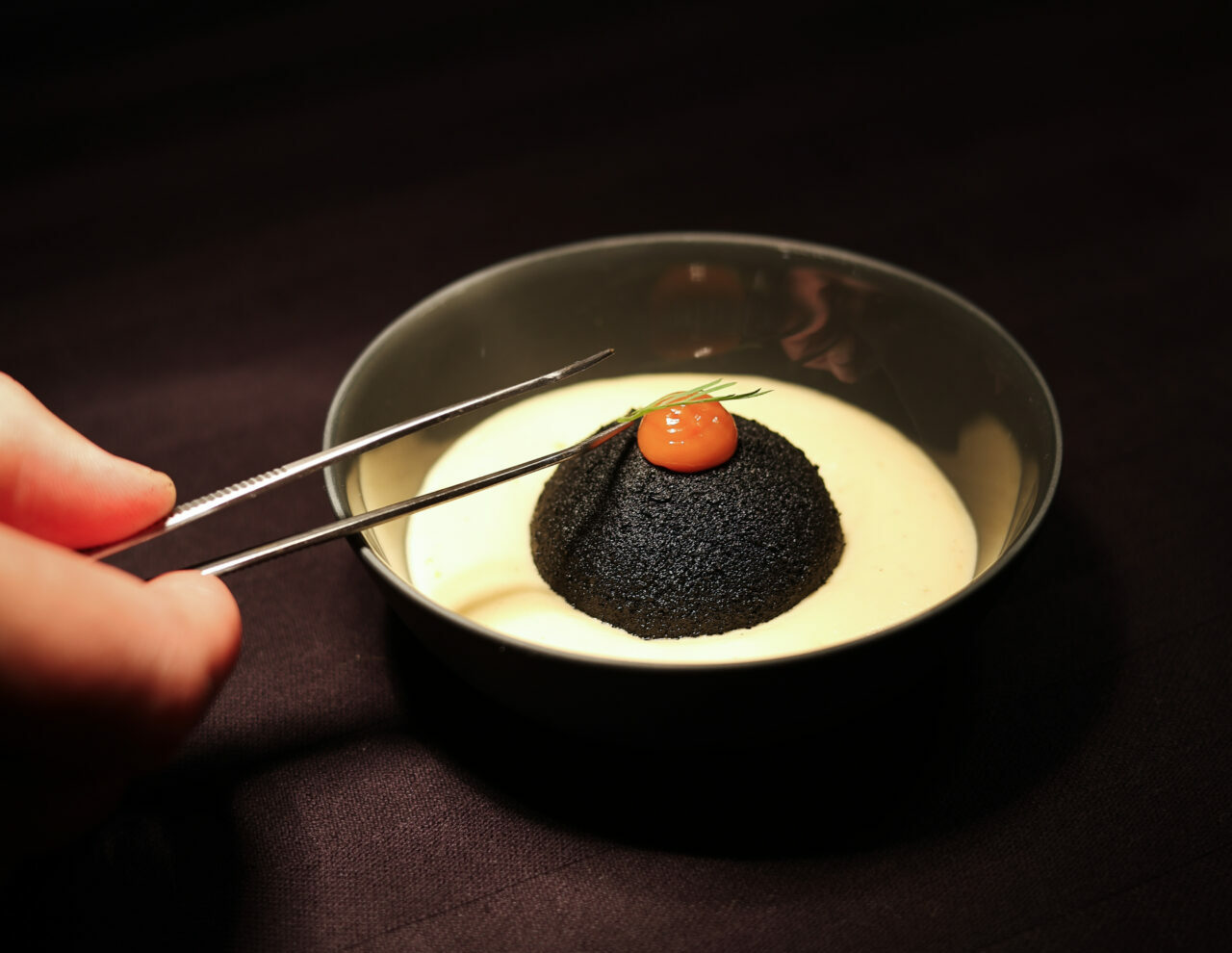
A dish from Chaga restaurant in Brussels. Credit: Tribe Agency
The result is paradoxical: dishes that feel both light and deeply satisfying. Japanese influences, citrus notes and subtle smokiness run through the menu, balanced by contrasting textures – crisp, tender, occasionally crunchy.
Sommelier Vincent Wynant adds an imaginative dimension, pairing dishes with a sharp wine selection or his own inventive non-alcoholic creations.
Even after dessert, the experience continues with a final series of petits fours. Guests leave with a small homemade cake – a thoughtful gesture that lingers long after the meal. Stepping back onto the street, with the glow of Brussels’ façades around you, the evening feels almost dreamlike – a brief escape from the city’s bustle.
Chaga - 21, Avenue Marnix 1000 Brussels
Food
Boudin de Liège
Boudin de Liège
Boudin de Liège, Belgium’s renowned white sausage, was awarded European PGI (protected geographical indication) status in November 2025, after a decade of negotiations.
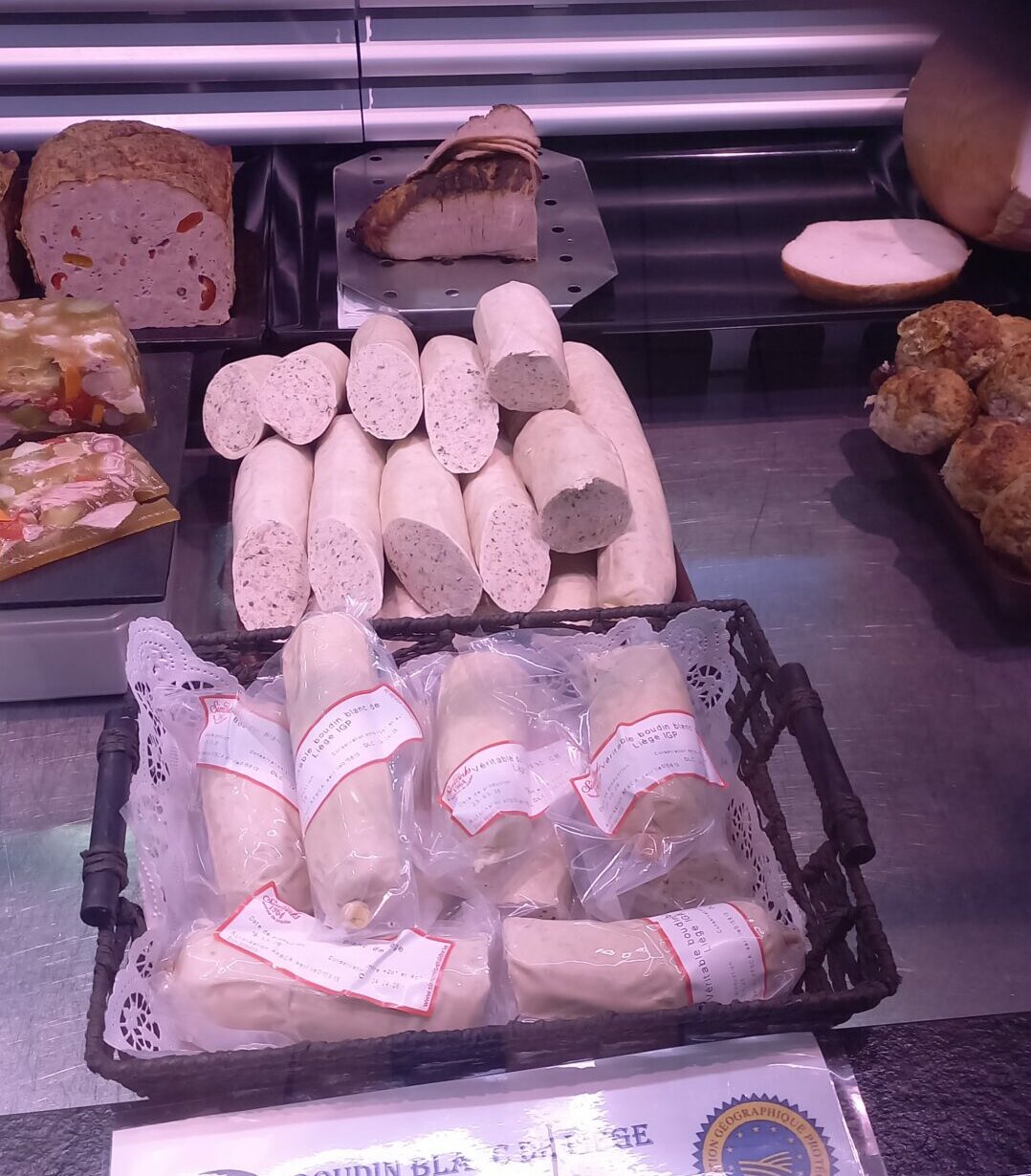
Unlike blood sausage, it is made from two-thirds lean pork and one-third cheek fat, mixed with milk-soaked bread and seasoned with 3g of marjoram whole leaves per kilo of stuffing – a defining ingredient visible in each slice. Its usage dates back to at least the 18th century.
This precise balance sets it apart from other white sausages in Belgium and beyond.
Historically, Liège’s butchers cultivated and dried their own marjoram. Over time, this practice declined, with imports – and even substitutions with oregano – becoming common.
In response, local butchers and growers relaunched marjoram production in 2014 on the slopes of the Liège citadel. The shale-rich soil retains heat, creating ideal conditions. The herb must dry for three years before use, and commands prices of up to €150 per kilo.
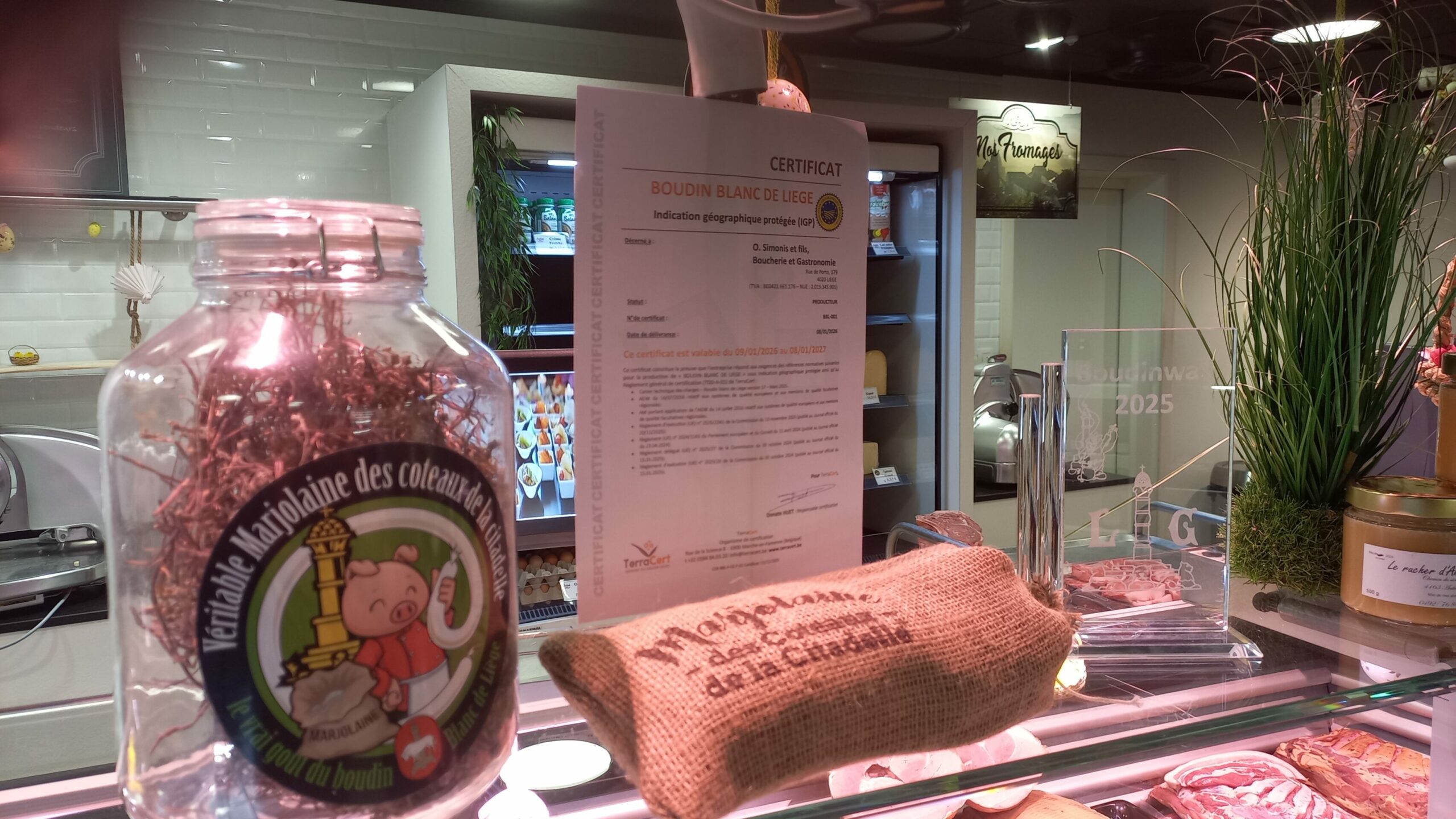
Boudin de Liège
Traditionally served cold in thick slices, boudin de Liège remains a staple of local culture. “Liège's butchers are used to giving a slice to every kid who enters their shop,” says Octave Simonis of the Liège guild.
Cooked at 70°C for 45 minutes, it is recognisable by its irregular shape and thick casing, made from pork bung. it looks like a thick, uneven sausage of 30-40cm long, 5-7cm of diameter, tied at both ends but thicker at one end. Butchers use it inside-out, to keep its fat inside the sausage. Though edible, the casing is often discarded.
Around a dozen butchers are certified producers, including Maison Massart in Ouffet, the first authorised to distribute it more widely in supermarkets like Colruyt. Production remains small-scale – around 60kg per week per butcher, rising at Christmas, Simonis says.
With a shelf life of two weeks, it can be found at select outlets such as Ferme à l’Arbre de Liège in Lantin, or sampled at the city’s covered market.
A true local speciality – and an ideal aperitif.
Café
Wittamer Cavell
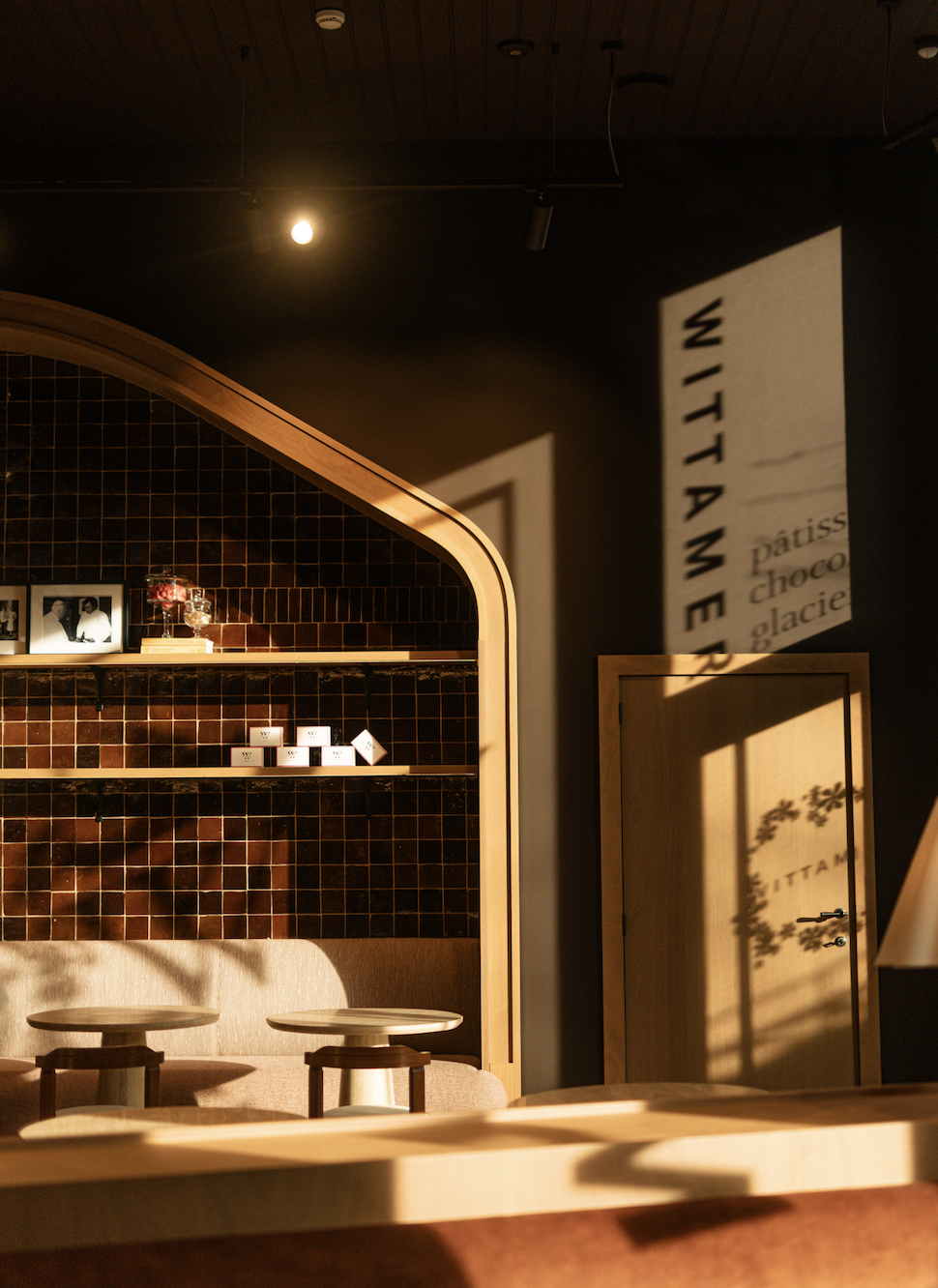
Wittamer cafe in Brussels
Wittamer has reopened its Cavell outlet, at the quiet junction of Edith Cavell and Marie Depage streets in Uccle – and its sunlit terrace is already drawing a crowd.
The tearoom, fully refurbished in 2022, feels both contemporary and rooted in tradition. Warm wood, zellige tiles, artisanal china and velvety travertine tables create a refined but inviting atmosphere.
The redesign reflects the strategy of Wittamer’s new owners: preserving a legacy of excellence while adapting to modern tastes. The interior now offers more seating and better visibility for pastries and chocolates – still the house’s core.
Start with the mille-feuille, reworked to such effect that it may well spoil you for the classic version.
Each pastry carries the weight of Wittamer’s 110-year history. The drinks list is concise but well chosen, including Belgian sparkling wine Chant d’Eole. Service is polished throughout.
Alongside its sweet offering, the menu includes savoury options – soups, quiches, salads and sandwiches – notably the pistolet-minute, a freshly filled brioche roll prepared to order.
Founded in 1910 in Sablon, Wittamer is part of Belgium’s culinary heritage and has been a supplier to the Royal Court since 2000. After its sale in 2021, the company is entering a new phase, with production set to move to a larger facility near the Roodebeek metro station.
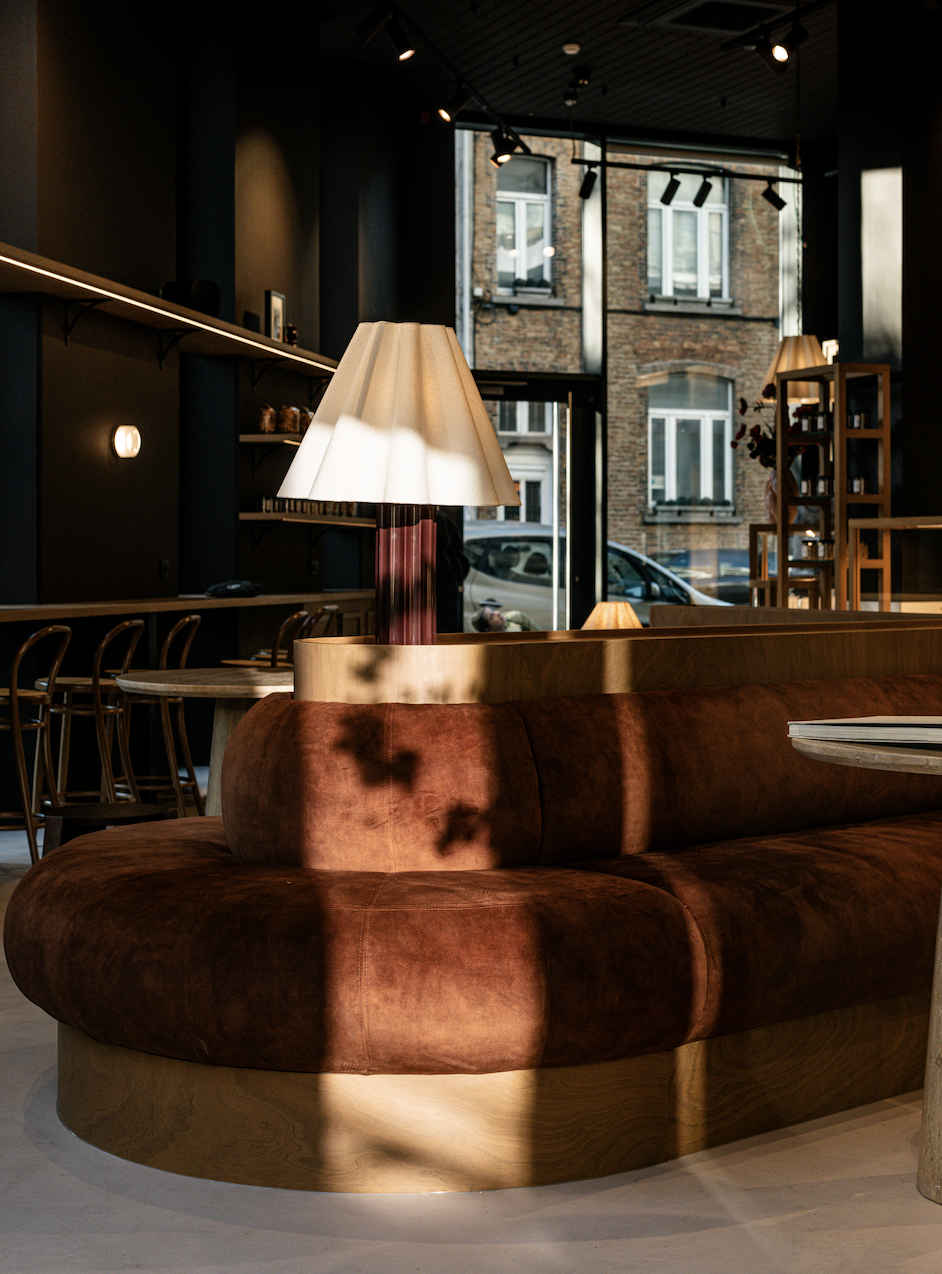
Wittamer cafe in Brussels
The arrival of former Neuhaus master chocolatier Christophe Museur in 2024 has already made its mark. His Easter 2026 collection confirms the house’s continued ambition. Try the Alto el sol, a rich Peruvian praline with the depth of a dark truffle, or the Dôme pulpe de cacao, whose cocoa pulp lends an unexpectedly fresh, fruity note. At around €2 per chocolate, the quality justifies the price.
Under new CEO Laurent Baert, the strategy is clear: “affordable exceptional products”, new openings – including Waterloo – and expansion into business-to-business sales.
To mark the 40th anniversary of Paul Wittamer’s 1986 Valrhona victory, the house will relaunch the original samba pastry in a limited edition this June. Wittamer continues to make luxury feel accessible – with a distinct taste of Belgian history.
Drink
Dada Chapel
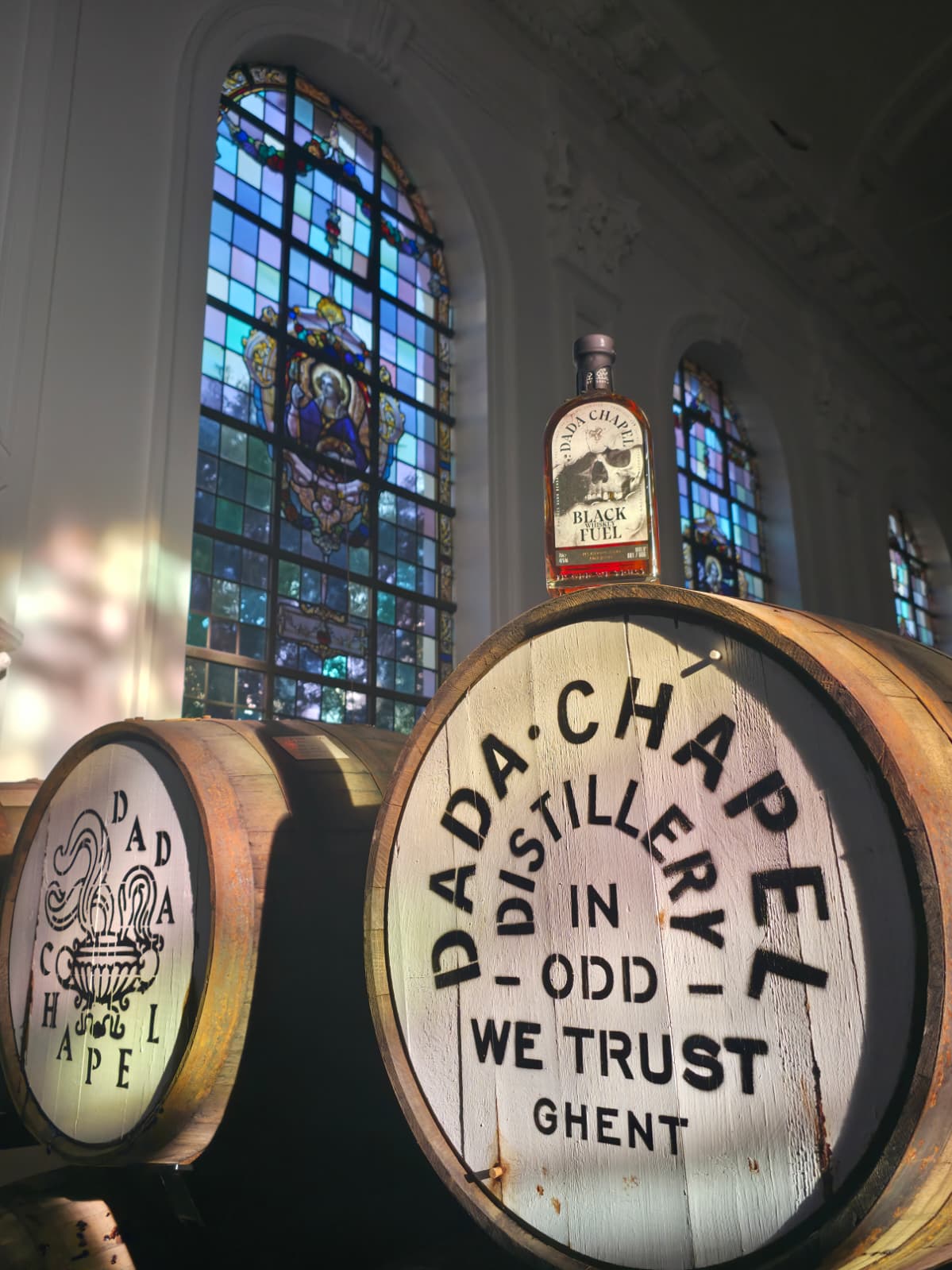
Dada Chapel
Michel Moortgat, CEO of Duvel Moortgat, has long been fascinated by fermentation and distillation, including through his recent 'Duvel distilled', a barrel-aged whisky. Building on his family’s 150-year brewing heritage, he has created Dada Chapel – a distillery that merges craft spirits with contemporary art.
The project is rooted in a 17th-century building in central Ghent, once a mansion and later a convent-run nursing home. After falling into disrepair the mid 1990s, it was restored and reimagined – becoming both distillery and artistic statement.
The name reflects Moortgat’s passion for Dadaism, the early 20th-century movement that challenged artistic conventions through provocation and absurdity. The motto: “In odd we trust.”
Inside, copper stills and their distillation towers stand beside ageing barrels beneath a monumental organ, creating a striking contrast between tradition and experimentation.
The philosophy is simple: start with high-quality, often local or organic ingredients, and push boundaries. "We want to push the limits in this still very traditional sector,” Moortgat says.
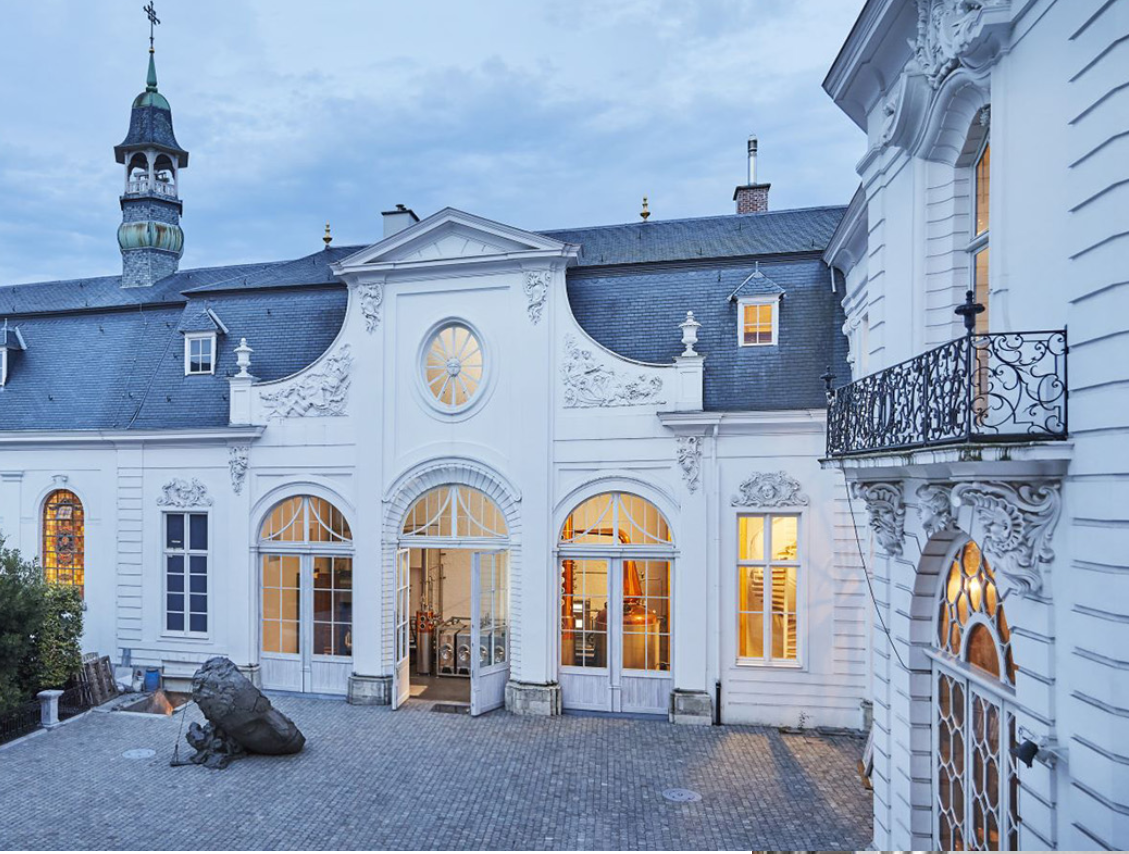
Dada Chapel
The range reflects that ambition. It began in 2021 with a potato-based vodka, made from Mona Lisa potatoes grown in northwest Flanders. This was followed by Brhum, a rum-like spirit distilled from Belgian sugar beet – with a bourbon barrel-aged version introduced in 2023. Both can easily replace rum in cocktails, but the aged version can be drunk as such like a bourbon.
Three gins followed in 2024: one with a intense juniper berry flavour, and two flavoured ones (raspberry and yuzu-peach) made with real juice from maceration.
More recently, the line has expanded to include a ready-made negroni, a non-alcoholic spritz based on iris root, and a coffee liqueur designed for espresso martinis.
The latest release, Black Fuel, is a limited-edition whisky created with Flemish heavy metal band Channel Zero, aged for four years in bourbon barrels.
Playful, inventive and distinctly Belgian, Dada Chapel’s creations are as much about experimentation as they are about flavour – perfect for aperitifs, barbecues, or simply a more unconventional drinks cabinet.
