
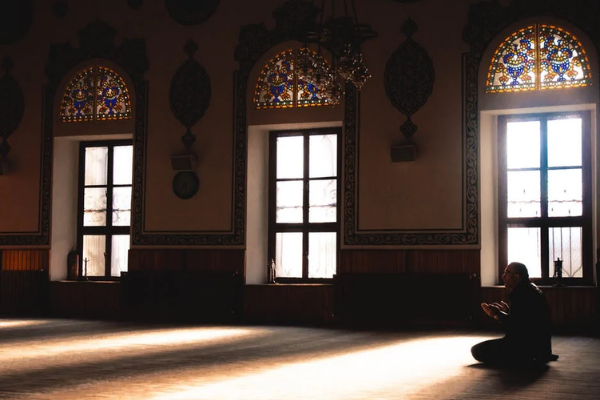
“I came home and ate a lot of meat. Then I ate pancakes. I topped it up with two high-protein yoghurts. Then two bananas and one apple. And I drank a litre of tea and a litre of water,” Aziz says after his first day of fasting.
He lives in Brussels with his uncle. They are originally from Uzbekistan, where Aziz first did Ramadan. But it wasn't a family affair – his close relatives aren't religious. In fact, it was his neighbours and community that got him into the spirit.
Belgium is home to some 800,000 Muslims with a similar number residing in the Netherlands. Though far from the warmer climes of the religious heartland, many of faith observe the tradition over here.
Yet whilst fasting might be the first thing to come to mind when we think of Ramadan, there is a lot more depth to the month-long ritual than not consuming anything during daylight hours.
And with days uninterrupted by meal times there is space to focus on other things. As Beyza from Schiedam explains: “It’s a beautiful opportunity. A month to both pause and try harder.”
Hilal in The Hague agrees. “The moment you stop eating, you have so much time to do other things: reading, reciting, and improving yourself.”
The Brussels Times spoke to Muslims participating in Ramadan across Belgium and the Netherlands, gaining an insight into the depths, benefits and challenges the tradition comes with.
A month of detoxing
Ramadan is observed by Muslims worldwide as a month of fasting, prayer, reflection and community – a chance to detox from the rush that is daily life and to earn forgiveness for your sins.
But not only do Muslims pay close attention to what they put in their mouths, they also are conscious of what they say: “The tongue is a sword,” Yassir from Rotterdam says. “Gossip and swear words are not allowed. They are not good for your soul.”
Hilal agrees: “I think a lot more about what I should and shouldn’t say. For example, I’m way more mindful about getting frustrated when I’m driving.”
An early start
Girls are considered old enough to do Ramadan from their first menstruation; boys are considered adults when they have their first wet dream.
Hilal first participated when she was 13. If it were up to her, she would have started sooner but her parents made her wait: “We wanted to start at an early age, you really look forward to it as a child. Sometimes we were allowed to fast for half a day.”
“As children, we would beg to start fasting,” Beyza confirms, likening it to the fun of Christmas. But this contrasts greatly with the outside perception of Ramadan.
"When we were in primary school, (non-Muslims) saw it as torture,” Hilal says. “They thought: ‘Why would you do that to your children?’ As if our parents forced us to do it.”
Community
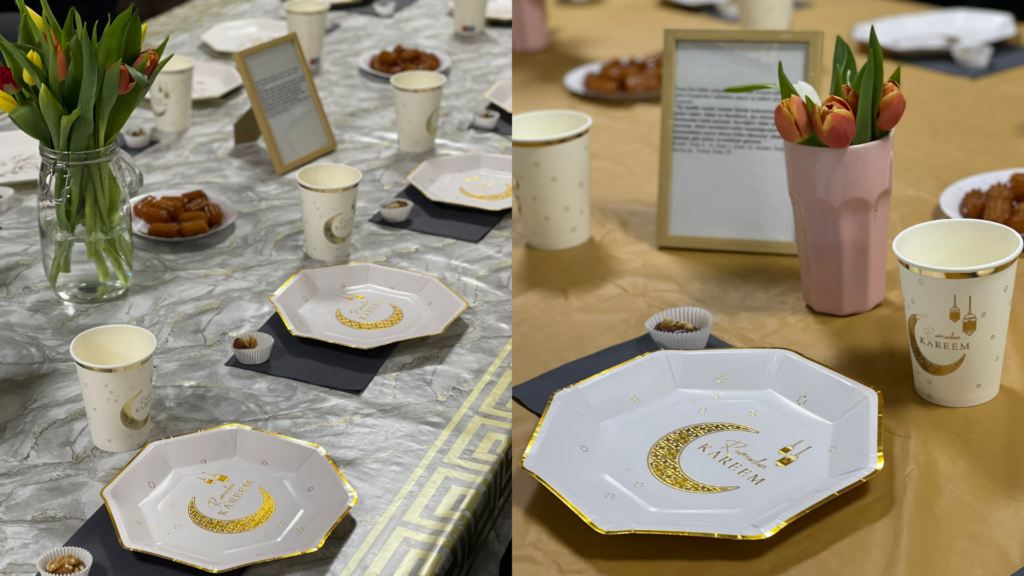
Part of that fun is in the social aspect of Ramadan, as the sense of community is central to the sacred month. Old disagreements are buried and it is a time to work on human relationships.
Ming, who is from The Hague, highlights this and adds that connecting with people outside your friendship circles is just as important as spending time with family. “Strengthen bonds, but also try to rebuild bonds that are no longer there.”
The pandemic has highlighted the importance of community and put strict limits on the normal procedures. “It’s all about having dinner with everyone, but being together suddenly stopped,” Beyza says. “It was less fun, a lot more lonely.”
Ramadan is also about staying positive and determined, Beyza explains, as she doesn’t get hungry or have the urge to eat. “God is with you. If you believe in it, then it will work.”
Credit: Rumeysa Vanlıoğlu
Aziz agrees: "I personally believe in God, and I’m extremely thankful for everything I have. Every morning I look up to the sky and I am grateful."
Those who aren’t familiar with Ramadan often think it is about experiencing starving and helping others. “As a child we learnt that we do it for gratitude, to feel what the poor feel,” Hilal says.
But besides learning to empathise with those less fortunate, the intention is to strengthen your connection with God, Ming says. “To resist the urge to eat and drink when no one is looking. To not surrender to basic human compulsions."
Hilal agrees: “The older you get, the more you understand that this is a spiritual journey rather than a physical one.”
A sacred month
It is the spiritual aspect that makes Ramadan the month Hilal looks forward to the most. “It's like a best friend seeing you again after a long time. The joy and solidarity that it brings is so beautiful, I wish we could always have that.”
Yassir agrees that you feel better inside during Ramadan. “This is the time to focus on your faith. It’s like a self-fulfilling prophecy, we believe it comes from God.”
It is the month that God is most merciful, Beyza says. “If you regret something and ask for forgiveness, God is going to forgive you this month. And everything has more meaning - if you donate to charity, it will be worth more.”
Aziz explains that doing Ramadan is a necessity. "In Quran it says that this is the only thing you do for God, not for yourself."
The last 10 days
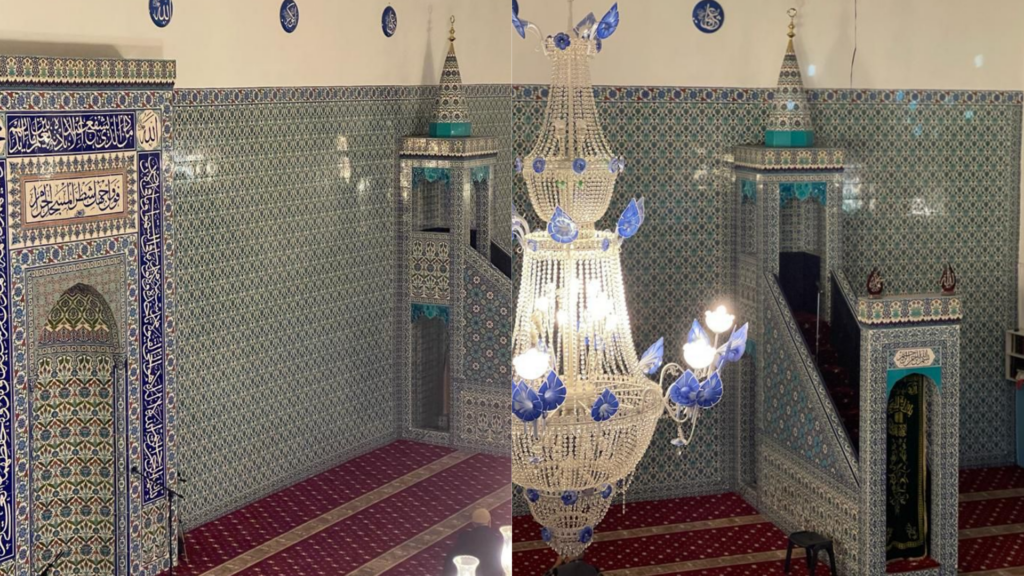
The last ten days, known as Laylatul Kdar, are the most sacred days. “One odd day in that period is seen as the Night of Power. That night, all your sins are forgiven,” Ming says, “but nobody knows exactly when.”
“You will try even harder those days, read the Quran even more, give even more zakat (donations), stand even longer in night prayer. It is the final stretch.”
Hilal agrees that the last ten days are a highlight, as the sacred night is hidden in one of them. “Those days, I let go of everything I’m doing, and the reward is very big.” The intention, she says, is that you take that energy with you into the rest of the year.
Credit: Rumeysa Vanlıoğlu
Challenges
Although Ramadan is a celebratory month with plenty of things to be grateful for, not eating and drinking throughout the day does come with its challenges. “Fatigue, that’s one,” Ming says. “You have to continue doing your daily duties.”
Illness is another potential hurdle. Those who become unwell are allowed to stop fasting, but that can make you feel as if you are not doing enough. Indeed, for many Muslims, the entire month is both a physical effort as well as a test of will power.
Sleep deprivation is another challenge, especially for those who wake up with a cup of coffee. “The disturbed sleep rhythm can be challenging, but I’ve been doing it for several years now,” Yassir says. "I’ve ordered slow-release caffeine pills to maintain my productivity during day time."
Hilal and Beyza dread their daily duties the most, as it can feel like a distraction from the most important thing: faith. But Islam says life is supposed to continue normally during Ramadan - and difficult experiences are part of the deal. “The more challenges, the more rewards,” Beyza says.
Self-healing power
While fasting for 18 hours per day comes with some difficulties, it has scientifically proven health and physical advantages for the body. “After 12 hours, your body enters a self-healing state, called autophagy,” Ming explains.
Autophagy is the body’s way of cleaning out damaged cells, in order to regenerate newer, healthier cells. “You break down the bad cells and the good cells remain,” Yassir says. “As an athlete, it is important for my health.”
Breaking taboos
Thankfully, awareness about Ramadan is growing as more intercultural dialogue is held in order to break taboos and inspire conversation.
“In The Hague, I would have invited you to iftar,” Ming says. “As more schools and companies are organising iftars, we are taking a step beyond diversity: inclusiveness.”
