
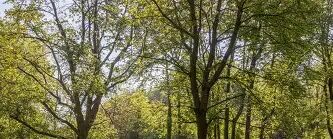
Nearly 240 hectares of new forest were planted in Flanders during the 2025-2026 season, including 524,230 trees and plants, according to Flemish Minister Ben Weyts (N-VA).
Of this, the Flemish Rand - 19 Flemish municipalities that surround Brussels/Capital Region - contributed 18 hectares of new forest and 40,904 trees, bringing its total since 2019 to 312,090 additional trees.
This area, which is part of Flemish Brabant, accounted for nearly 40% of the province’s reforestation and around 8% of Flanders’ overall forest expansion.
West Flanders saw the largest planting effort in 2025-2026, adding 48.56 hectares and 133,252 plants, followed by Antwerp (68.66 hectares, 132,248 plants) and East Flanders (58.31 hectares, 117,877 plants).
Flemish Brabant planted 46.06 hectares with 106,753 plants, while Limburg contributed 18.04 hectares and 34,100 plants.
Minister Weyts, whose portfolio includes the Brussels periphery, identified the Flemish Rand as Flanders’ fastest-growing green zone, highlighting the efforts made there to counter urbanisation pressure from Brussels with reforestation projects.
Half of the tree planting in the Rand occurred through a specific project dubbed ‘De Vlaamse Rand Boomt.’
The other half came via the Gordel initiative, in which each participant planted a tree in the area immediately around Brussels.
Major efforts also took place in the ASIAT Park in Vilvoorde, and through forest projects in Meise and Overijse.
Dilbeek led the municipalities with 50,474 new trees since 2019.
Overall, 1,386 volunteers and 26 schools participated in the planting campaigns.
“No one could have imagined over 300,000 trees being planted,” Weyts remarked, adding that reforestation efforts in the Flemish Rand would continue.
