
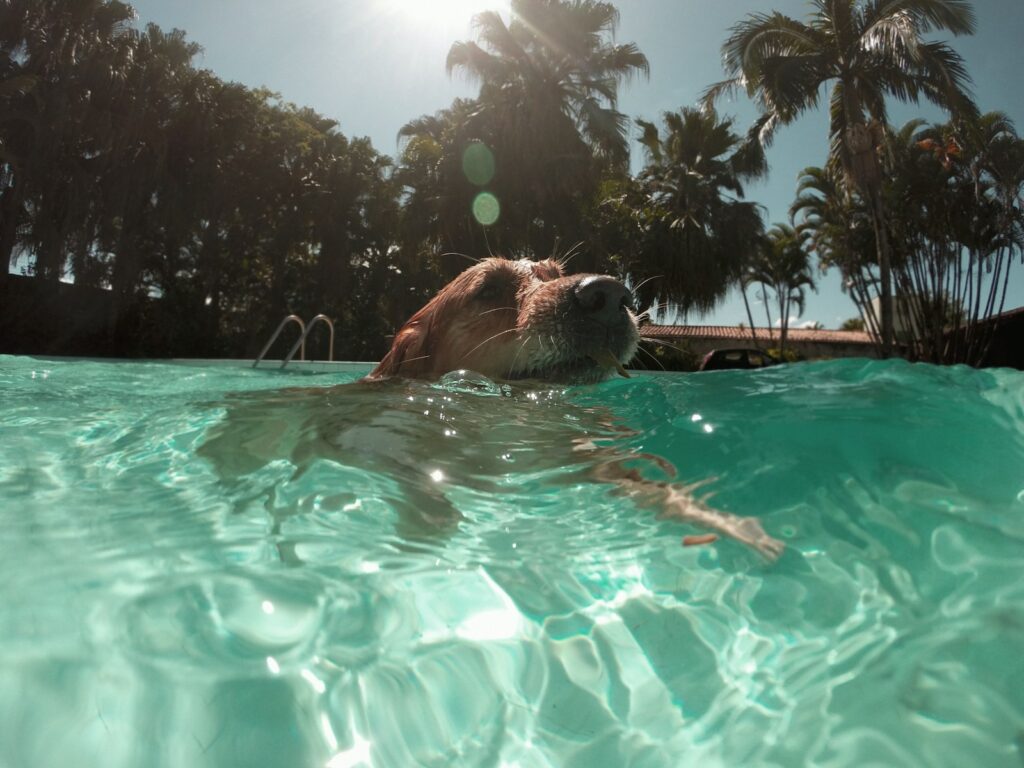
As Belgium battles with sweltering temperatures of up to 35°C this week, the risk of overheating is real, including for animals.
Dogs, cats and other pets have a naturally higher body temperature than humans, and struggle to regulate their body temperature, leading to more health problems in hot weather. Owners should therefore take extra precautions during heatwaves. Find some top tips on how to keep your pets cool below.
Firstly, ensure your pets have a cool, shady place to rest, using umbrellas or specially-designed shelters rather than blankets. The shelter should be well ventilated to provide sufficient air circulation. Cooling mats and a wipe down with a damp towel can also help keep them cool.
While it might seem logical to shave long-haired dogs, their coats actually provide vital insulation. Owners should instead opt for professional thinning and maintain regular brushing to remove excess undercoat.
Hydration is also essential during heat waves: pets should have access to fresh, clean water at all times in different places around the house and garden. Owners should avoid giving them very cold water, as this can cause stomach issues, and avoid adding ice cubes, as the pet may swallow them.
Owners should not walk their pets during the hottest part of the day (usually from 12:00 until 16:00) and instead stick to mornings and evenings. Shady or grassy areas are also best for a walk, as hot surfaces such as concrete, asphalt and metal can burn your pet's paw pads.
Crucially, pets should never be left in the car during hot weather, even with the window open. Temperatures in a car can quickly rise to 80°C and cause fatal heatstroke, according to regional agency Brussels Environment.
Signs of overheating
Owners should stay vigilant to avoid their pets overheating. Some breeds, such as pugs and bulldogs, are at particular risk, often succumbing to heatstroke within 15 minutes due to their compromised airways.
Symptoms of overheating include rapid, panting, excessive saliva, red or pale gums, weakness, vomiting or diarrhoea.
If a pet shows any of these symptoms, their body temperature should be lowered gradually using a damp cloth, especially on the paw pads and ears. Pets should also not be immersed immediately in water, especially when it is very cold, as this can cause thermal shock.
If symptoms persist, contact your local vet immediately.
