
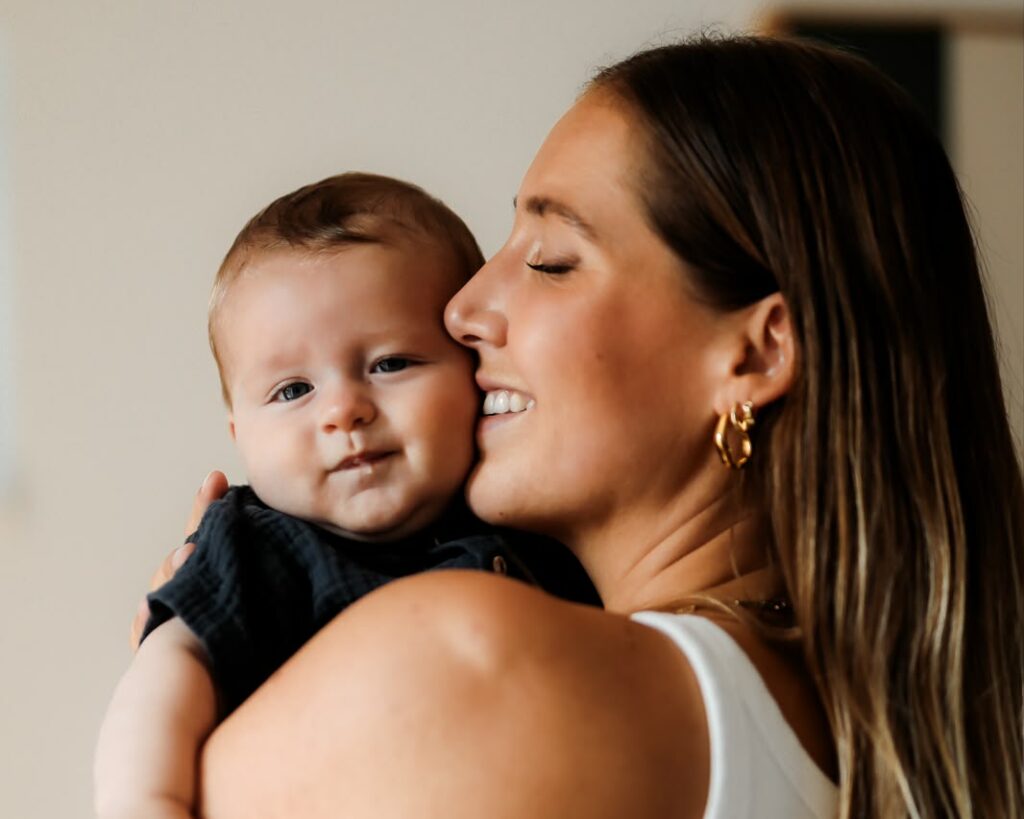
For three years, Alexia Desmet's life revolved around pregnancy tests, hormone injections and the hope that her next attempt at getting pregnant would finally work.
Today, the 33-year-old from Waterloo is the mother of a healthy two-year-old boy. But reaching that point required a long and emotionally exhausting journey through Belgium's medically assisted reproduction (MAR) system.
“I think I wanted to quit after every single attempt,” she recalls. “But the desire to have a child was stronger. Somehow, you always get back on your feet and try again,” she told The Brussels Times.
Desmet is one of the participants featured in the upcoming Pickx+ documentary Inconceivable: The Secret Business of Breeding Humans, which explores infertility, fertility treatments and the rapidly growing global fertility industry. The programme will be followed by a debate featuring patients and specialists, including Dr Isabelle Dupond of Erasme Hospital.
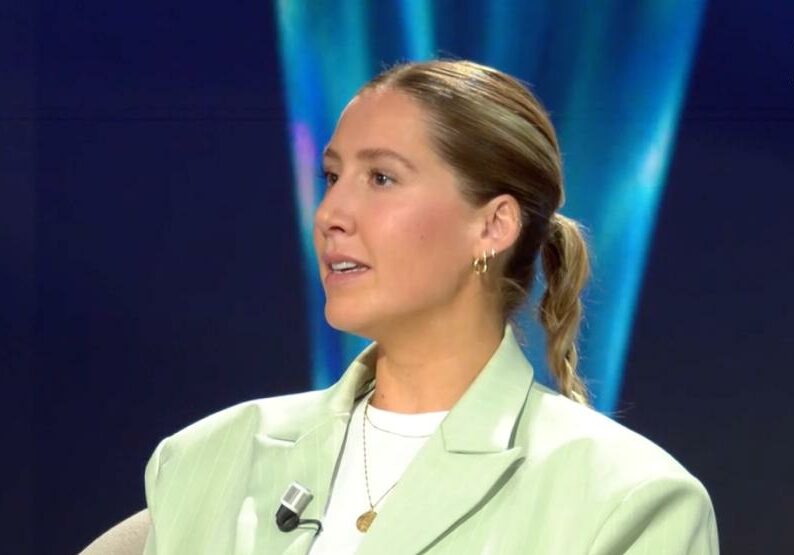
Credit: Screenshot/Pickx+
An unexpected diagnosis
Desmet and her husband began trying for a child nearly six years ago. After six months without success, she pushed for medical tests. The results revealed elevated prolactin levels, a hormonal imbalance that prevented ovulation. At the same time, her husband was diagnosed with teratospermia, a condition affecting sperm morphology.
“In the end, both of us were classified as infertile,” she says.
The diagnosis came as a shock. “I had never suspected anything. My cycles were extremely regular. There was absolutely nothing to suggest there was a problem.
“When I found out about my condition, I completely broke down. I felt an enormous amount of guilt. I thought I would never be able to give my husband a child.”
What followed was a succession of fertility treatments across several hospitals in Brussels. The couple underwent multiple intrauterine inseminations (IUI) and several rounds of in vitro fertilisation (IVF). Each failed attempt brought a new emotional setback.
“As soon as you find out it hasn't worked, they're already asking if you want to schedule the next appointment,” she says. “But when you've just received bad news, you're not necessarily ready to start all over again.”
The treatments also took a physical toll. Hormonal stimulation caused ovarian hyperstimulation syndrome, leaving her in severe pain. After three years, four inseminations and three IVF attempts, the couple came close to abandoning their dream. “I said: that's it, I'm done. I don't want a child anymore," Desmet tells us.
Yet one final appointment changed everything. In 2023, she finally received the positive pregnancy test she had been waiting for. “When I found out I was pregnant, I couldn't believe it. I was taking two or three pregnancy tests a day for weeks.”
Her son was born healthy the following year. “He's the love of my life. My greatest pride,” she says.
Much more than IVF
While IVF is often the first thing people associate with fertility treatment, Dr Isabelle Dupond, who has worked for two decades in the assisted reproduction unit at Erasme Hospital in Anderlecht, says treatment is far broader than this.
“Many people think medically assisted reproduction is synonymous with IVF, but that is not the case,” she explains. “As soon as someone comes to us because a pregnancy is not occurring naturally, we are already in the field of medically assisted reproduction.”
MAR includes fertility assessments, cycle monitoring, hormonal treatments, intrauterine insemination and IVF, among other techniques. For some patients, relatively simple interventions are enough. For others, more advanced treatments become necessary.
In IVF, patients receive hormone injections to stimulate egg production before eggs are retrieved and fertilised in the laboratory. One embryo is then transferred to the uterus. Belgium has become one of Europe's leading fertility destinations, attracting patients from neighbouring countries, particularly France.
“Belgium has a highly advanced fertility sector and excellent laboratories,” says Dupond. “The country played a pioneering role in the development of ICSI (Intracytoplasmic sperm injection), where a single sperm cell is injected directly into an egg.”
The country is also known for its relatively generous reimbursement system. Women under 43 are entitled to six heavily subsidised IVF cycles, reducing costs that would otherwise reach €3,000 to €3,500 per cycle.
New technologies and new ethical questions
Beyond helping couples conceive, assisted reproduction is increasingly used for other purposes. One growing trend is elective egg freezing, allowing women to preserve their fertility for later in life.
“We see a growing number of women interested in the technique when they do not yet have a family project after the age of 30,” says Dupond.
Another rapidly developing field is preimplantation genetic testing, which allows doctors to analyse embryos before transfer and avoid passing on certain hereditary diseases.
At the same time, new ethical debates are emerging. Belgium is currently discussing proposals to end donor anonymity for sperm donors, potentially allowing donor-conceived children to access the identity of their biological donor later in life.
While Dupond understands the desire to know one's origins, she warns that any reform must be accompanied by appropriate psychological support and could discourage future donors. “Belgium already has very few donors,” she notes. “If donors know they may be contacted twenty years later, some may decide not to donate at all.”
For patients such as Alexia Desmet, however, the debate remains secondary to the reality of infertility itself. “The hardest part was those constant thoughts telling me: what if I never have a child?” she says. “They're incredibly difficult to silence.”
Today, with her son at home and two frozen embryos still stored for the future, she hopes her story will help others understand what lies behind the statistics and medical procedures. “I'm capable of much more than I ever thought,” she says. “And I absolutely do not regret holding on.”
