
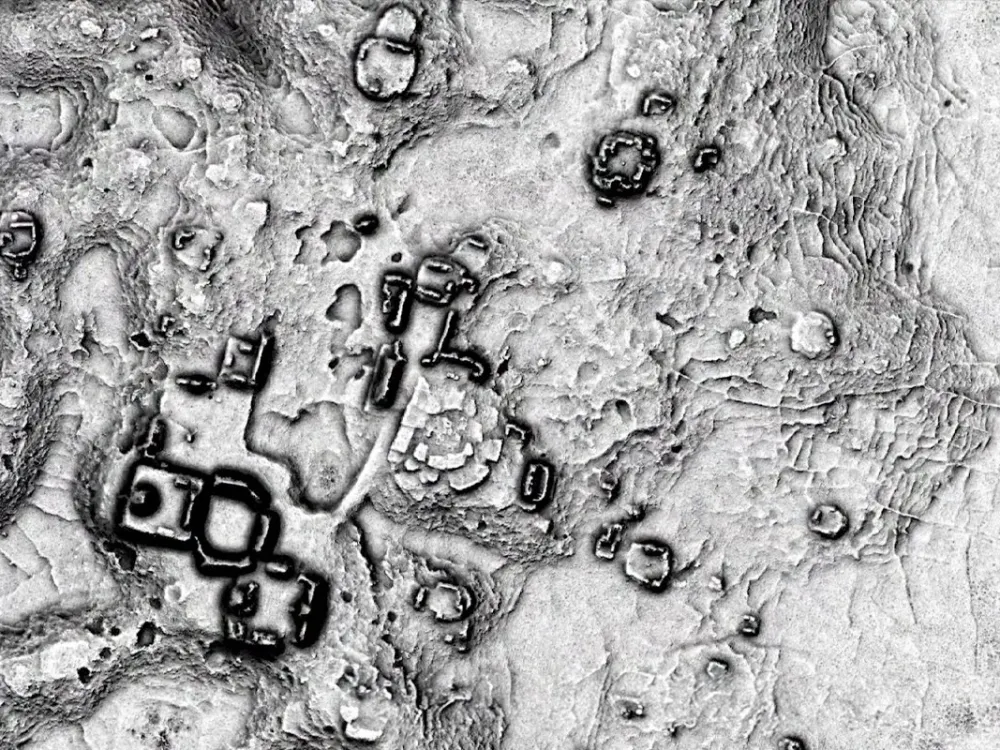
A team of Mexican and Slovenian explorers has discovered an intact Mayan city in Mexico’s Calakmul Biosphere Reserve.
The city, named 'Minanbé' ('No Path'), was found near an archaeological site uncovered in the XXth Century. Researchers trekked through kilometres of dense jungle in Campeche State to locate the site, which is believed to have been built between 600 and 900 AD.
Spanning roughly 15 hectares, Minanbé boasts a 13-metre-high pyramid, several structures, a carved bas-relief depicting a decapitation, and ancient waterways.
Explorers expressed surprise at the city’s pristine condition, noting that it had remained for centuries without being pillaged.
The Mayan civilisation thrived in vast areas of Mexico from around 3000 BC until the Spanish conquest in the 16th century, with its population peaking at an estimated 10 to 15 million people.
