
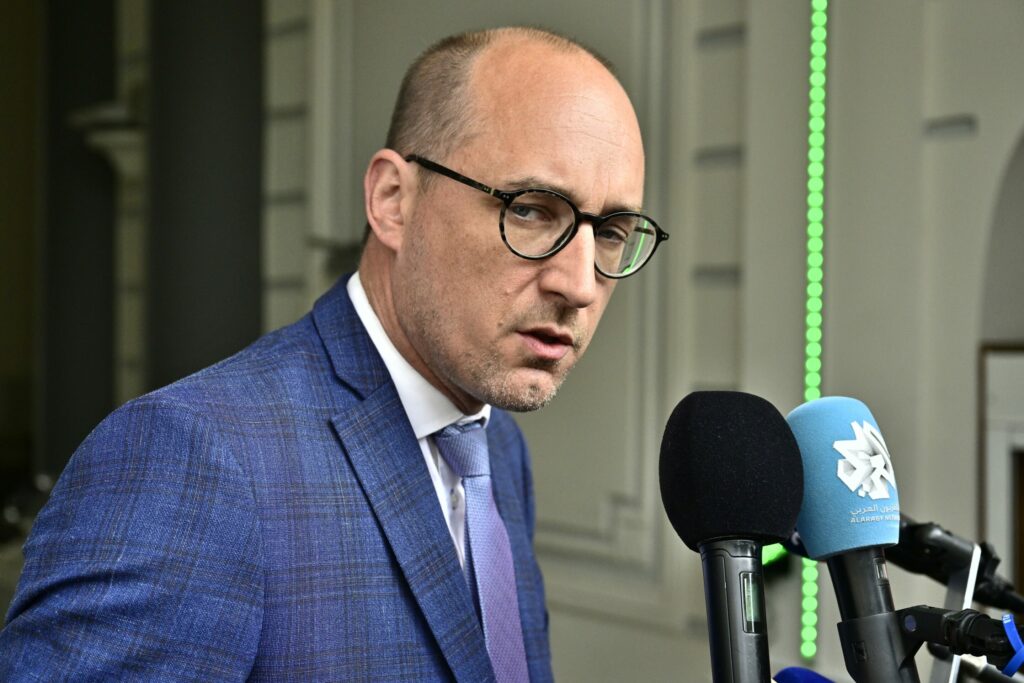
Budget Minister Vincent Van Peteghem has called for Belgium’s flexi-job scheme to be reviewed, warning that it is undermining the country’s social security system and welfare state.
Speaking to De Standaard, the CD&V minister said many sectors do need greater flexibility, but argued that flexi-jobs policy should be brought back to its original purpose.
He said the scheme was never intended to create the cheapest form of labour while also putting pressure on the wider jobs market.
According to him, the growing number of flexi-jobs is becoming comparable to the rise in long-term sickness, showing that the system is going off track.
"If this continues, our welfare state will not remain sustainable," he said. As a first step, he wants to remove what he described as the "injustices and contradictions" in the flexi-job system.
In the interview, Van Peteghem also criticised management companies. He said they were meant to protect entrepreneurs seeking to expand and take risks, not to serve as a tool for simple tax optimisation.
The minister also raised concerns about Belgium’s public debt. He warned that in the event of a political crisis, the country could fall into a debt spiral sooner than expected.
He said the IMF’s message had been clear: if current policies continue, Belgium could end up with a public debt situation worse than Greece’s. "It is our responsibility to avoid that scenario," he said.
In July, flexi-jobs became available across all private and public sectors in Belgium, bar certain protected professions like healthcare, under more advantageous tax conditions from 1 July.
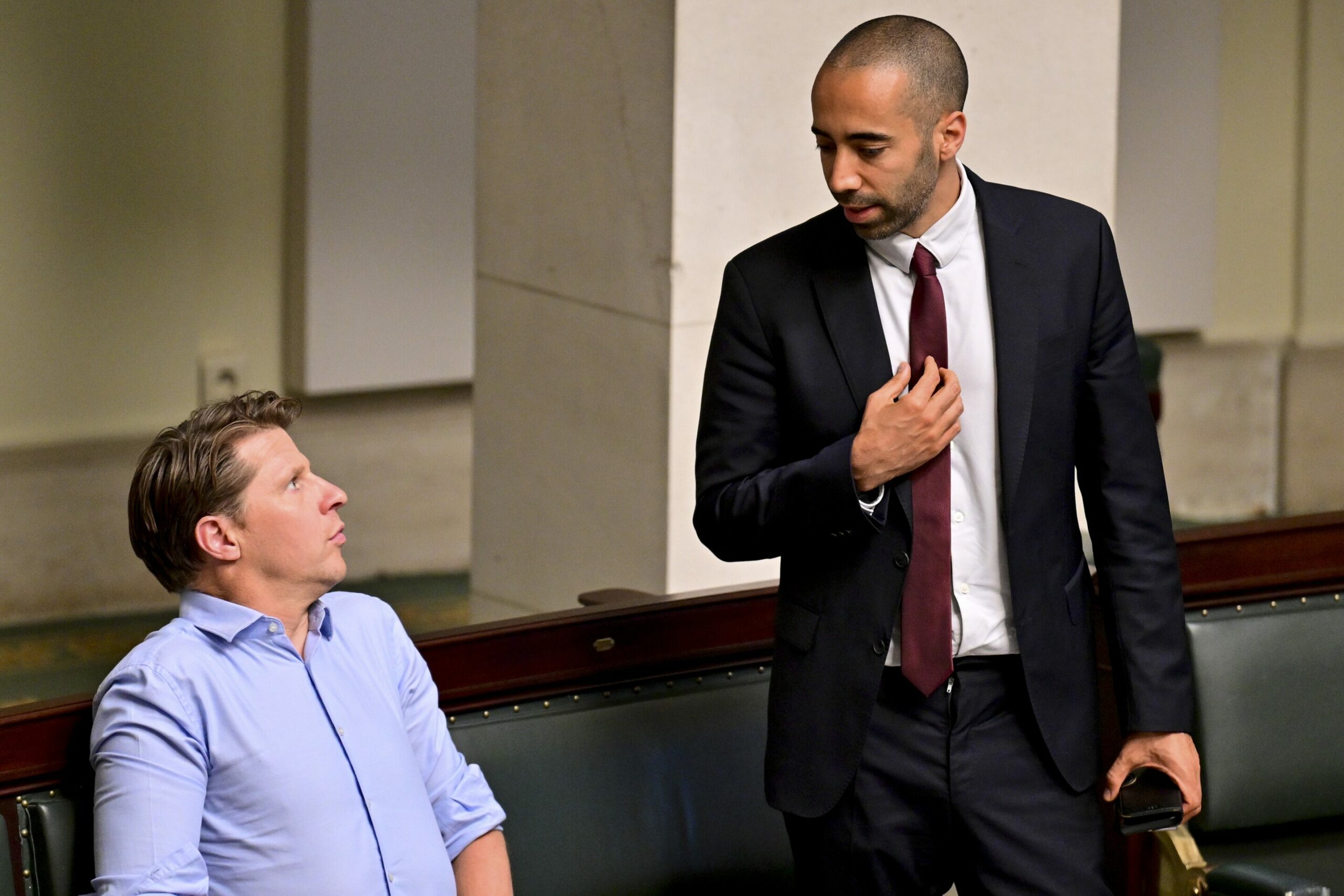
N-VA's Axel Ronse and CD&V's Sammy Mahdi pictured during a plenary session of the Chamber at the Federal Parliament in Brussels, Wednesday 13 May 2026. Credit: Belga / Dirk Waem
Originally introduced in 2015 to address labour shortages in the hospitality sector, they have gradually expanded across industries.
They allow individuals working at least 80% of full-time hours to earn supplementary income tax-free, while employers pay a 28% social contribution.
N-VA disagrees
Flemish nationalists, N-VA, the largest party in the coalition, do not share this view.
When questioned by the VRT, the party’s parliamentary group leader in the Chamber of Representatives, Axel Ronse, reiterated his party’s positive view of the scheme.
"I see no reason to review flexi-jobs at this stage," Ronse emphasised. According to the figures he has seen, 83% of flexi-jobbers are already in full-time employment and lend a hand to another company when it needs extra staff to cope with a peak in activity. "On the contrary, flexi-jobs help to create jobs by enabling companies to put together flexible teams," he further claimed.
In his view, the current status of salaried workers should be reconsidered to be made even more flexible.
This is a task that the so-called Arizona coalition government has partly set about tackling through the reforms introduced by the Minister for Employment, David Clarinval (MR), on working hours, overtime or, if the political deadlock is resolved, the annualisation of working time.
This story was updated.
