
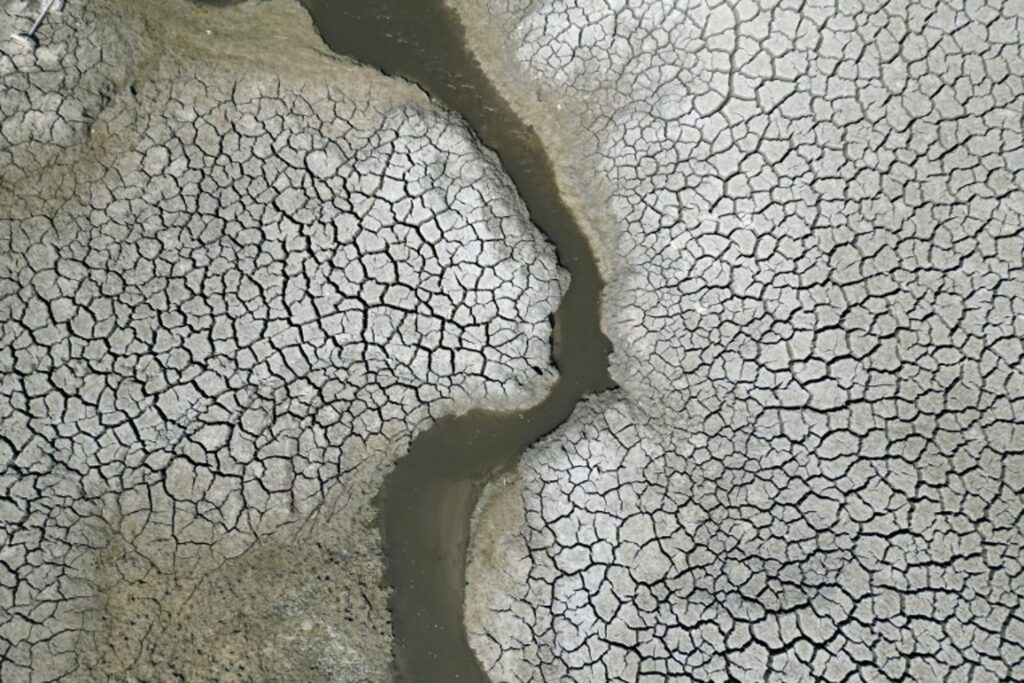
Wallonia’s rivers are in a worrying state, regional authorities said on Thursday, as they kept a range of drought measures in place.
Meeting under the coordination of the Centre for Risk Coordination and the Transmission of Expertise, CORTEX, the Walloon Region’s drought unit said the hydrological situation had worsened across the region.
Low rainfall since 14 July, mostly limited to a few localised thunderstorms in the south of the country, has not been enough to bring any lasting improvement in water resources.
Flows in both navigable and non-navigable waterways remain well below seasonal norms, with some tributaries causing particular concern.
Reservoirs are generally still under control, but the Nisramont Dam is being closely monitored because its level is nearing the low recorded during the 2022 drought.
Groundwater levels are continuing to fall and are generally below seasonal averages. According to the Royal Meteorological Institute, the water balance remains severely deficient, with areas including Hainaut experiencing dry to very dry conditions.
Seven municipalities — Bouillon, Léglise, Manhay, Rochefort, Saint-Hubert, Trois-Ponts and Vresse-sur-Semois — have issued orders restricting certain uses of water.
Municipalities supplied by the Nisramont Dam have also been placed under surveillance, as have Rouvroy, Tournai, Pecq, Celles, Rumes, Antoing, Estaimpuis, Nassogne and Tenneville, where authorities are advising residents to limit non-essential use of drinking water.
Existing restrictions remain in force, including a temporary ban on fishing in fast-flowing and mixed waters, the closure of some stretches to kayaks, limits on navigation and the suspension of hydroelectric power generation, except at major dams.
The fire risk remains moderate in open areas and low in forests.
A new update on the drought situation in Wallonia is due on 30 July.
