
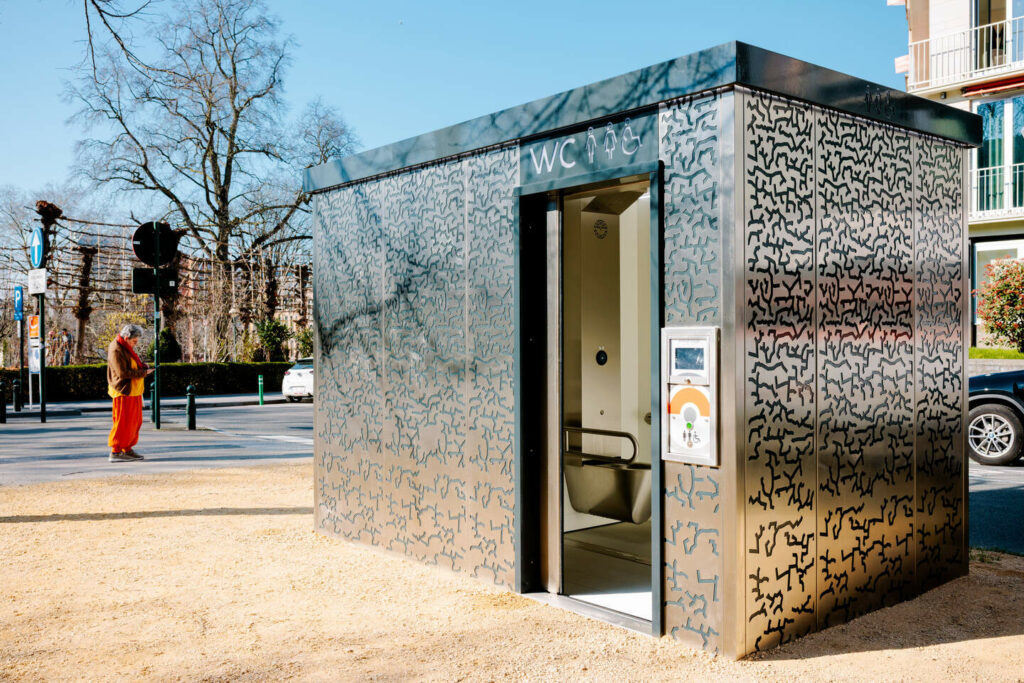
Brussels City Council has expanded its network of “welcoming toilets” to 90 and launched a new interactive digital map of all accessible toilets across the city.
The initiative is intended to make toilets easier to find for residents, commuters and tourists, while helping to tackle public urination.
The city allocates €75,000 a year to the scheme.
From Thursday, the Bouillon Bruxelles restaurant in Rue des Dominicains is making its toilets freely available to everyone during opening hours, including people who are not customers.
Like other private partners in the network, the restaurant receives a municipal subsidy of €1,000 to help cover the additional costs of use and maintenance.
During a press briefing, the restaurant's owner and Brussels alderman for public cleanliness, Anas Ben Abdelmoumen, placed a “Welcoming Toilet” sticker on the venue’s window.
Ben Abdelmoumen said the network, created in 2021, had been significantly strengthened in recent months. It now includes 90 welcoming toilets: 54 in private establishments, mainly cafés and restaurants, and 36 in public buildings where toilets are available free of charge.
He said the city wanted to expand the scheme substantially and had now reached a record 90 welcoming toilets, adding that the aim was to continue extending the network.
The new interactive platform goes beyond the welcoming toilet scheme itself. It lists not only the 90 welcoming toilets, but also the city’s 13 public toilets, 22 urinals and facilities managed by other operators in the area.
Users can search for the nearest toilet by geolocation or by entering an address. The platform also provides information on opening hours, the type of venue and accessibility for people with reduced mobility.
Ben Abdelmoumen said the increased provision of toilets would be matched by tougher enforcement. From 1 August, the fine for public urination will rise from €250 to €400.
He said the city wanted first to provide as many accessible, practical and shared solutions as possible before strengthening enforcement, adding that there should no longer be any excuses.
Dugajin Spahija, founder and chief executive of Bouillon Bruxelles Group, said his venues had already allowed free access to their toilets before joining the network.
He said the approach helped keep the neighbourhood clean and that his group had joined the scheme more for the visibility offered by the label than for the municipal subsidy.
“I would rather people come into our establishment than urinate in the street,” he said.
