
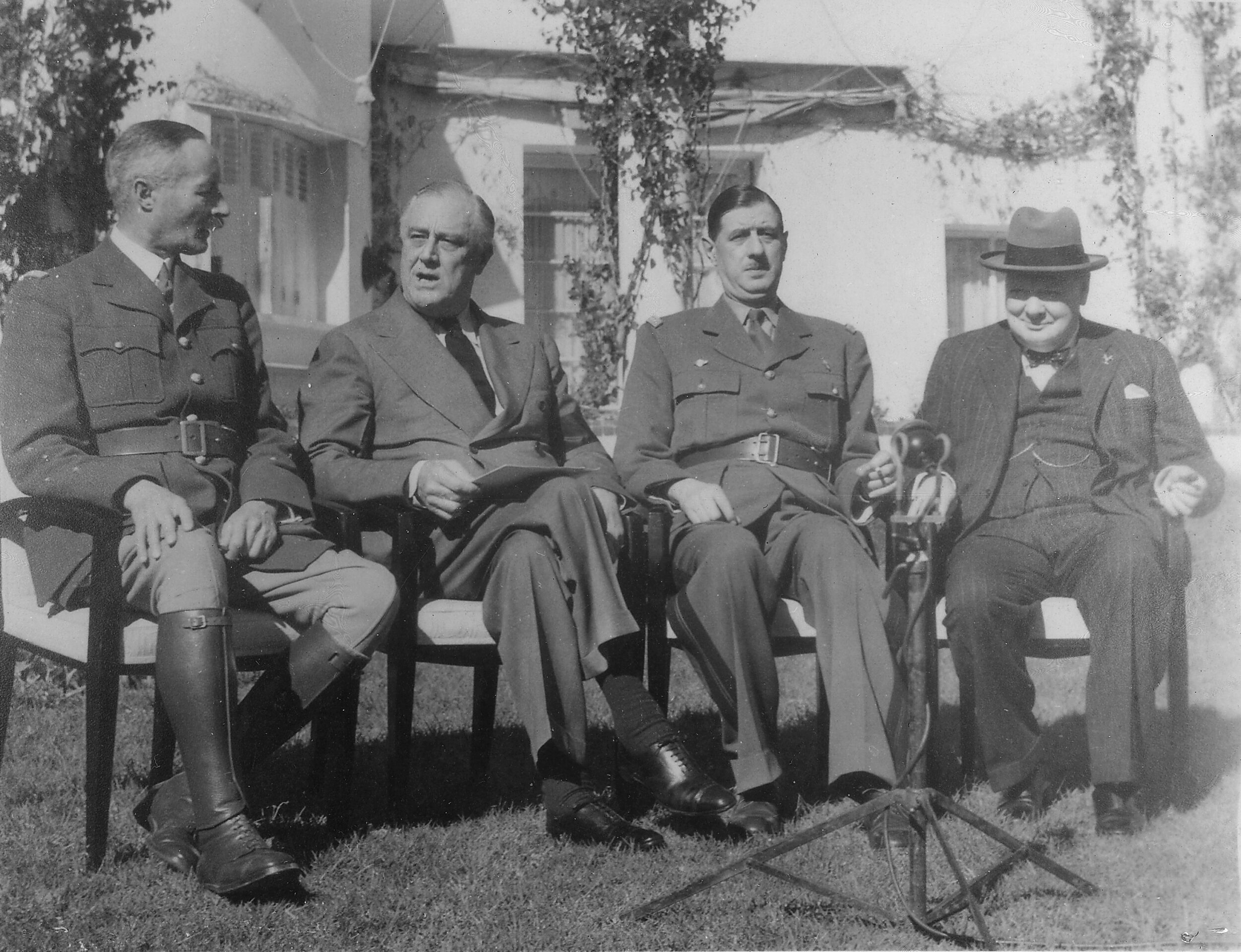
A new two-part French biopic on General Charles De Gaulle has dug up memories of a forgotten US idea to carve up Belgium and create a new buffer state between France and Germany in 1943. The new country's name? "Wallonia".
Released in June, the new film features the plan from the angle which portrays the US President Franklin D Roosevelt’s as attempting to undermine French sovereignty amid tensions between Allies during the Second World War.
In one scene, an AI-generated fictional map shows a "New Wallonia" with borders which included parts of France, Luxembourg and Germany.
While no historical records mention "New Wallonia", as the film suggests (rather just "Wallonia" – a new state with expanded borders), the picture gives an idea of what the buffer state envisaged by US President Roosevelt could have looked like.
New Wallonia state
Roosevelt’s idea was real – and would have led to the end of Belgium as we know it.
Under plans discussed with British wartime Foreign Minister Anthony Eden in 1943, the US president wanted to find new ways for Europe's great powers to police post-war Germany and placate its industrial might to avoid future wars.
One idea was to create a new buffer state between Germany and France, which included parts of both Belgium and France, according to the various theories circulating on the plan.
Roosevelt told Eden that the only way to resist German aggression was the "dismemberment" of Germany into smaller states.
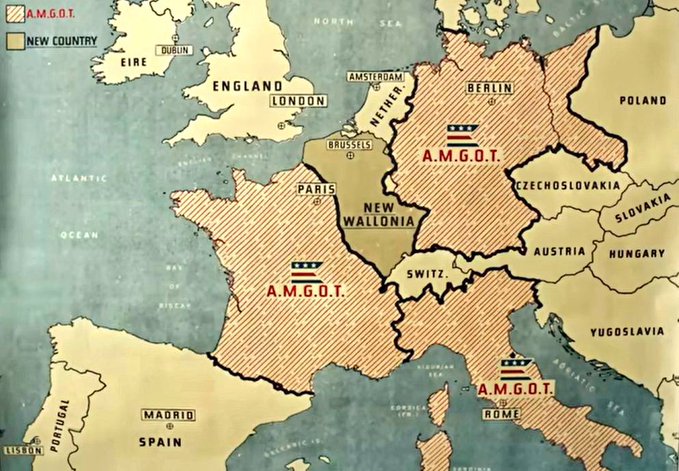
The new buffer state as seen in the De Gaulle film, featuring AI-generated hallucination of Czechoslovakia and Slovakia as two separate entities.
One of these would have been called “Wallonia”, located on the western borders of Germany including parts of Belgium, the Rhineland, the Luxembourg and the Ruhr, as laid out in Eden’s memoirs.
Other versions of this plan suggest the new state included all of Belgium (including Flanders), Alsace-Lorraine and the northeast regions of France, including Calais and Lille.
Roosevelt said he was concerned with the position of Belgium after the war, telling the British foreign minister he thought the Belgian King had gravely undermined his authority during the war.
Belgium was invaded in May 1940, with the King quickly capitulating to the Nazis while being enclosed in his castle but still allowed relative freedom. He collaborated with the occupation authorities, and interestingly, had his own plans to carve up Belgium under Nazi rule.
Recently-discovered documents revealed he planned to give up most of Belgium to the Nazis, while carving out a small state territory for himself in Wallonia, a year after Roosevelt was also discussing his own Wallonia plan.
'A trifle taken aback'
Another account of Roosevelt’s plan came from British trade minister, Oliver Lyttelton, 1st Viscount Chandos, who published his memoir in 1963, entitled The Memoirs of Lord Chandos: an unexpected view from the summit.
Lyttelton describes how one very late night in June 1942, both he and Roosevelt were drinking whisky and soda in the White House – when the US president began floating his views on Belgium.
"You know, Oliver, in Belgium there are two communities which can't live together; one are called Walloons, and they speak a kind of low Dutch—you know I am Dutch by origin—and the others are called Flemings, and they speak…."
At this point, Roosevelt realised his mistake, and corrected himself.
"NO, NO STOP. Go back. One are called Walloons and they speak French, and the other are called Flemings, and they speak this kind of low Dutch. They can't live together."
In the memoir, Lyttelton notes how he was a "trifle taken aback" by Roosevelt’s theory, given his strong knowledge and ties to Belgium as trade minister. He also added he felt "unlucky" Roosevelt had chosen him as "his audience" for the theory – but the US president continued.
"After the war, we should make two states, one known as Wallonia and one as Flamingia, and we should amalgamate Luxembourg with Flamingia. What do you say to that?"
Lyttleton writes that, upon hearing this, he "gasped", and told the US president the plan would need a huge amount of study. He stressed that both Walloons and Flemings "were much intermixed".
His knowledge of the territory threw up the first practical flaw in the plan: who would control the Scheldt and the Port of Antwerp. Control of Belgium’s iron ore, steel and coal markets and ports would pose some serious economic problems, Lyttleton further noted.
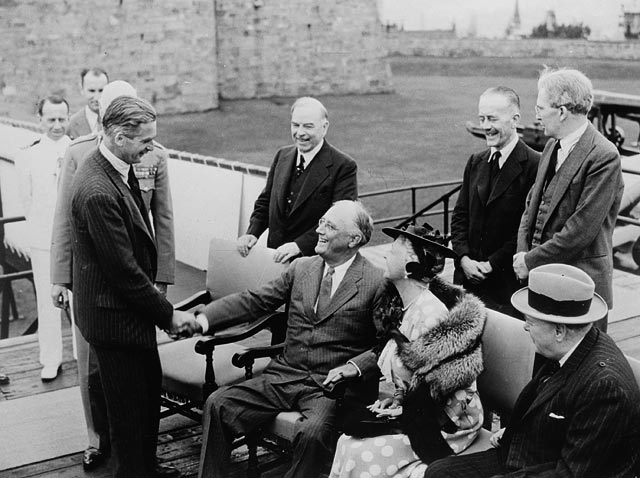
Roosevelt (right, sitting down) and Anthony Eden (left) at the Quebec Conference
When Lyttleton reported the details of the conversation to Foreign Minister Eden, he was also incredulous – and asked the trade minister if it had been a joke.
However, Roosevelt would then float this idea again during Eden’s trip to Washington a few week later. Lyttleton notes that, following Eden's US trip, Roosevelt's plan was never heard of again.
Give Luxembourg Belgian crown
Historian Gerald Arboit's essay in Nouvelle Revue Politique, details another high-level conversation between Roosevelt and Grand Duchess Charlotte of Luxembourg which mention his buffer state plan a few month before, in October 1942.
Here too, Roosevelt expressed doubts on the future of Belgium due to King Leopold III’s attitude – an intuition which proved to be correct given the King’s own plans for his country.
It appears that the Americans were probing the Luxembourgish royals on their feelings if they gave the Grand Duchess Charlotte the throne of either Belgium or the new buffer state which would annex parts of Germany, Belgium and France as well as the whole of Luxembourg.
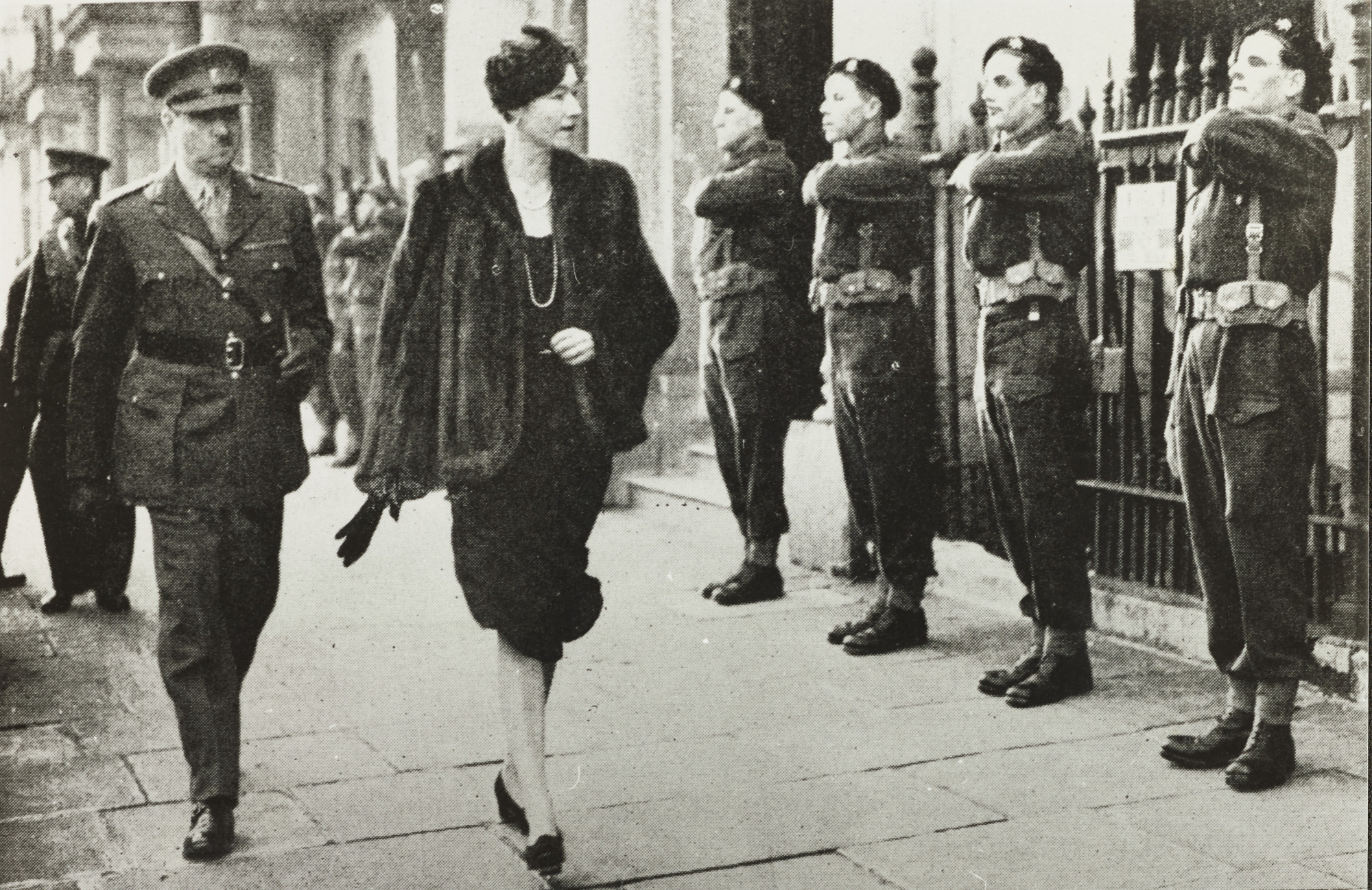
The Grand Duchess and Prince Félix review a squad of Luxembourg volunteers outside the Luxembourg embassy in London in 1944. Credit: Photographic collections / Cour grand-ducale
Just a trial balloon
Most historians agree that these plans for Wallonia were nothing more of a trial – an idea which never got off the ground. In the new De Gaulle film, experts have cautioned against the emphasis it puts on the Wallonia plan.
Some argue that the film’s director Antonin Baudry is tapping into France’s well-documented anti-Americanism, presenting the plan as a threat to carve up France and subjugated it to Allied command under the Allied Military Government of Occupied Territories (AMGOT) – to the dismay of its contemporary French audience.
While it is no historical secret that Charles de Gaulle and Franklin D Roosevelt did not get on, there is no evidence the US wanted subjugate France (or Belgium) in the way the film reportedly portrays, French historian and professor Olivier Wieviorka recently wrote in Le Figaro.
Evidence suggests that the reaction of the British Government poured cold water on the plan, and dissuaded the US President’s plans for a new Wallonia – batting away what was and remained an intellectual exercise by Roosevelt.
