

As many as three-quarters of job applicants consider it important for employers to state the salary range in their job adverts, but six in ten employers (56.2%) do not currently do so.
As many as 75.5% of unemployed job seekers consider it 'important' or 'very important' for job adverts to state the pay scale. Among job seekers who are already employed elsewhere, more than eight in ten (83.2%) consider this very important.
"Employers face a dilemma," said Liesbet Werbrouck, an expert at HR expert Acerta. "If they do not specify the pay or terms of employment, more than one in five jobseekers who are currently unemployed will not apply."
That is, she stressed, "a strong argument for specifying remuneration in job advertisements."
However, if the pay scale then turns out not to be attractive enough, 36.9% of jobseekers will not apply either, the survey found.
Currently, only four in ten employers already provide the pay scale in job advertisements (43.8%).
Lever for more effective recruitment
Under the European directive on pay transparency (which, after some delay, is expected to be transposed into Belgian law by the end of this year), employers will be obliged to provide information on the starting salary or pay scale for the advertised role.
This will enable informed and transparent negotiations on remuneration. Many job seekers are also in favour of this, the annual survey by Acerta and Stepstone found.
Importantly, Werbrouck stressed that the salary does not have to be stated in the job advertisement itself, according to the directive. "However, the employer must inform the candidate of the intended remuneration before salary negotiations."
Conversely, 31.8% of job applicants indicated that they are still regularly asked about their previous pay during job interviews – something which will no longer be permitted once the new European directive is implemented.

Credit: Canva
According to Acerta, the results show that pay transparency is "more than just an emerging legal obligation": it can also be a lever for more effective recruitment.
"Employers who already provide clear information about pay and benefits increase their chances of attracting talent while simultaneously building a credible and transparent employer reputation," Acerta said.
The new EU rules were supposed to come into force in all EU Member States on Sunday 7 June. However, Belgium's Federal Government – along with the majority of EU countries– was not yet ready to implement them.
In a letter addressed to the European Commission in early June, Belgium's Minister for Employment David Clarinval (MR) and Minister for Equal Opportunities Rob Beenders (Vooruit) explained that the social partners in the country had not yet reached an agreement on the directive.
Therefore, they requested a six-month extension from the Commission, citing "unanswered questions" from Belgian employers and trade unions.
No public salaries
In an annex to the ministers' letter, they set out 30 key unanswered questions, concerning data protection (GDPR), the scope of pay to be taken into account, and the retroactive nature of the directive, among other things.
GDPR rules were a particular cause for concern, as was the fact that Belgian companies feared that they would not be able to handle the extra administrative burden involved in implementing the directive.
Importantly, pay transparency does not mean that everyone's salary will be made public. Instead, it applies at a group level, which means an average is calculated for employees in similar roles. Then, that average is adjusted for certain variables, such as age – giving people a clear picture of an employer’s pay policy.
This means that employees will not be able to compare their individual salaries with those of their colleagues. What they will receive, however, is a broad overview of the salary distribution, which protects employees' privacy while still highlighting the differences.
Additionally, employees will have the right to ask about the average salaries of colleagues in similar roles and the criteria the employer uses to determine those salaries.
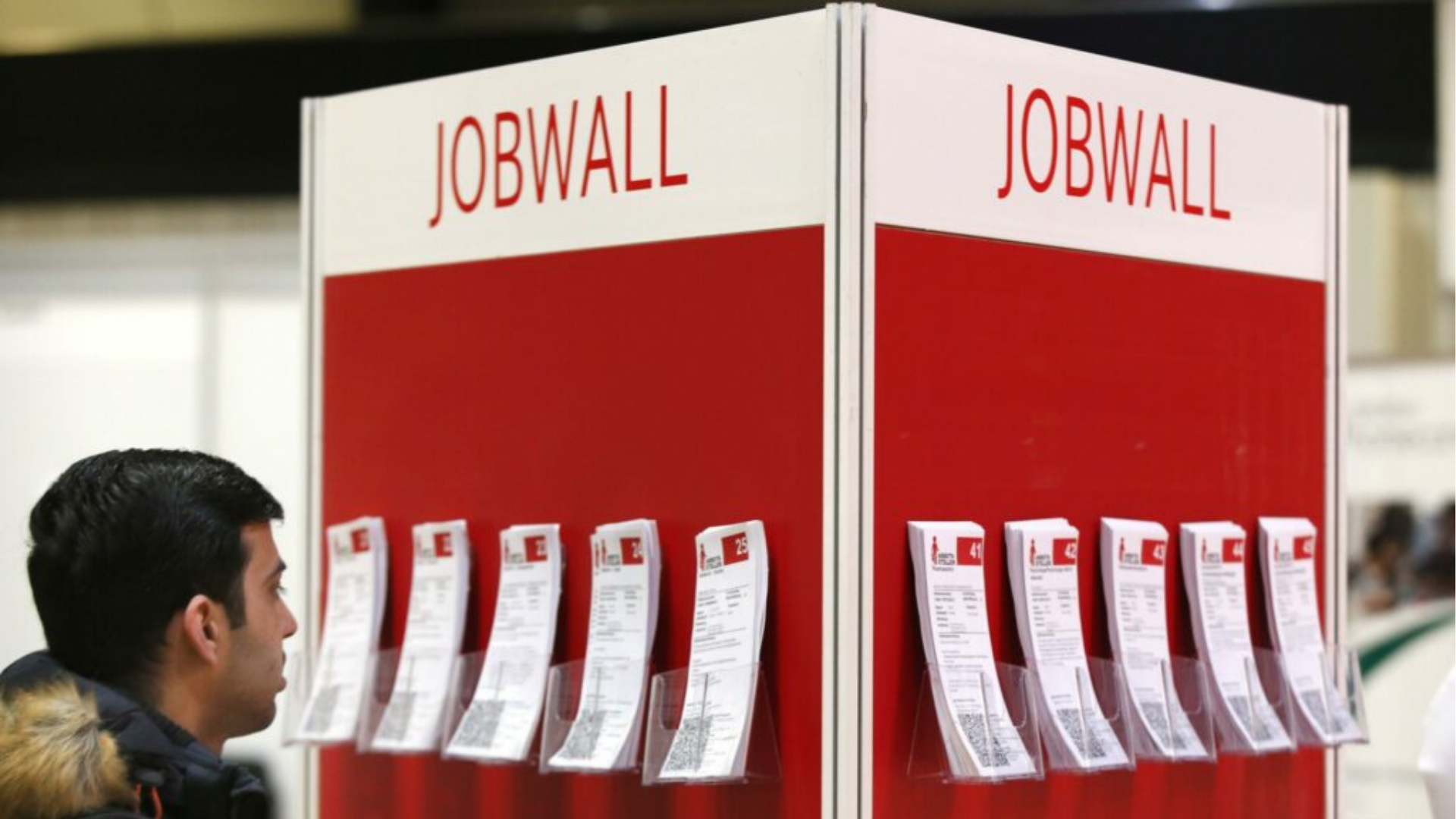
Person looking at a job listings. Credit: Belga
Figures from late February showed that nearly half of employees in Belgium feel they are not being paid fairly compared to their colleagues – an increase of 5.5 percentage points compared to 2025.
The study found a notable difference in how men and women perceive salary fairness. While men tend to perceive their salary as fair, women are more likely to feel neutral or negative about their remuneration.
If a pay gap is identified, according to the directive, the employer must assess whether this gap can be objectively justified – for example, through factors such as performance, relevant length of service, labour market shortages or other pre-defined criteria.
In case the pay gap is bigger than 5% without an objective explanation, the employer must rectify the pay difference. Employees who are victims of discrimination will be fully compensated for the missed pay.
Potential extras – such as missed bonuses, promotions or training – must also be paid out. Compensation for non-material damage (such as reputational or psychological damage), and legal costs (if the employer is found liable) should also be covered.
