
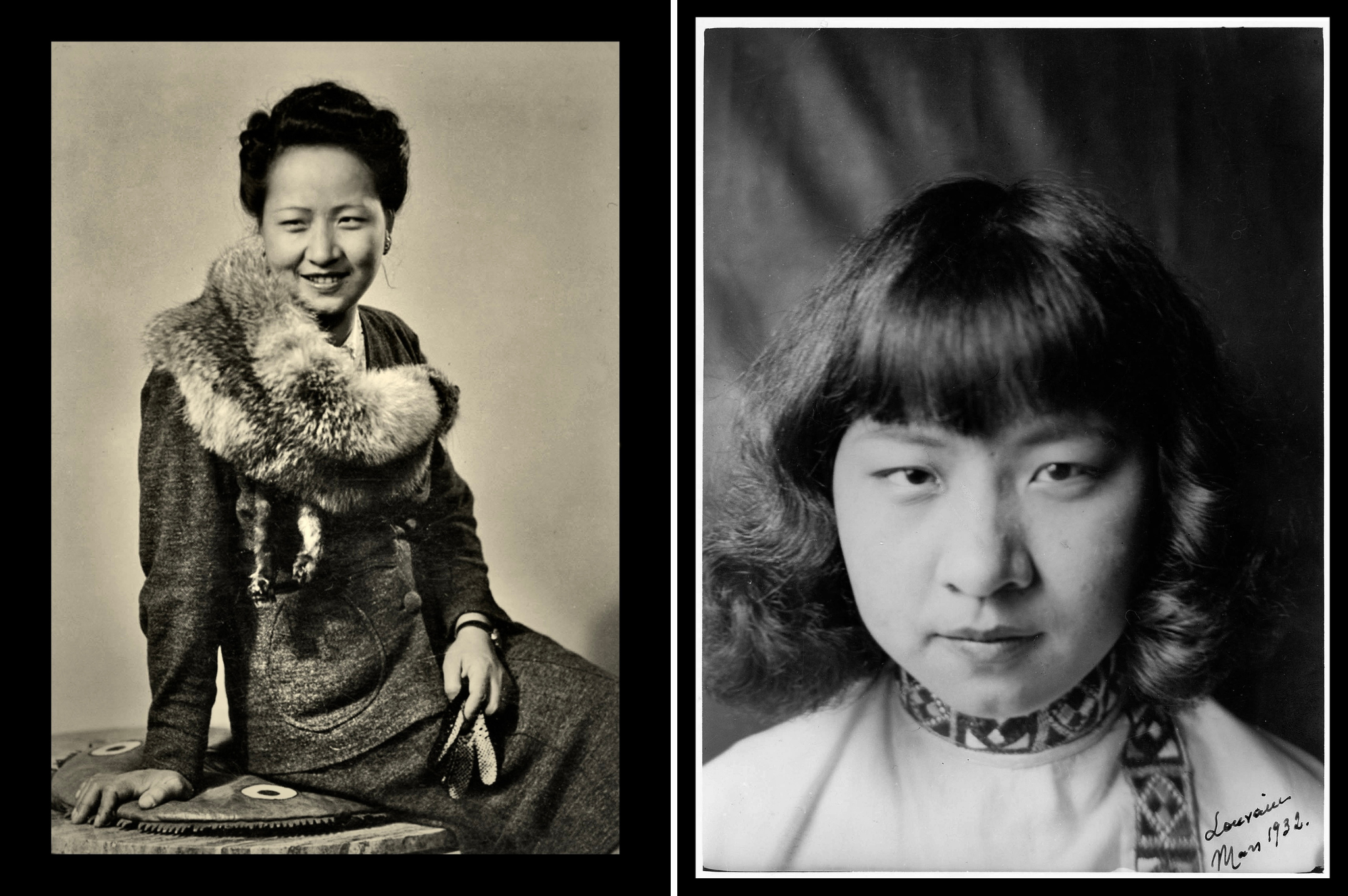
In the town of Écaussinnes, midway between Brussels and the French border, is a street called Rue Perlinghi.
Most people who pass through probably assume it commemorates a local family.
Few would guess that its name ultimately leads to one of the most extraordinary lives ever lived in Belgium: that of a Chinese scientist who crossed continents to study in Leuven, became one of the first Chinese women to earn a doctorate in Europe, ran one of Brussels' most celebrated Chinese restaurants, and helped save nearly 100 Belgians from execution during the Second World War.
The woman behind the name was Qian Xiuling, or Siu-Ling if written in the older script, and later to be known as Madame De Perlinghi-Tsien.
Born near Shanghai in 1913, she arrived in Belgium as a teenager with a dream that seemed almost impossibly ambitious for a young Chinese woman of her generation: to follow in the footsteps of Marie Curie, the Polish-French physicist and double Nobel laureate who had become one of the most celebrated scientists in the world. Qian Xiuling wanted to become China's Marie Curie.
Crossing worlds
Her granddaughter, filmmaker Tatiana de Perlinghi, believes this part of the story is often overlooked. For all the attention later devoted to Qian's wartime exploits, she remains most struck by the image of a 17-year-old Chinese girl arriving alone in Belgium, speaking no French and entering a world that few women – and almost no Chinese women – had yet entered.
"To me, what my grandma did before she came to Belgium was amazing," Tatiana says. "She came here to study, not knowing a word of French. I have pictures of her in the streets, and people are staring at her because they had never seen a Chinese person. She was the first woman to get a diploma in chemistry. That was…wow!"
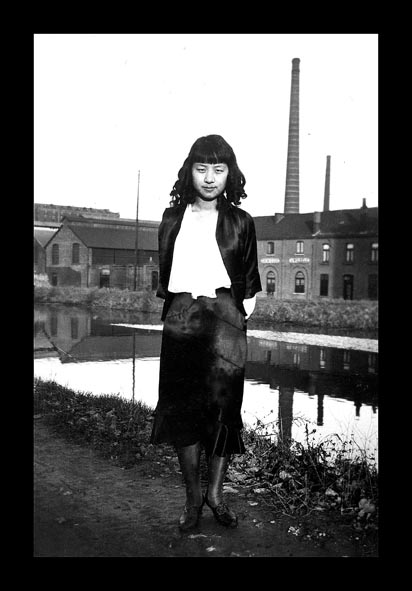
My Grand-Mother, probably in Leuven, Belgium around 1929
Yet it was not scientific achievement that eventually made her famous.
In Belgium, Qian Xiuling is remembered as the woman who persuaded the German military governor to spare scores of hostages from Écaussinnes during the Second World War. In China, she became something larger still: the subject of novels, documentaries and a lavish television drama, and a figure frequently described as the "Chinese Schindler".
The person least comfortable with such labels may have been Qian herself.
"She thought it was what she had to do," Tatiana says. "She never thought it had to be recognised in any way. She said: 'I did it because I could do it and it was my duty.'"
Her father was a landowner and local judge. By her granddaughter's telling, she was a woman whose eyes lit up when she spoke of him, who grew up with sufficient privilege to imagine a different kind of life than the one her society prescribed – and sufficient determination to go and find it.
She persuaded her father to let her travel to Belgium to study at the Catholic University of Leuven – KU Leuven, one of Europe's oldest and most distinguished institutions. She was 17 years old and did not speak any French, the language of the university.
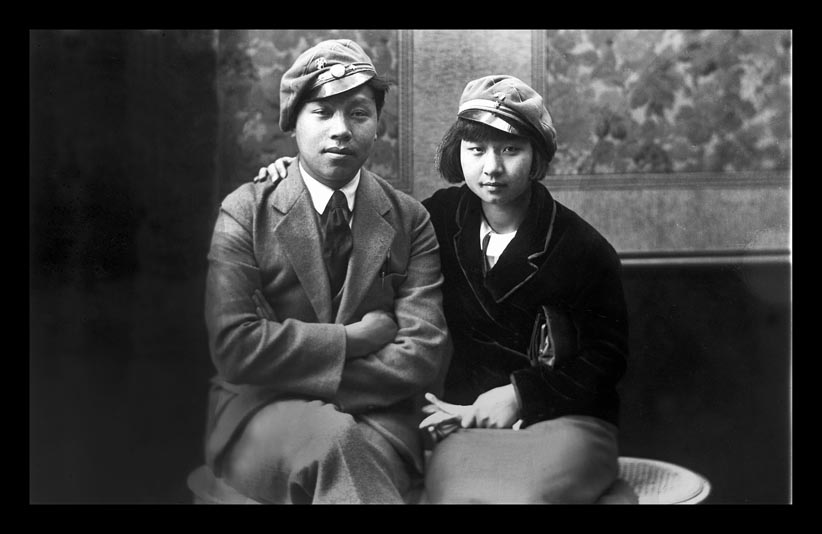
Siu Lin and her younger brother most likely in 1929 in Belgium
The arrangement had a dynastic dimension: a friend's son who had been designated her fiancé since birth was also studying there. The detail is almost comically predictive: Qian Xiuling arrived in Leuven, looked at this man she had never met, and broke off the engagement immediately.
However, her plans for a scientific career were overtaken by history. She married a Belgian doctor of Greek-Russian origin, Grégoire de Perlinghi and when the Japanese invasion of China made their planned return impossible, they settled in Herbeumont, a small village in the Ardennes. There, she raised a family and lived the quiet life of a provincial doctor's wife – until the German occupation.
An unlikely connection
The chain of events that led to her most significant intervention began in Herbeumont itself, where Qian Xiuling intervened to save the life of a young Belgian who had been condemned to death.
She knew – through the complex social web of her own life, through her cousin's military connections in China – that the German military governor of Belgium, General Alexander von Falkenhausen, had served as a military adviser to Chiang Kai-shek's Nationalist government before the war. Von Falkenhausen knew Qian's cousin. There was a thread, however slender, that connected a Chinese woman in an Ardennes village to the most powerful German official in occupied Belgium.
She sent a telegram. Then she made the 160km journey to Brussels in person, bringing letters and photographs of the general that her cousin had given her. Von Falkenhausen agreed to spare the young man.
The second intervention was larger, more dangerous, and more remarkable in its logistics. In Écaussinnes, the local resistance had killed several German officers – believing them to be Belgian fascists but finding, too late, that they had assassinated men in plain clothes whose superior, Heinrich Mueller, was the head of the Gestapo in Brussels.
In retaliation, the Germans swept through the town and seized every young man they could find. Ninety-six hostages were held in the town hall, with a 48-hour ultimatum: produce the responsible parties, or face death.
Everyone knew who was responsible. Nobody was going to say.
Someone remembered a story about a Chinese woman in the Ardennes who had once done something improbable. A young man made a nighttime crossing of half of Belgium – without papers, without a pass – to reach Herbeumont. When he arrived, Qian Xiuling was pregnant.
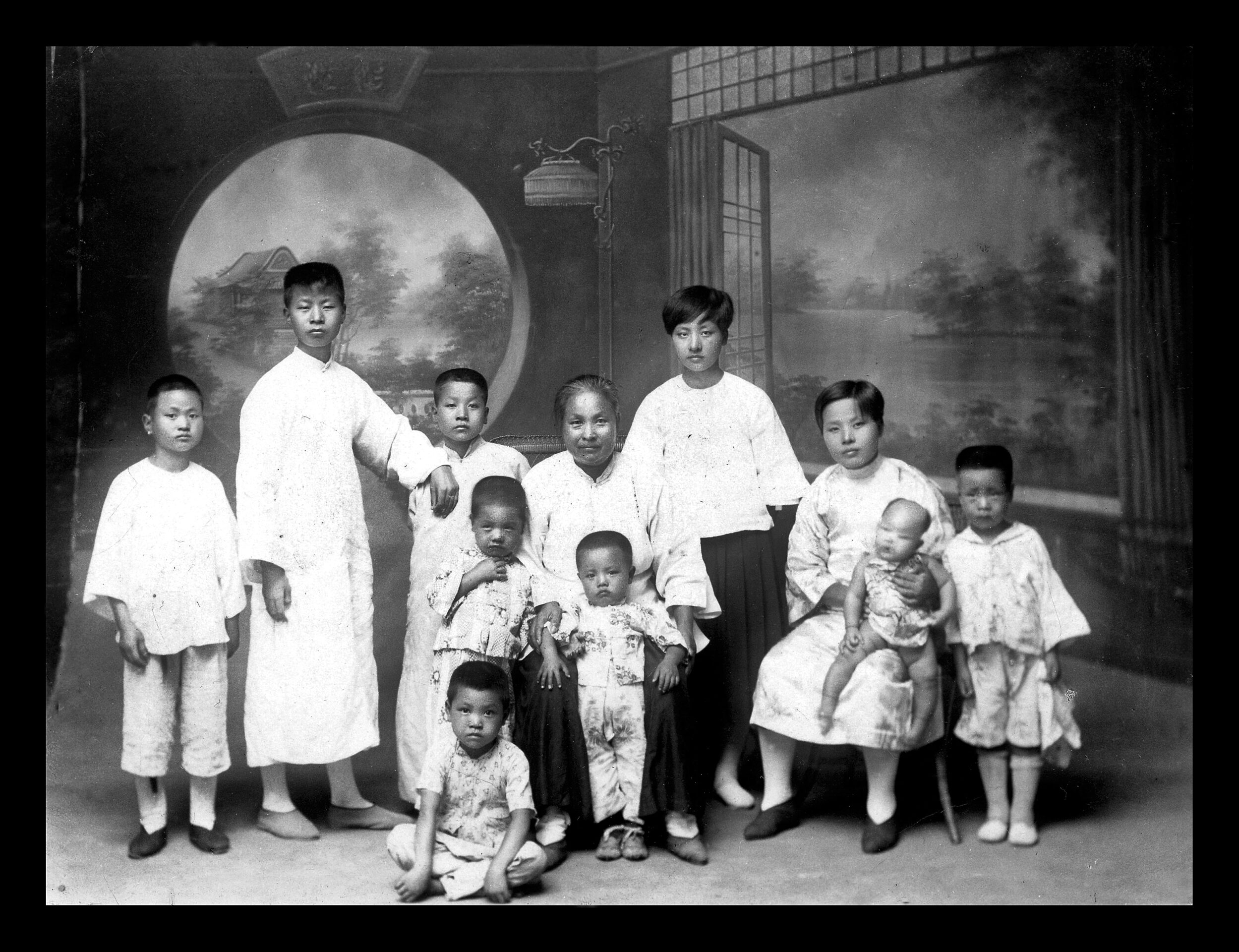
The Tsien Brothers and Sisters with their mothers and some unknown kids probably in Iching, China around 1925
She went to Brussels anyway. Von Falkenhausen, by this point, was already on the wrong side of the Nazi hierarchy – he was, it would later emerge, among those involved in the July 1944 plot to assassinate Hitler – and the risk of using his authority against the Gestapo's wishes was real. He commuted the death sentences. The hostages were sent to a labour camp in Germany. Ninety-nine of the one hundred and two returned.
After the war, she was decorated at the liberation. Écaussinnes made her an honorary citizen. And then, she effectively asked the world to move on. She had other priorities, including founding Chinese restaurants in Brussels: the first was named Confucius, the next one Sin Ya, and then La Fontaine de Jade, one of the most celebrated in the country.
The burden of remembrance
Écaussinnes never had much difficulty deciding what to make of Qian Xiuling. One hundred men removed from a small Belgian town would have been a catastrophic wound.
"She's a heroine," Tatiana de Perlinghi says, "and that's normal, because for Écaussinnes it made a huge difference. One hundred men less – they would have had no men anymore after the war if she hadn't been there."
What was harder for Tatiana – the point at which admiration curdles, or at least becomes complicated – was seeing the gratitude of a Belgian village get translated into a Chinese state's appetite for heroic narrative.
In the early 2000s, Chinese television decided her story deserved the full historical-drama treatment: a lavish multi-part series complete with romance, intrigue and wartime heroics. Curious, she obtained the script. Her reaction was immediate.
“I thought: this is all bullshit,” she recalls.
The series transformed Qian's life into a historical fantasy, complete with an elderly heroine narrating her memories through a series of flashbacks, using a framing device clearly modelled on the movie Titanic.
The scene required actual footage of Qian Xiuling herself. "And of course, as we said, this is not her story, we don't want her name in it – of course, we didn't want that scene."
The family hired a lawyer. A legal letter was sent forbidding the use of Qian Xiuling's name or image. The character's name was changed to Jin Ning.
Then, one day, the co-producers called. The crew was going to her grandmother's home.
"We ran there," Tatiana says, "and we found them with the actress, coming to my grandmother with presents. And my grandmother – not understanding anything, answering her questions."
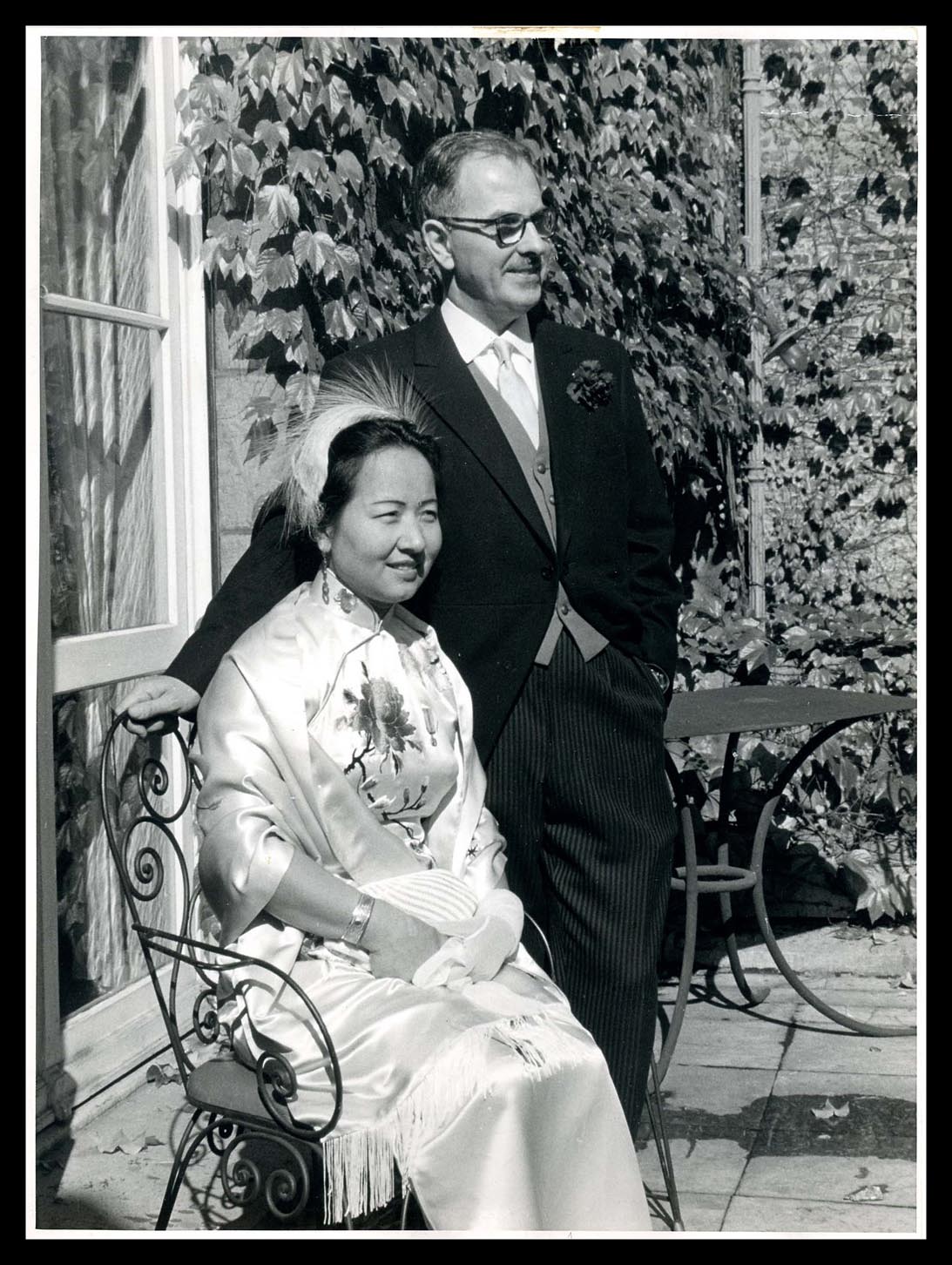
With her husband Gregoire De Perlinghi
Qian Xiuling was in her early nineties, her memory failing. "They were using her," Tatiana says. "She was losing her mind, and she would say yes to anybody." The family lawyer sent another letter. The footage was never used. But the act itself – a film crew surrounding a confused elderly woman to extract material they had been legally forbidden to take – was not something Tatiana could unfeel. “How can you say you respect her when you're doing that?"
Tatiana’s own documentary, Ma grand-mère, une héroïne? – the question mark deliberate – was made during this same period, partly as documentation, partly as protection, partly as an act of retrieval.
What she found, when she turned her camera on Qian Xiuling, was not quite what she expected. The “Great Empress” of her childhood – a woman too busy running her restaurants to spend much time with grandchildren, a woman who intimidated everyone around her – had softened into something more accessible, more particular, more herself. In the documentary, Tatiana films her looking through old photographs, talking about her father, her youth, the Leuven years.
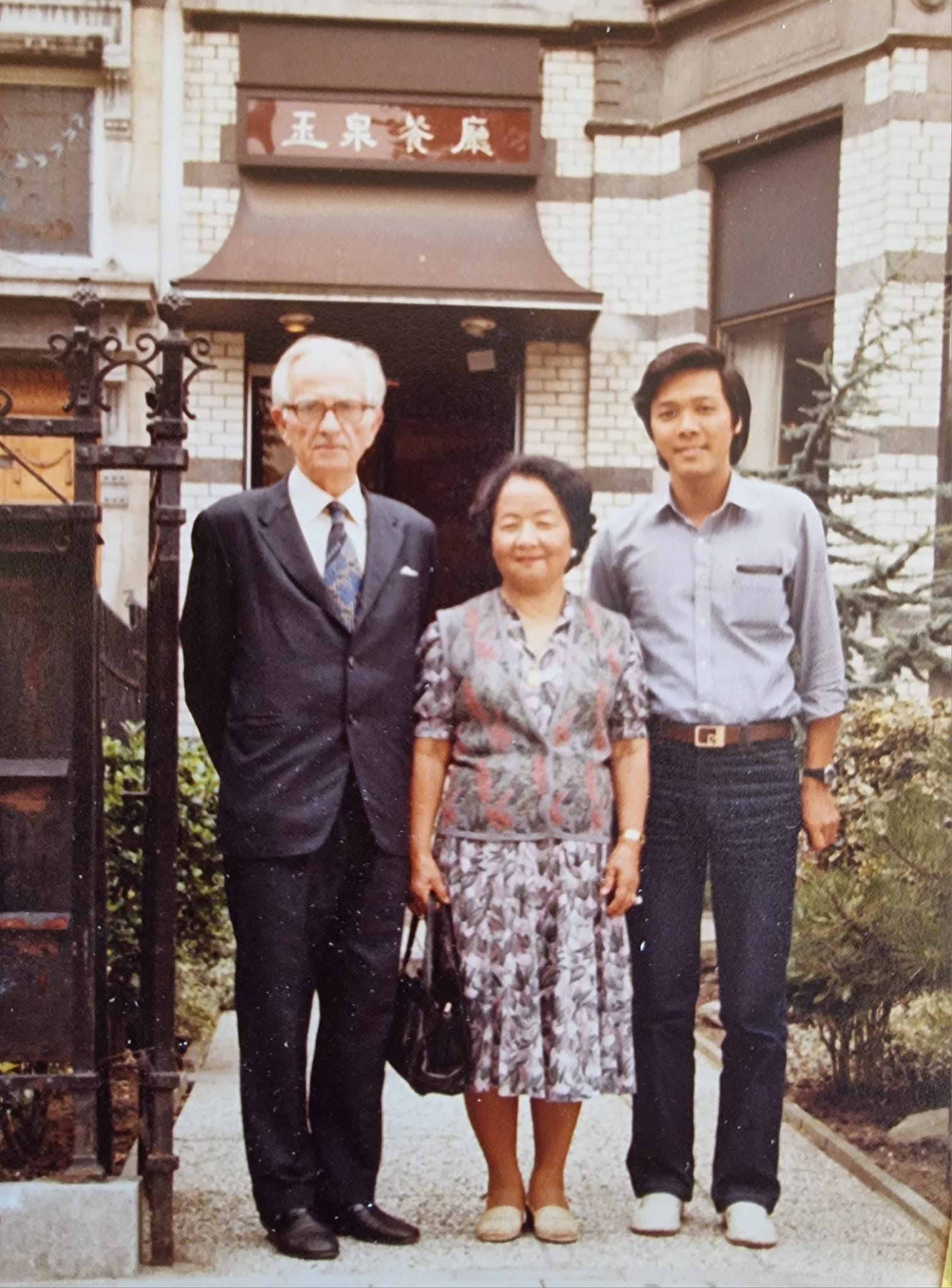
Qian Xiulin outside her restaurant with her husband
"She just did something that has to do with basic humanity," Tatiana says. "With your neighbours. And people who say, OK, hundreds of our people are going to die, and maybe you could do something. And she decided, okay, I can't sleep thinking it was in my power, and I didn't do it." She pauses. "It was not a political gesture. She didn't decide to fight the enemy. She didn't decide to enter the resistance. It has nothing to do with fighting a regime."
Qian Xiuling spent her postwar decades running her restaurant rather than collecting tributes. She returned to China several times, maintained ties to both the mainland and Taiwan, brought family members to Belgium, built a life from the materials she found available. She died in 2008, at 96, having asked to be forgotten, and having been conspicuously refused.
"To me, I'm more amazed by what my grandma did before she came to Belgium," Tatiana says, returning, as she often does, to the Leuven years. The teenage girl in the photographs. The first woman to earn a chemistry diploma from one of Europe's great universities.
The young woman who arrived in a foreign country without speaking its language and proceeded, methodically, to master it, to master its sciences, to make a place for herself that no one had reserved for her.
That is the story Tatiana would most like to tell. Not the Chinese Schindler, but the would-be Chinese Marie Curie. That young woman crossed continents, languages and cultures. She built a life between worlds. When history demanded something of her, she acted. She did what she could. Then she asked everyone to forget about it and let her get back to her life. History, however, had other ideas.
