
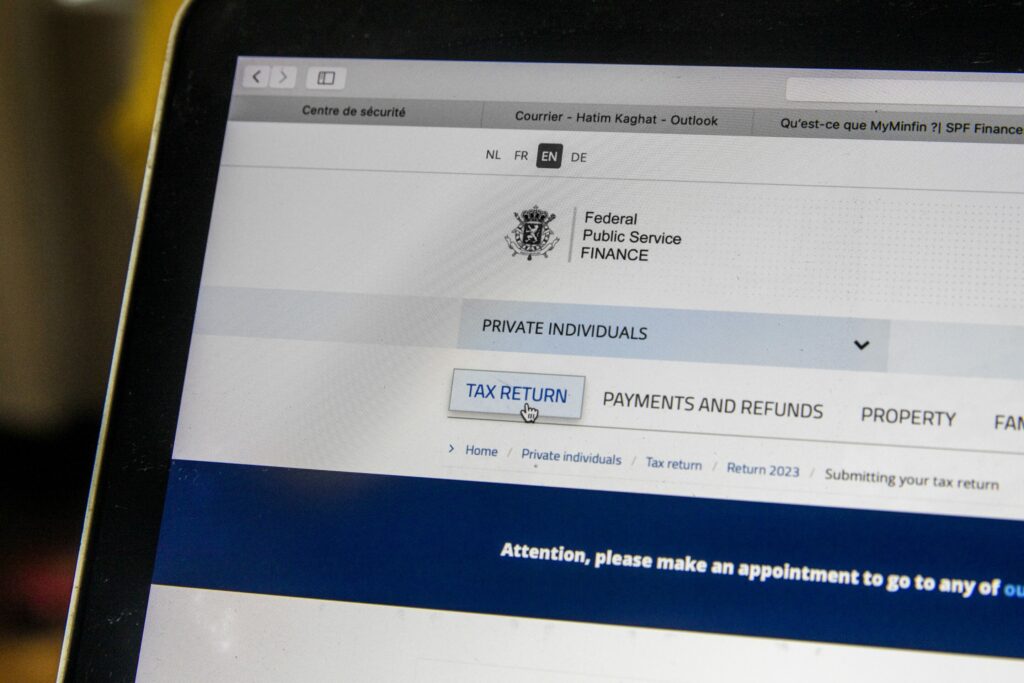
Good news for Belgian taxpayers who are in a dispute with the country's fiscal authorities for the first time: the Constitutional Court confirmed that the right to make a mistake in tax matters will apply retroactively.
In a ruling handed down on 18 June, the Constitutional Court confirmed the retroactive application of the "presumption of good faith" on the part of the taxpayer in the case of a first tax offence – provided that the matter in question has not already been definitively settled.
The ruling concerns a measure recently adopted by the Federal Government that aimed to improve relations between the Belgian tax authorities and taxpayers.
To this end, they implemented a rule that states that someone who committed a first tax offence, but acted in good faith, will not be penalised. In other words, this means that taxpayers are entitled to make a mistake when filing their tax returns.
Importantly, this does not apply to cases where a tax return is submitted after the deadline, or not at all.
The law introducing this new principle stipulated that it applied to tax assessments issued from the date of publication of the legislation in the Belgian Official Gazette, meaning from 29 July 2025.
It was this date that was overturned by the Constitutional Court, L'Echo reports. In other words, if a taxpayer made a first mistake in their tax returns before 29 July 2025, the presumption of good faith will apply.
Presumption of good faith
In its judgment, the court first reiterated the existence of the general principle of the retroactive application of a more lenient criminal law.
According to this principle, when a criminal provision undergoes an amendment that makes it more favourable to those subject to the law, that amendment also applies to situations prior to its entry into force. Provided, of course, that these situations have not already been the subject of a final decision.
If the fine for exceeding the speed limit is reduced, for example, speeding offences that were committed before this measure came into force also benefit from this reduction, provided they have not already been subject to a final penalty.
"The principle of retroactivity of a more lenient criminal law also applies to tax surcharges that may be classified as criminal," the Constitutional Court stated. "The presumption of good faith must therefore apply to tax assessments that are not yet final and which may still be subject to review by an administrative or judicial body."
As a result, the right to make a mistake in tax matters has now become retroactive.
