
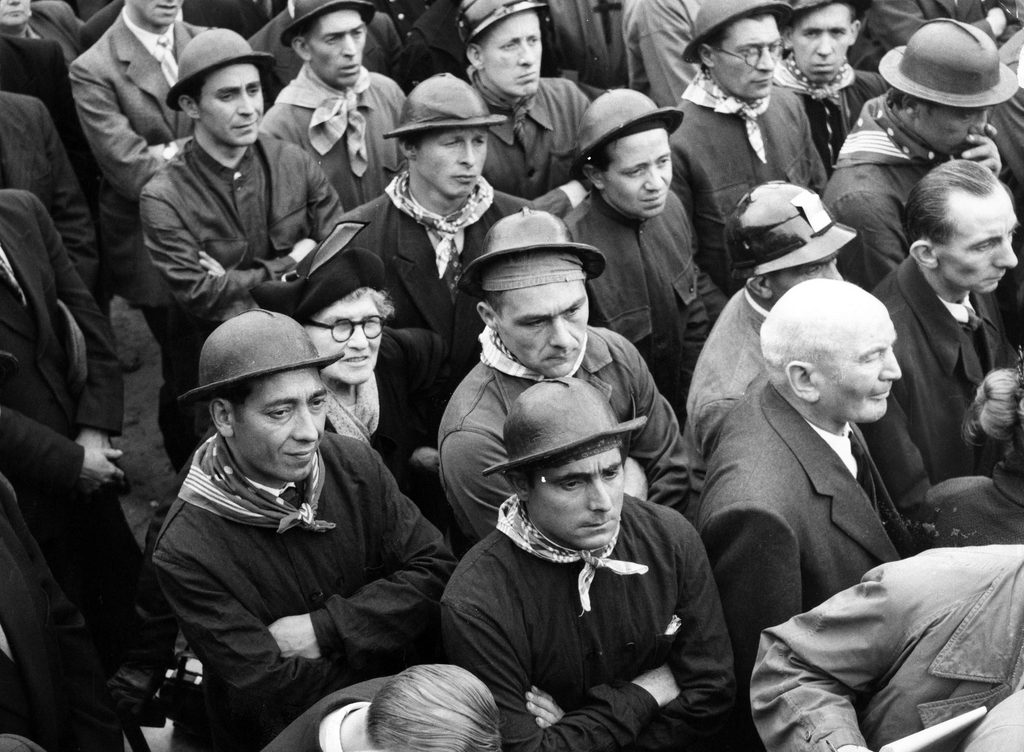
The 70th anniversary of the Bois du Cazier disaster will be commemorated in Marcinelle (Charleroi, Hainaut province) at the site of the former coal mine on Saturday, in the presence of descendants of those who lost their lives, politicians and trade union delegations. The tragedy, which claimed 262 lives, has left a lasting mark on Belgium's history.
Italy has never forgotten the Marcinelle mining disaster, the Italian ambassador to Belgium said on Friday, as the two countries prepare to mark the 70th anniversary of the Bois du Cazier tragedy.
In an interview with Belga, Ambassador Federica Favi described the ties between Italy and Belgium as "inseparable", and said the 1956 disaster helped forge a uniquely close relationship between the two nations.
She said the tragedy also played a major role in the "full integration" of Italian immigrants in Belgium, many of whom had previously faced discrimination.
The disaster at Bois du Cazier in Marcinelle killed 262 people, including 136 Italians and 95 Belgians. It remains one of Europe's worst mining accidents.
'Tutti cadaveri'
On the morning of 8 August 1956, nearly 300 men went underground to work in the mine's galleries and extract coal. At about 08:00, 975 metres below ground, a cage used to transport coal wagons was being pulled back to the surface whilst some wagons were still protruding from it. As they were being hauled up, the wagons tore away oil pipes and electrical cables, causing a fire.
The blaze spread quickly through the mine, trapping the workers below. Two weeks later, an Italian rescuer delivered the verdict that still echoes through history: "Tutti cadaveri" — all dead.
In the days that followed, the general public closely followed the ongoing search for survivors through the press, radio and the nascent television, and shared in the grief of the families. Images from that time remain etched in the memory: relatives and residents of Charleroi waiting desperately at the site’s gates.
The investigation into the disaster highlighted the harsh working conditions faced by the miners and the glaring inadequacy of safety measures.
A few months after the incident, mining operations resumed at the site. The colliery was permanently closed in 1967.
'Open wound'
Italian miners had become the largest group in Belgium's coal mines after the 1946 "coal agreement" between the two countries. Under the deal, Belgium supplied Italy, which had been economically devastated by the Second World War, with cheap coal in exchange for 50,000 Italian workers in the Belgian mines.
"We have never forgotten the tragedy of Marcinelle," Favi said. She said Saturday's commemoration was a moment of remembrance and recognition for the miners, who helped Italy recover resources needed to rebuild after the war.
The ambassador called the disaster "an open wound" and said it had created a shared memory that Italy and Belgium must preserve together.
She said younger generations in Belgium, descended from Italian immigrants, remain living proof that the tragedy cannot be forgotten. According to Favi, many still have personal stories linked to Marcinelle.
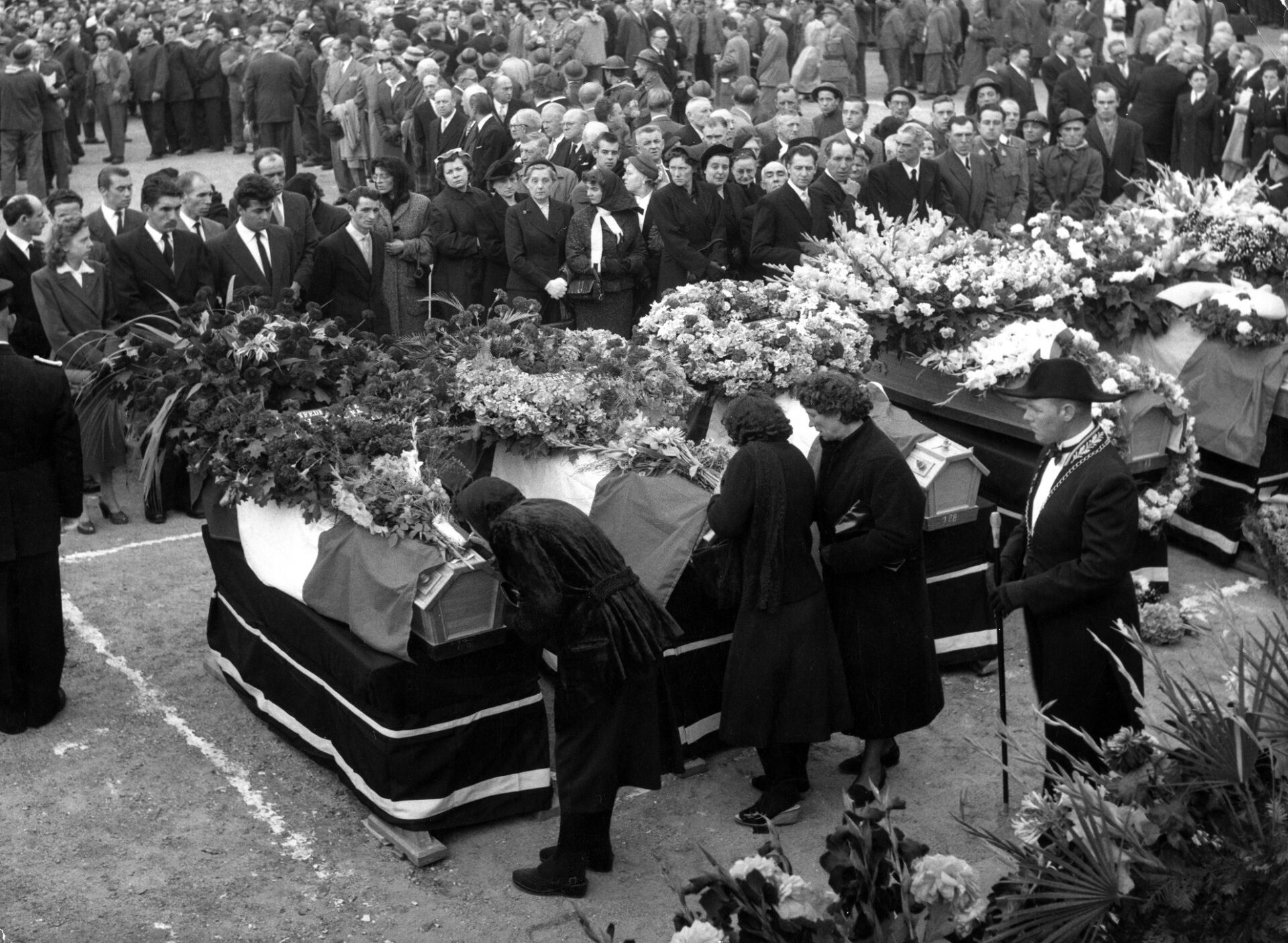
This file picture dated 13 August 1956 during the funerals of the miners of the Marcinelle mining disaster. Credit: Belga Archives
She said the Italian embassy has worked to promote remembrance in recent years, including through an agreement with the Wallonia-Brussels Federation centred on remembering the disaster. The initiative links schools in both countries, and has enabled pupils from Italy to visit the site, where Marcinelle is presented as a symbol of workplace safety.
Favi said the catastrophe was central to preserving the "absolutely special, unique" relationship between Italy and Belgium. In her view, it led to "complete integration" between the two peoples.
When Italian miners first arrived in Belgium, she said, they were often treated as outsiders and faced discrimination. After the disaster, however, Belgians increasingly came to see them as one of their own.
That deeper bond, she said, later became the foundation of bilateral ties that continue today, with around 300,000 Italians now living in Belgium. She described the community as large, diverse and highly valuable to both countries.
Over time, that social integration also developed politically and economically. Trade in goods between Italy and Belgium now amounts to around €46.5 billion a year, almost as much as Italy's trade with China and more than with India.
"It is an inseparable relationship," Favi said. "Honestly, without that integration, which has its roots in Marcinelle and in post-war migration, I do not know whether history would have been the same."
