
Thousands of Romanians are becoming Belgians every year, but why are so many acquiring the nationality when they have the same rights to live and work across the bloc as any other EU citizen?
Over 34,000 Romanians have acquired Belgian citizenship since the year 2000, the vast majority of whom did so after 2007, when Romania joined the EU. In 2025 alone, 4,366 Romanians acquired Belgian nationality, the second-highest nationality after Moroccans. Given that EU rules grant Romanian citizens the same rights to live and work across the bloc, why are Romanians choosing to become Belgian, too?
For some like Elena*, the issue is not about choosing between Romanian or Belgian identities. "Both allow dual citizenship", she told The Brussels Times, adding that for her it was more a question of "why not?" Elena lived in Romania until she was 19. She lived in several other countries before eventually arriving in Belgium.
Now in her mid-40s, she's spent over 15 years in Belgium and feels that a mix of "different identities and stories" defines who she is. However, for her, "Romania will always be my home country."
Despite this, she felt living here for many years and owning property in Belgium meant she wanted to take up nationality so she could be a full citizen and vote in elections.
Becoming Belgian
Having arrived in Belgium in 2003 and acquired nationality in 2015, Brigitta, unlike Elena, now feels no connection to Romania. "I'm super integrated in Belgium and don't have any more relatives in Romania, so [nothing is keeping me] related to Romania, except the fact that I was born there."
This detachment, according to Brigitta, is partly due to the bitter sense of disappointment at the lack of progress in Romania following the fall of communism in December 1989.
"I think that a lot of Romanians choose to take Belgian nationality [...] just to show the rage," she claimed.
While sentiments may differ on how Romanian they feel, both agree that Romania's weak passport serves as a nudge for adopting Belgian nationality. Notably, the United States still requires Romanians to get a visa to visit.
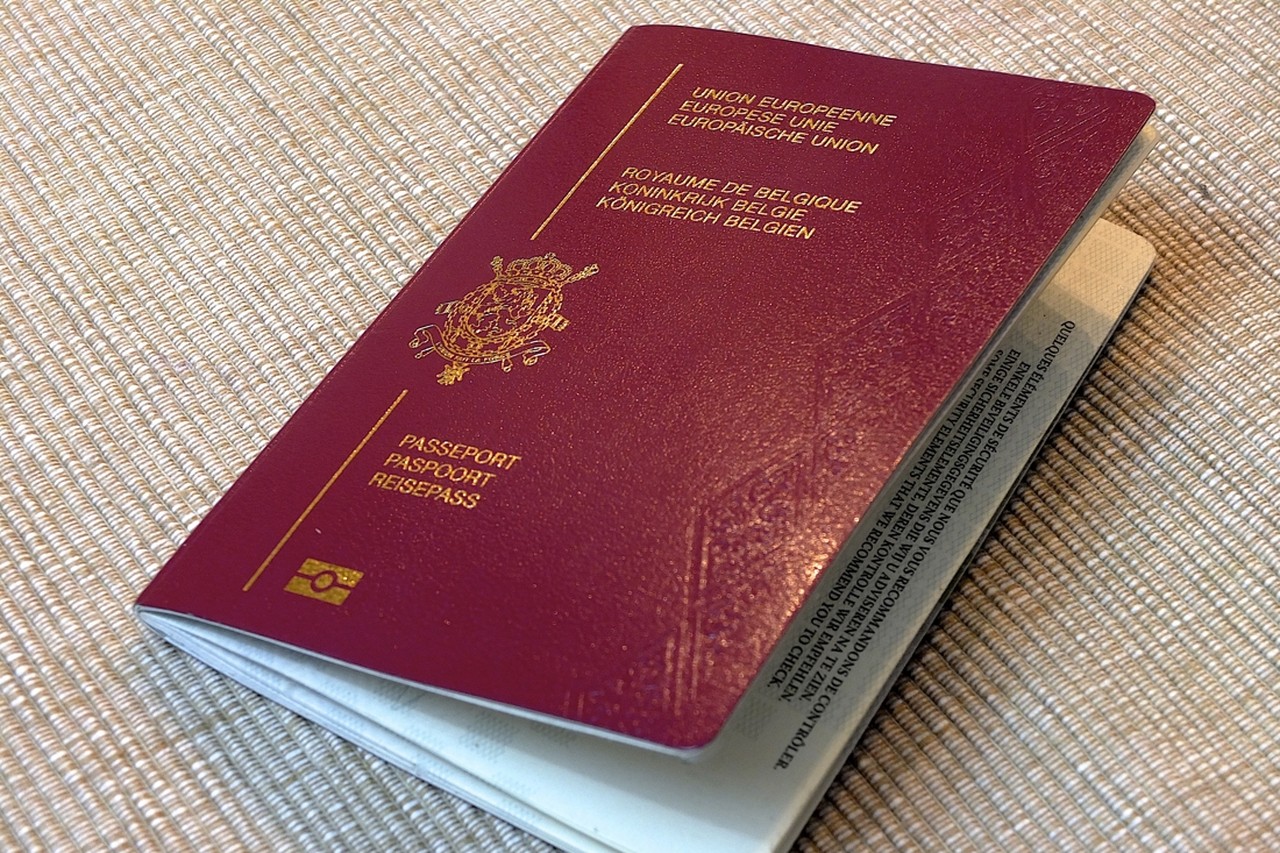
Belgian passport. Credit: Belga
For Loredana, who arrived in Belgium in 2014, the issue is more pronounced. Her children were born in Belgium, and Romania's rulebook requires extra steps to prove you are the parent if travelling on a different passport.
"The other parent has to legally approve the travel, and the document has to be legalised," Loredana said. This can be done online in Belgium, but in Romania you must go to a notary. "It is more complicated, more costly and more [time-consuming]," she said.
Adopting Belgian citizenship in 2020 to avoid these administrative requirements was for her only the second reason to become Belgian. The first was because she wanted to "help her kids be fully Belgian" and give her family a cohesive identity, rather than a Romanian mother and a French father.
Daria's story is similar to Loredana's. After marrying her Belgian husband, whom she had met following his frequent visits to Romania, she moved to Belgium in August 2001. Three years later, she acquired citizenship, after having her son and with encouragement from her husband. It made her feel "definitely part of [the] family".
Legacy of discrimination
While Romania joined the EU in 2007, some EU members did not immediately extend the full right to live and work in their countries. Belgium was one such country, which delayed these rights until 2014. Elena noted that the legacy of discrimination from this time still lives on in the minds of some Romanians, especially when it comes to finding jobs.
Even after the temporary restrictions were lifted in 2014, it took time for mindsets to adapt. The change led to the creation of RomBel, a voluntary organisation of Romanians in Belgium.
RomBel's mission is "to bring Romanians in Belgium together, support their integration and representation, preserve Romanian identity and culture, and build bridges," president Carmen Solomie told The Brussels Times.
Daria is a member of RomBel and remembers going to hospitals and communes in 2014, "to go through the legislation and go with copies and underline the law to the functionaries". She claims they often did not believe or understand that Romanians had acquired full rights.
Statbel data shows that the number of Romanians acquiring Belgian nationality hit a pre-pandemic peak in 2019. This is the year they first became eligible to acquire Belgian nationality, after the 2014 extension of citizenship rights, due to Belgium's five-year residency requirement.
Solomie believes that Romanians become Belgian for a complex range of reasons.
"For many members of our community, Belgian nationality is the natural recognition of years of residence, work, family life, and contribution to Belgian society. It can also express a desire to participate more fully in the country's civic and democratic life," Solomie said.
"Belonging to Belgium and preserving one's Romanian language, culture, and connections are not contradictory; together, they can make our community a bridge between the two countries."
*Name has been changed to protect the speaker's identity.
