
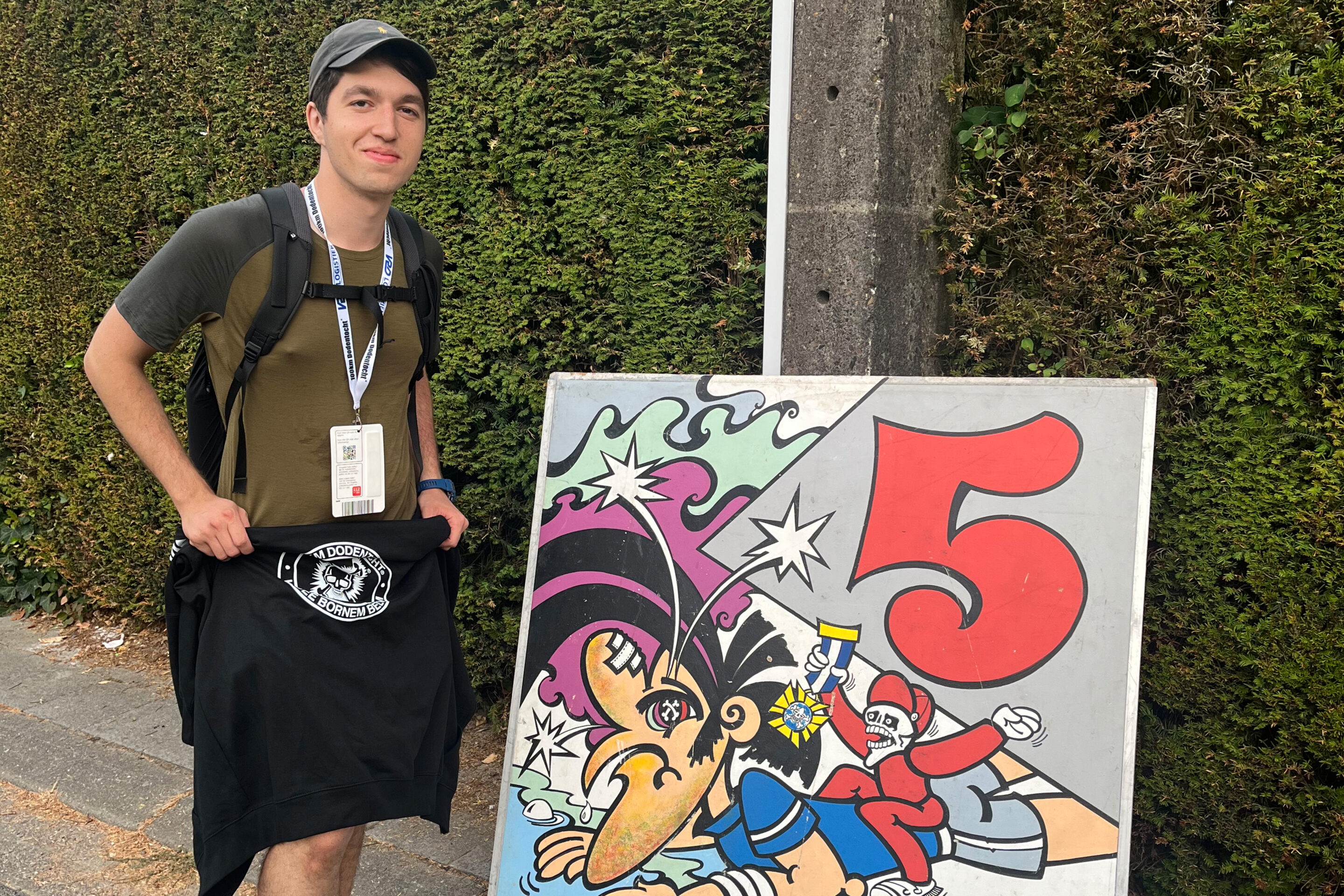
After walking for 23 hours and 42 minutes (equivalent to about 150,000 steps), The Brussels Times reporter Kosmos Khoroshavin crossed the finish line of the 100 km Dodentocht walk.
This is his account of a grueling challenge to body and mind that wrecked him in ways he did not expect.
The start
At 20:50, just 10 minutes before the Dodentocht's official start, I was locked in behind the tall steel fence of the Yellow starting zone, nervously anticipating the challenge ahead. For the first time, I realised just how many people were taking on this challenge.
The official number of 12,769 participants feels quite right once you take a look around.
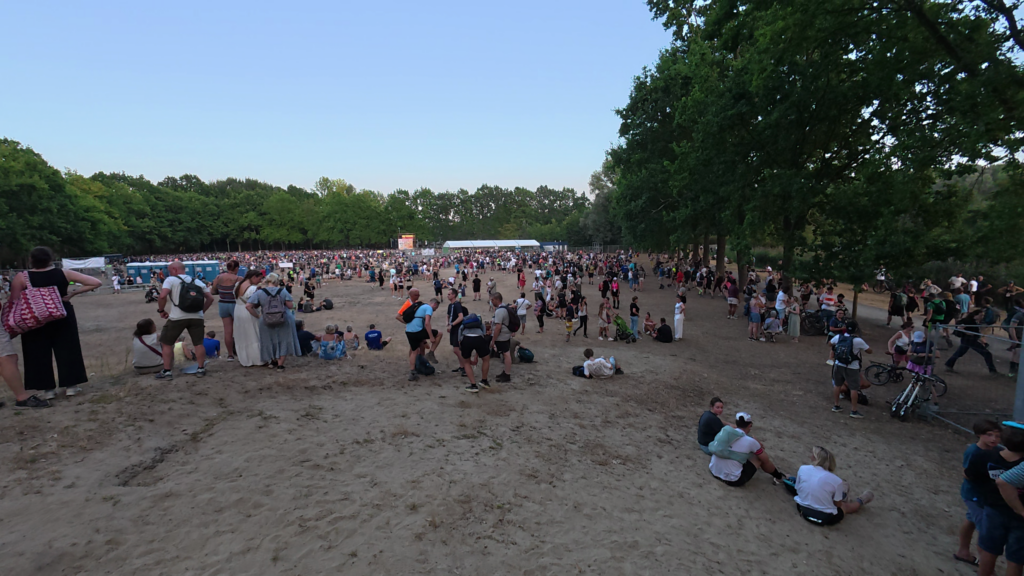
Hikers preparing for the start of Dodentocht (Action cam screenshot). Credit: Kosmos Khoroshavin / The Brussels Times
Despite having some prior experience in long-distance cycling and walking, I did not do any specialised training for an "ultra sporting event" such as this one.
I tried my best to figure out the exact kit I should bring with me, keeping in mind that I will have to carry every extra kilogram for the whole trail. With me, I had a change of clothes and four pairs of socks, prioritising merino wool for moisture management and breathability.
I also opted for worn-in, lightly cushioned sports shoes instead of hiking boots, which landed me in the minority of people finishing without blisters. Aside from that, I packed talc powder for drying feet, anti-friction cream, plasters and sports tape.
At 21:00, I heard the crowd ahead erupt into cheers and celebrations as everyone hurried to the exit, keen to make their way to the first checkpoint as soon as possible.
Waiting at the bottleneck took about 15 minutes. Then, finally, I went through the automatic scanner with my lucky number 8648 and hit the road.
First steps
Making my way through the first small part of the trail to the Weert checkpoint (8,3 km) left an impression of a party. Surrounded by people with signs and music, everyone supported the participants on their journey.
To me, the fans are as much a part of the event as the hikers themselves. Without their family tables outside their houses and somewhat cheesy, but atmospheric Flemish classics like "Laat het gras maar groeien" blasting through the speakers, the Dodentocht would lose a lot of its appeal.
Seeing the children lining the sides to give us a high five, and groups of friends showing up as a surprise for someone else is just heartwarming.
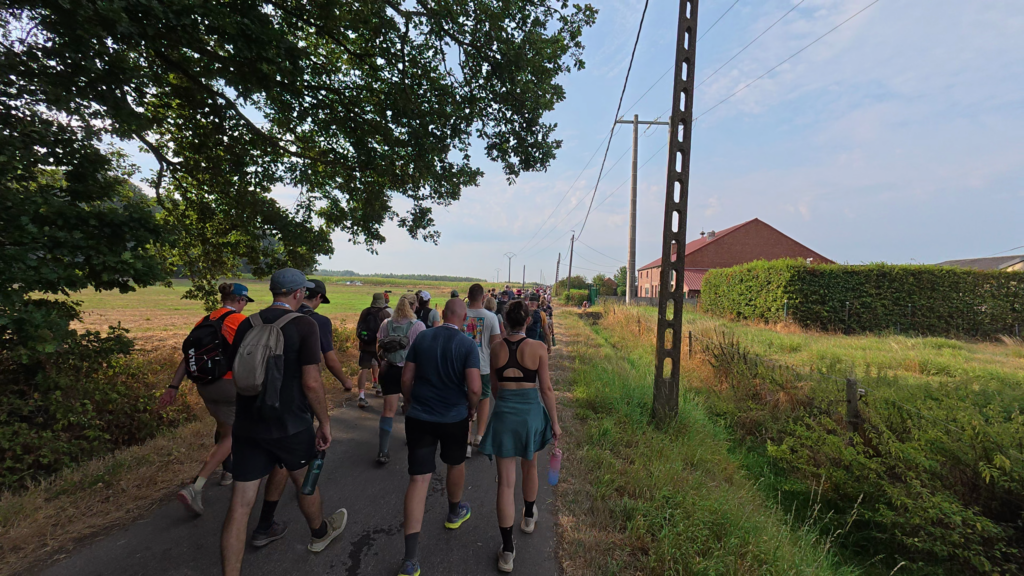
During the march, you are surrounded by hundreds of other hikers in your close vicinity. Most of the time, you move as a long single column (Action cam screenshot). Credit: Kosmos Khoroshavin / The Brussels Times
However, I quickly realised that I did not feel fresh at all, even at the very first kilometre. Due to the evening start, many walkers – including myself – had already been on their feet for the whole day.
While there was no sign of pain or fatigue yet, I was counting every step. Only now was I exploring what it really feels like to walk a single kilometre and let me tell you: it's not short at all.
By that point I had a sinking feeling that I was here for long – probably longer than I initially anticipated.
The 03:00 slump
Once I reached the Friesland Campina checkpoint (17,1 km), my body was showing the first signs of tiredness. The most common issues on the trail are blisters, swollen feet, knee and joint pain, sore leg muscles, back pain, an upset stomach and many other unpleasant problems.
The thing that nobody tells you is that it is not necessarily one or another; all of them can hit you, sometimes even at the same time.
A habit I acquired quickly was to stop at each checkpoint for a quarter hour, lying on my back with legs raised above my heart. This position helped to re-establish the blood flow, solving my biggest issue: swollen feet. They had been painfully pulsing back at me with every step, since about 20 km into the event.
While the first few steps after getting up always felt even worse, this ritual paid off once I started moving.
My rule was not to linger for longer than 15 minutes. I would refill my bottle, use the restroom, stock up on food that the organisers provided and have a short rest before carrying on. This ensured I was preserving more time for the walking process itself, while also not becoming overly sleepy or sore.
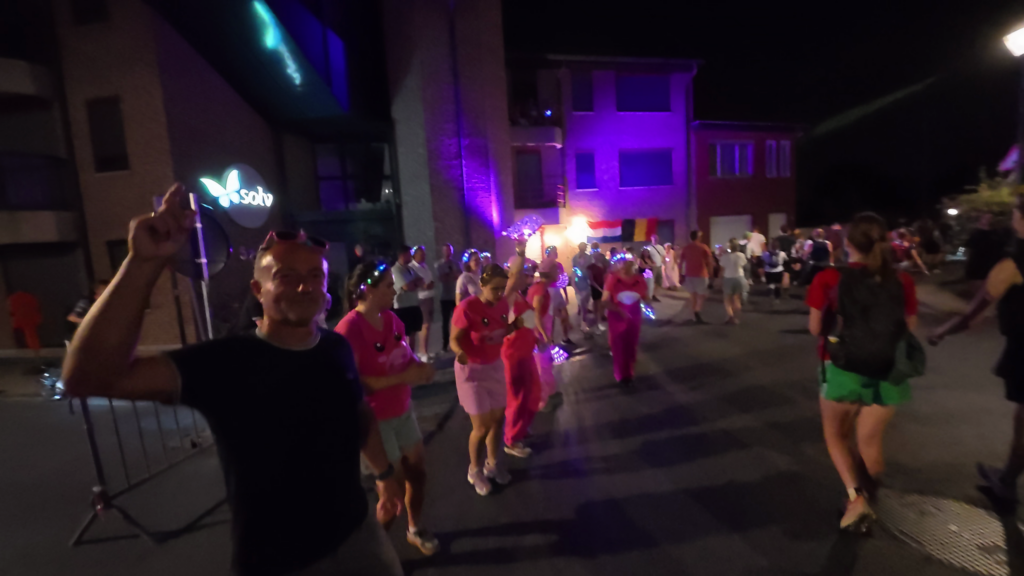
Supporters dancing in pig costumes next to the trail during nightime (Action cam screenshot). Credit: Kosmos Khoroshavin / The Brussels Times
The stretch between Friesland Campina (17,1 km) and Kalfort (36,3 km) is the longest single distance between two checkpoints, with 19,2 km of uninterrupted walking. This was the first time my mind started playing tricks on me and my morale sunk. The darkness and lack of sleep were not helping either.
Now past the initial supporters on the sidelines, we were now going through wilder areas that were picturesque, but gave off a vibe of human insignificance. For someone on a solo hike like me, loneliness hit hard and my brain unwillingly jumped to the idea of having to walk over 80 kilometres to the finish.
Obsessing over the kilometres that are left is a very common theme among participants, I learned. During the hike, I talked to numerous Dodentocht veterans, and all of them gave me the same exact advice: only count distance until the next checkpoint. "Stap per step" ("Step by step").
When I met Aurelié and her brother, their good company helped me to get over my 03:00 motivation crisis. Friendly banter and support made the road just a little easier, but once we reached the Kalfort checkpoint (36,3 km), my new-found friends and I split up as they walked ahead.
I was convinced they had a bigger chance to finish than me, but it turned out to be the exact opposite. Not much later, they sent a message to say they had both dropped out and were now cheering for me to make it to the end.
The halfway breaking point
The Dodentocht is not the kind of challenge that progressively gets harder, instead it is a rollercoaster. It is always darkest before the dawn, as they say. But it also always gets better – I rebounded. Seeing the sun come up slowly, enjoying the scenery and walking into a sort of trance for a couple of hours with music for company, I got my second wind.
Despite feeling better, I had heard a myth that I genuinely believed in: "after 50 km, you get carried by motivation".
For me, and seemingly for most other people around me, that was not the case. Once I crossed this point, quitting immediately felt harder. However, that feeling did not give me any additional power, it just raised the stakes dramatically.
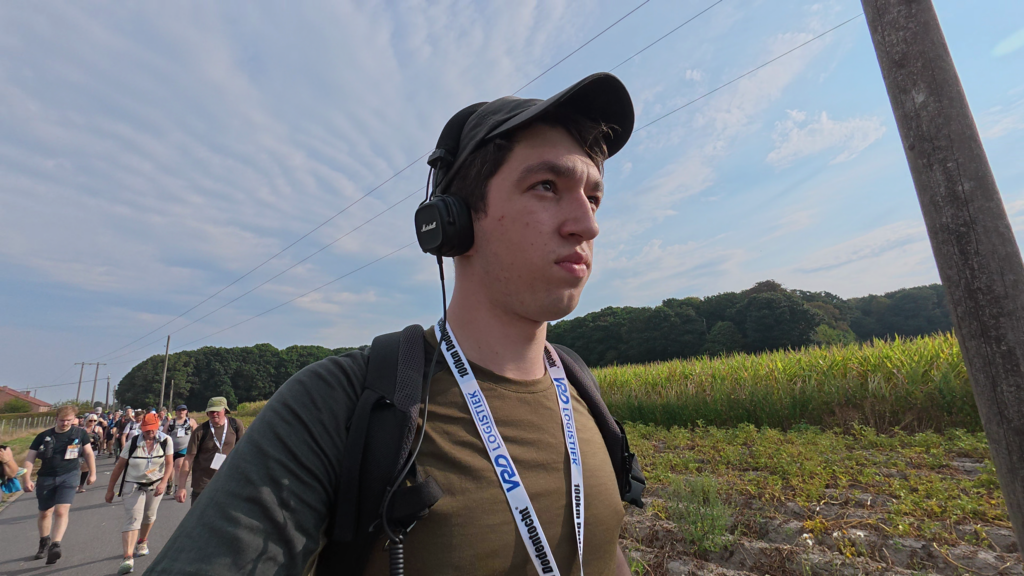
A moment captured during the last 25 km on the trail (Action cam screenshot). Credit: Kosmos Khoroshavin / The Brussels Times
Still, it was not the mental challenge, but the physical one that was the biggest factor at play at this point. I felt apprehensive about having to walk another 50 km, but it was the pain of my swollen feet that bothered me the most.
Most people actually drop out somewhere after 60 km, and it does not look pretty at all: I started seeing hikers stumbling along like zombies, some stopping to lie on the ground, others literally crying after realising that they passed the halfway point "for nothing".
Every time I saw situations like these, they gave me motivation to move forward. Not out of spite, but out of fear that I might soon be in the same position, so I'd better keep walking.
Yet my own journey almost ended in Opwijk (58,3 km), when a terrible stomachache started making the walk unbearable. In most similar cases, it is advised to quit. I started mentally preparing myself for a loss and called my partner.
However, I made a decision to try and reach one more checkpoint, the one in Lebbeke (64,4 km). By the time I made it there, the terrible pain left me and I was able to push through.
Making it to the finish
During the last stretch, my exhaustion and pain peaked. At this time, like everyone else around me, I was giving all I had to make it to the finish at any cost.
I wanted to stop more for little resting moments, all while arriving at checkpoints that nearing their closing times.
Perhaps the last real fight was the stretch between Puurs (84,8 km) and the last checkpoint before the finish, in Branst (95,8 km). Despite being so close to the end, I could feel my body giving up on me.
I was trying my best to stay on my feet, while a companion I met along the way tried to take my mind of the road by talking. It was tough. The diploma I received at the end of march confirmed my feelings: I hit my lowest speed of the entire hike at this point, walking at just 3,7 km/hour.
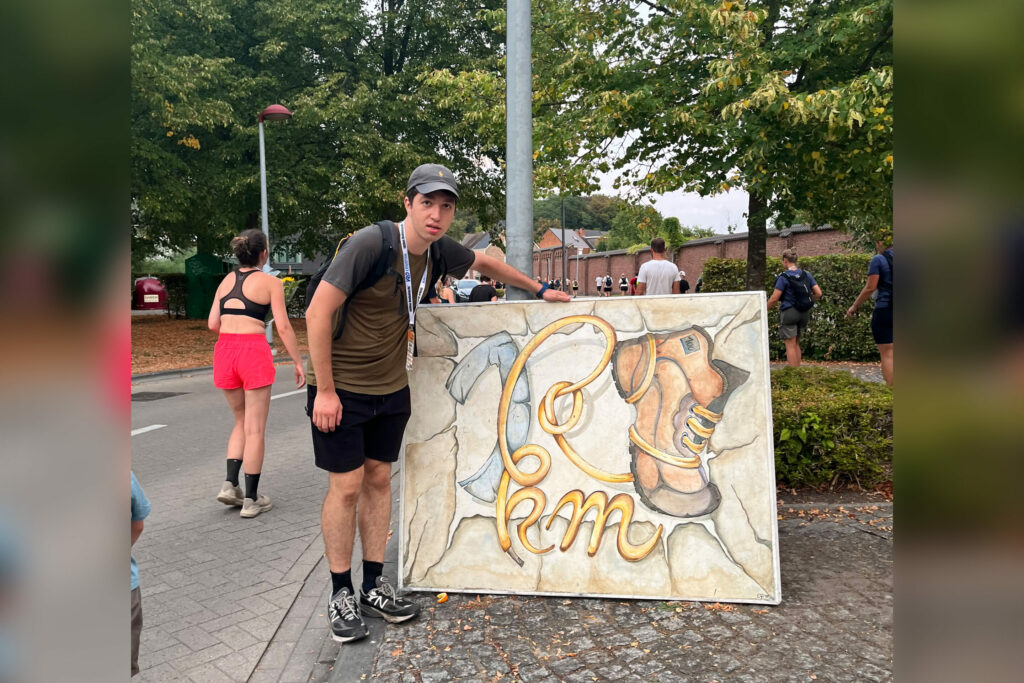
The Brussels Times reporter Kosmos Khoroshavin pictured at the 1km sign of Dodentocht. Credit: The Brussels Times
Once Branst (95,8 km) was left behind, the last 4,2 km were the easiest.
When I entered Bornem again, I was met with crowds of people cheering and doing their best to keep the hikers going. Tthere were also Dodentocht-themed signs for each kilometre.
To make it back before 21:00, I spent my last kilometre jogging marathon-style. Once I crossed the yellow gates back in Bornem, a wave of relief hit me and my body seemingly relaxed, giving way to even more soreness, pain and fatigue that I did not have before.
My Dodentocht was filled with joy and pain, companionship and challenge, stubbornness and raw human spirit. Reflecting back on it, the event left an impression that I will carry with me until the very end of my life.
Immediately after finishing, I was sure I would never come back for another round of the "Death march." But who knows. Looking at all of those who keep coming back, never say never.
