
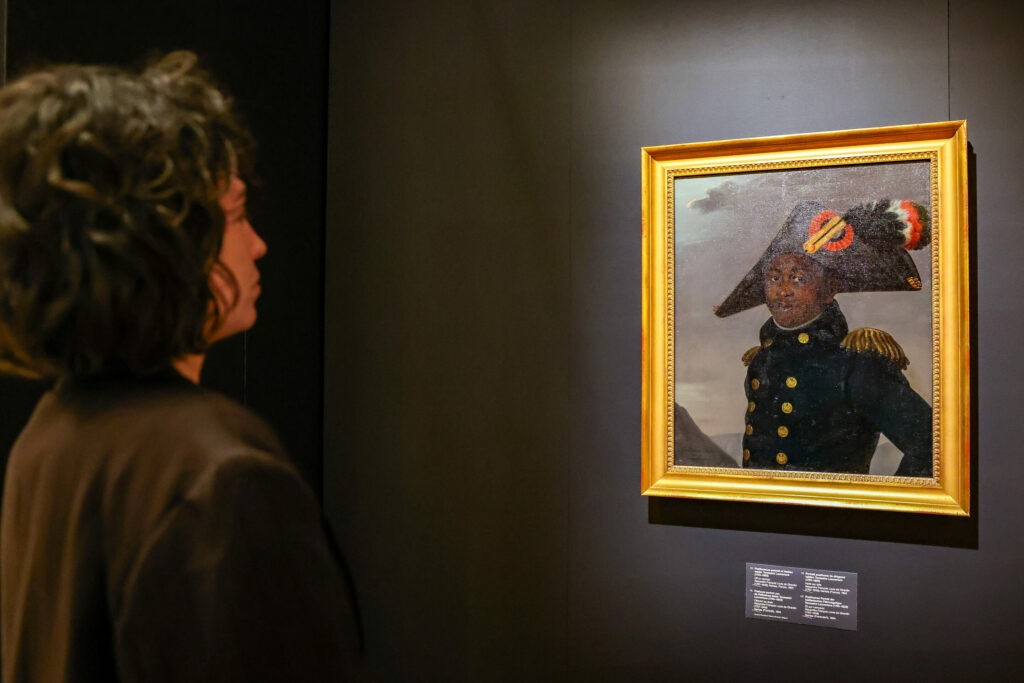
On 23 August, the International Day for Remembrance of the Slave trade and its Abolition, the struggle against slavery and for freedom raises a difficult question: have the former European colonial powers truly come to terms with their past?
The day marks the uprising on the night of 22 to 23 August 1791 by enslaved people in the French colony of Saint-Domingue – marking the first successful rebellion against colonial slavery and eventually lead to Haiti’s independence, according to UNESCO. It is also an occasion to reflect on its consequences, preserve collective memory and encourage future generations to build more just societies.
This is the territory explored by ‘Postcolonial?’, a temporary exhibition at the House of European History in Brussels. Rather than presenting independence as a clean break with the past, the exhibition examines what survived it.
"Not everything is post,"Ayoko Mensah, one of its curators, told The Brussels Times. "There is also continuity." Remembrance, in this sense, becomes a way of recognising how colonial patterns of power remain present today.
For Haitians, the cost of independence was greater than many can imagine. To secure France’s recognition, Haiti was required to pay an indemnity of 150 million gold francs until 1947. Unable to meet that demand, the country took out loans from French banks, creating what became known as a "double debt". The New York Times estimates that Haiti paid the equivalent of approximately $560 million in today’s money.
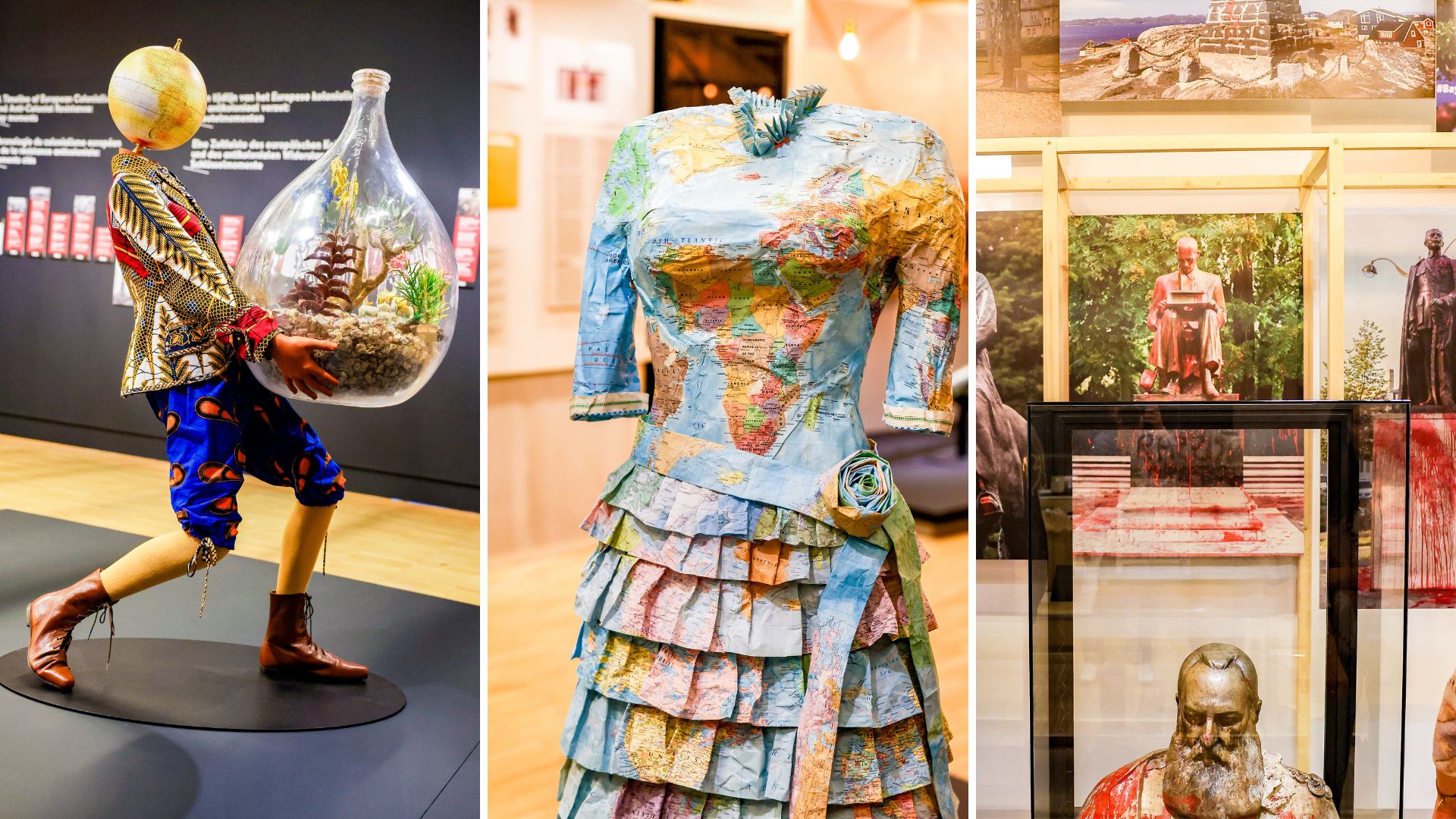
Works featured in the Postcolonial? exhibition include Yinka Shonibare’s Botanist Kid (Boy) and Susan Stockwell’s Colonial Dress, alongside photographs of busts of Leopold II and other European colonial figures marked with paint during Black Lives Matter protests. Credits: Yinka Shonibare CBE RA; Susan Stockwell; EU, EP, House of European History.
But Haiti was not the only former colony forced to bear the economic consequences of colonialism. Indonesia made payments to the Netherlands, Congo inherited debts connected to Belgian rule, and countries in West and Central Africa remained tied to a French currency, the CFA franc. Comparable financial dependencies also developed across the Caribbean and the Americas.
Freedom on someone else’s terms is not only a monetary question; it can also be structural. During the sovereign debt crises of the 1980s and 1990s, many former colonies turned to the World Bank and the International Monetary Fund, the famous "Bretton Woods" institutions. Their loans often required structural adjustment programmes, which were based on austerity, privatisation and deregulation.
Economists and historians challenge our conventional understanding of colonial history. Critics, including some UN experts and affected governments, argue that post-colonial relations weakened healthcare, education and agriculture, deepened poverty and inequality, and reproduced colonial patterns of external control.
However, the exhibition is not only about financial burdens or looted objects that have not yet been returned. It raises a deeper question: how free are former colonies to make their own decisions and define their own paths in a world still shaped by Western institutions and standards?
The prefix 'post' does not simply mean that colonialism has ended; it asks how colonial ways of organising power, knowledge and identity continue to shape the world today.
Three takeaways on Europe’s colonial legacy
Mensah, the curator, identifies three central takeaways. Firstly, she says, colonialism is not a marginal episode but a central part of European history.
The second is colonialism's continental reach: the empire shaped not only the countries that formally possessed colonies, but "Europe as a whole benefited from this system," she says. The third is its human impact, conveyed in the exhibition through eight personal stories showing how colonialism entered family histories and continued to affect later generations.
The exhibition’s location gives this argument particular significance: the House of European History is situated in Parc Léopold, behind the European Parliament’s Altiero Spinelli building, and was opened at the European Parliament’s initiative in 2017 to examine the complexity of European history and integration.
"The concept of memory runs as a red thread throughout the whole House of European History," Taja Vovk van Gaal told The Brussels Times in 2015 before the opening of the museum. A historian and curator from Slovenia, she led the academic project group which had been implementing the project since 2011.
Even then, she made clear that the museum would not avoid difficult or negative events such as European colonialism, slavery and the wars which used to be fought in Europe, culminating in the two world wars.
The idea of the House of European History differs from most history museums in the EU Member States, she underlined, as most of those museums were designed to glorify the history of the nation. The permanent exhibition in the House of European History, however, is not portraying the individual histories of Europe’s states and regions. Instead, it focuses on European phenomena.
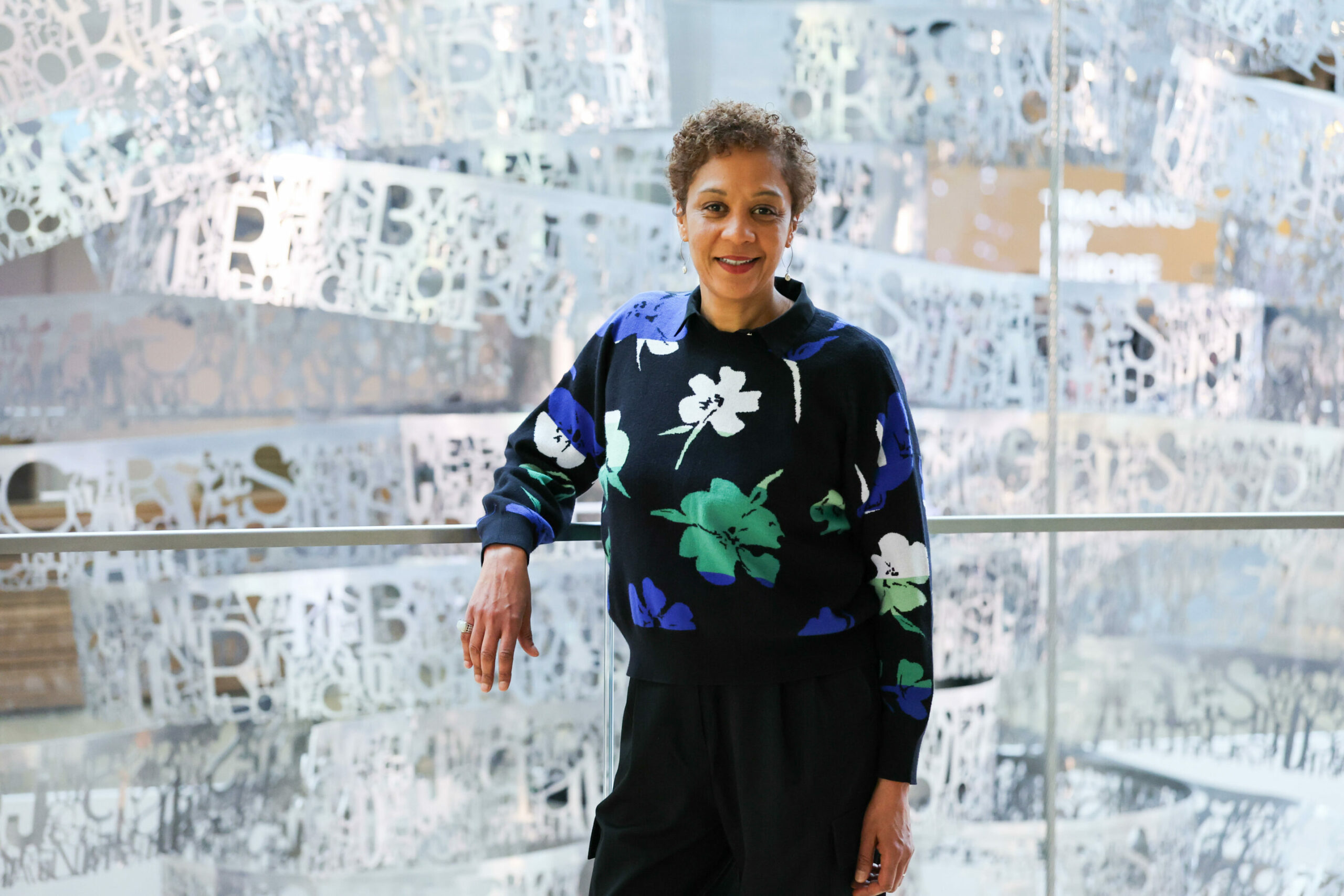
Ayoko Mensah, one of the curators of the Postcolonial? exhibition, spoke to The Brussels Times in an exclusive interview. Credit: EU, EP, House of European History.
In doing this, the academic project group chose three criteria: the event or idea should have originated in Europe, expanded across Europe and continue to be relevant today.
That mission requires it to address not only Europe's pursuit of peace and unity, but also the violence, exploitation and inequalities that accompanied the continent's formation. Colonialism is therefore essential to understanding both Europe's past and the institutions it has inherited today. The exhibition does this through historical objects, contemporary artworks and testimonies from people whose families continue to experience the consequences of colonialism.
This mixture is important because, as Mensah explains, art can tell stories that historical objects alone cannot. She gives the example of Dutch wax cloth, which was inspired by Indonesian batik and later became part of the cultural identity of many African communities. This is the kind of dialogue the exhibition seeks to create: connecting the past with what we recognise in the present.
The exhibition, Mensah stresses, is the result of collective work involving curators and researchers. Her own social identity (positionality), however, brings an important perspective to its central debate. Positionality describes how a person’s social identity and experiences shape their view of the world.
As a black woman of Togolese and French nationality, Mensah approaches this history from a particular perspective. "Because of my positionality, I really wanted to include the agency of colonised people in this history," she says.
This approach is reflected in the exhibition’s presentation of anti-colonial resistance, and features figures including Queen Njinga in Angola, Nanny of the Maroons in Jamaica, Rani Lakshmibai in India and Toussaint Louverture in Haiti. A 1968 portrait of Angolan liberation fighter Luzia Inglês Van-Dúnem further highlights the central role of women in these struggles.
Mensah adds that her own experience also matters: she works as a black woman and curator within an institution that, in her words, remains "mainly white".
Coming to terms with the colonial past
The evidence suggests that Europe has not, or at least not fully, come to terms with its colonial past. In Belgium, colonial history remains contested through debates over statues of Leopold II, the restitution and presentation of objects held by the AfricaMuseum, and the limited place colonialism still occupies in schools and public institutions.
These are not simply disputes about how to display the past; they reveal an unresolved disagreement over how colonial rule should be understood and what responsibilities follow from it.
Its consequences also extend beyond museums and memorials. Across former colonies and within European societies, colonial history continues to shape debates about racial inequality, economic dependence and political representation. Colonialism cannot explain every contemporary disparity, but it helped establish structures through which wealth, opportunity and power have remained unevenly distributed.
Remembering this history also means recognising agency, something that is central to UNESCO’s remembrance day. Enslaved and colonised people were not only victims, but also leaders of resistance and creators of political, intellectual and cultural movements.
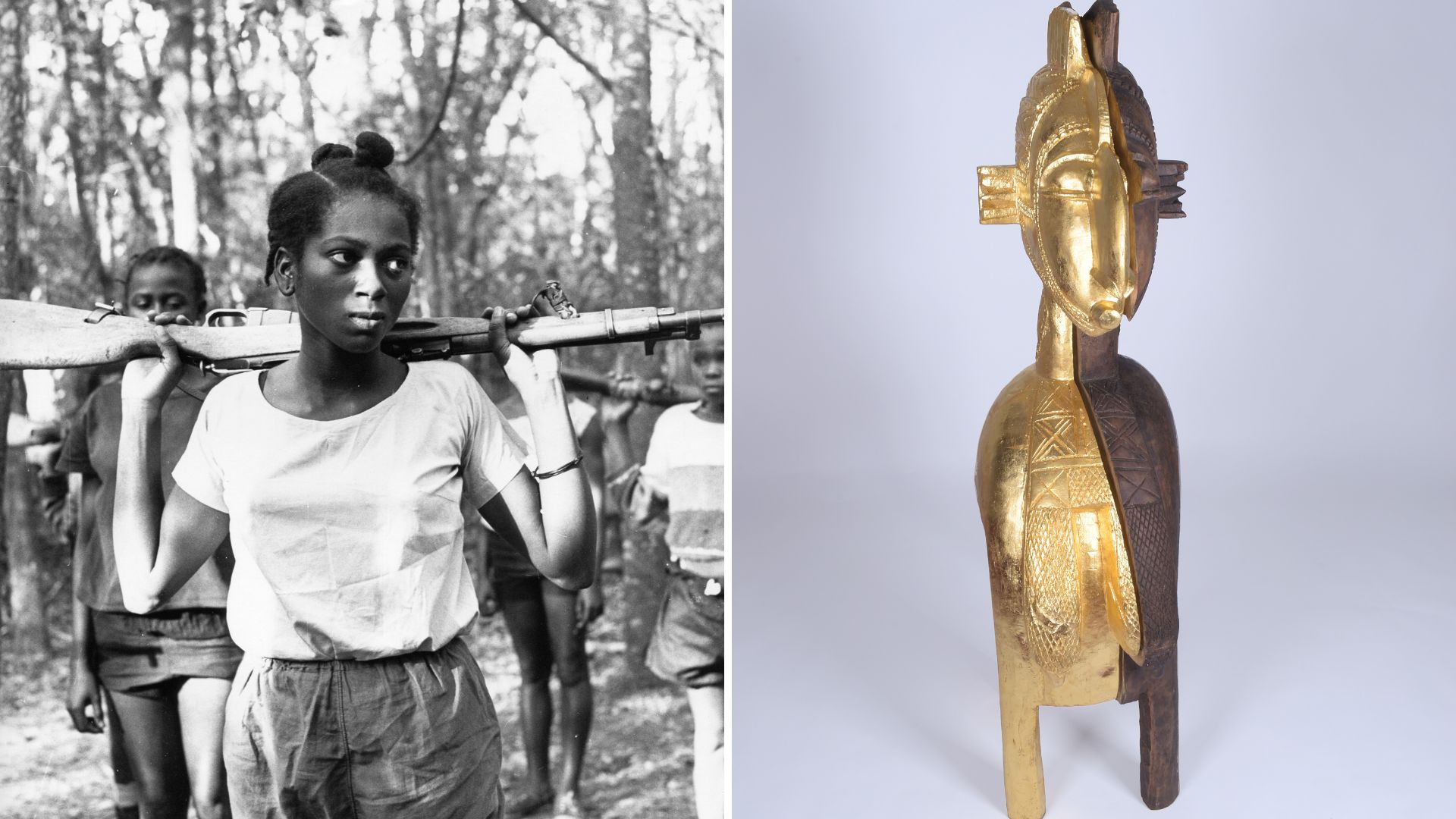
Left: Luzia “Inga” Inglês Van-Dúnem, a member of the Angolan liberation movement, photographed in 1968 by Augusta Conchiglia. Right: Baga Nimba (Gold) (2019), by British-Nigerian artist Niyi Olagunju, forms part of a series examining the global trade in African art and the continuing influence of colonial systems. Credits: Augusta Conchiglia; Niyi Olagunju. EU, EP, House of European History.
Their influence can be heard in Brazilian samba and frevo, jazz and reggae, the Garifuna traditions of Central America and the Caribbean, and Cuba’s Tumba Francesa, which developed through the arrival of people from Saint-Domingue.
The date therefore recalls suffering, but also resistance and achievement. At the same time, it raises practical questions about the present: who reaches positions of leadership, whose history is taught, whose knowledge is recognised and who participates in decisions that shape the international system?
These questions reach far beyond the issue of restitution. They concern the representation of African, Caribbean and other formerly colonised countries in institutions of global governance, their ability to determine their own development priorities and their power to shape international rules rather than simply follow them.
Europe may be discussing its colonial history more openly, but discussion alone does not amount to having come to terms with it.
From Portugal and the Netherlands to Belgium, France and the United Kingdom, disputes over education, restitution, responsibility and representation remain unresolved. The persistence of these debates, and of the inequalities connected to them, suggests that Europe’s colonial past is not only a matter of memory. It remains part of the present.
