
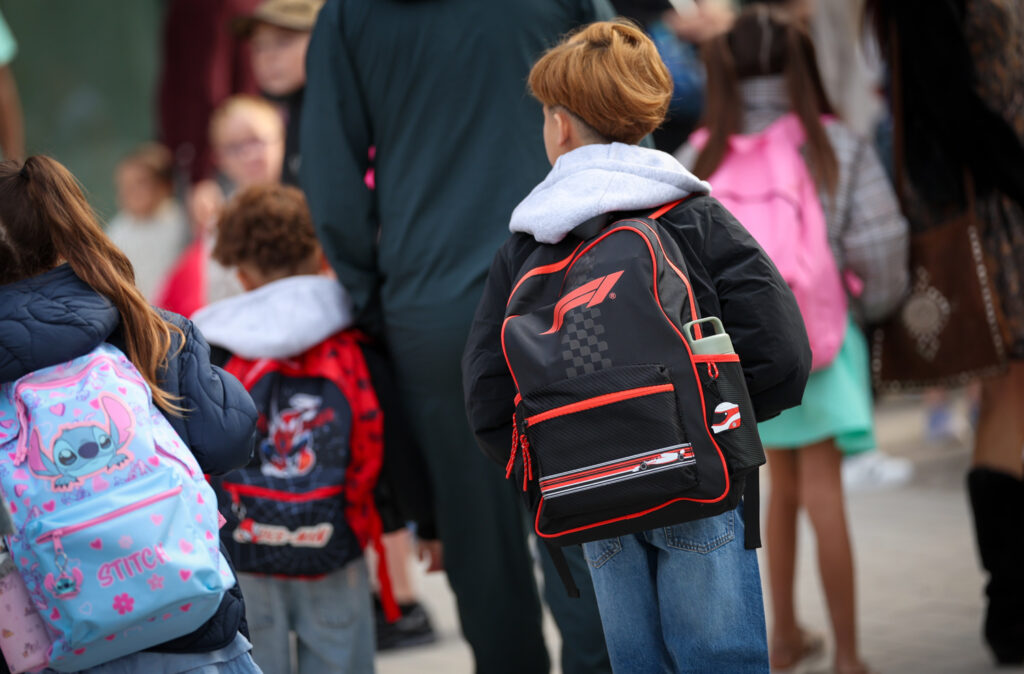
As French-speaking pupils returned to school on Monday, LGBTQIA+ groups warned that many still face violence and hostility in education.
“Youth is a time of intense vulnerability,” said Erynn Robert of Prisme, the Walloon LGBTQIA+ federation, particularly on issues of sexuality and sexual orientation.
The organisation said violence affects all places where young people gather, including schools, whose structures can still be heavily shaped by gender norms.
Increase in violence in schools
Prisme also warns that masculinist movements, which follow a sexist ideology promoting male superiority, are popular among some teenagers and are circulating within schools.
According to a 2024 survey by the European Union Agency for Fundamental Rights, two thirds of LGBTQIA+ people experienced bullying, mockery, insults or threats at school because of their identity.
Prisme said that figure was 21% higher than in the agency’s previous study in 2019.
Homophobic attitudes among teachers
Robert also pointed to a poll published this summer by Flemish media outlets VTM Nieuws and Het Laatste Nieuws, which found that one in three young people in Flanders would not want a transgender friend.
On the ground, teachers and school staff are not always equipped to respond to anti-LGBTQIA+ violence, Robert said. The reasons include a lack of awareness, limited resources and, in some cases, homophobic attitudes among teachers themselves.
The Flemish non-profit organisation Cavaria examined the issue in 2022. Nearly 80% of respondents said education staff rarely or never intervened when LGBTQIA+-phobic acts were committed in front of them.
Using information to fight abuse
In response, Prisme has expanded its information and support platform on LGBTQIA+-phobic violence with a section dedicated entirely to schools.
The federation said pupils, students, witnesses, relatives and education staff can now find guidance there on how to identify abuse, how to respond, and where to access existing support services and resources.
The site also lists training opportunities, offers advice on supporting victims and creating inclusive spaces, and explains what forms of redress are available.
