
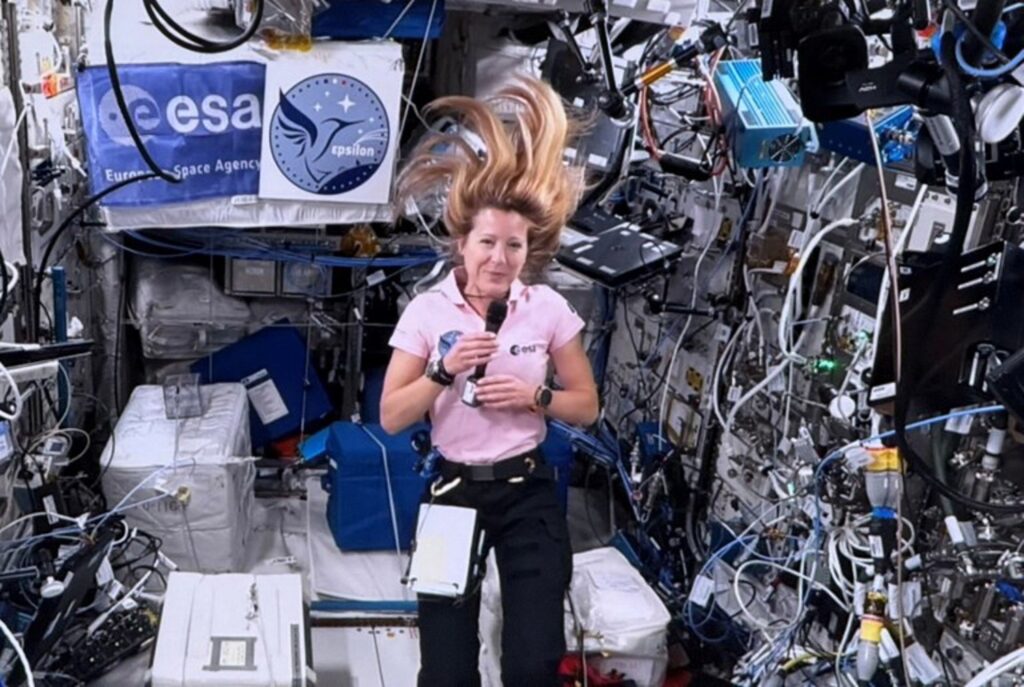
Astronauts and cosmonauts on board the International Space Station are taking part in a study led by the University of Antwerp to measure how space missions affect the brain, Belgium’s federal science policy office, Belspo, said on Tuesday.
The three Americans, three Russians and one French astronaut now on the ISS underwent MRI scans before travelling to the station and will be scanned again after returning to Earth.
By comparing the images taken before and after the mission, researchers hope to identify any changes that occur in the brain during prolonged stays in space.
“We cannot perfectly reproduce the conditions of space on Earth, especially microgravity,” said Professor Floris Wuyts, who is leading the research. “These images help us better understand how the human body and brain adapt to that environment. We are learning a great deal about balance disorders and about the remarkable resilience of the brain.”
Mapping those changes could also lead to medical advances on Earth, particularly in research into balance and neuroplasticity.
By comparing astronauts’ and cosmonauts’ brain scans with those of patients, the team has already made major progress in understanding Mal de Débarquement syndrome, a disorder that causes a persistent sensation of movement after travel. Professor Wuyts said results on that work are expected to be published soon.
The research programme, known as Brain-DTI, is an European Space Agency project led by the University of Antwerp.
The Catholic University of Leuven and the University of Liège are also involved, along with universities in Munich, Moscow and Rome, as well as Stanford University and the University of South Carolina.
The team has already received several international awards, including one from the US space agency NASA.
