
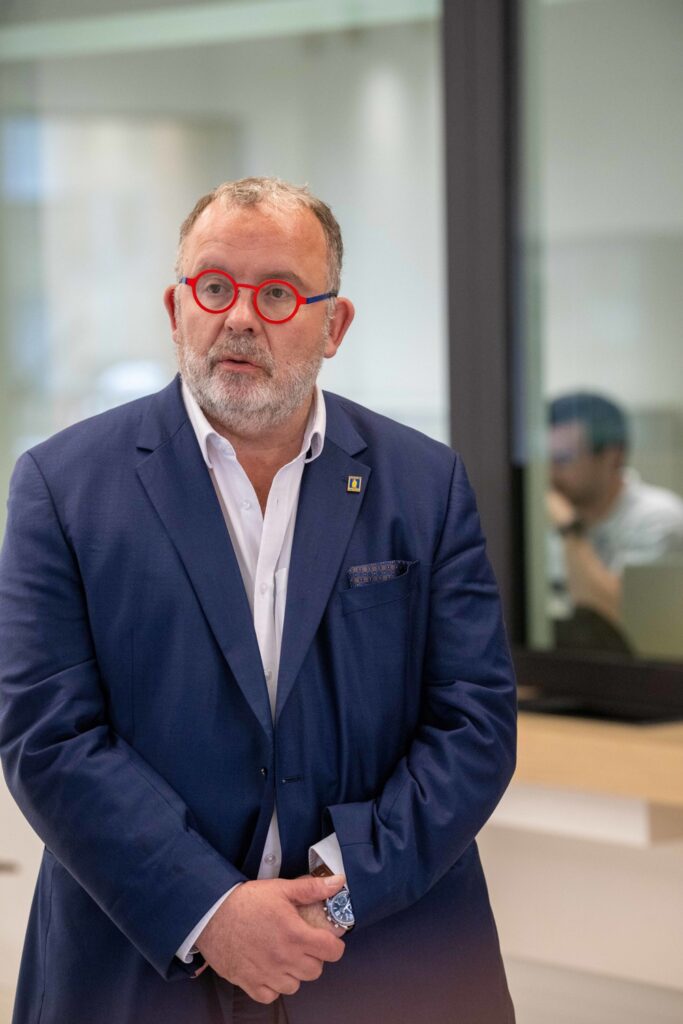
Several Brussels mayors voiced cautious optimism following Wednesday's Regional Security Council meeting, at which reinforced coordination in the fight against violence related to drug trafficking was announced.
Saint-Gilles Mayor Jean Spinette said he felt better supported in the fight against organised crime after the meeting. Deeply affected by recent incidents in his municipality, the Socialist mayor said he had “a bit more of a smile back” after the meeting.
Spinette had previously complained of “a lack of federal loyalty,” but said he now saw “a national awareness” of organised crime as a destabilising problem for the whole country, not just Brussels and Saint-Gilles.
A completely different level of awareness
Representatives from the Justice and Interior ministries, the Brussels public prosecutor’s office, Brussels-Capital Region, local mayors and the federal police met on Wednesday at the headquarters of safe.brussels to discuss ways to step up the fight against drug-related violence.
Spinette said the meeting has led to stronger co-operation backed by concrete reinforcements. Support had already been provided by the Brussels-Capital/Ixelles police zone and was now being supplemented at federal level, he said.
The Saint-Gilles mayor said that after the explosion at the façade of the school on Place Bethléem, and the shooting on the same square, he had felt there had been plenty of compassion but little concrete follow-up.
“This is a completely different level of awareness,” he said.
Hope and optimism
Spinette said he hoped this "national unity" would now translate into action. Reinforcements from the City of Brussels were now visible in Saint-Gilles, with more patrols on the streets, he said.
“The unit was not promised for months down the line. It is being put in place straight away,” he added.
He nevertheless remained cautious. “I have learned to wait and see. But here, I must admit, I was able to thank people,” he said.
Etterbeek mayor Vincent De Wolf called for “national unity” between the municipalities, the region, the federal government, the justice system and the police. He suggested taking inspiration from Portugal’s “dissuasion commissions”, under which drug users intercepted by the authorities are offered a pathway towards treatment and reintegration. If they refuse, they face prosecution.
De Wolf said he would circulate a note he had written on the model to the other partners. He said he was leaving the meeting with “a great deal of hope and optimism.”
Health measures, social support, also needed
Forest Mayor Charles Spapens also described the meeting as constructive and called for the rapid implementation of a “national emergency plan.”
He said mayors supported the needs set out by the public prosecutor and were reaching the limits of their own capacities.
“There is no normalisation, there is no lawless zone, there are no neighbourhoods we are abandoning,” he said, addressing residents.
Spapens added that the response must also include health measures, prevention and social support. He said he was “optimistic, without being naïve.”
Responding with one voice against organised crime
Finally, Saint-Josse-ten-Noode mayor Emir Kir described the meeting as one of the strongest he had attended.
“When it happens in Saint-Gilles, it is as if it were happening in Saint-Josse,” he said.
According to Kir, attacking a police station amounts to attacking Belgium and the state itself.
He urged all public authorities to stand together, rise above political games and respond with one voice against serious organised crime.
