

A candidate can have the right qualifications, the right experience and a strong CV – but still never make it to the interview because of their age, skin colour, disability or religion. Such discrimination, however, is often difficult to prove.
Employers rarely state openly that a candidate has been rejected because of their background, meaning that discriminatory decisions can remain hidden behind seemingly legitimate reasons. But sometimes, the evidence is there in black and white.
Unia director Patrick Charlier told The Brussels Times that his organisation has handled cases in which candidates accidentally received internal emails discussing their applications, revealing comments about their ethnicity, age or appearance. “Employers know that they cannot discriminate,” Charlier said. “So they may use other pretexts or arguments to reject someone.”
In Brussels, employment remains the largest area of discrimination reported to Unia. In 2024, employment-related cases accounted for 43% of all cases opened by the organisation in the capital, or 208 cases. Unia's 2025 figures similarly show employment continuing to rank first among the areas in which it receives reports.
The problem can occur at several stages of professional life: during recruitment, while an employee is working, and when their employment ends.
At the recruitment stage, candidates may be rejected because they are perceived as too young or too old, because of their ethnic origin or skin colour, because they wear a headscarf, or because of a disability. “It is sometimes hidden, but it can also be uncovered,” Charlier said.
When the evidence is in the inbox
Proving discrimination can nevertheless be difficult, as employers do not always give candidates an explicit reason.
But occasionally, the evidence is much more direct. Charlier described cases in which applicants received not only a rejection email, but, by mistake, internal correspondence discussing their application.
One recent Brussels case illustrates the point. In May 2025, the Brussels Labour Court ruled that a woman who had applied for an accounting position had been discriminated against on the grounds of both skin colour and age after an internal email described her as “not too bad, but Black and/or old”. The court awarded compensation equivalent to 12 months of gross salary – six for each discriminatory ground.
According to Charlier, such cases are relatively rare compared to situations where the evidence is much less obvious. “The most difficult cases are those where it is one person's word against another's, with no recording, witnesses or other material evidence,” he said.
Credit: Unsplash
One way of identifying discrimination is through so-called situation testing. For example, two otherwise identical CVs can be submitted, with the main difference being the applicant's name. If one candidate receives an invitation to an interview while the other does not, this can provide evidence of a discriminatory pattern. Unia advises people carrying out such tests to use genuine profiles rather than a fake identity.
The organisation itself also conducts situation tests, while labour inspectors have the legal power to carry them out anonymously in Brussels. The Brussels employment authorities say such tests can be used as part of an investigation into discriminatory recruitment practices.
Charlier, however, believes that this power is still underused. The legal framework allowing labour inspectors to carry out such tests was introduced at federal and Brussels level in 2017-2018 and subsequently strengthened. But for Charlier, inspectors were not given sufficient additional resources to make systematic use of the powers. He described the current results as “relatively disappointing”.
Disability and religion among key issues
According to Charlier, disability is one of the main grounds involved in employment cases in Brussels, including refusals to provide reasonable accommodation or decisions allegedly linked to a person's health condition.
Racial discrimination is another major concern. Unia recorded 2,502 reports relating to racial criteria across Belgium in 2025, leading to 757 cases. The organisation said work was the largest area concerned by racial discrimination, accounting for 26% of cases.
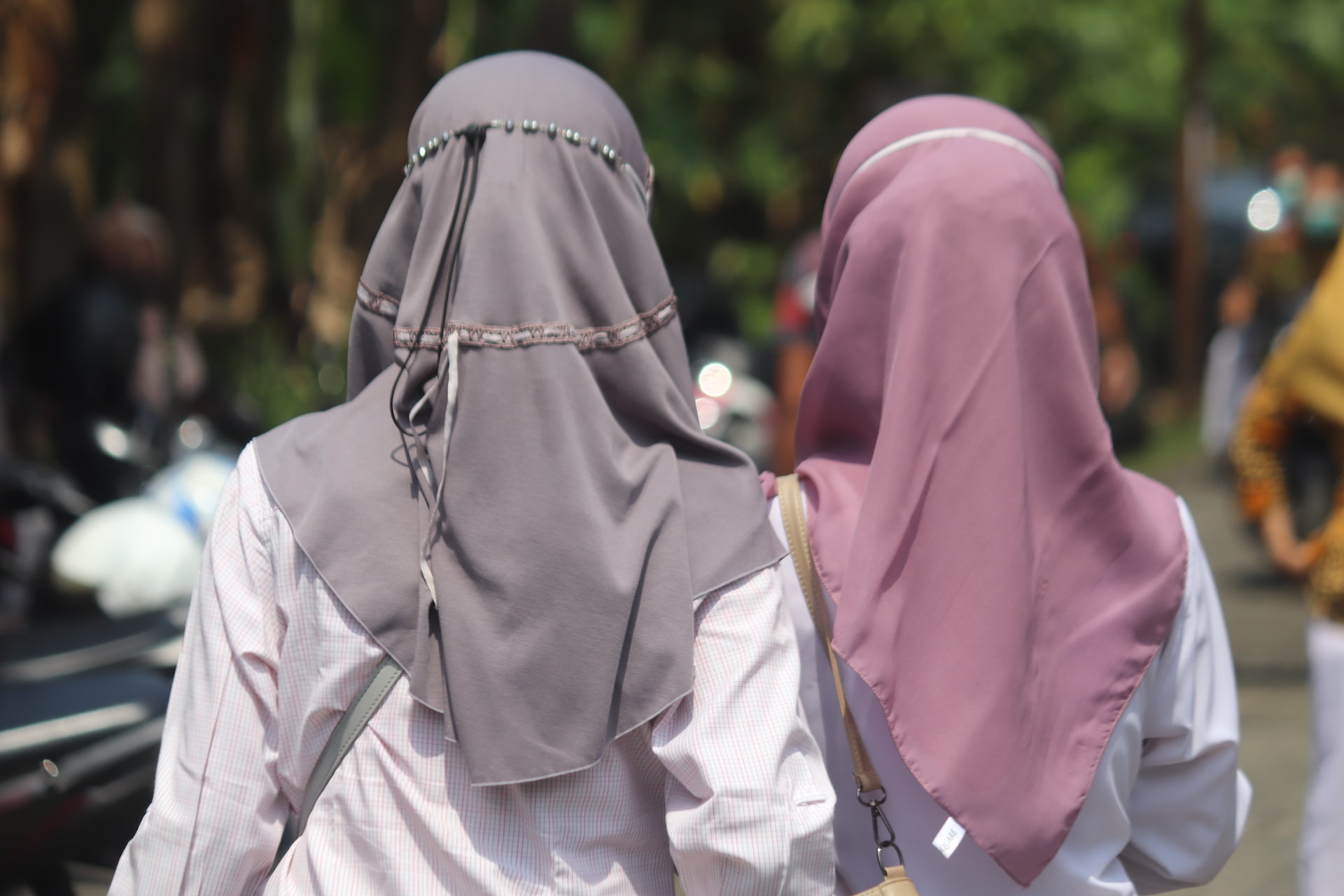
Religious discrimination also regularly appears in employment cases, particularly around the wearing of religious symbols such as the headscarf. A February 2026 ruling by the Brussels Labour Court found that a woman applying for a position at a Brussels public service had been directly discriminated against on religious grounds after the selection process was interrupted when she said she wanted to wear a headscarf at work.
Charlier stressed, however, that not every difference in treatment is automatically illegal discrimination. In certain circumstances, differences can be legally justified. The key question is whether the distinction is based on a protected criterion and whether it can be legally justified.
Credit: Belga
When discrimination is established, Belgian law provides for lump-sum compensation in employment cases.
In principle, a victim can receive compensation equivalent to six months of gross salary. If several distinct grounds of discrimination are established, compensation can be higher, as demonstrated by the 2025 Brussels case.
But Unia generally tries to resolve cases without going to court. “We only go to court in exceptional cases,” Charlier said. “We first try to find out-of-court solutions.”
Unia can negotiate settlement agreements between an employer and a victim, which can include financial compensation, but can also require employers to change their practices. That can mean modifying recruitment procedures, workplace regulations or providing training to HR and recruitment staff.
For Charlier, the objective is therefore not simply to compensate one victim, but to prevent the same situation from happening again.
A new challenge: artificial intelligence
Another potential source of discrimination is increasingly entering the recruitment process: artificial intelligence.
Algorithms are being used more frequently to screen candidates, assess applications or support recruitment decisions. But the systems can reproduce biases contained in the data on which they are trained. “These biases can be related to age, origin, gender, and so on.”
Unia does not advocate abandoning such technologies, but rather greater transparency and prevention from the moment an algorithm is designed. The organisation is increasingly working on AI-related discrimination, including in the context of the EU's AI Act.
Charlier has also pointed out that AI can itself be used to identify discriminatory patterns in recruitment. An algorithm could, for example, analyse recruitment data and reveal that a company or sector consistently selects the same type of candidate while systematically excluding certain groups.
“Sometimes they may simply be mechanisms that lead a company to keep recruiting the same type of profile without this being intentional,” Charlier said.
