
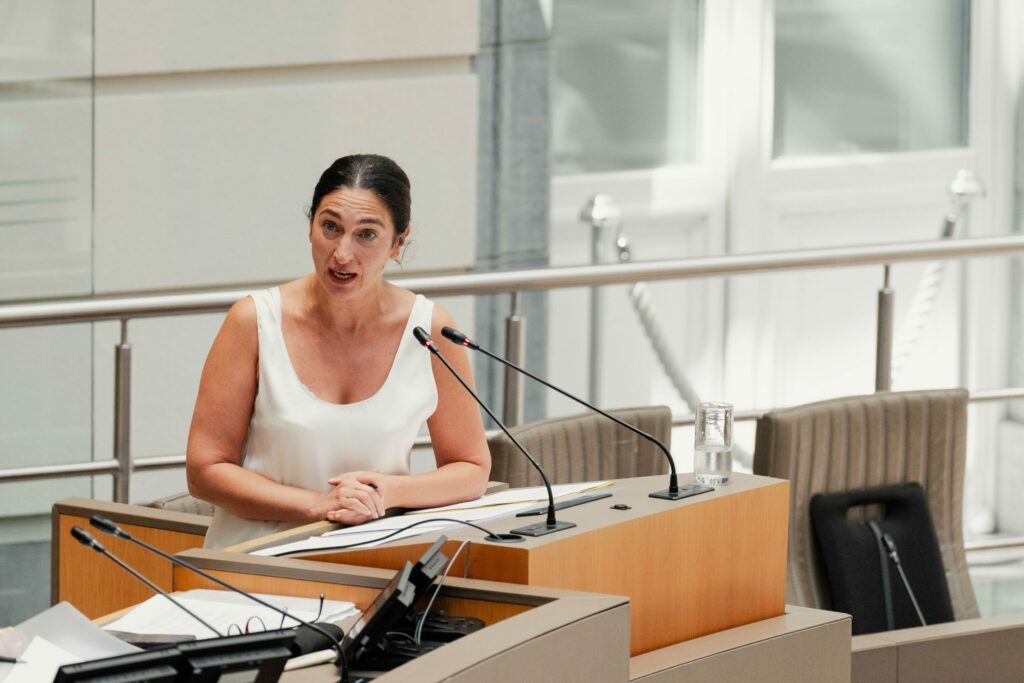
Flemish education networks expect Education Minister Zuhal Demir to present a concrete plan soon for transport for pupils in special education, after a fatal school bus crash in Buggenhout prompted the government to scrap planned cuts while a broader reform remains delayed until 2028.
The crash at a level crossing on 26 May killed the driver, the bus attendant and two pupils. It also intensified anger over a planned €10.7 million saving that would have cancelled 200 journeys. That saving has now been abandoned, and responsibility for school transport has been transferred from Mobility Minister Annick De Ridder to Demir, her party colleague in the N-VA.
Koen Pelleriaux of GO! said it made sense to place the issue under the education portfolio. Until now, the education minister decided which children were entitled to bus transport, while the mobility minister had to organise and fund it. “That was, of course, asking for problems,” he said. “It is at least an improvement that it is now in one policy area, and that the education minister is also responsible for pupil transport.”
Pelleriaux said there was no ready-made solution, but pointed to lessons from pilot projects. He cited Roeselare and Leuven, where transport was organised within a single city and bus routes were kept as short as possible.
Bruno Vanobbergen, head of Catholic Education Flanders, said the coming school year would largely continue under the current system. He noted that Demir wants to expand local pilot projects during the school year.
He said local responsibility would be key because local authorities have the clearest view of actual needs. He also called for greater investment in inclusive childcare, so pupils spend less time on buses, and for closer co-operation between mainstream and special education.
“I am hopeful, but there is still a great deal of work to do at every level,” Vanobbergen said.
The broad outline of the reform, due to take effect from the 2028-2029 school year, has already been set out in a policy note. It proposes a more targeted system in which pupils who genuinely need collective transport can continue to rely on it, alongside a more flexible model combining different transport options.
The plans also include before- and after-school care in special education, with regional hubs taking charge of organisation.
Walentina Cools, director of OVSG, warned above all against further delay. She said the pilot projects had been running for a long time and the issue had too often been pushed back. “It is important not to rush this, of course, but also not to postpone it again,” she said.
She said she hoped a clear plan of action for the following school year would be ready by the end of the current academic year, “so that every pupil can get to school properly without having to leave at 05:00”.
