
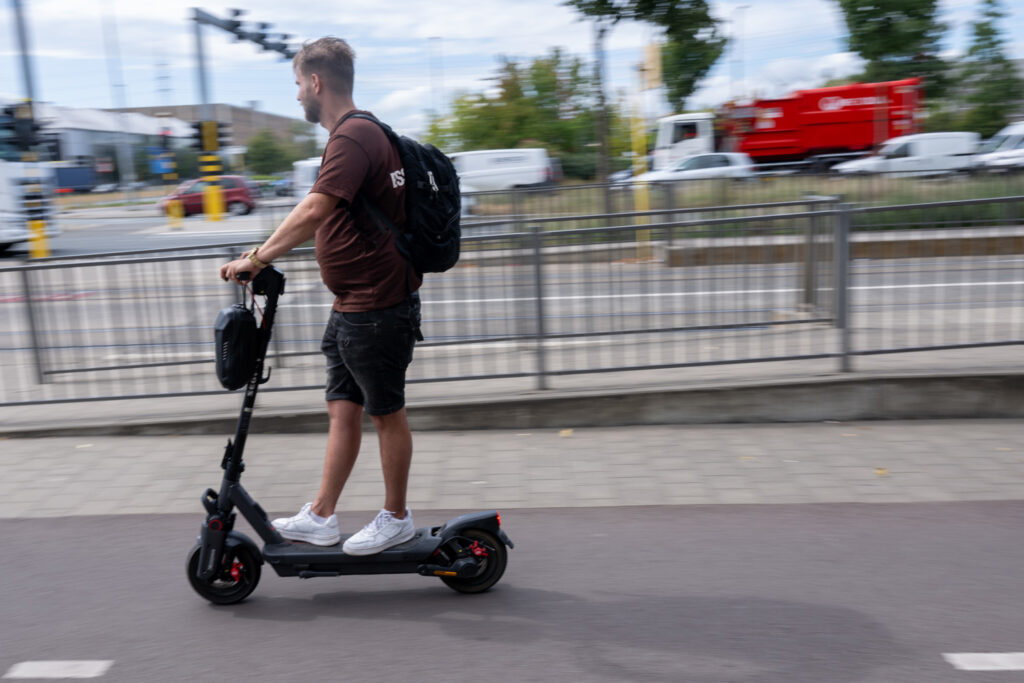
From 1 September, riders of electric scooters with a design speed above 20 kilometres per hour must wear a helmet, Belgium’s Federal Public Service Mobility has announced.
The rule is set out in a royal decree and applies to drivers of motorised mobility devices whose maximum speed, as determined by design, exceeds 20 km/h. This means the obligation depends on the scooter’s top permitted speed, not on how fast the rider is actually travelling.
The helmet may be either a moped helmet or a bicycle helmet that protects the temples and the back of the head.
The measure is intended to improve safety. According to the FPS Mobility, international studies as well as medical and accident statistics all point to the same conclusion: in serious and fatal crashes involving motorised vehicles, especially electric scooters, head and brain injuries are particularly common. The risk of severe injury also rises with speed.
In Belgium, only electric scooters with a maximum speed of up to 25 km/h are allowed on public roads. In practice, the new helmet requirement therefore applies to e-scooters with a maximum speed of between 20 and 25 km/h. Not all e-scooter users are covered by the rule because the authorities do not want to discourage people from switching from cars to scooters, including shared scooters, for some journeys.
For shared scooters, a helmet is not required if the operator has limited the maximum speed to 20 km/h. FPS Mobility said this is already often the case, with the speed cap included in the operator’s licence.
