
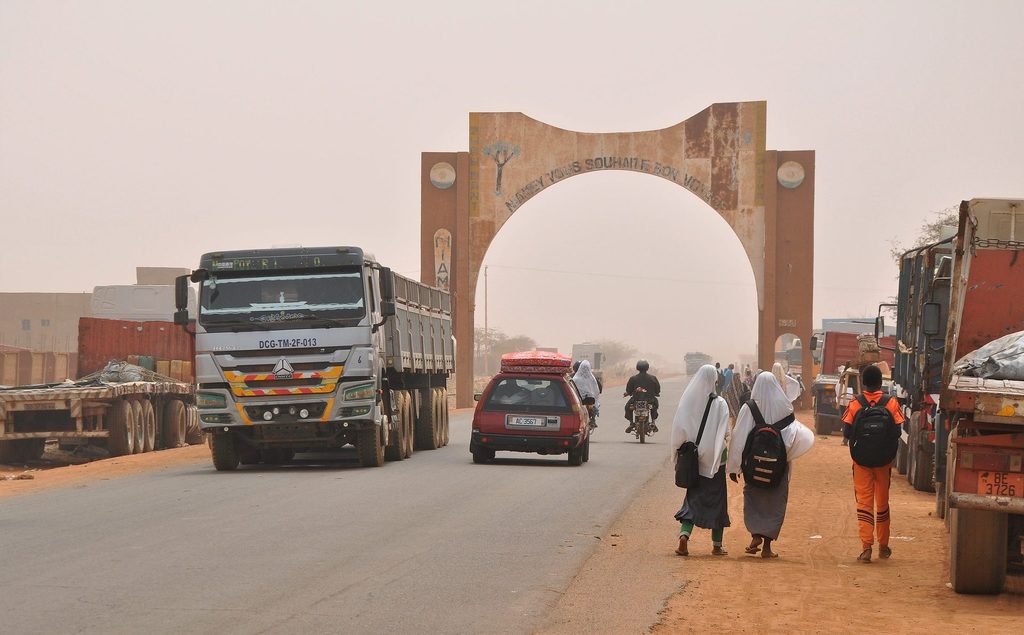
Belgian Foreign Minister Maxime Prévot visited Niger on Friday to maintain ties with the Sahel nation despite military rule, hours before gunfire was reported near Niamey airport and in the city centre.
Niger, like Mali and Burkina Faso, is now governed by a military junta following recent coups. The three countries have withdrawn from regional African economic co-operation and formed their own alliance, marked by a strong emphasis on sovereignty and hostility towards former colonial powers.
Only a handful of European embassies remain open in Niger. After meeting the Nigerien prime minister, Prévot said Europe was turning its back on the Sahel even though the region remained important to security in Europe.
He said Belgium’s relationship with these countries stretched back more than 50 years and had already endured several coups. Belgium, he said, had never simply walked away before.
At the same time, Prévot said Belgium could not accept the way the country is currently being governed. Speaking to local media, he also criticised claims that Europe supports terrorist groups.
“That disinformation campaign must stop,” he said. “You should not add fuel to the fire.”
Niger’s Foreign Minister, Farmo Moumouni, said disagreements had been discussed openly during the talks. He said this had been done respectfully and added that Belgium could not limit its dialogue only to countries that fully shared its views.
Moumouni said Niger was chiefly looking for economic co-operation from Belgium. “We no longer need Western legitimisation; we can provide that ourselves,” he said. “What we are looking for are investment opportunities.”
Local media framed the visit differently, with one outlet reporting that Brussels had once again confirmed its respect for the sovereign decisions of Ouagadougou. Prévot said he was not troubled by that interpretation, noting that selective quotations were being used but that, in essence, Belgium did have to respect the countries’ choices.
In recent days, Prévot also visited Belgian development aid projects in Burkina Faso and Niger. He told partners that the Belgian government had cut development aid by 25%, while stressing that humanitarian aid would not be reduced.
That position caused some tension with members of the accompanying aid delegation, who argued that long-term thinking and economic development were essential to reduce the appeal of jihadist groups.
Prévot disagreed. He said living conditions also had to improve in the short term if young people were to be kept out of the hands of Islamic State and al-Qaeda, and that humanitarian aid was needed for that.
A few hours after Prévot and the Belgian delegation left, gunfire was again reported in Niamey. According to local media, heavier weapons were also heard near the airport, and the army was placed on the highest alert.
