
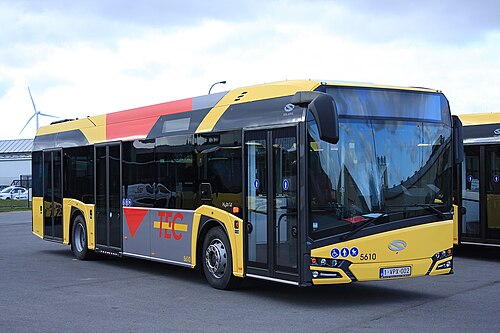
The Walloon Parliament on Wednesday evening approved a draft decree giving the Transport Operator of Wallonia, WTO, greater autonomy, including over fares, despite opposition from the Socialist Party (PS), Belgian Workers Party (PTB) and Ecolo.
The text, backed by the Mouvement Réformateur-Les Engagés majority at Parliament’s opening session, reorganises responsibilities between the government, the administration and the WTO. Its stated aim is to give the operator more flexibility and improve efficiency.
In practical terms, the reform gives the WTO more freedom to set fares and define transport services. It also updates the legal framework on fare evasion and anti-social behaviour on the local Internet network, bringing it more closely into line with rules applied by other Belgian public transport operators.
Reform aims for greater efficiency, more reliable service
During the debate, MR parliamentarian Arnaud Dewez said the guiding principle of the reform was to ensure that every euro invested in public transport delivers a better service for passengers.
Sophie Fafchamps of Les Engagés said the intention was not to make users pay more, but to preserve a network that remains present even in areas where a bus service may no longer be justified in its current form.
She said the reform should lead to greater efficiency, clearer policy implementation and more reliable services, while maintaining support for the most vulnerable.
Opposition remains unconvinced
The opposition, however, remained unconvinced, in a politically charged return to parliament against a backdrop of expected social unrest. Earlier on Wednesday, several dozen demonstrators from the Mars Attacks movement, which opposes reforms in the education sector, protested outside the regional parliament.
Socialist legislator Mélissa Hanus said public transport must remain a strong public service built with local communities.
She warned that greater autonomy must not become a pretext for democratic backsliding, and that efficiency must not be used to obscure a blurring of responsibility.
Undeclared privatisation incentive?
PTB group leader Germain Mugemangango accused the government of creating a framework that encourages privatisation without saying so openly.
He said too much power was being handed to a board of directors made up of MR and Les Engagés figures, and argued that the reform would make buses less accessible and more expensive, in contradiction with social justice and climate goals.
Ecolo parliamentary leader Stéphane Hazée said the decree makes OTW responsible for a number of political choices that should remain with the government. He described it as a measure that allows ministers to wash their hands of those decisions.
