
Belgium has not recorded any human cases of West Nile virus, although infections among horses and birds are increasing, the Flemish health agency said on Thursday.
The agency, Departement Zorg, said no human contamination had been detected so far. However, the number of infected horses in Flanders has risen sharply.
A spokesperson said a new infection in a horse had been identified almost every day over the past week. In total, around 10 horses are believed to be infected in Flanders.
Several infected dead birds have also been found. In Brussels, Brussels Environment reported on Wednesday the recent discovery of several bird carcasses.
In Wallonia, at least one horse has also been infected.
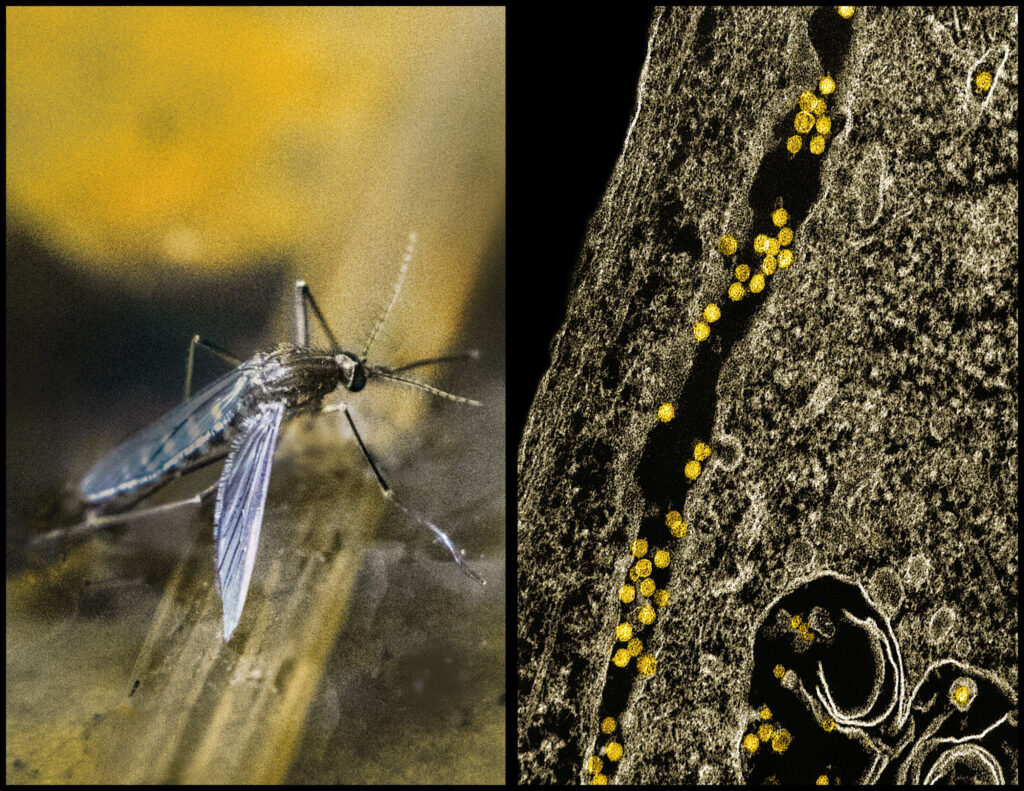
West Nile virus is an arbovirus mainly spread by mosquitoes. It circulates among birds and can be passed on to humans through mosquitoes that have fed on the blood of an infected bird.
The virus is not transmitted from person to person.
No human cases have therefore been recorded in Belgium to date. In the Netherlands, by contrast, nine people have been infected this year, the Dutch National Institute for Public Health and the Environment (RIVM) said on Thursday.
One of those patients died in late August.
According to the RIVM, around 80% of people infected with West Nile virus have no symptoms. A further 19% develop flu-like symptoms, while about 1% may suffer severe neurological complications.
There is currently no vaccine approved for humans and no preventive treatment for West Nile virus infection. A vaccine is, however, available for horses.
