
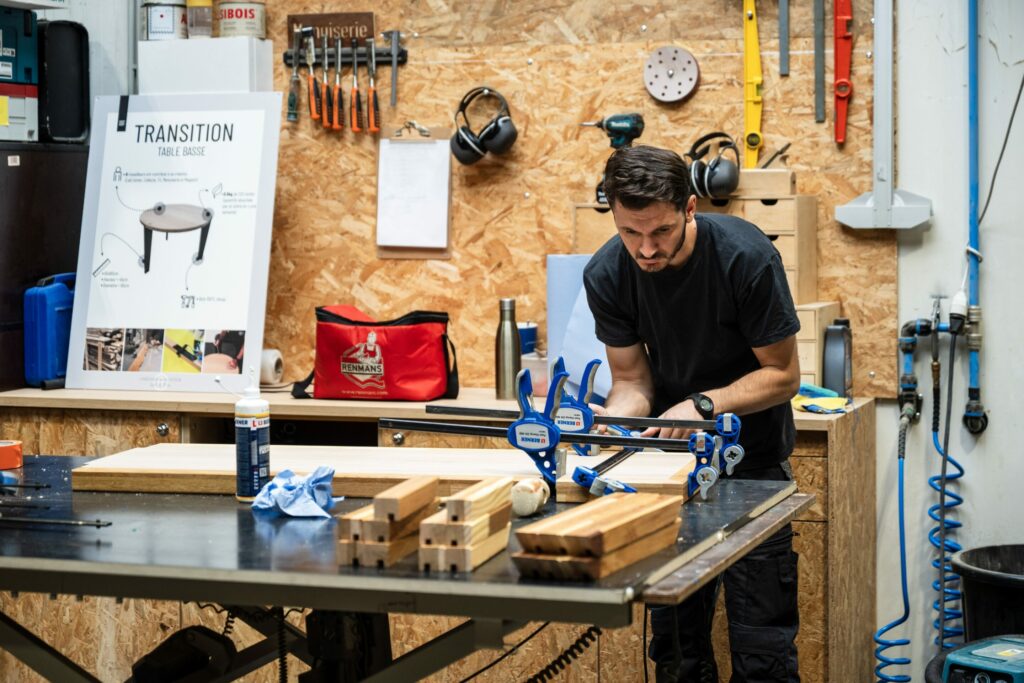
Never before has Belgium had as many self-employed students as it does today. According to entrepreneurs’ organisation UNIZO, there are 9,155 young entrepreneurs, 5% more than a year earlier and a staggering 83% more than when the status was introduced in 2017.
You’re young and you’ve got ambitions. Studying and starting a business, for example. More and more young people are doing just that, figures from UNIZO show.
Good news, according to Mirjam Knockaert, professor of entrepreneurship at Ghent University. Speaking to The Brussels Times, she said that students' time at university is the ideal moment to experiment with entrepreneurship.
"There are very few risks while you’re studying. Most students do it as a sort of experiment: to learn, to see if entrepreneurship is for them," she said.
She believes that those with a brilliant idea rarely come up with it out of the blue. It develops through experience, building a network and spotting a gap in the market. This often begins while studying. It encourages students to become entrepreneurs, but businesses benefit too.
"Research from Ghent University shows that student-run businesses grow faster and generate more turnover and jobs than the average start-up," said Knockaert.
What’s more, it appears that those who close down their business after a while are more likely to end up as 'intrapreneurs': people who continue to think creatively about innovation and new business models within an existing company. In other words: that entrepreneurial instinct doesn’t disappear, even when you start working for another company.
From hobby to business: the story of iBlocus
A good example of what such a journey looks like is Francesco Duval, a management engineering student at Solvay Brussels School. After the first year of his bachelor’s degree, he realised just how much of a difference good planning makes to your academic results.
That insight developed into iBlocus, a study coach via WhatsApp that helps students organise themselves better. "Ever since I was 16, I’ve always had a project keeping me busy, which allowed me to meet new people and, above all, to keep learning," Duval told The Brussels Times.
"I started out in the e-sports sector, where I spent two years building up my own team. Since then, that drive to be an entrepreneur has never left me. For me, being a student and an entrepreneur is actually a logical progression: my studies give me knowledge and, by being an entrepreneur, I can put that knowledge straight into practice," he said.
It wasn’t always easy. Particularly during revision and exam periods – just when iBlocus was at its busiest – he had to make tough choices about how to manage his time. "My studies sometimes required a bit more organisation and a few compromises, but that was a personal choice I fully supported."
What he learnt above all: always start with a real problem, stay close to your users, and build resilience to overcome obstacles. Today, he is starting his master’s degree and iBlocus continues to grow, with ambitions to expand internationally.
Mainly engineers, economists and men
Who are the more than 9,000 student entrepreneurs in Belgium? Research by Ghent University shows that the core of student entrepreneurs comes from engineering and economics programmes.
"That makes sense for engineers," said Knockaert. "Developing software and apps rarely requires a large amount of start-up capital, which keeps the barrier to entry low. Economics students, on the other hand, often develop an interest in business at an early stage."
More striking is the gender imbalance. Since 2017, the number of male student entrepreneurs has more than doubled (+104%), while growth among women has remained limited to 53%. As a result, two-thirds of all student entrepreneurs today are men.
Frank Socquet, director of the UNIZO research department, describes this disparity as worrying. "Talent and ambition are there, but young women still face more obstacles when it comes to taking the step towards entrepreneurship or seeing it through. Women often adopt a more cautious approach, wait longer to put an idea out there, or only consider entrepreneurship after completing their studies."
Knockaert also pointed to the lack of female role models as a possible explanation: it is a long search to find a female counterpart to Marc Coucke. Eléonore Simonet (MR), Federal Minister for Small Businesses, has already announced an autumn campaign featuring a roadshow on financing and a communications campaign highlighting successful female entrepreneurs.
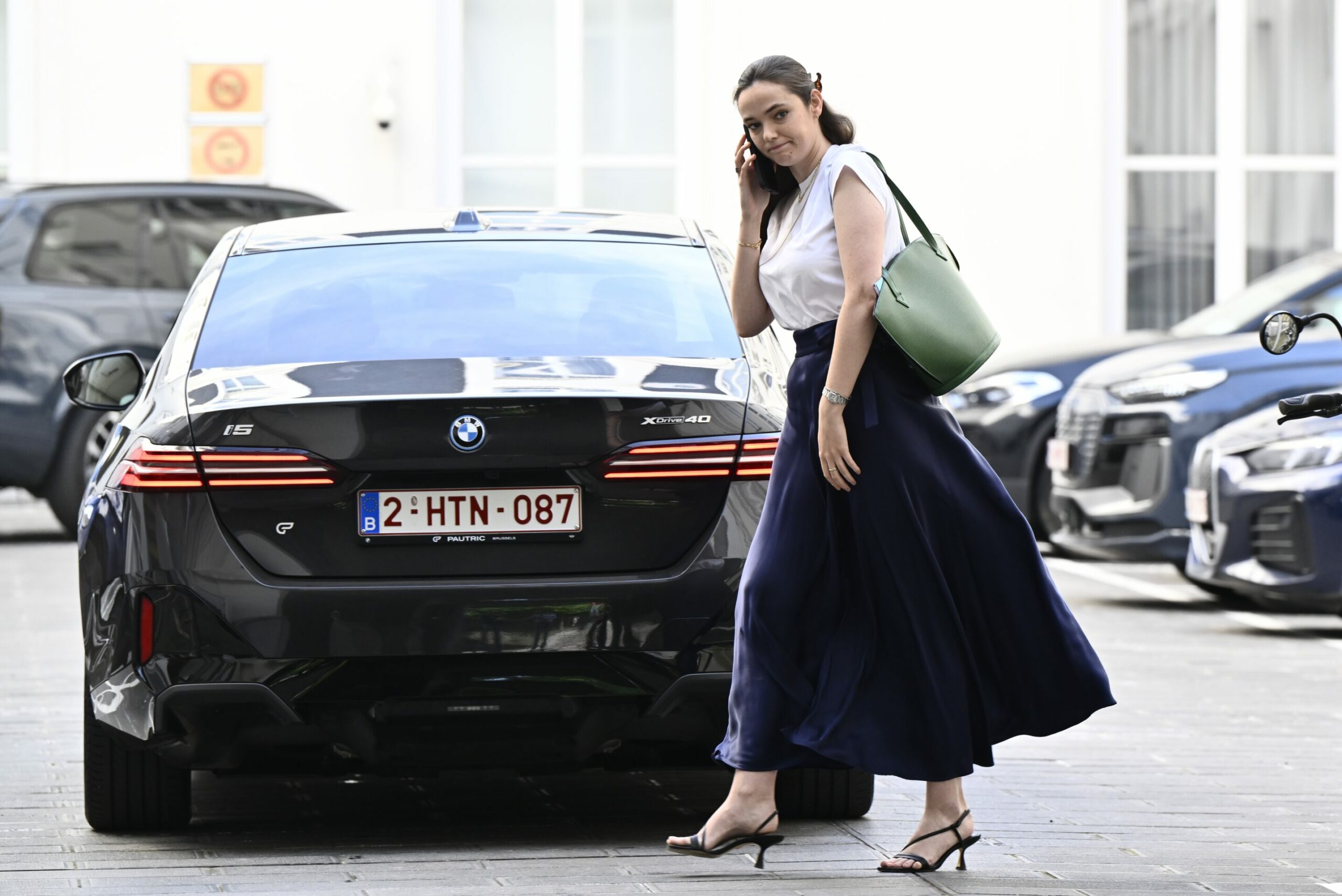
Minister of Middle Classes Eleonore Simonet (MR). Credit: Belga/Eric Lalmand
Geographically, Flanders remains by far the most important region for student-entrepreneurs: three in four student self-employed people live there. Since 2017, the number there has grown by 92%, compared with 61% in Wallonia and 57% in Brussels.
Nevertheless, 2025 was a standout year for the other regions: Brussels grew by 22% and Wallonia by 18%, while Flanders remained virtually stable with barely 1% growth. Most student entrepreneurs are active in the liberal and intellectual professions (38.7%), followed by commerce (30.5%) and industry (15%) – often easily accessible sole traders such as consultancy, photography or freelance work.
A not insignificant question is whether these small businesses will survive once the degree has been obtained.
Research carried out by Ghent University for VLAIO (Agency for Innovation & Entrepreneurship) showed that just under 60% of student entrepreneurs are still active a few years later. This means that less than half don't survive, but what remains is at least as valuable: a network, practical experience and, as Knockaert put it, a "focus on creativity and innovation" that also proves useful in salaried employment.
Middle of the pack
With 11% of all Belgian self-employed people under the age of 30, Belgium sits in the European mid-table – above average but not yet a frontrunner. France and the Netherlands are performing better, while Germany is doing slightly less well.
UNIZO is therefore calling for further simplification of the status and for a "seventh year of entrepreneurship" in which young people can gain additional practical experience.
One concrete improvement is already in place: from October 2026, students will be allowed to remain student-self-employed even after turning 25, rather than automatically switching to self-employment as their main occupation. For those studying for longer – for example, those in medicine or following a bridging programme – this removes an arbitrary age limit and the associated paperwork.
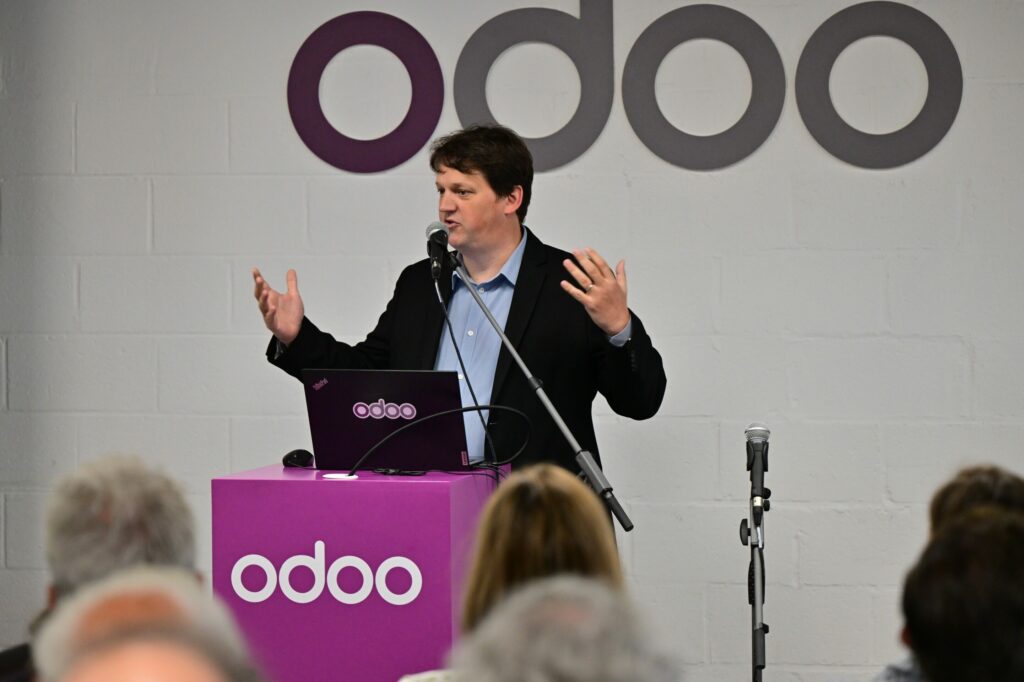
Odoo CEO Fabien Pinckaers. Credit: Belga/Dirk Waem
"Anyone who builds a viable business while studying should be able to decide for themselves when it is time to take the next step," said Socquet.
The number of student entrepreneurs is therefore set to rise even further in the future. Francesco Duval’s message to all those who wish to follow his example is simple: persevere.
Anyone in doubt can also look to two well-known role models of successful student entrepreneurs: Fabien Pinckaers, founder of the Walloon unicorn Odoo, and Roland Duchatelet, the driving force behind Melexis, amongst others.
"Resilience is what entrepreneurship has taught me above all else," Duval said. "There will always be obstacles and moments of doubt. You have to push through them."
