
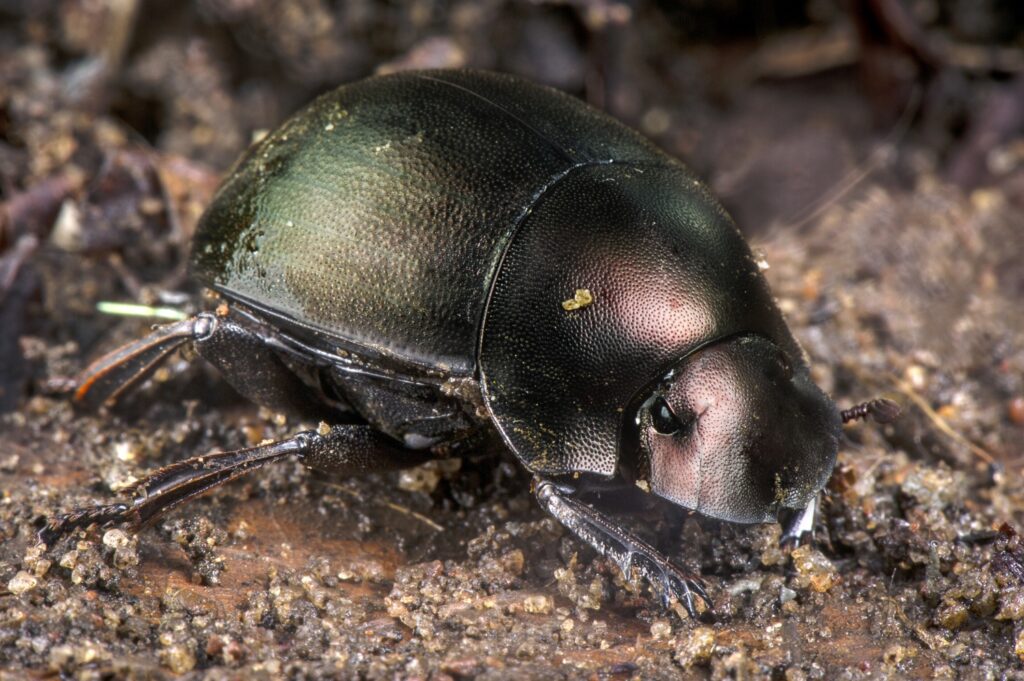
Climate change is causing a net loss of biodiversity in Flemish forests, despite the arrival of some more southerly species, according to a study by several Belgian scientific institutions.
Researchers surveyed 54 forest sites across Flanders using the same method in 1997 and again in 2023.
By comparing ground beetle communities over 25 years, they found that climate change is having a much greater impact on biodiversity than previously thought.
Net loss of biodiversity
“We expected a reorganisation of species communities under the effect of warming, but what we are actually seeing is a net loss of biodiversity,” said San Yin Leemans, the study’s lead author and a researcher at the Royal Belgian Institute of Natural Sciences and Ghent University’s Forest & Nature Lab.
Species once found mainly in southern Europe, such as the wasp spider, the transparent cricket and the great egret, are now being recorded more often in Flanders. The researchers said this could create the impression that global warming is benefiting biodiversity, but their findings show the opposite.
The total number of ground beetles captured almost halved between 1997 and 2023. Over the same period, total species richness fell from 97 to 83 species.
Cold-adapted species hardest hit
Cold-adapted species were hit hardest. Their numbers dropped by nearly 70%, while researchers observed virtually no increase among thermophilic species, which prefer warmer conditions.
“A decline of this scale is exceptional over such a short ecological period,” Leemans said.
Some cold-adapted species that were once common in local forests, including the Patrobus atrorufus and Bembidion mannerheimii ground beetles, were no longer found at any of the sites studied.
Stronger protection of the forests needed
The researchers also found that forest fragmentation is worsening the harmful effects of climate change. Cold-adapted forest species with limited ability to disperse appear to be especially vulnerable.
Episodes of extreme heat and drought, such as those seen again this summer, can lead to the disappearance of local populations.
The researchers are therefore calling for stronger protection of existing forests and better connections between natural areas.
“If we do not tackle climate change and biodiversity loss at the same time, we risk losing species and habitats irreversibly,” Leemans said.
