
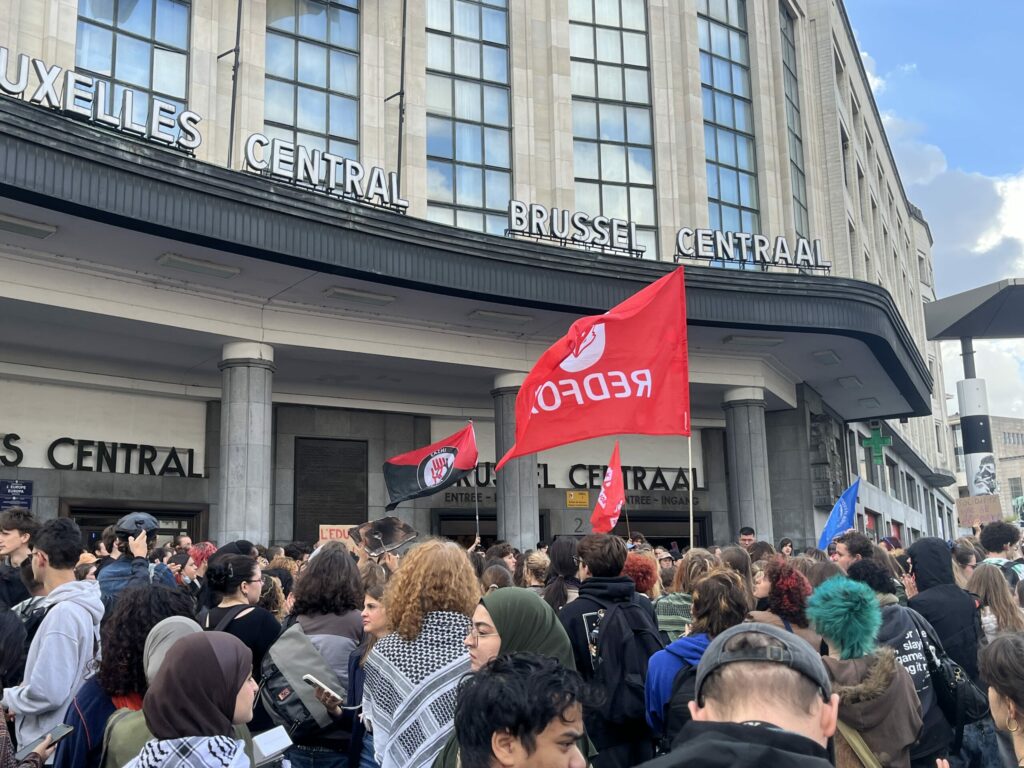
Hundreds of students, teachers and supporters took to the streets of Brussels on Wednesday to protest against changes in tuition fees and higher education funding, warning that the reforms could make higher education harder to access for students from less privileged backgrounds.
Under a clear blue sky, wind instruments mixed with French pop blasting from speakers as demonstrators gathered near Gare Centrale in Brussels. Above the noise, one chant carried clearly: "Étudier est un droit qu'on ne négociera pas" (Studying is a right we will not negotiate.)
The Brussels Times was on the streets to speak to students and demonstrators about why they were protesting – and to ask what they would say directly to the Minister-President of the French Community of Belgium Elisabeth Degryse (Les Engagés).
The demonstration was organised by the Fédération des Étudiant·e·s Francophones (FEF), which was protesting against changes to tuition fees introduced for the 2026–27 academic year, as well as changes to the rules governing whether students remained eligible for public funding.
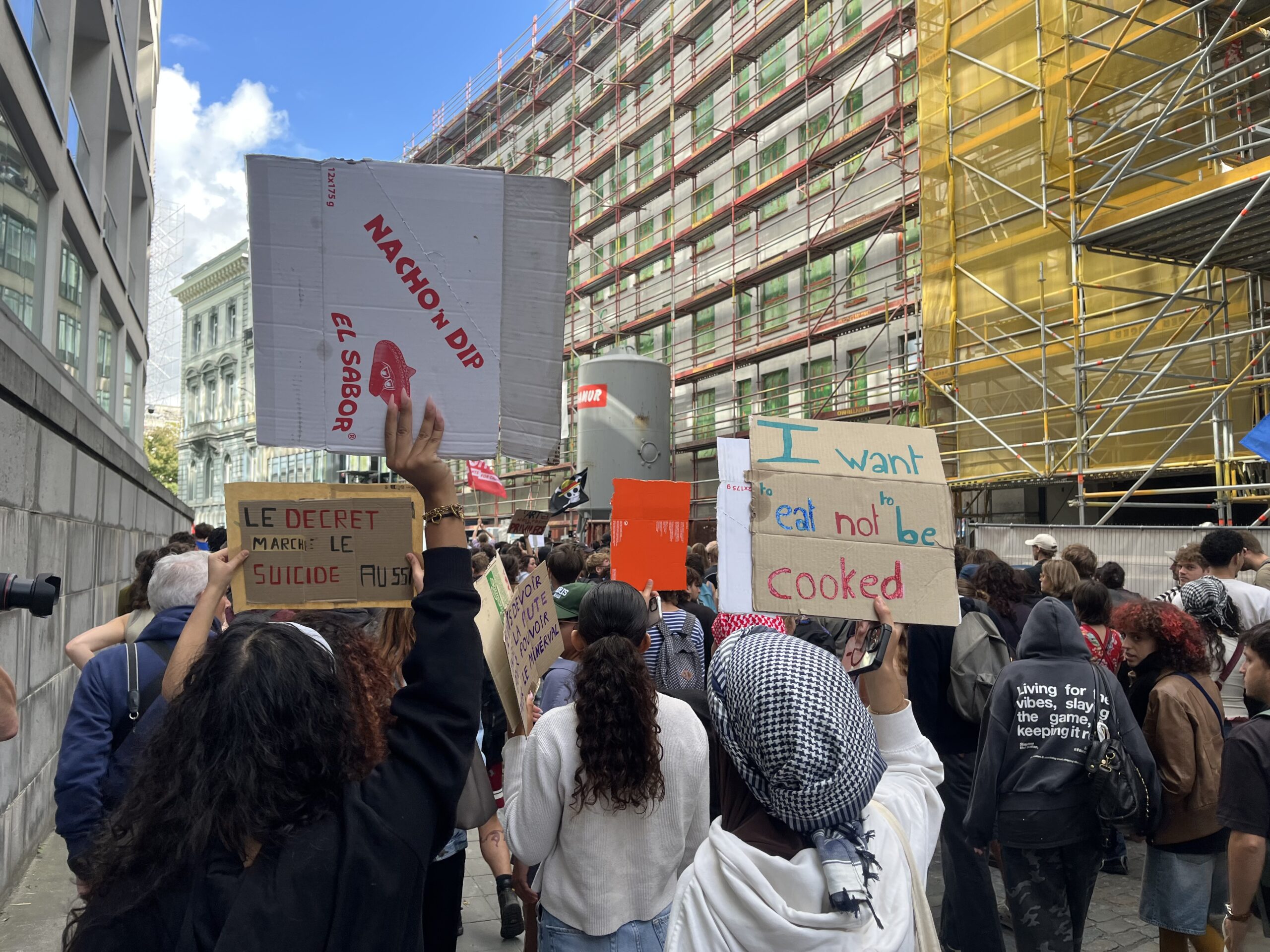
Credit: The Brussels Times
"It's always always education that gets attacked first"
The education reform divides students into four categories based on their financial circumstances. Students eligible for scholarships pay no registration fee, while other students pay €374, €835 or €1,194 per academic year, depending on their socio-economic situation.
For Emilie, 21, a third-year theatre student at the Conservatoire Royal de Bruxelles, the increase was not abstract. "Last year our registration fee was €350, now it's €1,200 for Belgians. For non-Belgians it's even more, for non-EU students even more than that," she said.
Thibaut Lété, 26, a final-year Political Science student at ULiège, saw the same number pushing people out before they even started. "There are people who don't even want to enroll in advance, because they know it's going to cost too much and they won't be able to pay it," he said. "So we exclude, de facto, the poorest people from higher education."
Both point to the same group as hardest hit. "The people I see who are most affected are the people who have to work alongside their studies," Thibaut said. "It's them who have the least time to study, and so it's them who get excluded first."
Emilie thinks the same. "Students are unable to finish their studies while also holding down a student job, sometimes several," she said. "It's impossible to manage a job, a social life, and succeed at school."
For both of them, the word that keeps coming up is elitist. "The access to education is already elitist," Emilie said, "and we're only maintaining that with a registration fee that keeps increasing."
Thibaut put it more bluntly. “They keep talking about meritocracy but we don't give the possibility for people to do their studies. I find it completely disgusting,” he said.
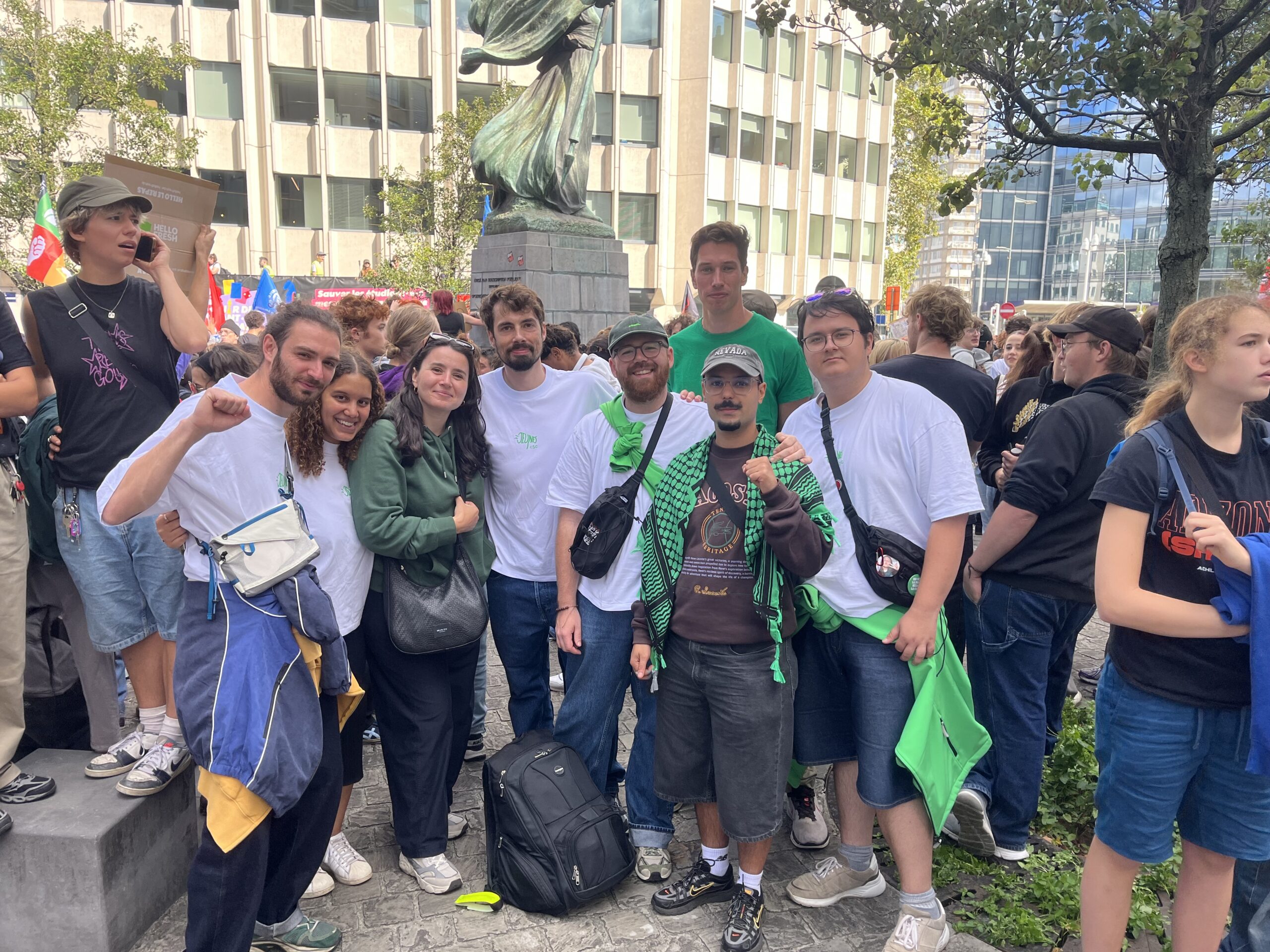
Jeunes CSC at demonstration in Brussels, Wednesday 16 september 2026. Credit: The Brussels Times
Défendre, représenter, mobiliser
Defend, represent, mobilise. These are the three words that greet visitors on the FEF’s home page.
For the students, those words seem to have taken on a meaning of their own. If anything, the recent protests have shown how effectively students can come together when they feel their interests are under threat.
Bernard Dessy, 37, who is responsible for Jeunes CSC alongside his studies at UCLouvain, told The Brussels Times that he believes this is one of the movement’s main strengths.
"I would say that, if there's well one thing that Degryse succeeded in doing, it's to unite the students," he said.
“The government is taking measures against everyone, and by being together, it gave rise to some really nice mobilisations. We're managing to really mobilise as many people as possible,” he said.
Valentin Deberdt-Detheux, 22, a labour sciences student at ULB and member of Jeunes FGTB, echoed that sense of determination.
“We're not going to abandon this, and we're quite confident in our strength. In the movement we've managed to build. I think she can be scared,” he said.
It is clear that the students have no intention of stepping back. As the demonstrators continued through the streets of Brussels, their message remained unchanged: “Étudier est un droit qu’on ne négociera pas.”
