
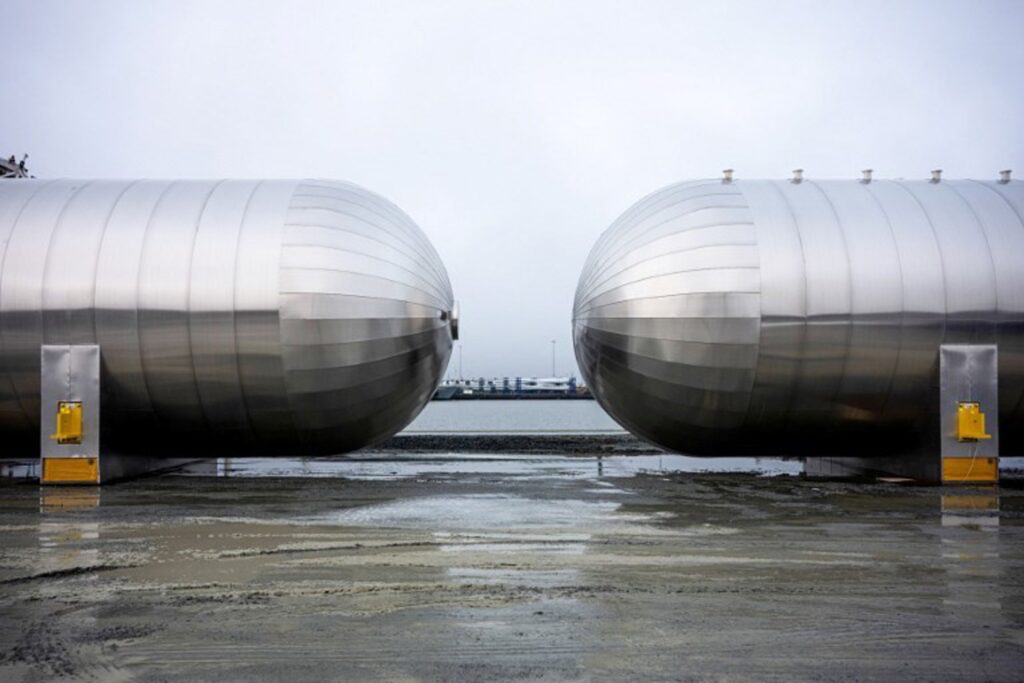
The Greensand project has officially begun burying carbon dioxide beneath a former oil platform in the North Sea, making it the EU’s first large-scale CO2 storage site, according to energy group Ineos.
Ineos, which is leading the project, said on Friday that the launch marked a milestone for carbon capture and storage in Europe. Chief executive David Bucknall said Greensand would provide a foundation for future carbon capture projects across the continent.
Carbon capture and storage, or CCS, is widely seen as one of the tools needed to tackle global warming, particularly in industries that are difficult to decarbonise, such as cement and steel. However, the technology remains expensive and has yet to establish a fully viable business model, despite strong political backing.
European Energy Commissioner Dan Jørgensen said the launch showed that carbon storage had become a practical reality. He said the project could help European industry move towards a low-carbon future while keeping production, investment and jobs in Europe.
The Greensand reservoir lies about 250 kilometres off the Danish coast, beneath the Nini West oil platform in the North Sea.
In its first phase, the project is expected to store 400,000 tonnes of CO2 a year. Ineos then plans to increase injections to between 4 million and 8 million tonnes annually by 2030.
Most of the CO2 will come from Danish biomethane plants. After being liquefied, it will be shipped from the mainland via the terminal at Esbjerg in south-west Denmark.
Under the EU’s Net Zero Industry Act, the bloc has set a legally binding target to reach storage capacity of at least 50 million tonnes a year by 2030.
In neighbouring Norway, the first commercial CO2 storage site has been operating since the summer of 2025.
That project, Northern Lights, is largely funded by the Norwegian state and has annual storage capacity of 1.5 million tonnes of CO2, with plans to increase this to 5 million tonnes by the end of the decade.
