
Kristina Chetcuti, a Registered Health Coach (UKIHCA) specialising in behaviour change and lifestyle medicine (ELMO), answers your lifestyle dilemmas.
Ursula von der Leyen has just announced the EU’s proposal to keep children off social media until they are 13, with more restricted, parent-supervised access until they reach 15. This, to me, is magnificently good news, especially as more and more research is examining what phones and social media are doing to young people.
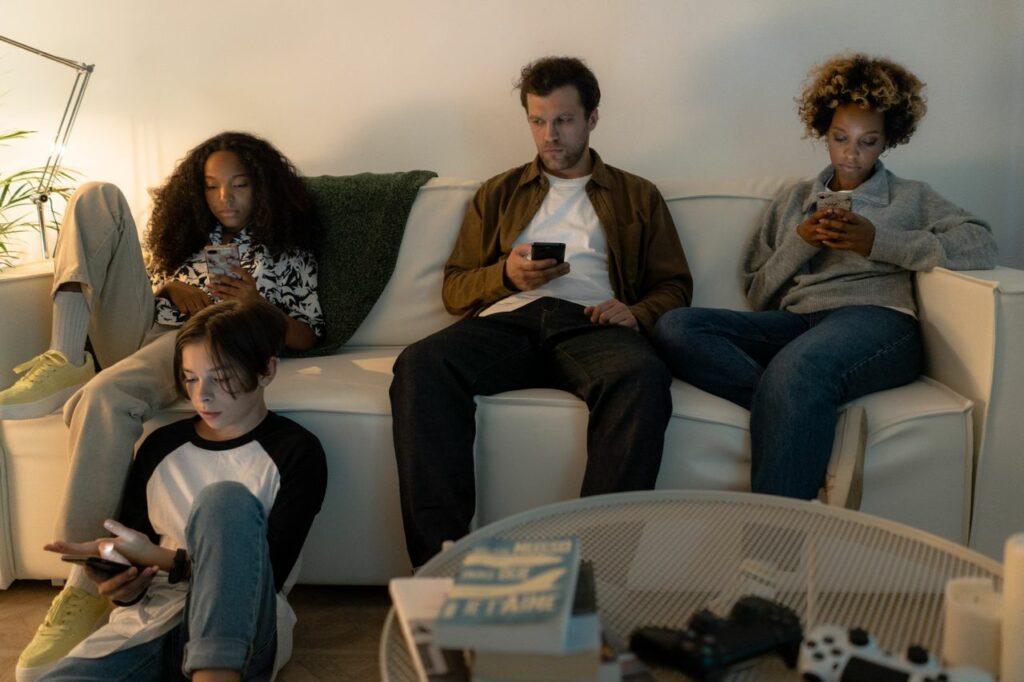
But while Europe works out how to regulate children's digital lives, there is another rather obvious side conversation we need to have: if social media can interfere with children’s wellbeing, what is it doing to us, adults, who are supposed to teach them how to live? And, more importantly: what are our children learning from watching us use our phones?
The thing is, if we are checking our phones whenever there is a spare 30 seconds, taking them to bed, eating dinner beside them and spending the evening scrolling, then telling our children, “You need to get off your phone!” is rather like constantly stuffing your face with Haribos in front of them while preaching that sugar is unhealthy.
Technoference
Here’s a very common parent-and-child scenario. The child says, “Mummy (or Daddy) look!” The parent replies, “One sec.” But that one second becomes two minutes because we’re replying to a message, reading a headline or watching a reel. The child waits and then they ask again. The parent says, rather mindlessly, “I said one second.”
Please feel free to swap ‘child’ for ‘wife’, ‘colleague’ or ‘friend’. We’re all guilty as charged. These tiny interactions have subconsciously become our way of life now.
There’s a fascinating study in which researchers actually watched parents and children in waiting rooms and playgrounds and recorded what happened. Parents using their phones were five times less likely to respond to a child vying for their attention than when they weren't using the phone.
Their responses were also much less engaged: “Mm-hmm, wow” (without actually looking). There’s a name for this increasingly ubiquitous phenomenon: "technoference" – technology getting in the way of ordinary family interaction.
Are we to blame? On this, I’d point an angry finger fairly and squarely at Silicon Valley.
Our brains evolved to notice new and exciting things, to care deeply about what other people think of us, and to chase rewards. Silicon Valley learned how to monetise these innate, instinctive drives.
Instead of our reward being an unexpected honeycomb full of honey, now it’s someone liking our Instagram post. Essentially, our ancient brains, with their quaint, ancient wiring, are now living in a very bizarre, new village.
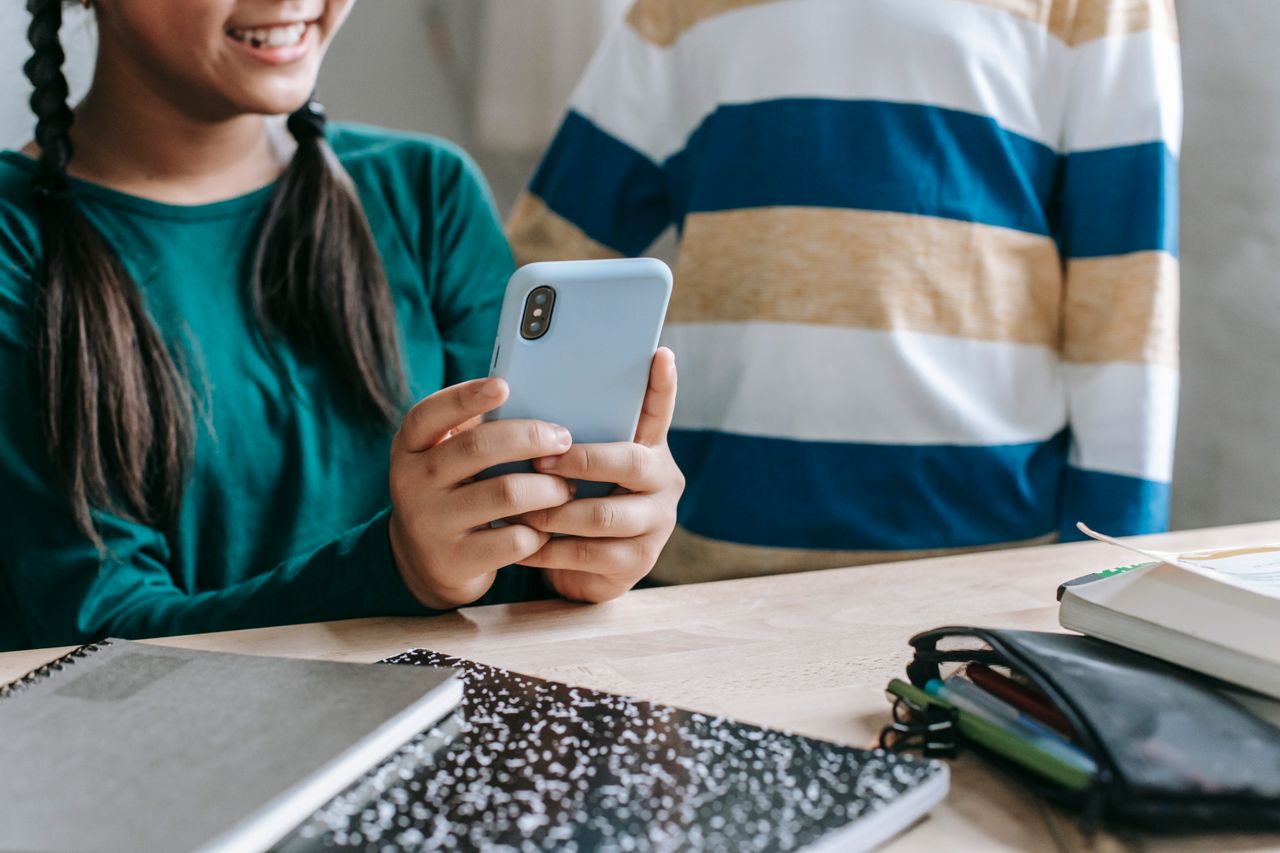
For most of human history, we evolved in small, tight-knit social groups, where knowing what other people were doing mattered. Who liked us? Who didn’t? Who had status? Who was attractive? Who had resources? Who was being excluded? Social comparison isn’t some modern psychological trend. It was how we navigated living in a tribe. Our social world was made up of people we actually knew.
Credit: Pexels/Katerina Holmes
Anthropologist Robin Dunbar famously proposed that humans can realistically maintain around 150 stable social relationships. Today, our phones have effectively plugged our ancient social brain into an infinite village.
On social media, you can compare your face, body, marriage, holidays, children, career, kitchen, dinner… even your morning coffee with those of thousands of strangers before you’ve even had breakfast! Our poor, poor brain. It’s on steroids. No wonder the “one sec” utterings to our children.
Sure, social media has its pros. It’s thanks to these apps that I get to chat to my sister and mother and get envious of blue skies elsewhere in the world; it’s how I find my way to Schaveys Park so my dog can run free; and how I get the news of von der Leyen’s proposals.
Yes, we do use socials for genuine stuff, but the problem is that these platforms are designed to do more than that: they are then remarkably difficult to put down.
We now know that smartphones interfere with several things that matter to adult health. Sleep is the obvious one. The problem may not simply be the blue light everyone is always harping on, but the bottomless feeds. At 22:00, we head to bed and open Instagram and think, “Oh, goodness me, what’s this now?’ and before we know it, it’s past midnight.
Then there’s movement. When we have ten minutes to spare, what is the easier option: going for a walk or slumping on the sofa and refreshing our feeds?
And what about the sheer mental noise? Notifications, outrage, comparison, endless information… I have clients who tell me they sometimes wish they could go completely off-grid because their brains never seem to get a break.
Possibly, though, the most overlooked casualty of all is attention. We are increasingly practising the habit of interruptibility, training ourselves to abandon whatever we are doing whenever something else pings.
There is, sadly, no longer much opportunity for nothing to happen. From a developmental perspective, that matters. Children learn to regulate themselves partly through good old-fashioned boredom, frustration and having to invent something to do. If, as adults, our automatic response to every empty moment is to reach for the phone, what on earth are we modelling?
If we want children to have a healthier relationship with social media, they will learn considerably more from what we do than from what we tell them.
So, while we wait for the EU laws to catch up, here’s how to become a better phone-user role model:
- Make the bedroom a phone-free zone
Charge the phone somewhere else and buy an alarm clock if necessary.
- Switch off notifications that don't genuinely matter
Your phone should not be announcing every like, comment, email, sale and piece of breaking news unless you are the President.
- Protect meals
When eating with others, phones out of sight and revive the art of conversation.
- Practise being bored
Leave the phone at home for a short walk; stand in a queue without reaching for it; look out of the window. Let your brain wander.
- Notice how you feel after scrolling
Ask yourself: do I feel refreshed and perked up after these 20 min of scrolling or do I feel a teeny-weeny bit queasy?
- Curate your feeds
Unfollow accounts that reliably make you feel inadequate, angry or vaguely miserable. Follow beautiful things that make you curious, connected or amused.
- Create some phone-free rituals
A morning coffee, a dog walk, reading before bed.
- Delete social media apps from your home screen
So you have to search for them every time you want to use them.
- Be mindful of your phone usage in front of your children
Because what children need from adults is for them to demonstrate what being present looks like.
- Adopt the 3-6-9-12 rule for your children
These are age milestones for screen time, brilliantly developed by French psychiatrist Serge Tisseron
