
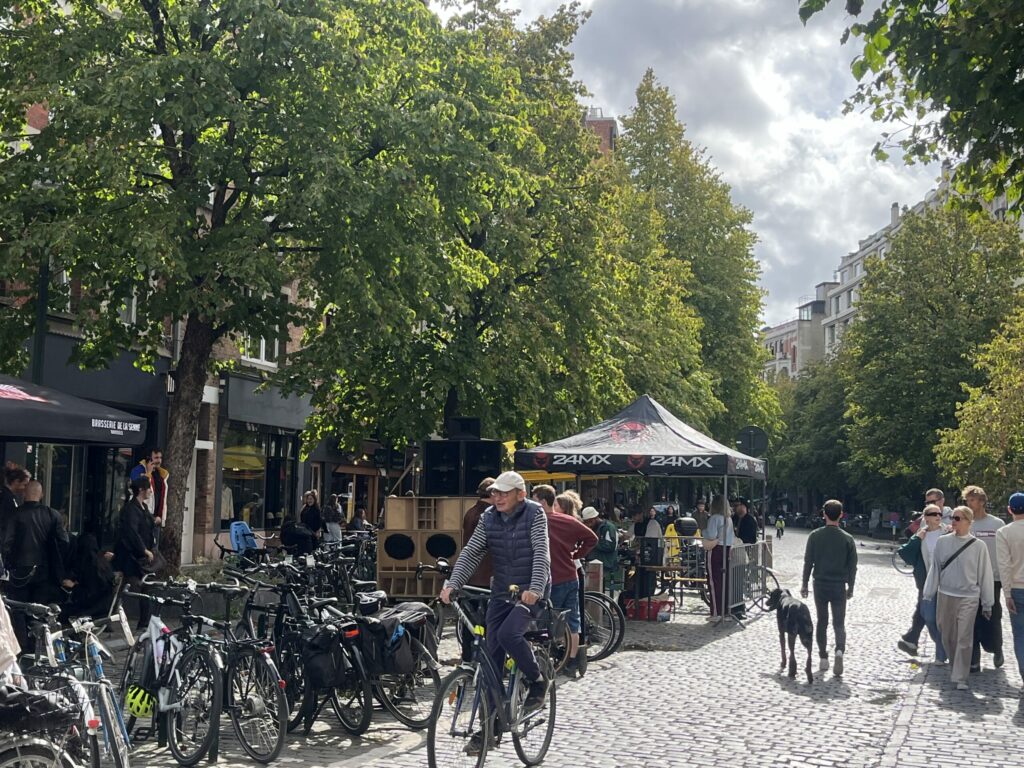
Cars out, people in. For nine and a half hours on Sunday, Brussels belonged to people on foot, bikes and skateboards. The Brussels Times joined them, and heard about a "perfect world", a bit of chaos and a lot of togetherness.
What began as a rainy morning turned into a sunny afternoon in Belgium. On Sunday, Brussels' streets were taken over by pedestrians, cyclists, skaters and everyone else on the move without an engine. Open-air parties, flea markets, and concerts were organised in roads normally filled with traffic.
From 9:30 to 19:00, private cars were banned across the Brussels-Capital Region as part of the annual Car-Free Sunday. More than 70 cities and municipalities across Belgium also took part.
The event forms part of European Mobility Week, an annual initiative that promotes more sustainable ways of getting around cities and encourages alternatives to private cars.
But beyond the transport message, what does Car-Free Sunday mean to the people who took part?
One Sunday, a different Brussels
For Arthur Wagner, the day offered a different perspective on Brussels.
“You get a new vision of your city, and at the same time you see that you can walk and it's not that long,” he said. “It's to encourage more people not to take the car.”
Carla Treinen, who has lived in Brussels for three years, described the experience as freeing.
"It is for people to see that cars are actually not fun, and that urban space should belong more to the people, to the bikers, to all the slow vehicles,” she said.
She admitted that the day can feel almost too good to be true.
“Car-Free Sunday is a bit utopian. It's a bit like a perfect world, because everyone is out, everyone is having a good time, everyone is on their bikes, there are loads of children,” she said. “You're kind of like, okay, this is not the real world.”
For Carla, however, that is part of the point. The day shows what Brussels can feel like when cars no longer dominate its streets.
“I think it's to show that life is actually better without the cars, and that maybe you don't need them every day,” she said. “But I'm also very optimistic,” she said.
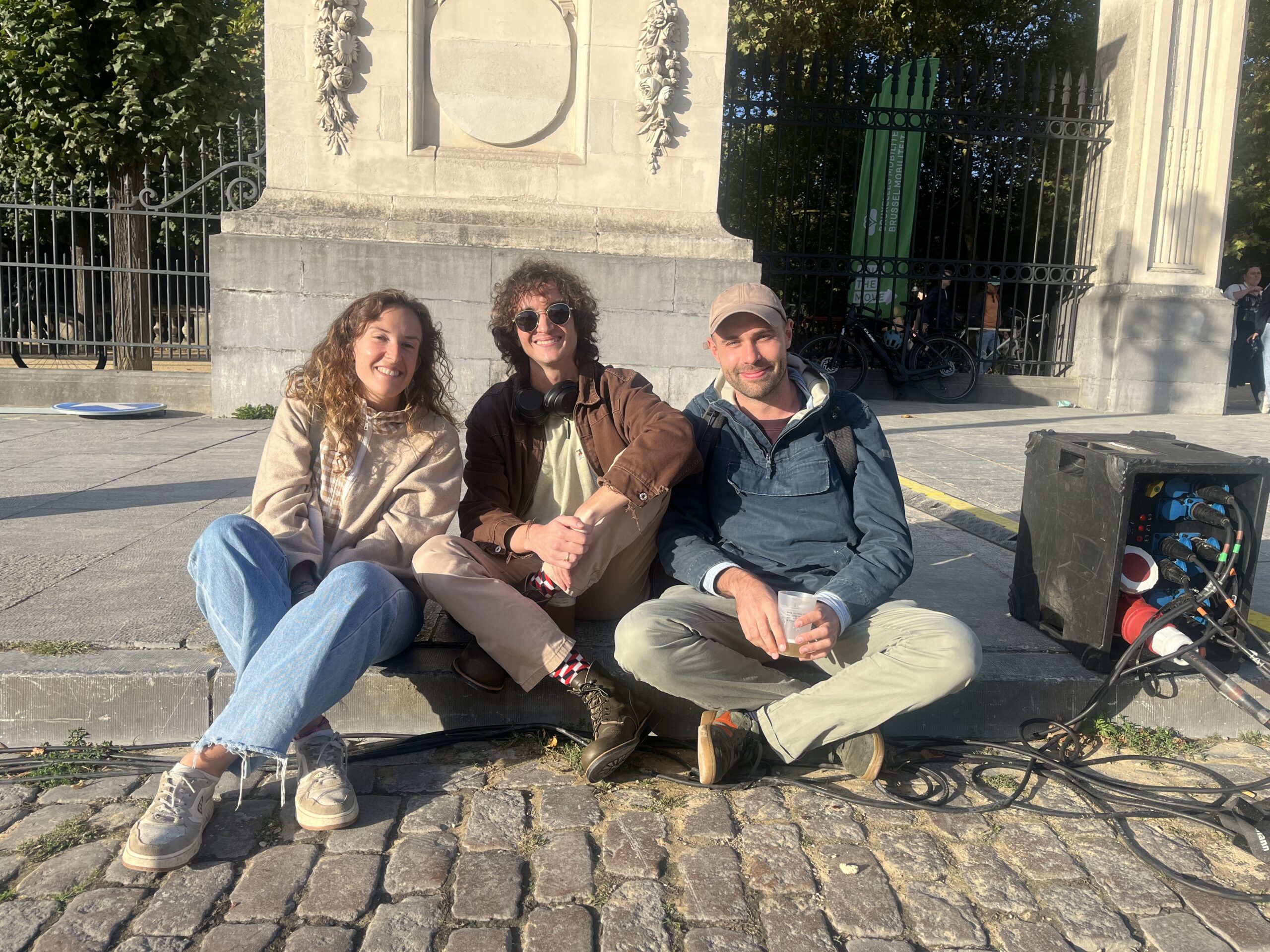
Jack (in the middle), with friends. Credit: The Brussels Times
'A bit chaotic'
Not everyone experiences the day in quite the same way.
Jack Murray, who has lived in Brussels for six years, said Car Free Sunday allows him to see the city differently.
“You don’t have the constant noise of cars, you don’t have the clogging of cars visually,” he said. “I mean, you can see streets that are just cleared out, there’s just people on bikes, people on skateboards and stuff. And allowing people to do that is really nice.”
But he said the day can also become chaotic.
"People on bikes, when they're given free roam of the city, it can just get a bit chaotic," he said. "They go the wrong way, you see people going out in front of buses, a lot of sudden stops, a lot of near misses."
The closures can also disrupt everyday plans. His housemate, for example, had a hockey match outside Brussels and had to plan their journey around the restrictions.
"The first time it happens, you're like, 'Oh yeah, no worries, it's Car-Free Sunday,'" he said. "By the sixth time, you're just like, 'Oh, I've got this again'."
Overall, he said, it is a positive thing, even if he has become "a bit of a cynic" after seeing so many of them.
Ctredit: The Brussels Times
A feeling of togetherness
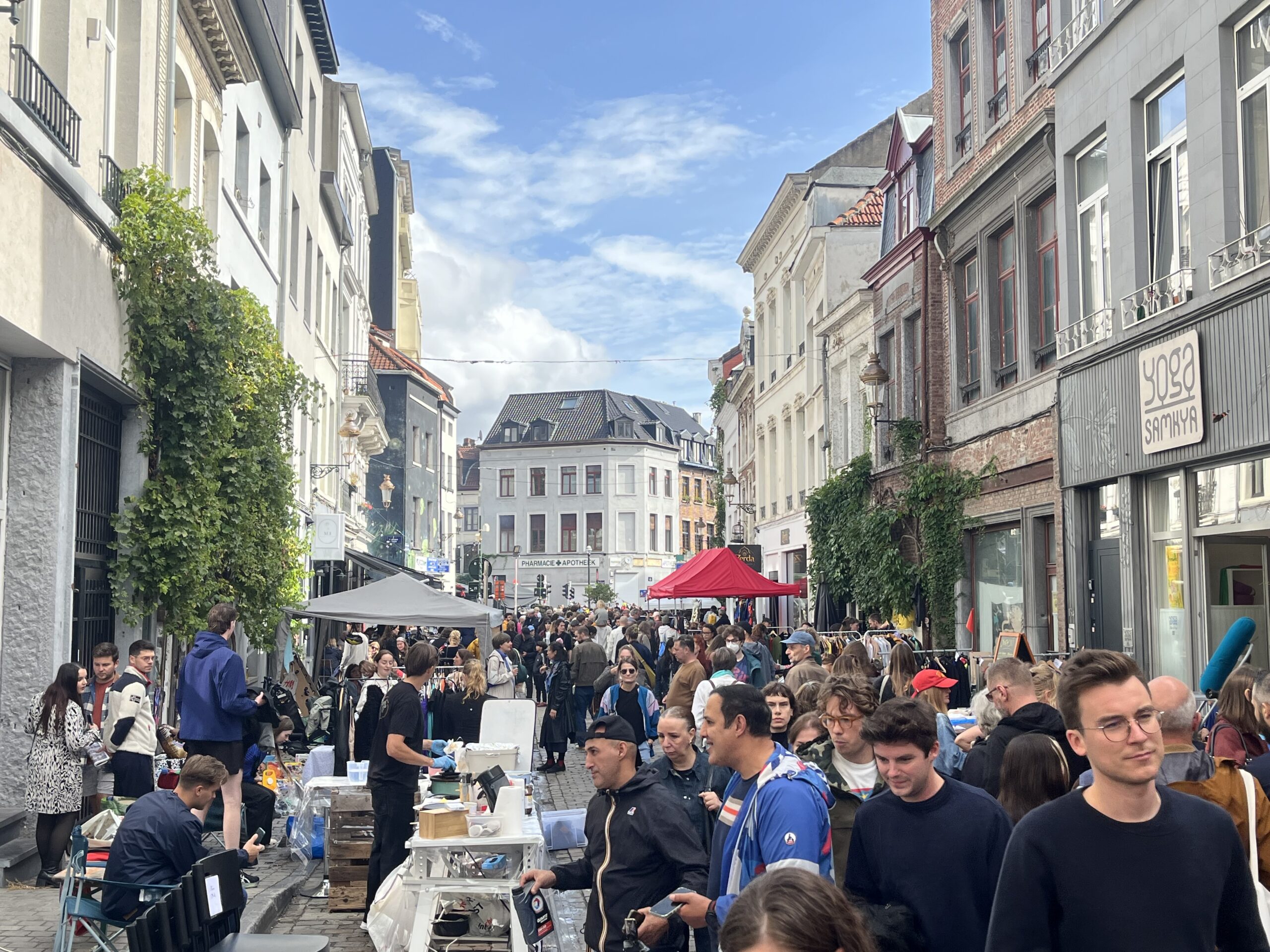
For others, Car-Free Sunday was less about transport and more about the people who fill the streets. On Rue de Flandre, the traditional flea market took over the street, the smells of different cuisines mixed in the air and shops kept their doors open to passers-by.
For Emma Flynn, who has lived in Brussels for nine years, it is the highlight of the year. "I look forward to this all year," she said.
Having a stall at the flea market has long been her Brussels dream. She did not get an official one this year, but friends let her set up outside their hairdresser salon. Still, she said, the day is not really about selling.
"Everybody is so happy and in a good mood," she said. "Maybe during summer the city kind of empties, so it's a good opportunity. Everybody comes back to Brussels, everybody's together again, and this feeling of togetherness is just so nice."
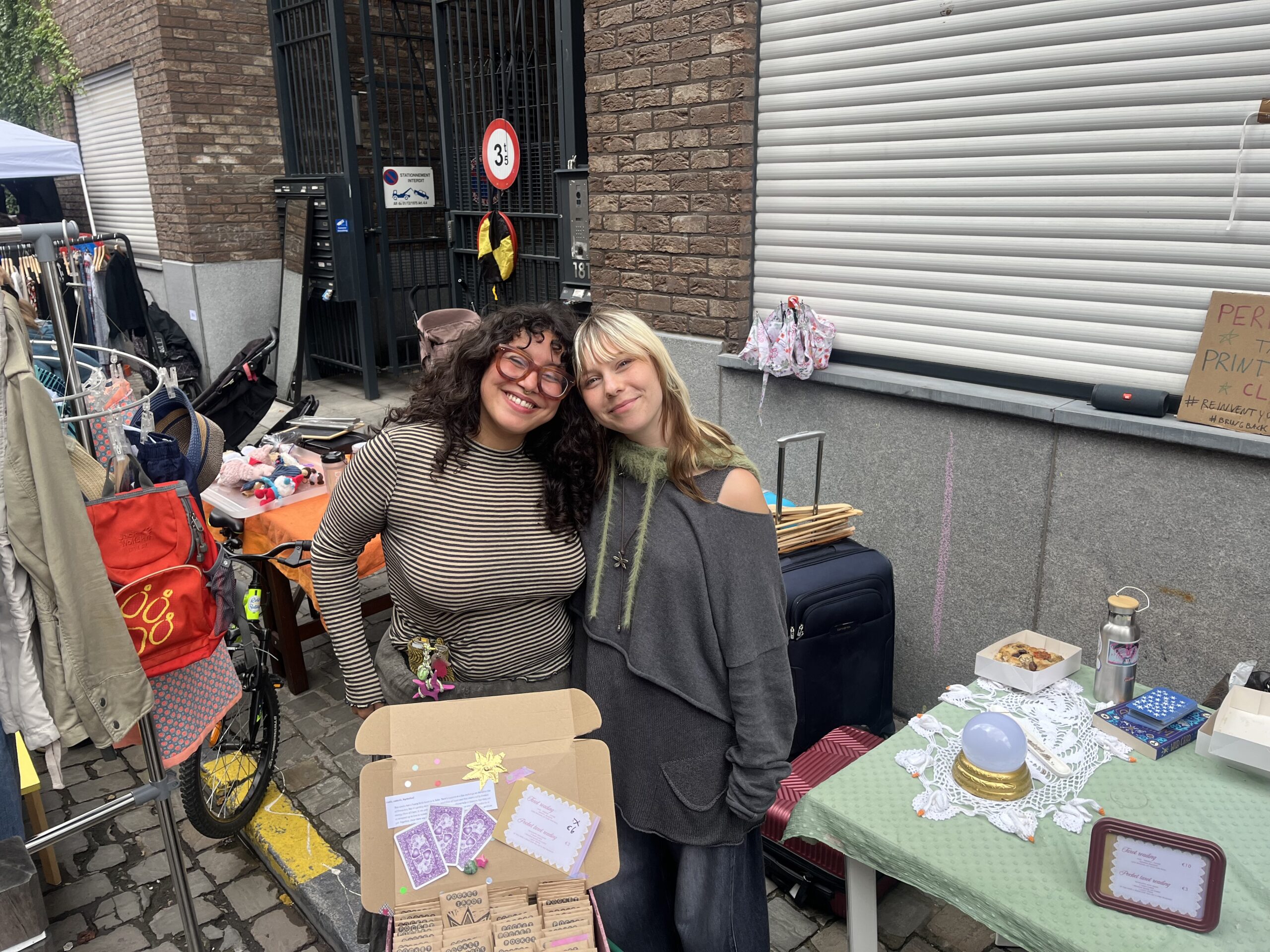
Gosha Tirions (right). Credit: The Brussels Times
Gosha Tirions, who has lived in Brussels for six years, was also selling, together with her roommate: tarot readings in blind boxes with a lucky stone. For her, the best part was the streets themselves.
"It's so nice that the streets are so much less busy, that people really come out on the street, and it's also nice to connect with our neighbours," she said.
She has grown attached to the city, and days like this only reinforce that feeling.
"The city really stole my heart," she added. "Especially on days like this, I'm so lucky to be living in a city like this."
She would like to see more of it. “I wish Brussels would have Car-Free Sunday more often,” she said.
At 19:00, the cars were allowed back in.
Cars in, “utopia” out. At least until 2 May, when Brussels will hold its second annual car-free Sunday for the first time.
