
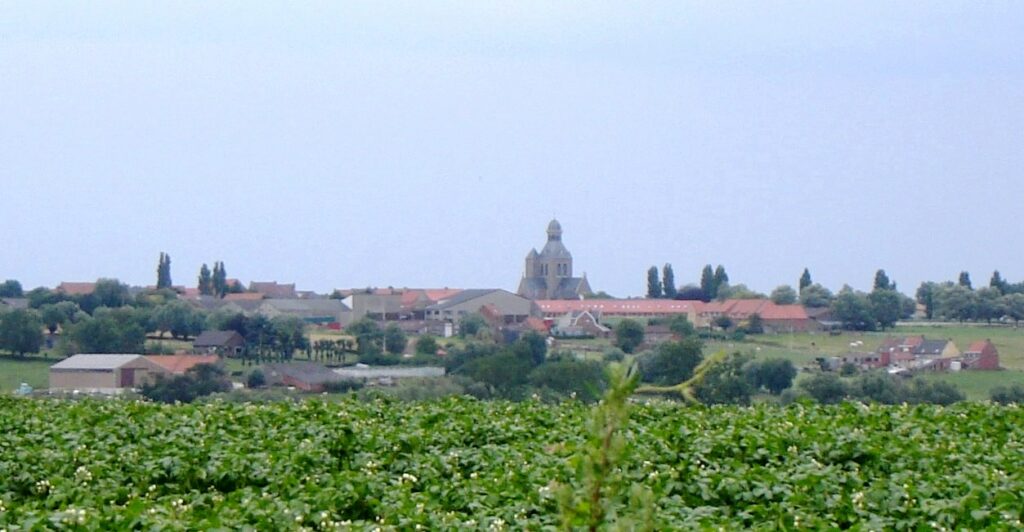
Archaeologists have uncovered the remains of a medieval abbey in Mesen, West Flanders, during excavations ahead of a housing development, with work set to continue until 2 October.
The discovery had been expected rather than made by chance. Signs of the building beneath the ground had long been known, and a preliminary study carried out in January confirmed its presence.
Mesen Abbey was founded in 1060 by Countess Adela, daughter of the King of France, and Count Baldwin V. In the late 18th century, the site was converted into the Royal Institution for the Orphans of Fallen Soldiers.
The buildings were completely rebuilt during the First World War, leaving almost no visible trace of the abbey’s medieval past. The main surviving element is the crypt of Countess Adela beneath St Nicholas’s Church.
The excavations have revealed remains from several periods. The oldest are walls of iron-rich sandstone dating from the 11th to the 13th century.
Archaeologists have also uncovered the town’s former canal, which probably formed part of the defensive walls.
Other finds include remains of the Royal Institution, such as a former bakery and butcher’s shop. Several traces of the First World War, including ammunition, have also been found.
Although the site had already been well documented, the discoveries provide fresh insight into the scale of the abbey complex.
