
The National Crisis Centre has published a new guide to help Belgians prepare for emergencies.
The cover shows a man, a woman, a child, and a dog standing together. Above them big white letters forms the sentence "Prepared together." The Belgium's National Crisis Centre launched the 28-page guide on Thursday, containing practical advice on what to do before, during, and after an emergency.
"Those who are well prepared are better protected," said Interior Minister Bernard Quintin (MR). "We need to find the right balance: never give in to panic, but also never be naive."
The guide will be sent to all local authorities and provinces. It takes households through four steps: know where to find reliable information, make an emergency plan for your family or household, put together an emergency kit, and know what to do if you need to shelter or evacuate.
The word "war" does not appear anywhere in the guide, as it instead focuses on crisis and emergencies in general terms.
The 72-hour kit
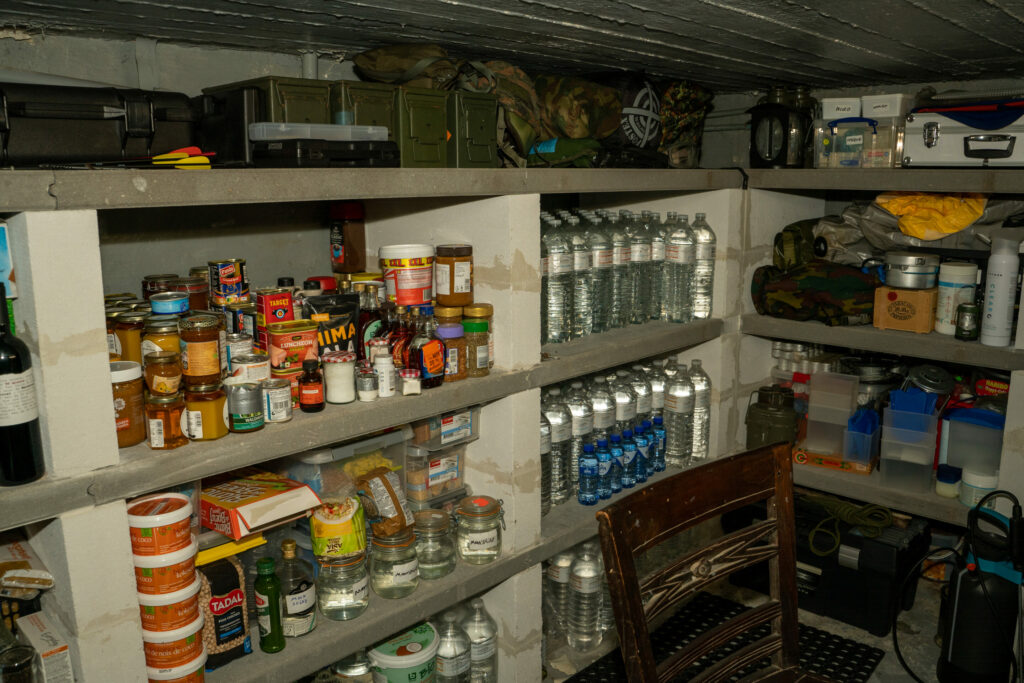
One of the guide's four steps is putting together an emergency kit able to sustain a household for 72 hours. It should hold 3 to 10 litres of water per person per day, ready-to-eat food, iodine tablets, a hand-crank radio, a torch, essential medicines and copies of identity documents. It should be small enough to fit in a bag back, so it can be grabbed quickly if an evacuation is needed.
The 72-hour figure comes from a European recommendation. It estimates that three days is the minimum level of self-sufficiency people need to cope with a modern crisis.
Households are expected to build their own kit based on their needs. The kit should be kept somewhere easy to reach, checked regularly for used or expired items, and every member of the household should know where it is.
High awareness, low action
Getting people to act is the hard part. Quintin has said he wants to develop "a culture of risk," and admits it is not a strong point in Belgium.
A YouGov survey published in June suggests that he is right. Almost all Belgian households knew what an emergency kit was, but fewer than one in five had even a partial one. Most had no plans to make one.
The new guide is part of a four-year awareness campaign the Crisis Centre launched in the spring.
"The possibility of a large-scale power cut, flooding or fires … is very real," Quintin has said. "Everyone must be aware of this and be as well prepared as possible."
Have you changed your mind about an emergency kit?
The Brussels Times would like to hear from readers. Have you put together an emergency kit, or decided not to?
Tell us why on c.guerry@brusselstimes.
