

“I have two sons. They are young and already exposed to high levels of chemicals simply by breathing and eating. And I am unable to protect them, because the government has failed to protect us.”
These are the words of Stefanie Bellinkx, a mother and resident of Zwijndrecht, the town notorious for PFAS (Per- and polyfluoroalkyl substancescolloquially known as "forever chemicals") pollution caused by the American multinational 3M, after seeing her blood test results.
Bellinkx is one of 46 women who participated in a free blood testing program to measure levels of PFAS and TFA (trifluoroacetic acid) last June, an initiative led by the European Parliament’s Greens/EFA group.
Recently, TFA has been classified by the European Chemicals Agency (ECHA) as a substance that is “toxic to reproduction”, because it can harm the fetus growing inside exposed women. It is also suspected of impairing fertility and female reproductive health.
The tests were conducted in Brussels on a voluntary basis involving 110 people from nine European countries. Alongside Bellinkx, Zwijndrecht residents Wendy D’Hollander and Hanne Willems also took part.
“When I shared my results with a chemical expert, they described them as alarming,” said Willems.
TFA was detected in 100% of the samples.
What does the EU study reveal?
Through their blood samples, women exposed to PFAS through their work, mothers, pregnant women, and residents of contaminated areas across Europe have created a unique scientific dataset.
The study, analysed by the University Medical Center Hamburg-Eppendorf (UKE) and subsequently interpreted by the Vrije Universiteit Amsterdam (VUA), revealed that all four "common" PFAS measured (PFOA, PFOS, PFHxS, PFNA) were detected in the blood of almost all participants.
TFA, an ultra-short-chain PFAS resulting from the degradation of pesticides and pharmaceuticals, was found in every individual, with a median concentration of 21.2 ng/mL, compared to the 4.6 ng/mL recorded for the sum of the four "legacy" PFAS.
In other words, TFA alone accounts for over 80% of the total PFAS burden measured in the participants' blood and reaches the highest levels ever reported in humans.
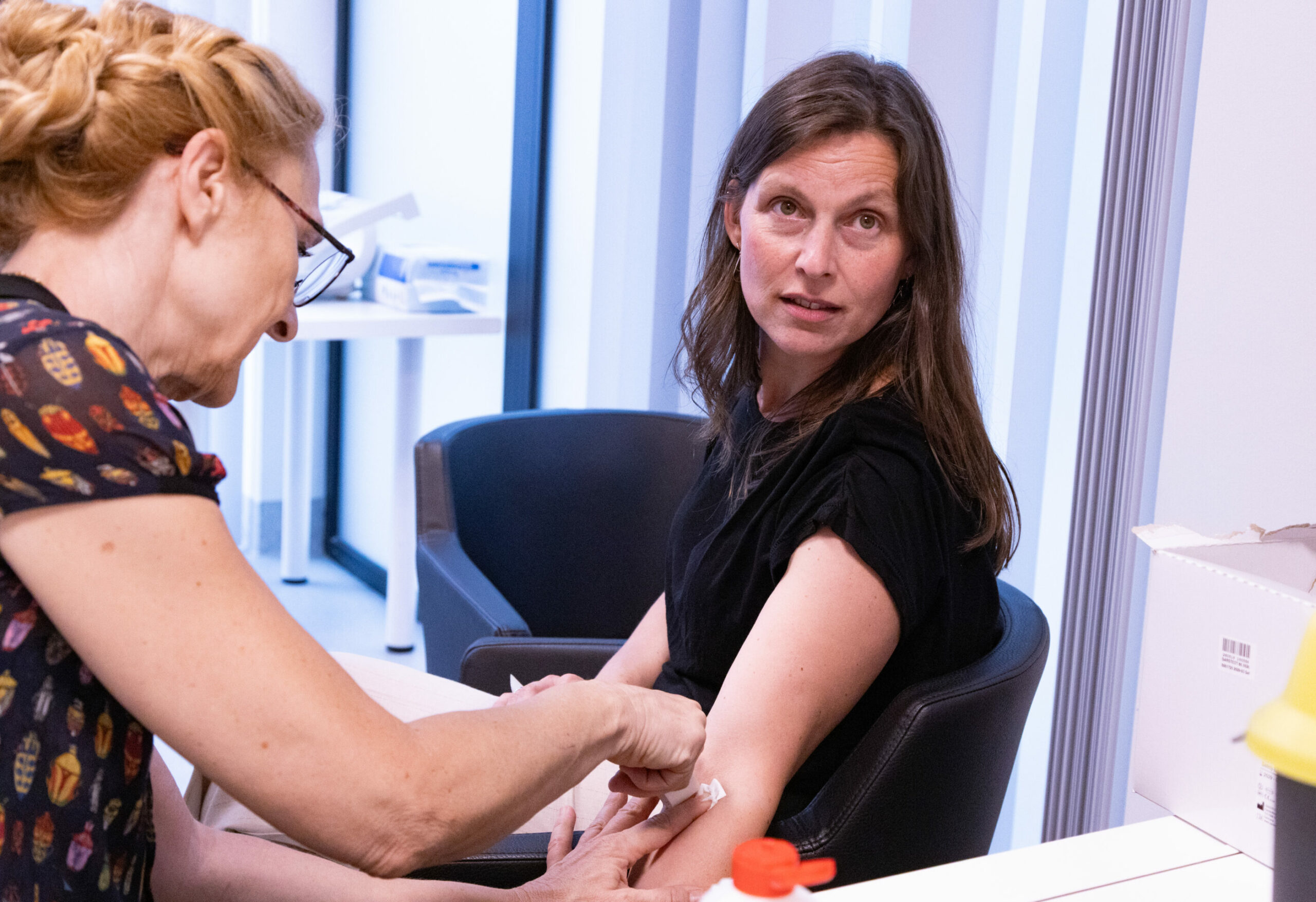
Wendy D'Hollander. Credit: The Brussels Times
In particular, TFA is a degradation byproduct of many fluorinated compounds, including refrigerants, pesticides, medicines, and PFAS themselves. Highly mobile and persistent, it is considered the smallest compound in the PFAS family and accumulates particularly easily in water and crops.
Until now, it has received little monitoring, as it was considered less bioaccumulative – and therefore less toxic – than long-chain PFAS.
People living near a contaminated site, like Bellinkx, in the case of the 3M plant, know exactly what PFAS are and what it means to adopt strict daily measures to protect their own health and that of their children, such as avoiding tap water or homegrown vegetables.
However, the detection of TFA in her blood represents a new finding. “The only possible explanation is that TFA enters the body through pesticides, and thus food, and the air. The fact that the body eliminates TFA relatively quickly, at least compared to traditional PFAS, implies that there is no significant accumulation over time."
"This also means that my body is constantly exposed to high levels of TFA; it is the only way to explain such a high concentration. Additionally, it means that reducing my TFA levels depends entirely on government decisions and national and international product regulations,” she explained.
Currently, there is no safety threshold in the EU for TFA levels in human blood; consequently, it is impossible to determine at what point it becomes dangerous, even though it is already ubiquitous.
For Hanne Willems, it is shocking not only to find such high levels of TFA in her blood but also to see the lack of data on the subject. “Further research into TFA is needed, as is a better understanding of what these levels mean for our health. This is particularly relevant given that ECHA has recommended labeling TFA for potential reproductive toxicity, making the lack of data even more surprising.”
A gender perspective on TFA
The sample is particularly “valuable” because, as Italian MEP Cristina Guarda points out, “women's health remains a major gap in scientific research and chemical risk assessment” amidst a general scarcity of data.
“The fact that TFA was detected in all of them highlights the urgent need to bridge this knowledge gap,” she stated. “For decades, women have been excluded or underrepresented in clinical and toxicological studies; we call for women's reproductive health to be systematically included in the assessment and regulation of PFAS, substances that must all be banned at the European level."
In general medicine and research, factors specific to women, from hormonal cycles to breastfeeding, are rarely taken into account when setting safety limits, even though these are the very stages when the body is most vulnerable to endocrine disruptors and when substances can be passed on to the fetus and newborn.
For Belgian MEP Saskia Bricmont, mothers like Stefanie and Wendy from Zwijndrecht "should not have to worry about their children during pregnancy, and a society cannot accept its children being born contaminated."
Still, it happened. The situation on the outskirts of Antwerp remains concerning, even following the Flemish government's €571 million agreement with 3M for the remediation of certain areas.
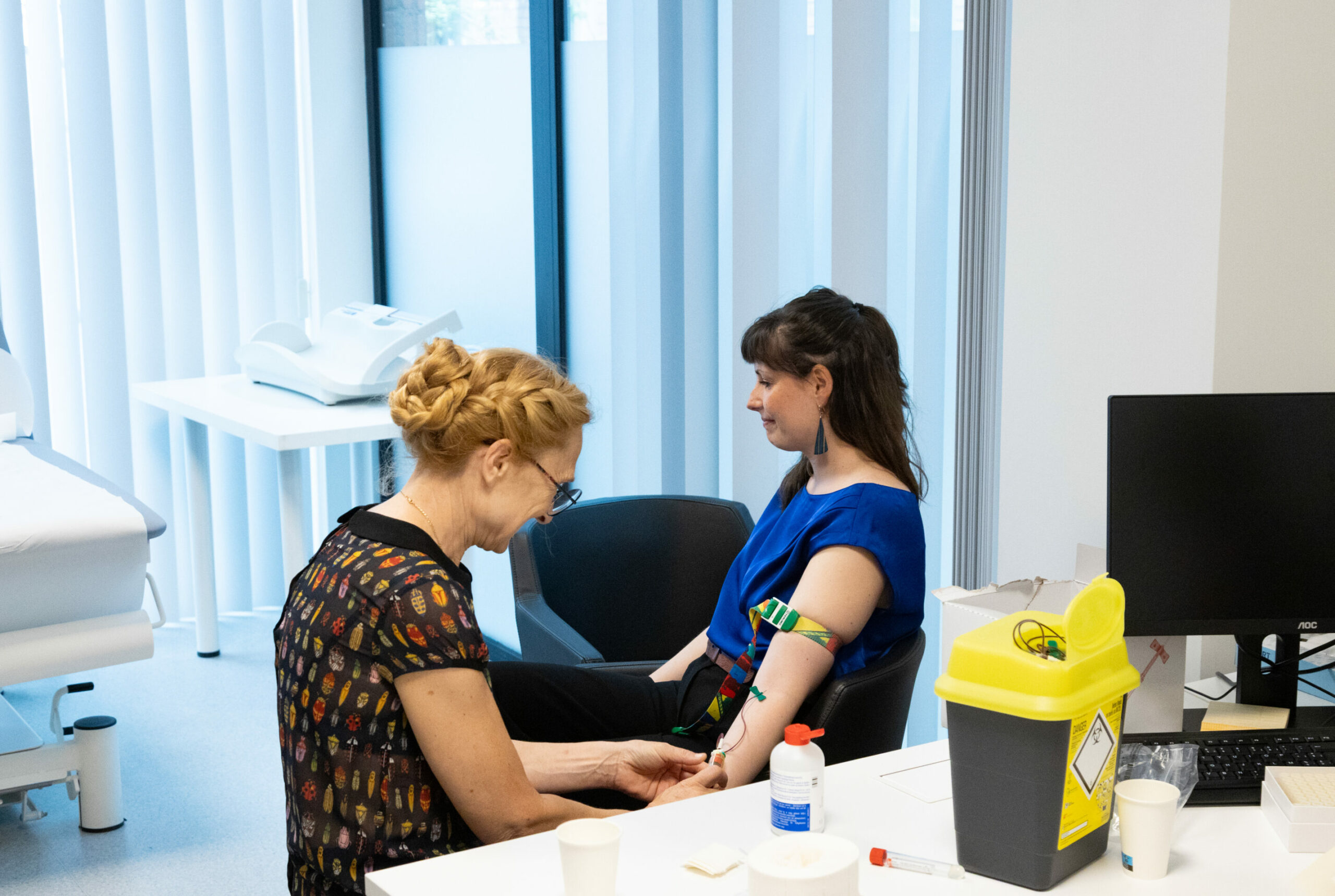
Stefanie Bellinkx. Credit: The Brussels Times
Indeed, this summer, ClientEarth filed a complaint against Belgium for failing to protect the right to health, highlighting the urgent need for measures to safeguard European citizens. "Protecting health, especially that of our children and the environment, is a public responsibility: Belgium and the EU must ban PFAS," Bricmont said.
"It is absurd that on the very same street in Zwijndrecht where gardens require soil remediation due to PFAS contamination, PFAS continue to be sprayed on fruit in the local orchard. Farmers are victims of the system too: they have access to PFAS, yet there is little research into better, healthier alternatives for them," says Stefanie.
"The industry has shown it is incapable of self-regulation and 3M is a prime example of this. These analysis results can serve as yet another wake-up call for politicians, reminding them of their most important task: protecting citizens.”
What to do now
For the Greens lawmakers, these results confirm the urgent need for a general ban on all PFAS at the European level including TFA and for the systematic inclusion of this pollutant in future human biomonitoring programs.
Above all, they highlight the need to systematically include women's reproductive health in the assessment and regulation of PFAS.
“The health risks associated with PFAS - such as infertility, certain types of cancer, and immune system disruption - are by now well known. Yet they are everywhere: in vegetables, fruit, bread, and drinking water,” said Bricmont.
Guarda echoes this sentiment and insists. “The message to the Commission and Member States is: if you vote against the PFAS ban, you will be knowingly complicit in a crime against the environment and public health.”
According to official sources from Brussels, the Commission’s proposal may arrive in June. It will be up to the Member States to decide, and the process will take a long time; the Parliament will then only be able to accept or reject it.
“To reduce my TFA levels, I am entirely dependent on government decisions and on national and international product regulations,” said Bellinkx. “We need a strong government – or a strong Europe – that guarantees this protection, allowing us to drink clean water, eat safe, healthy food, and breathe clean air.”
